Return on Investment Analysis of Electromagnetic Flowmeters: Cost-Benefit Comparison in Smart Water Management Projects
Analyzing the shift from scale expansion to application adaptation in modern industrial flow measurement.
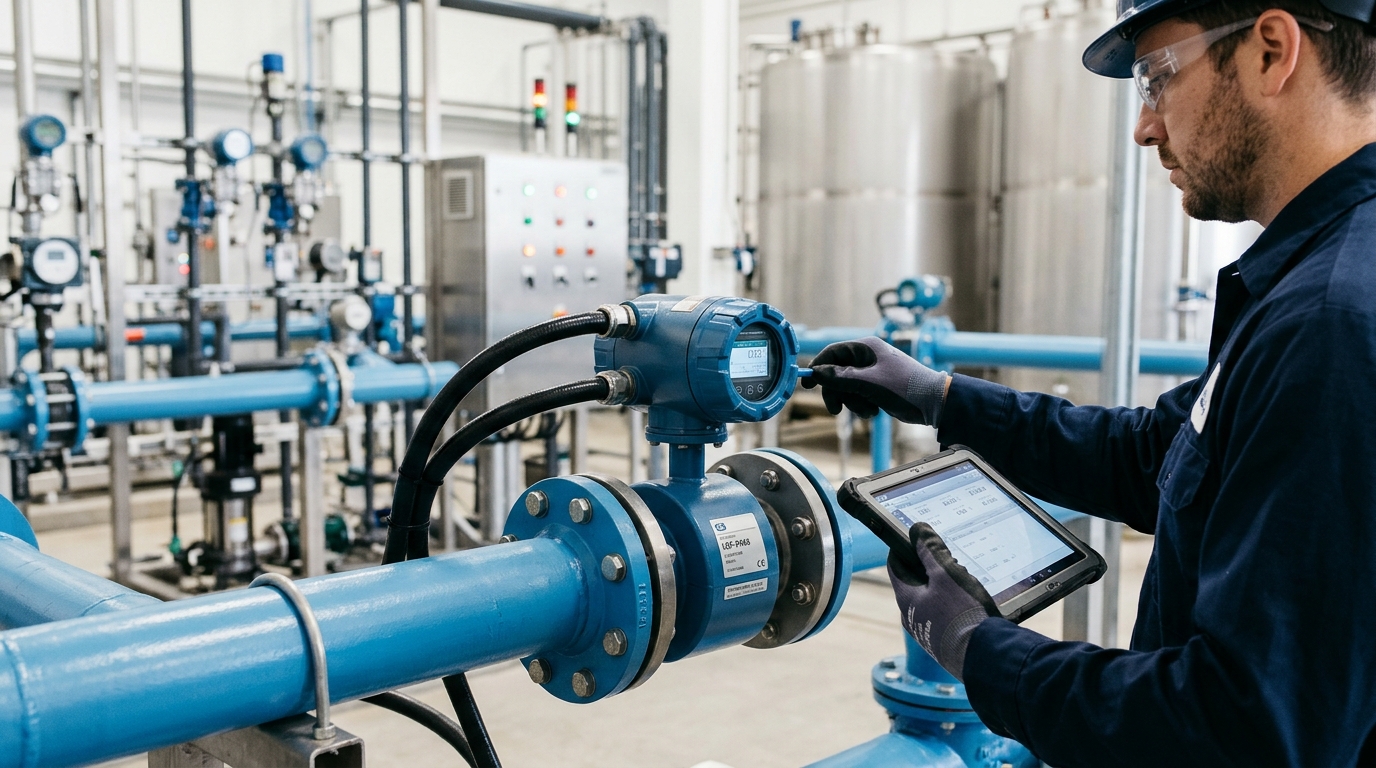
In process industries such as municipal water management, chemical, metallurgy, paper, food, pharmaceutical, and new energy materials, electromagnetic flowmeters have become one of the mainstream instruments for measuring the flow of conductive liquids. Based on Faraday's law of electromagnetic induction, when a conductive medium flows through a magnetic field, it generates an induced electromotive force proportional to the average flow velocity, which is then converted by the transmitter into instantaneous and cumulative flow rates. Since there are no moving parts or flow-obstructing components in the measuring tube, resulting in minimal pressure loss, and the measurement results are relatively unaffected by the medium's density and viscosity, electromagnetic flowmeters are widely used for media such as wastewater, raw water, circulating water, acid and alkali solutions, slurries, and syrups.
However, industry demands are evolving. In the past, buyers focused more on "whether it can measure" and the "initial price," whereas now they prioritize long-term stability, corrosion resistance, maintenance costs, communication interfaces, diagnostic functions, and compatibility with on-site piping systems. This is especially true for small and medium pipe sizes, such as DN25, DN32, DN40, DN50, and DN65, which are often used at critical nodes like chemical dosing, batching, cooling water branches, wastewater branch pipes, and CIP returns. Improper instrument selection in these cases can easily lead to data fluctuations due to empty pipes, air bubbles, scaling, corrosion, or poor grounding.
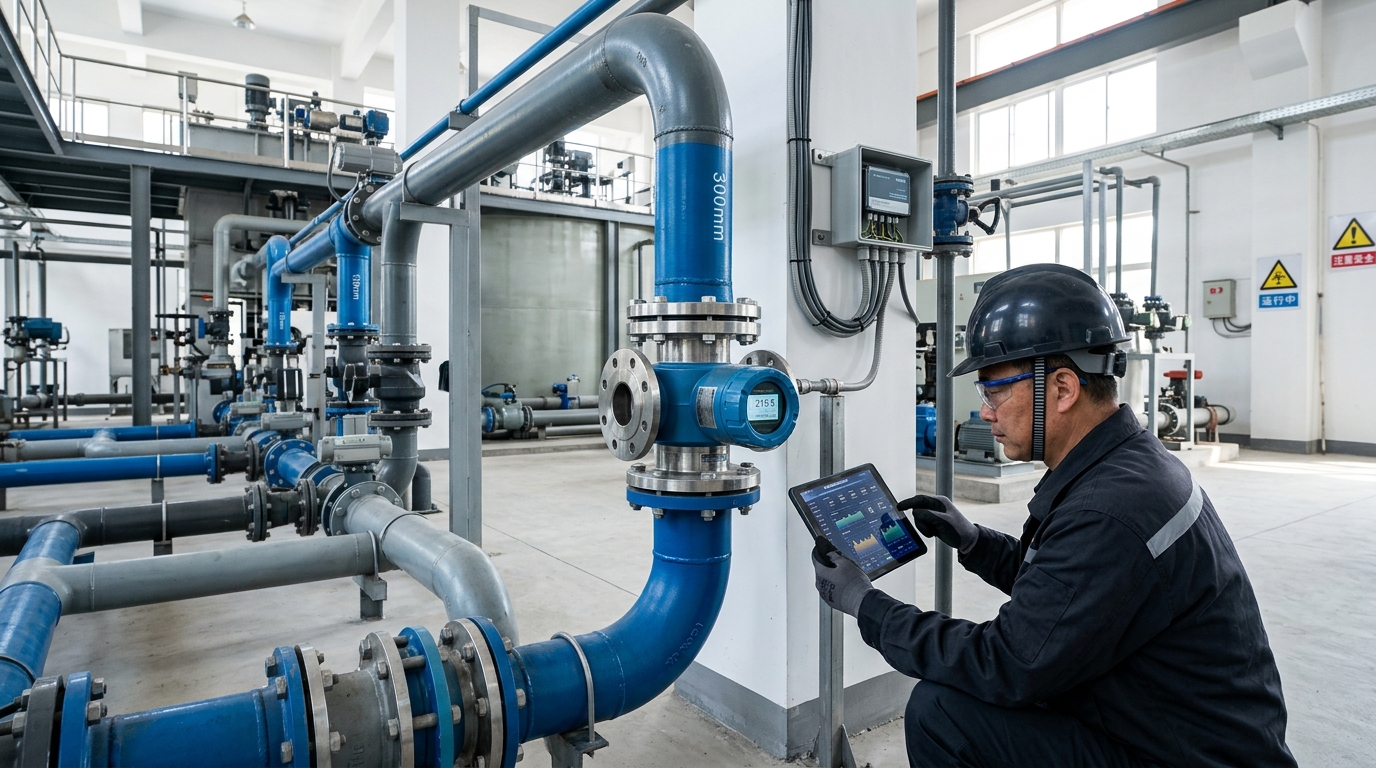
Industry Insight: This article analyzes the market structure, price ranges, procurement recommendations, and maintenance costs of electromagnetic flowmeters. It explores the practical value of small and medium-sized anti-corrosion electromagnetic flowmeters (such as LGF-PA66 models) in engineering applications. Note that prices mentioned are estimated based on common industry ranges; specific figures vary depending on configuration, certifications, delivery cycles, and project conditions.
I Market Demand and Product Structure: Increasing Application Frequency of Small and Medium Sizes like DN50
In terms of application structure, the electromagnetic flowmeter market can be roughly divided into small, medium, and large sizes. Small sizes typically refer to DN15 to DN50, medium sizes range from DN65 to DN300, and large sizes are mostly concentrated from DN350 to DN2000 and above. Small-size products are high in volume and relatively low in unit price, but they still have high requirements for accuracy, corrosion resistance, installation space, and response speed. Large-size products have high unit prices and are mainly used in scenarios such as raw water transmission, rainwater pump stations, main wastewater pipes, seawater intake and discharge, and slurry transport.
The Economic Sweet Spot: DN50
DN50 is a common pipe size for small to medium flow measurement. Calculated approximately for circular pipes, a DN50 pipe at a flow velocity of 0.5 m/s corresponds to a flow rate of about 3.5 m³/h, at 2 m/s it is about 14 m³/h, and at 5 m/s it is about 35 m³/h. In actual selection, to balance measurement stability and liner lifespan, the economic flow velocity is often controlled between 0.5 and 3 m/s. Therefore, DN50 is suitable for continuous flow conditions of approximately 3 to 20 m³/h and is commonly used in:
- Chemical dosing systems and acid/alkali metering
- Cooling water branches
- Wastewater treatment dosing
- Food batching and fine chemical reactor feeding
Technical Shifts: Anti-Corrosion & Lightweight
Another shift in market demand is the increased emphasis on anti-corrosion and lightweight structures. Traditional electromagnetic flowmeters mostly use metal housings, carbon steel flanges, or stainless steel flanges. In environments with moisture, salt spray, and acid or alkali mist, the housing and fasteners are prone to corrosion. In recent years, some manufacturers have begun using engineering plastics, composite materials, or one-piece injection-molded structures for non-wetted parts to enhance corrosion resistance and assembly efficiency. This change is particularly evident in small-size products like DN50, because small instruments are installed densely and in large quantities, making maintenance convenience a significant factor in total cost.
II Price Range Analysis: Size, Liner, Electrode, and Structure Determine Cost Differences
The price of an electromagnetic flowmeter is not determined by size alone, but by a combination of size, pressure rating, liner material, electrode material, transmitter functions, protection rating, explosion-proof requirements, communication protocols, and installation structure. Taking common industrial project procurement as a reference, the price of standard small-size electromagnetic flowmeters is generally lower than that of anti-corrosion models; rubber-lined products are typically cheaper than PTFE-lined ones; and 316L electrodes are usually less expensive than special electrodes like Hastelloy, titanium, or tantalum.
Standard Models (Approx. RMB)
- DN15 - DN25: 3,000 – 6,500
- DN32 - DN50: 5,500 – 12,000
- DN65 - DN100: 9,000 – 26,000
- DN125 - DN200: 16,000 – 45,000
Anti-Corrosion / High-Spec (Approx. RMB)
- DN50 (PTFE/Hastelloy): 12,000 – 18,000+
- DN250 - DN400: 30,000 – 90,000
- DN500 - DN800: 60,000 – 180,000
- > DN1000: 100,000 – 300,000+
Liner Material Impact: Elastic liners (natural rubber, neoprene) are cost-effective for water and wastewater. Fluoroplastic liners (PTFE, PFA) offer superior chemical resistance but increase price by 20% to 60% due to stricter processing requirements.
Electrode Material Impact: Upgrading from 316L to Titanium, Hastelloy, or Tantalum can add hundreds to thousands of RMB to the cost. For example, a DN50 product for municipal wastewater (rubber liner, 316L) might cost 6,000–9,000 RMB, while the same size for chemical acid/alkali metering (PTFE liner, Hastelloy) could reach 12,000–18,000 RMB.
Warning: To reduce initial procurement costs, some projects opt for standard liners or electrodes. However, if the medium contains chloride ions, sulfides, strong acids, or abrasive particles, this can lead to electrode pitting, liner blistering, and seal failure. For continuous production facilities, the cost of a single unplanned shutdown often far exceeds the material upgrade costs of the instrument itself.
III Anti-Corrosion Design: Engineering Significance of LGF-PA66 and One-Piece Injection-Molded Structures
The anti-corrosion performance of an electromagnetic flowmeter depends not only on the liner and electrodes but also on the housing, wiring compartment, flange connections, fasteners, sealing gaskets, and external coatings. In field environments, acid and alkali mist, salt spray, moisture, wash-down water, and chemical drips can all corrode the external structure of the instrument. If the housing rusts or the wiring compartment takes on water, it can cause signal drift, communication interruptions, terminal corrosion, and even transmitter failure.
Why LGF-PA66?
LGF-PA66 refers to long glass fiber-reinforced polyamide 66 material. Compared to ordinary plastics, the long glass fiber-reinforced structure enhances tensile strength, flexural modulus, creep resistance, and dimensional stability. Compared to some metal housings, it exhibits better corrosion resistance in environments with salt spray, moisture, and certain chemical mists.
Note: LGF-PA66 is primarily used for non-wetted parts such as instrument housings, junction boxes, and protective covers. It cannot replace the liners and electrodes that directly contact the medium.
The Advantage of One-Piece Injection Molding
Traditional metal housings are often assembled from multiple parts via welding, bolted connections, and gasket assembly, resulting in many seams and fasteners. A one-piece injection-molded structure integrates the housing, wiring compartment, and installation interfaces in a single molding process.
- Reduced Leakage Points: Fewer seams lower the risk of water and dust ingress, crucial for IP65/IP67/IP68 ratings.
- Lightweight: Facilitates handling and installation for small-size instruments like DN50.
- Cleanability: Smooth surfaces in food/pharma workshops reduce liquid accumulation and rust spots.
IV Procurement Recommendations: Confirm Medium and Conditions First
Confirm Conductivity
If conductivity is below 5 µS/cm, standard electromagnetic flowmeters may fail. Evaluate special excitation methods or alternative technologies for pure water/organic solvents.
Confirm Corrosiveness
Check pH, chloride ions, and abrasiveness. Standard wastewater uses rubber/316L; acid/alkali requires PTFE/Hastelloy; slurries need wear-resistant liners.
Confirm Temperature & Pressure
Rubber liners suit low temps; PTFE suits -20°C to 120°C. Evaluate negative pressure and thermal shock risks for vacuum or steam wash-down scenarios.
Confirm Pipe Size & Flow
For DN50, ideal flow is 3–20 m³/h. Too low (<2 m³/h) causes weak signals; too high (>25 m³/h) increases wear. Provide min/normal/max flow rates.
Confirm Installation & Output
Ensure sufficient straight runs (5D upstream, 3D downstream). Confirm interfaces (4-20mA, HART, RS485) for DCS/PLC integration.
V Installation and Commissioning: Hidden Costs Affecting Measurement Stability
The measurement performance of an electromagnetic flowmeter depends heavily on installation quality. Common pitfalls include insufficient straight pipe runs, bubble accumulation, and improper grounding.
Case Study: Grounding Issues
A circulating water system in a chemical park experienced significant fluctuations (nearly 8%) in a DN50 electromagnetic flowmeter. Inspection revealed poor grounding connections and interference from a nearby variable frequency drive. After reinstalling the grounding ring, standardizing single-point grounding for the shielding layer, and adjusting cable routing, the fluctuation was reduced to within 0.5%.
Key Installation Tips:
- Full Pipe: Essential for stable measurement. Avoid partial filling or siphoning.
- Orientation: For horizontal pipes, avoid placing electrodes at the top (bubbles) or bottom (sediment).
- Grounding: Critical for anti-corrosion meters where the liner isolates the medium. Use grounding rings if necessary.
VI Maintenance Cost Analysis: From Procurement Price to a Ten-Year Lifecycle
When evaluating ROI, look beyond the purchase price. Industry experience shows that in conventional water treatment, annual maintenance costs are about 3% to 8% of the procurement price. In corrosive or abrasive environments, this can exceed 10%.
Spare Parts & Faults: Common issues include false empty pipe alarms, electrode scaling, and wiring compartment water ingress. Traditional multi-seam metal housings are prone to water ingress in humid environments. Products utilizing LGF-PA66 one-piece injection-molded structures show significant advantages in preventing these failures.
Strategy: Establish a ledger recording size, liner, electrode, location, and fault type. Standardizing selections across batch projects reduces inventory pressure and simplifies future maintenance.
VII Typical Application Scenarios: The Value of DN50 Anti-Corrosion Models
Chemical Dosing
A fine chemical project metering weakly acidic solution (60°C, 0.6 MPa) adopted PTFE liners, Hastelloy electrodes, and LGF-PA66 housings. After 18 months, there was no rust, the wiring compartment remained dry, and maintenance frequency dropped from quarterly to semi-annual.
Municipal Wastewater Dosing
Used for PAC, PAM, and sodium hypochlorite dosing. Cramped, humid dosing rooms benefit from one-piece injection-molded housings and higher protection ratings to prevent wash-down water entry. Electrode material must be verified for chlorine compatibility.
Food & Beverage Batching
Requires hygienic connections and cleaning compatibility. A food factory used DN50 meters with stainless steel electrodes and food-grade seals, achieving consistent cumulative water data aligned with energy accounting systems.
Coastal Industrial Projects
Salt spray corrosion is the main challenge. Retrofits replacing standard coated metal housings with LGF-PA66 one-piece molded housings and stainless steel fasteners significantly improved appearance and reduced corrosion-related failures.
Concluding Outlook: Reshaping Procurement Logic
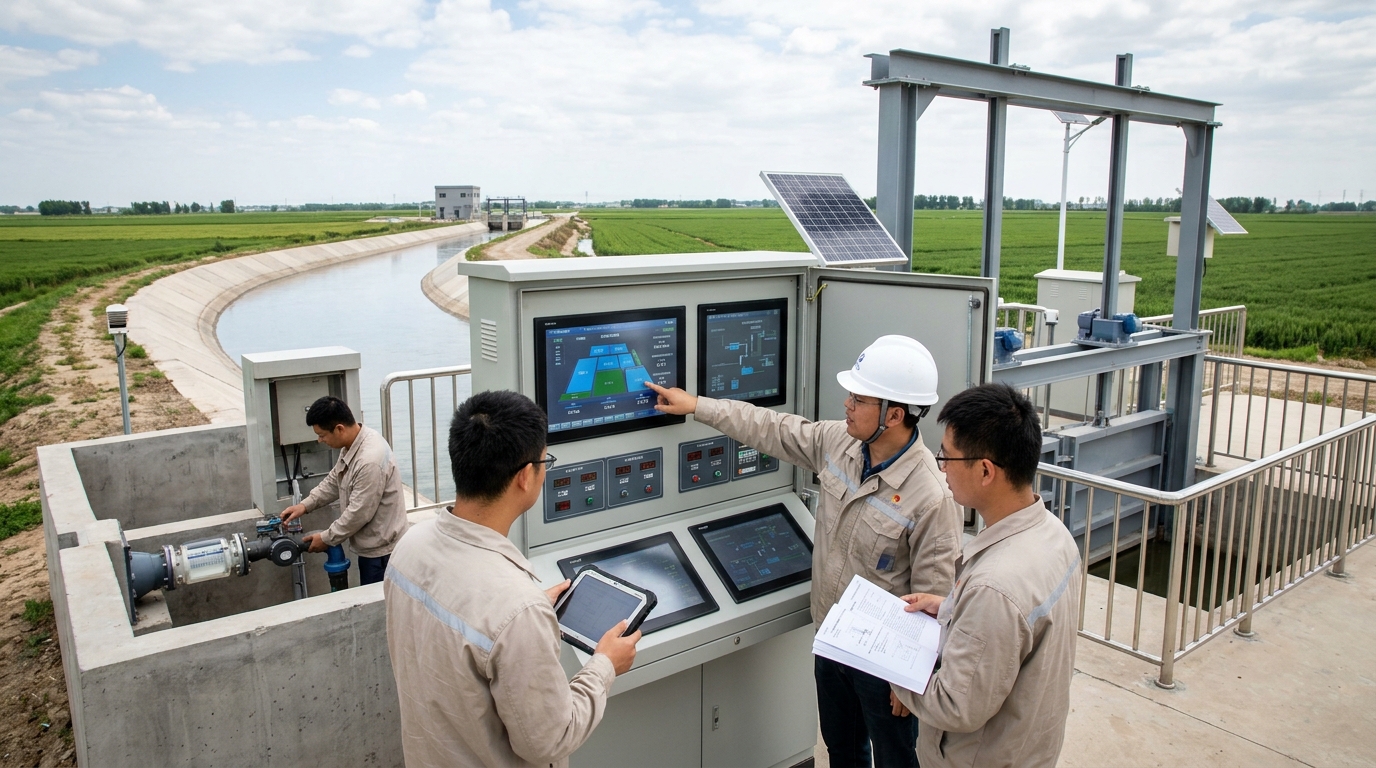
The electromagnetic flowmeter market is shifting towards smart water management and digital transformation. Buyers will increasingly demand higher accuracy, continuity, and traceability. Electromagnetic flowmeters are evolving from standalone instruments into data nodes within energy management systems.
Key trends include the rise of digital diagnostics (empty pipe detection, electrode contamination warnings) enabling predictive maintenance, and advancements in material technology balancing metals, composites, and engineering plastics like LGF-PA66.
Winning bids with the lowest price does not necessarily result in the lowest total cost. For scenarios involving continuous operation, strong corrosion, or high metering criticality, attention should be paid to maintenance costs, downtime risks, and spare part interchangeability over a ten-year lifecycle. Only by evaluating price, performance, anti-corrosion capabilities, and maintenance costs within the same framework can electromagnetic flowmeters truly become reliable infrastructure in industrial process management.