Electromagnetic Flowmeter Selection and Maintenance: How Much Does the LGF-PA66 Cost?
Market Overview: Small- and Medium-Bore Electromagnetic Flowmeters Enter Stable Growth and Structural Upgrade Phase
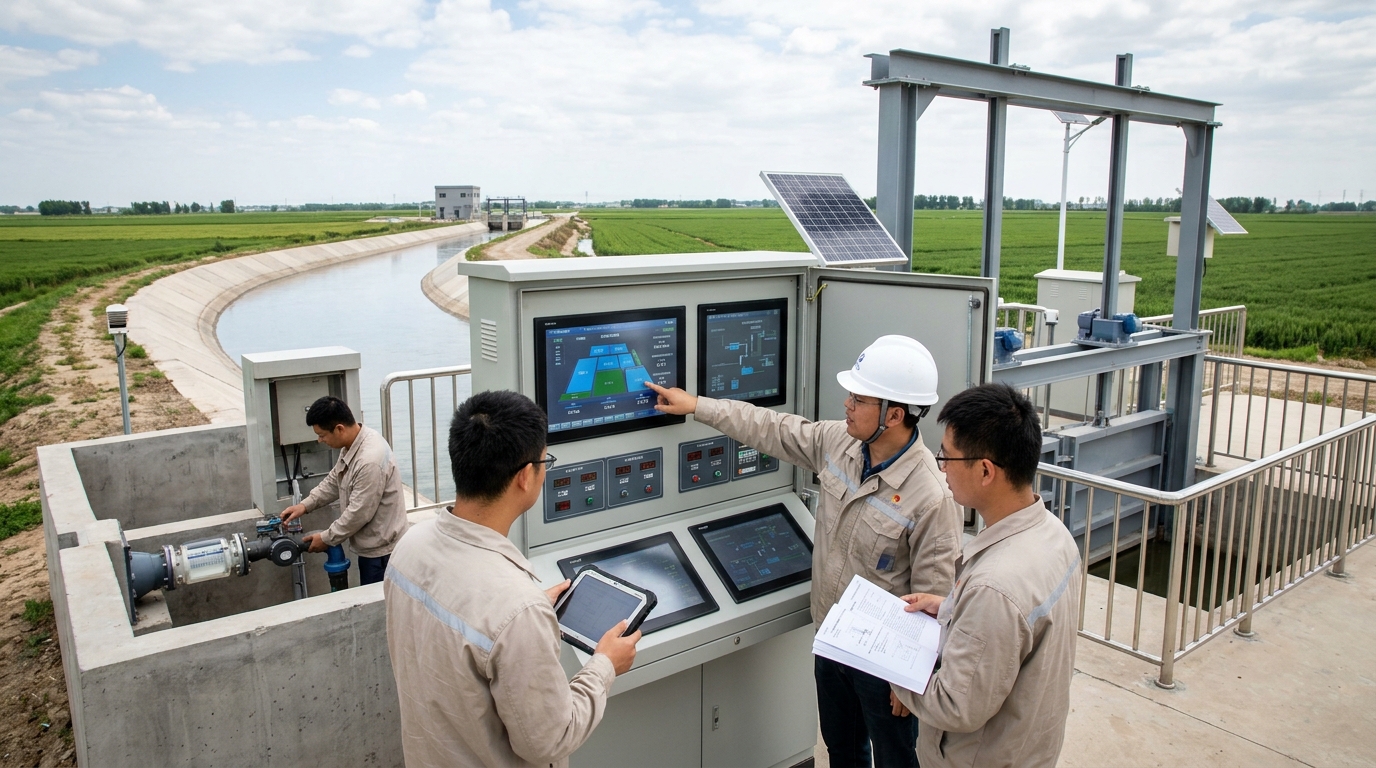
As an important instrument for industrial flow measurement, electromagnetic flowmeters have long been applied in municipal water supply and drainage, chemicals, metallurgy, environmental protection, food and pharmaceuticals, power plant circulating water, and other fields. This is due to features such as no moving parts, low pressure loss, and strong adaptability to media containing solid particles and corrosive substances. From recent market observations, demand for small- and medium-bore products such as DN50 remains steady. On the one hand, this comes from aging pipe network renovation, chemical dosing metering, branch flow monitoring, and increasing process control points; on the other hand, it comes from smart water management, factory digitalization, and environmental regulation raising requirements for data acquisition stability.
Compared with large-bore products above DN200, a single DN50 electromagnetic flowmeter has lower unit value, but usage volume is large, installation points are numerous, and maintenance frequency is high. Therefore, purchasers are paying increasing attention to price ranges, material compatibility, corrosion resistance service life, and total lifecycle cost.
The market is moving from simply “selling instruments” to “selling reliability and data capabilities.” General-purpose products are highly competitive and pricing is relatively transparent; however, high-accuracy, explosion-proof, sanitary, low-conductivity, and strongly corrosive media scenarios still command higher premiums.
In terms of materials, combinations of LGF-PA66 (long-glass-fiber-reinforced nylon 66), stainless steel, PTFE, PFA, Hastelloy, tantalum, and titanium are becoming increasingly segmented. Applications of injection-molded integrated structures in terminal boxes, housings, supports, and sealing structures are increasing, providing new design approaches for conditions such as humidity, mild corrosion, and frequent cleaning. However, it must be clear that corrosion protection of wetted parts still depends primarily on liner and electrode materials, while structural component materials mainly provide protection, insulation, mechanical support, and sealing functions.
Product Structure and Material Trends: Relationship Among LGF-PA66, Injection-Molded Integration, and Corrosion Protection Design
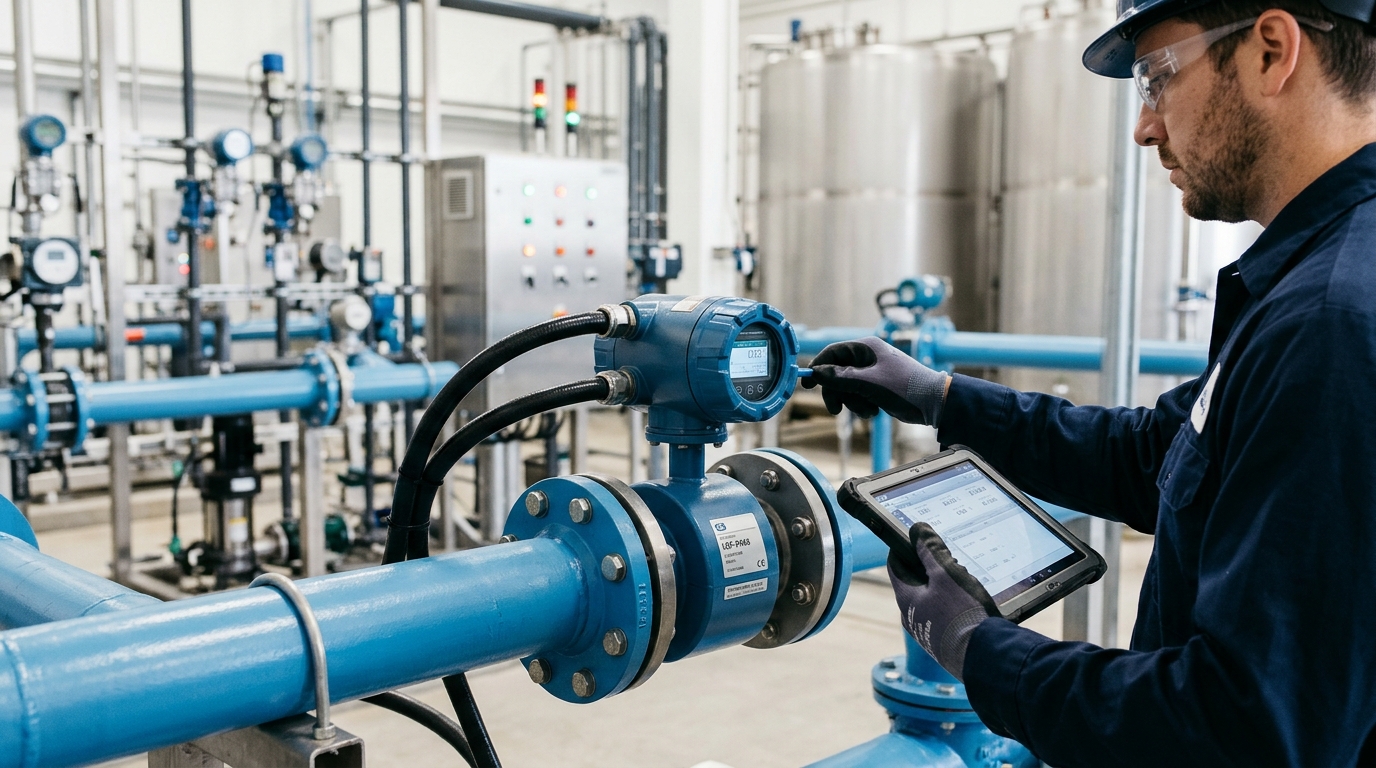
Electromagnetic flowmeters typically consist of two parts: a sensor and a converter. The sensor includes the measuring tube, excitation coils, electrodes, liner, housing, and terminal box; the converter is responsible for excitation, signal amplification, zero-point correction, flow calculation, and communication output. The DN50 nominal bore has an internal diameter of 50 mm, corresponding to a flow cross-sectional area of approximately $1.963 \times 10^{-3} m^2$. At a flow velocity of 1 m/s, the volumetric flow rate is approximately 7.06 m³/h, making it commonly used for chemical dosing, bypass lines, cooling water, wastewater branch pipes, process metering, and small recirculation systems.
Metal Housing Advantages & Risks
Conventional metal housings offer high strength, good shielding, and pressure/temperature resistance. However, in humid, salt-spray, acidic or alkaline atmospheres, or frequent washdown environments, housing fasteners, terminal box gaps, and damaged coating areas can easily become corrosion initiation points.
LGF-PA66 Engineering Plastic Role
LGF-PA66 is commonly used for non-wetted structural components like terminal box covers and brackets. Its advantages include lower weight than metal, good dimensional stability, impact resistance, electrical insulation, and complex structure realization through injection molding.
Injection-molded integrated design has become an important direction in product engineering. By reducing assembly gaps, decreasing the number of bolts, and improving sealing surface consistency, the housing protection rating and moisture resistance can be improved. For small- and medium-bore products such as DN50, integrated structures help reduce installation complexity and lower the risks of terminal box water ingress, condensation, and external corrosion.
However, wetted parts still require liner selection according to the medium: rubber or polyurethane can be used for ordinary water, PTFE and PFA are commonly used for acidic/alkaline and high-temperature conditions, and ceramic or thickened liners may be considered for severely abrasive media. Corrosion protection is not a single-material issue; it is the combined result of liner, electrodes, grounding, sealing, housing protection, and installation environment.
Product Price Ranges: Significant Differences from General-Purpose to Specialized DN50 Electromagnetic Flowmeters
The price of DN50 electromagnetic flowmeters is strongly influenced by accuracy, liner, electrodes, structure type, explosion-proof rating, communication interfaces, certifications, and supply-chain brand. Based on common quotation ranges in the open market:
- Domestic General-Purpose Integral: With rubber/polyurethane liners, stainless steel electrodes, ±0.5% accuracy, and 4–20 mA output, prices typically range from CNY 1,200 to CNY 2,800.
- Premium Material Configurations: Using PTFE liners, 316L/Hastelloy electrodes, and IP67/IP68 protection, prices rise to CNY 2,500 to CNY 5,000.
- Split-Type Structures: Generally 20% to 50% more expensive than integral types, ranging from CNY 2,000 to CNY 4,500; high-end configurations may exceed CNY 6,000.
- High-Accuracy (±0.2%): Selected for trade metering or strict process control, priced around CNY 3,000 to CNY 7,000.
- Sanitary Type: With clamp connections and Ra ≤ 0.8 μm surface roughness for food/pharma, priced at CNY 5,000 to CNY 15,000.
- Explosion-Proof Type: For hazardous areas with intrinsically safe/flameproof certs, generally CNY 6,000 to CNY 15,000.
- Imported/Joint-Venture High-End: Standard products approx. CNY 6,000 to CNY 18,000; special materials/diagnostics can reach CNY 15,000 to CNY 40,000.
Purchasers should be wary of low-cost products that compress costs by reducing electrode material, decreasing liner thickness, simplifying protective structures, or lowering test standards. Such products have low initial investment but may have higher failure rates and maintenance costs.
In bulk project procurement, orders of 10 or more units can usually obtain commercial discounts of 8% to 15%, but certifications, materials, accuracy, and explosion-proof configurations will not be significantly downgraded due to bulk volume.
Typical Applications and Case Studies: Differences in Price, Configuration, and Maintenance
Municipal Wastewater & Chemical Dosing
A wastewater treatment plant installed 12 DN50 integral flowmeters on PAC/PAM dosing lines (±0.5% accuracy, rubber/PU liners). Unit price: CNY 2,000–3,000. Annual maintenance: CNY 6,000–12,000 (total for 12 units) focusing on electrode cleaning and zero-drift checks. Intelligent diagnostics can reduce labor costs by 20–40%.
Chemical Acid & Alkali Metering
At a hydrochloric acid metering point (40°C), an initial rubber/stainless steel setup failed within 6 months. Modification to PTFE/PFA liners and Tantalum/Hastelloy electrodes increased unit price to CNY 6,000–12,000. Result: 24 months continuous operation, annual maintenance dropped to CNY 1,200, and reduced shutdown fluctuations.
Food & Pharmaceutical Industry
Beverage formulation line using sanitary DN50 meters (Clamp, 316L housing, PTFE liner, Ra ≤ 0.8 μm). Unit price: CNY 8,000–15,000. Maintenance focus shifts from corrosion to microbial control and seal integrity. Annual cost: CNY 1,500–3,000. Structural consistency is critical to avoid batch rejection.
Selection Advice: Comprehensive Assessment Based on Medium, Bore Size, Accuracy, and Smart Functions
- Confirm Medium Suitability: Electromagnetic flowmeters require conductivity ≥ 5 μS/cm. Pure water, oils, gases, or steam are usually not applicable. For media with fibers or solids, prioritize liner wear resistance; for scaling-prone media, choose cleanable structures and intelligent diagnostics.
- Bore-Size & Flow Range: DN50 suits low flow/branch metering. Recommended velocity: 1–3 m/s (approx. 7–21 m³/h). Avoid < 0.5 m/s (deposition risk) and > 5 m/s (wear risk). Ensure straight-pipe sections: 5D upstream / 3D downstream (extend to 10D/5D if disturbed).
- Accuracy & Output: Choose ±0.5%/±1.0% for monitoring; ±0.2% for trade/settlement. Basic 4–20 mA output is standard, but RS485, HART, or wireless modules enhance integration. Look for empty-pipe detection, coil fault detection, and grounding abnormality indications.
- Corrosion Protection Strategy: Distinguish wetted parts (liner/electrodes) from external structures. Use PTFE/PFA/Rubber/Ceramic for liners based on medium. Use 316L/Hastelloy/Ti/Ta for electrodes. External structures can use LGF-PA66 for humid/mild-corrosion environments, but note that plastic cannot replace metal for strong solvents/high temps without specific evaluation.
Maintenance Cost Analysis: Initial Purchase Price Is Only Part of Total Lifecycle Cost
Maintenance costs are usually estimated at 3% to 8% of purchase price, but actual differences are significant:
| Application Scenario | Annual Maintenance Cost (Per Unit) | Key Focus Areas |
|---|---|---|
| Clean Water / Cooling Water | CNY 300 – 800 | Visual inspection, moisture check, zero verification. |
| Dosing / Sludge / Scaling | CNY 600 – 1,500 | Periodic cleaning, scale removal, drift checks. |
| Strongly Corrosive / Sanitary / Exp-proof | CNY 1,000 – 3,000 | Seal integrity, material degradation, compliance validation. |
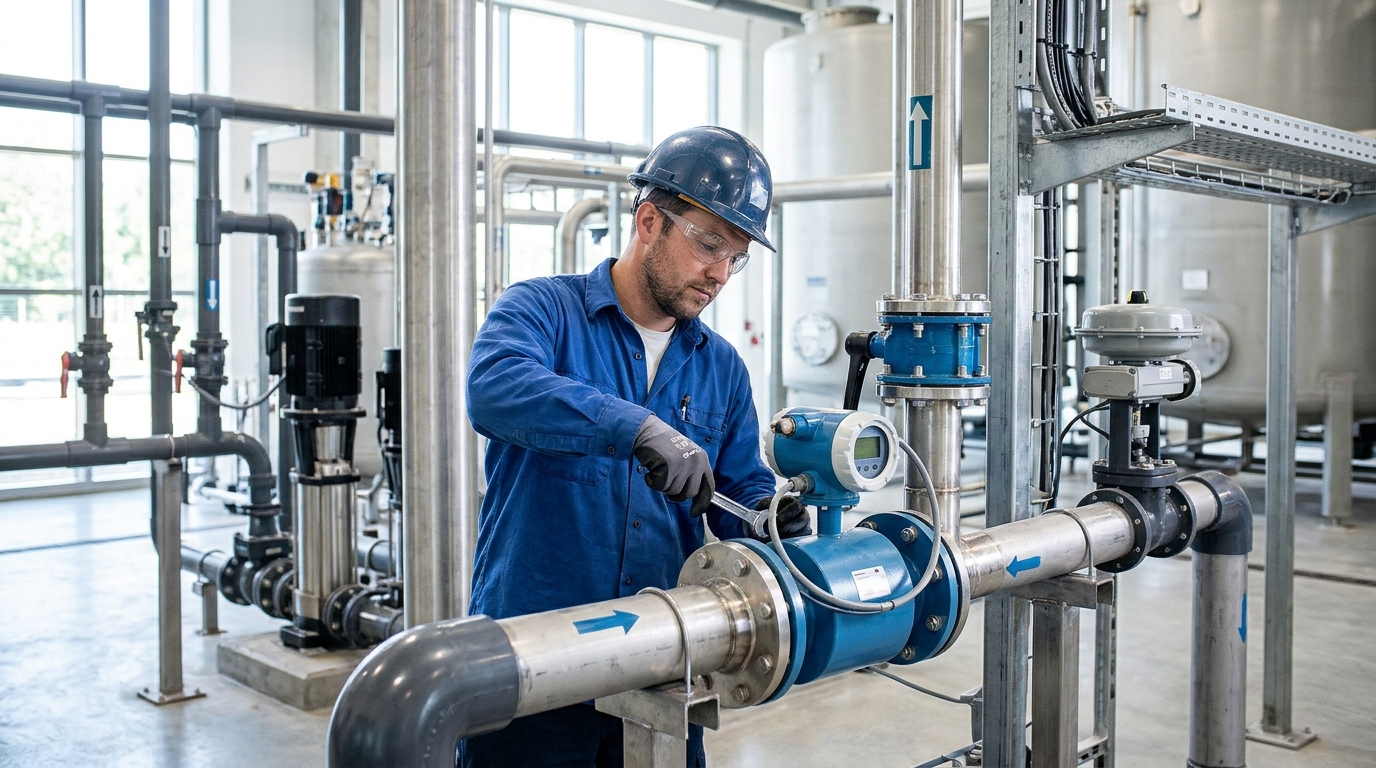
Common faults include zero drift (electrode scaling), leakage (liner damage), insulation degradation (terminal box ingress), and interference (poor grounding). Repair costs per unit can reach CNY 500–5,000, with downtime losses often exceeding repair costs. Strategies should shift to "condition-based maintenance" using intelligent diagnostics.
Spare parts costs vary: Converter module replacement costs CNY 800–3,000. Calibration services range from CNY 300–1,000 (on-site) to CNY 800–2,000 (lab). For regulated industries, traceable calibration certificates are essential despite higher costs.
Market Challenges and Outlook: Beyond Price Competition
The current market shows polarization. Mid- and low-end general-purpose products face intense price competition, leading to compressed configurations. However, as users shift to total lifecycle management, competition is constrained by reliability, service, and data capabilities. High-end markets retain technical barriers in low-conductivity measurement, advanced algorithms, and specialized materials.
Over the next three to five years, the DN50 electromagnetic flowmeter market will grow, shifting logic from "new installations" to "replacement upgrades, digital transformation, and refined metering." Technology paths will integrate materials engineering (like mature LGF-PA66 solutions), structural design, and digital diagnostics (edge computing, adaptive zero points).
Rational selection should start from medium conductivity, flow range, pressure/temperature, corrosion level, hygiene requirements, and data interfaces. Evaluate initial purchase price alongside spare parts, calibration, downtime loss, and service life. Only then can DN50 flowmeters transform from single measurement tools into stable, manageable, and traceable data nodes in industrial processes.