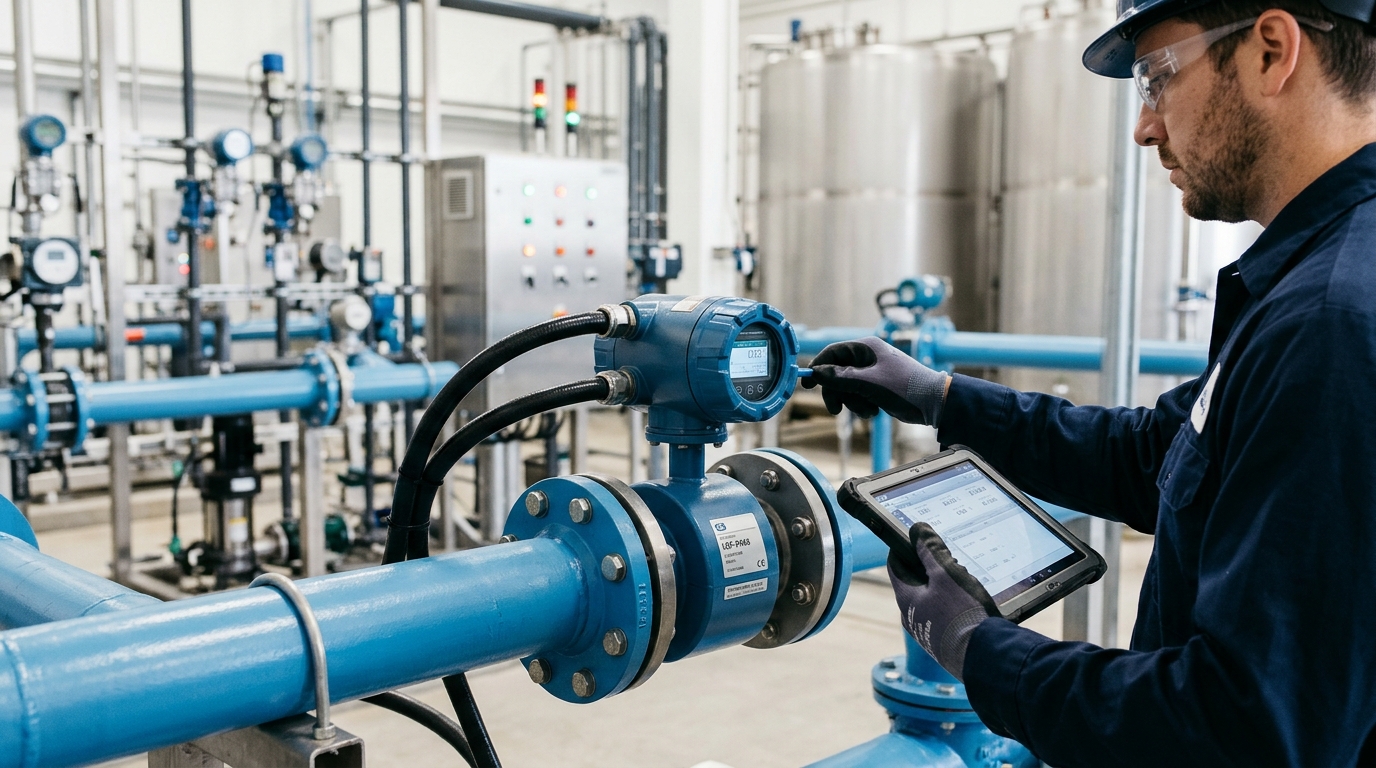
Electromagnetic Flowmeter Selection and Maintenance: How Much Does the LGF-PA66 Cost?
Lead: Electromagnetic Flowmeters Enter a Full Life-Cycle Cost Competition Phase
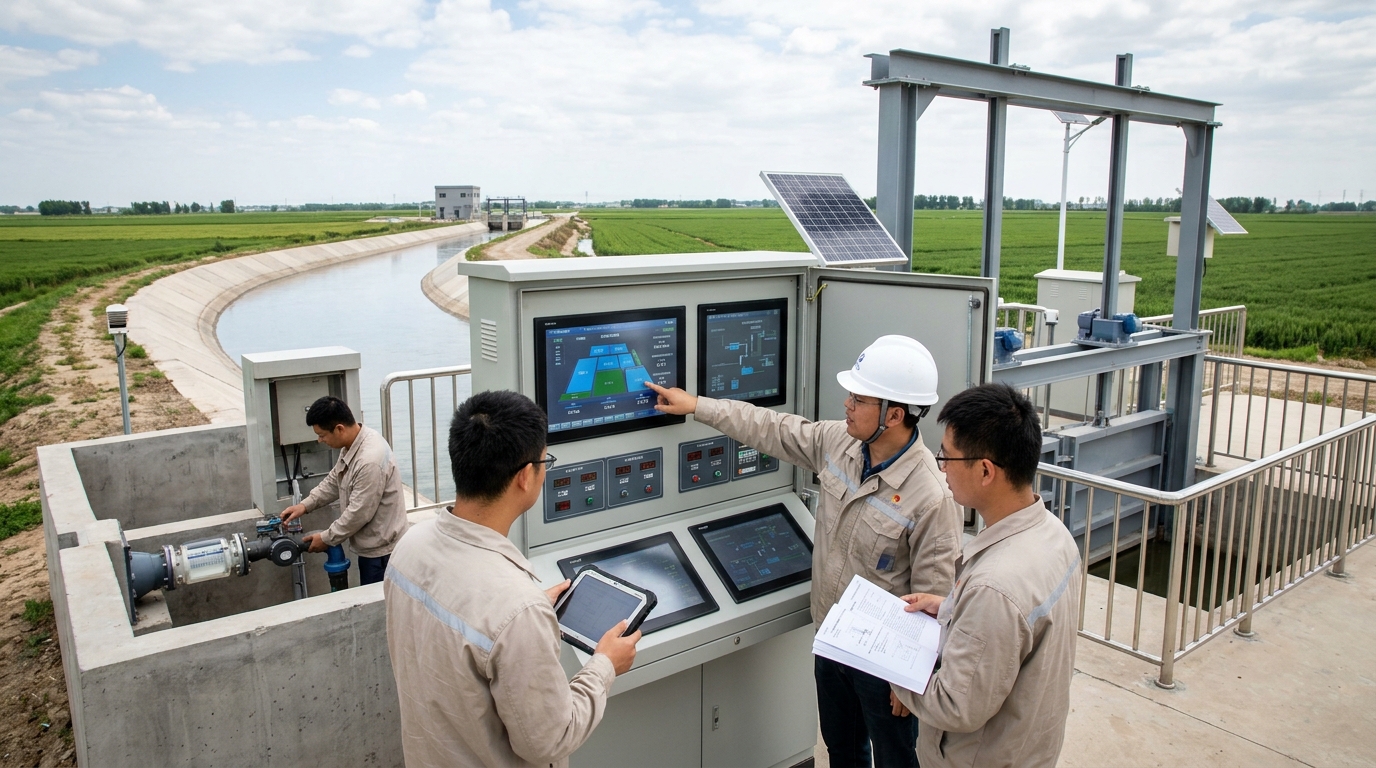
As one of the mainstream instruments for conductive liquid flow measurement, electromagnetic flowmeters have seen market discussions shift in recent years from single purchase price to full life-cycle cost. Municipal water utilities, chemical, metallurgy, papermaking, pharmaceutical, food, and other industries have raised more segmented requirements for measurement stability, corrosion resistance, explosion-proof safety, data networking, and remote diagnostics. Taking DN50 as an example, it serves industrial chemical dosing, circulating water, and branch metering, and appears extensively in smart water utility terminal nodes, park water supply metering points, and wastewater return pipelines.
Keywords such as LGF-PA66, injection-molded integrated construction, and corrosion-resistant liners indicate that the industry is evolving from “works after installation” to “long-term maintenance-free, traceable, and predictable.” Price is no longer the only metric; fluid properties, installation environment, verification interval, spare parts availability, and downtime losses jointly determine the real project cost. For purchasers, selecting an electromagnetic flowmeter has moved from being one model number on an equipment list to a key node in process systems, data systems, and O&M systems.
Market Landscape: Demand Concentrated in Municipal, Chemical, Metallurgy, and Water Treatment
In terms of application structure, electromagnetic flowmeters still hold an important position among liquid flow measurement instruments. Public industry data and project experience show that in the domestic process instrumentation market, electromagnetic flowmeters account for approximately 25% to 35% of liquid flow measurement units, with a higher usage share in municipal water supply and drainage, wastewater treatment, industrial circulating water, chemical dosing, pulp, and mine slurry transport. Their advantages include no throttling element in the measuring tube, low pressure loss, strong adaptability to conductive liquids, and the ability to expand the applicable fluid range through liner and electrode materials.
Regarding nominal-diameter distribution, DN15 to DN100 products account for approximately 60% to 70% of units, while DN200 and larger products contribute about 30% to 45% of value.
This is because large-diameter instruments have higher unit prices, and installation, transportation, flange accessories, and on-site calibration costs also increase significantly. Regionally, industrial projects and municipal pipeline renewal demand are concentrated in East China, South China, and North China, while Southwest and Northwest China show continued growth in water supply networks, wastewater treatment capacity expansion, and park water-efficiency management. Drivers include pipeline leakage control, upgraded wastewater treatment standards, industrial water-efficiency management, dual-carbon constraints, smart water utility platforms, and safety production requirements.
In terms of competitive landscape, domestic manufacturers have achieved scale supply in low- to mid-range diameters, conventional water media, and general industrial process control, with clear advantages in price, delivery, and local service. The high-end market competes in segmented areas such as high precision, multivariable measurement, explosion protection, hygienic design, strongly corrosive media, and complex low-flow measurement. Technical barriers mainly lie in excitation algorithms, signal processing, liner processes, electrode materials, protection ratings, and measurement stability. Procurement models are also changing: users no longer purchase only a single instrument, but include instruments, system interfaces, verification services, spare parts management, and data quality in overall tender requirements.
Price Range: Using DN50 as a Reference
Electromagnetic flowmeter prices are strongly influenced by nominal diameter, accuracy class, liner material, electrode material, enclosure protection, communication method, explosion-proof certification, and on-site service. Using DN50 as a typical reference, basic products usually use rubber liner or standard PTFE liner, 316L electrodes, IP65 enclosure, and 4–20 mA output, with prices around CNY 1,500 to 3,500. These products are suitable for general water, wastewater, low-corrosiveness media, and ordinary industrial loops, meeting basic metering needs.
Intelligent DN50 electromagnetic flowmeters typically offer accuracy class 1.0 or 0.5, LCD display, RS485 or Modbus communication, excitation optimization, empty-pipe detection, reverse-flow alarm, and out-of-range alarm, with prices around CNY 2,800 to 6,800. Their value lies in easier on-site commissioning, data integration into control systems, and diagnostic information under abnormal conditions. For points that need to be integrated into smart water utility platforms or industrial control systems, intelligent models often have better long-term suitability than basic models.
Corrosion-resistant, explosion-proof, or special-media DN50 products are priced around CNY 6,500 to 16,000. Such configurations may include PFA or special PTFE liners, Hastelloy, titanium, tantalum, or platinum-iridium alloy electrodes, IP67 or IP68 protection, explosion-proof certification, isolated outputs, and stricter factory testing. Hygienic products for food, pharmaceutical, or fine chemical applications usually use tri-clamp connections, low surface roughness, and CIP or SIP cleaning capability, with prices around CNY 8,000 to 22,000. For large-diameter products, DN200 to DN600 are priced around CNY 12,000 to 80,000, while DN1000 and above can reach CNY 100,000 to 300,000, depending on liner, electrodes, flanges, explosion protection, communication, and on-site service.
Note: Low price does not automatically mean low quality, and high price does not necessarily mean full suitability for the operating conditions. Purchasers should judge price in the context of the specific application. If the medium is ordinary tap water, over-specifying specialty alloys may add unnecessary cost; if the medium is strong acid or solid-containing, a low-price basic model may cause frequent repairs or safety incidents. A reasonable budget should cover the instrument body, installation accessories, grounding rings, cable shielding, surge protection, verification/calibration, and spare parts inventory.
Materials and Structure: How LGF-PA66 and Injection-Molded Integration Affect Reliability
LGF-PA66 usually refers to long glass-fiber reinforced polyamide 66, commonly used for non-pressure or low-pressure components such as instrument housings, terminal boxes, and brackets. Typical performance includes fiber content of about 25% to 35%, tensile strength reaching approximately 180 to 230 MPa, flexural modulus of about 8 to 12 GPa, higher heat deflection temperature than standard PA66, good dimensional stability, and resistance to oils, weak acids and bases, and common industrial media. For electromagnetic flowmeters in outdoor or humid environments, housing materials affect long-term sealing, impact resistance, and corrosion protection.
The core value of the injection-molded integrated process is reducing assembly gaps in housing, terminal seats, sealing grooves, and other parts, thereby lowering the risk of crevice corrosion, water ingress, condensation, and dust ingress. Compared with multi-part assembled structures, injection-molded integrated housings offer certain advantages in protection rating, appearance consistency, and long-term reliability, especially for IP67 or IP68 requirements in underground pits, utility tunnels, humid workshops, and outdoor metering nodes. Of course, plastic housings are not universal: under long-term UV exposure, high temperature and humidity, strong oxidizing media, mechanical impact, or high explosion-protection requirements, material aging, flame retardancy, antistatic performance, and metal housing alternatives still need evaluation.
The corrosion resistance of electromagnetic flowmeters depends mainly on the liner and electrodes, not solely on the housing. Rubber liners are suitable for general water, wastewater, and weakly corrosive media, with typical temperature resistance around 80 to 100°C; PTFE liners have strong chemical stability, commonly rated for approximately 120 to 180°C; PFA liners generally outperform standard PTFE in temperature and chemical resistance and are suitable for more demanding chemical conditions. In terms of electrode materials, 316L is suitable for ordinary water and weak corrosive media, titanium is suitable for seawater and chloride environments, Hastelloy is suitable for strongly corrosive media, tantalum is suitable for hydrochloric acid, halogens, and specific conditions, and platinum-iridium alloys are used in some high-requirement measurement scenarios.
DN50 is a relatively small nominal diameter; liner thickness, electrode flushness, internal roughness of the measuring tube, and grounding ring design directly affect zero stability and low-flow repeatability. Poor liner-to-pipe-wall adhesion may lead to bulging, delamination, or localized wear under negative pressure, temperature fluctuations, or solid-containing media erosion. Rough electrode surfaces or deposits can easily cause signal fluctuations. The combination of an injection-molded integrated housing and a high-reliability sealing structure can reduce the impact of external corrosion on the electronics chamber to some extent, but final measurement performance still depends on the sensor, excitation, signal processing, and installation quality.
Selection Recommendations: Confirm Operating Conditions First
- Confirm Medium Suitability: Conventional electromagnetic flowmeters require the medium to have sufficient conductivity, typically greater than 5 µS/cm. Low-conductivity oils, pure water, deionized water, some organic solvents, and gases are not suitable. For media containing solid particles, fibers, slurry, or corrosive substances, particle size, concentration, flow velocity, and abrasiveness must also be assessed to avoid rapid liner and electrode wear.
- Confirm Nominal Diameter and Flow Velocity: The cross-sectional area of DN50 is approximately 1,963.5 mm². At 1 m/s, the flow rate is about 7.1 m³/h; at 2 m/s, about 14.1 m³/h; at 5 m/s, about 35.3 m³/h; at 10 m/s, about 70.7 m³/h. For general water media, recommended operating velocity is usually 1 to 5 m/s. Long-term operation below 0.5 m/s may be affected by deposition and zero drift, while long-term operation above 8 m/s may increase wear. For intermittent dosing or low-flow metering, selection cannot be based simply on pipe diameter; ensure minimum and maximum flow rates fall within the instrument's linear range.
- Confirm Temperature, Pressure, and Hygiene Requirements: Rubber liners are suitable for cost-sensitive and mild conditions; PTFE and PFA are suitable for chemical, acid-alkali, solvent, and high-temperature conditions; hygienic designs require attention to surface roughness, tri-clamp connections, dead-leg cleaning, and sterilization capability.
- Confirm Accuracy and Repeatability: Class 1.0 can be chosen for general process metering, while class 0.5 is suitable for trade settlement, performance metering, or critical dosing; repeatability should generally be no greater than 0.2%.
- Confirm Communication and System Interfaces: Include 4–20 mA, pulse, RS485, Modbus, HART, wireless, or Ethernet, and determine whether data needs to enter SCADA, DCS, smart water utility platforms, or energy management systems.
- Confirm Installation Conditions: Electromagnetic flowmeters are sensitive to full-pipe conditions, grounding, and flow-field stability. Upstream straight pipe length is usually recommended to be no less than 5 pipe diameters and downstream no less than 3 pipe diameters. Lined pipes require grounding rings or grounding electrodes. Outdoor, underground, or humid environments require attention to IP65, IP67, or IP68 ratings, and hazardous areas must be matched with appropriate explosion-proof certifications.
- Confirm Service Boundaries: Include verification interval, spare parts supply, on-site training, fault response, and calibration support. Purchasers should convert 5-year cost into purchase price, verification, cleaning, spare parts, fault downtime, and management costs.
Maintenance Cost Analysis: Verification, Cleaning, Spare Parts, and Downtime Losses
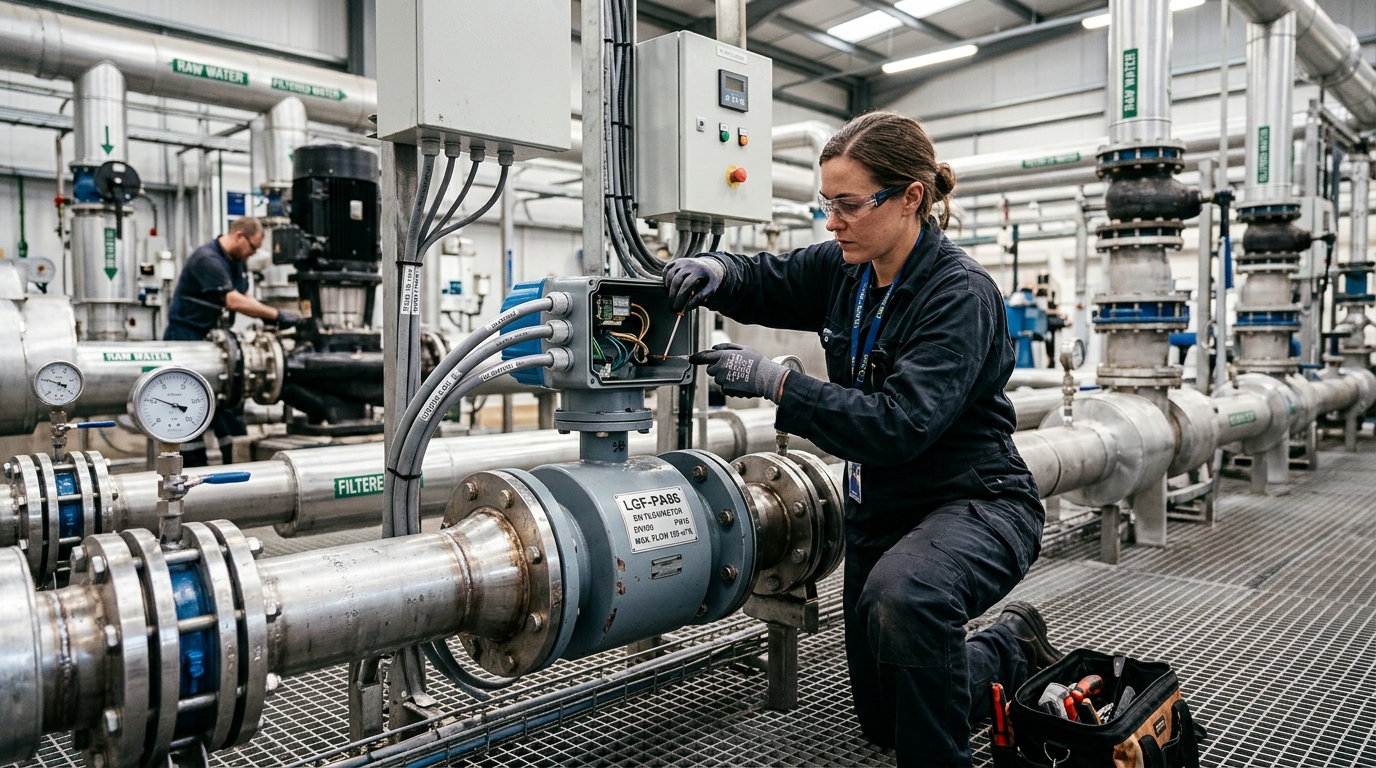
Maintenance costs for electromagnetic flowmeters are often underestimated. The annual maintenance cost of a conventional DN50 electromagnetic flowmeter is approximately 3% to 8% of the purchase price, and can reach 10% to 15% under severe conditions. Major maintenance items include periodic verification or calibration, electrode and liner cleaning, grounding system inspection, cable shielding maintenance, transmitter module replacement, surge protection inspection, and on-site zero calibration. For wastewater, pulp, sludge, mine slurry, and chemical dosing applications, surface deposits and scaling directly affect signal quality, and cleaning frequency is usually higher than in clean water applications.
Verification & Calibration Costs
- Laboratory verification (DN50): CNY 1,500 - 4,500 per event
- On-site calibration: CNY 3,000 - 8,000 per event
- Interval: Typically 1 - 2 years
Repair & Replacement Costs
- Cleaning electrodes/liners: CNY 500 - 3,000 per event
- Liner replacement (DN50): CNY 2,000 - 8,000
- Electrode repair/replacement: CNY 1,000 - 4,000
- Transmitter module failure: CNY 1,000 - 5,000
Downtime losses are often the least transparent but most impactful part of maintenance cost. Stopping flow at a DN50 municipal water supply node may affect local metering, dispatch analysis, and leakage assessment; stopping a chemical dosing system may affect reaction yield, environmental compliance indicators, and production safety; stopping wastewater return or sludge metering may cause process fluctuations. Downtime loss per hour can range from several thousand to tens of thousands of CNY, especially in continuous production units. For critical process points, selecting instruments with slightly higher reliability, increasing protection ratings, optimizing grounding, using surge protection, and maintaining spare parts inventory are usually more economical than emergency repair after failure.
Ways to reduce maintenance costs include: selecting injection-molded integrated corrosion-resistant housings, improving sealing ratings, using liners and electrodes suited to the medium, installing grounding rings, standardizing cable shielding, installing surge protection, and enabling online diagnostics such as excitation current anomaly, empty-pipe alarm, electrode fouling, out-of-range alarm, reverse-flow alarm, and zero drift warning. For continuous production units, critical DN50 points should be included in a preventive maintenance plan rather than emergency repair after failure. For distributed pipeline network nodes, remote diagnostics and low-power communication can reduce on-site inspection frequency, shifting maintenance from reactive response to condition monitoring.
Application Cases: Cost Changes in DN50 Dosing and Circulating Water Scenarios
Case 1: Municipal Wastewater Treatment Plant Dosing System
Early equipment used standard stainless steel housings and basic transmitters. In humid, chlorine-containing environments, pitting occurred, causing frequent interruptions. Annual maintenance cost was ~CNY 2,500-4,000/unit with 6-8 events/year. After retrofitting with LGF-PA66 injection-molded integrated housings, PTFE liners, 316L electrodes, and IP68 terminal boxes, maintenance frequency dropped to ~2 events/year, annual cost decreased by ~45%, and false alarms were significantly reduced.
Case 2: Chemical Circulating Water Project (DN80)
Original rubber liner showed bulging after 10 months due to chloride ions. Replaced with PFA liner and Hastelloy electrodes, increasing purchase cost by ~2.5 times. However, this achieved 18 months of continuous operation without liner failure and reduced maintenance cost by ~60%. Long-term benefits from higher material grades covered the initial purchase difference in scenarios with downtime sensitivity.
Case 3: Waterworks Leakage Analysis Integration
Selected a class 0.5 intelligent DN50 electromagnetic flowmeter connected via RS485 to a leakage platform. Night minimum flow analysis identified two suspected leakage points, confirmed by inspection. The single point saved ~12,000 m³ of water per year and reduced pipe burst risk. This shows that data value can exceed equipment price in smart water utility scenarios.
Outlook: Digitalization, Standardization, and Material Processes
Future competition in electromagnetic flowmeters will revolve around three directions: material processes, digitalization capabilities, and scenario-based standards. In materials, engineering plastics such as LGF-PA66 and injection-molded integrated structures will continue to improve protection ratings, appearance consistency, and corrosion resistance, but in high-temperature, strong-UV, strong-oxidizing, mechanical impact, and explosion-proof scenarios, they still need to be combined with stainless steel, aluminum alloy, specialty coatings, and metal sealing structures. Material selection will not be a simple replacement but will form more refined condition-matching solutions.
In digitalization, excitation optimization, self-diagnostics, cloud calibration, predictive maintenance, and measurement trustworthiness assessment will become important trends. Instruments will no longer output only instantaneous flow, but will provide health status, signal quality, zero drift trend, electrode fouling warnings, and out-of-range alarms. For smart water utility, industrial energy management, and environmental monitoring platforms, data trustworthiness is more important than raw readings. Whoever can convert measurement error, maintenance requirements, and downtime risk into quantifiable indicators is more likely to gain an advantage in procurement decisions.
Standardization and scenario-based segmentation will also further divide the industry. Municipal, chemical, food, pharmaceutical, metallurgy, and papermaking sectors have different requirements for accuracy, hygiene, explosion protection, legal metrology, cleaning methods, and maintenance intervals, making it difficult for universal products to satisfy all scenarios simultaneously. Small and medium diameters such as DN50 will gain more node deployments due to smart water utilities, industrial water-efficiency management, park pipeline metering, and process control. Procurement decisions will also shift from “equipment lists” to “full life-cycle cost.” The industry needs more transparent test data, more unified installation specifications, and more complete verification services to avoid hidden costs from low-price winning bids.