In-Depth Comparison of Four Technical Approaches for Electromagnetic Flowmeters
Electromagnetic flowmeters operate based on Faraday's law of electromagnetic induction and are suitable for liquid media with a conductivity typically no less than 5 µS/cm. Due to their lack of moving parts, low pressure loss, and wide turndown ratio, they are widely used in municipal water management, chemical, pharmaceutical, food and beverage, and new energy materials industries. The current industry focus has shifted from a single accuracy metric to a comprehensive comparison of lining materials, electrode materials, sensor structures, excitation algorithms, and O&M costs.
Focus: DN50 Application Scenarios
DN50 is a common pipe size for chemical dosing, batching, circulating water branch lines, and sewage lifting pipelines. Based on a nominal inner diameter of approximately 50 mm, a flow velocity of 1 m/s corresponds to about 7.07 m³/h; operating within the 0.5 to 3 m/s range corresponds to a flow rate of approximately 3.5 to 21.2 m³/h. Within this flow range, corrosion resistance, structural sealing, and installation adaptability often determine long-term stability.
1. Overview of Technical Routes: Full-Pipe, Insertion, and Capacitive Types
Full-Pipe Electromagnetic Flowmeters
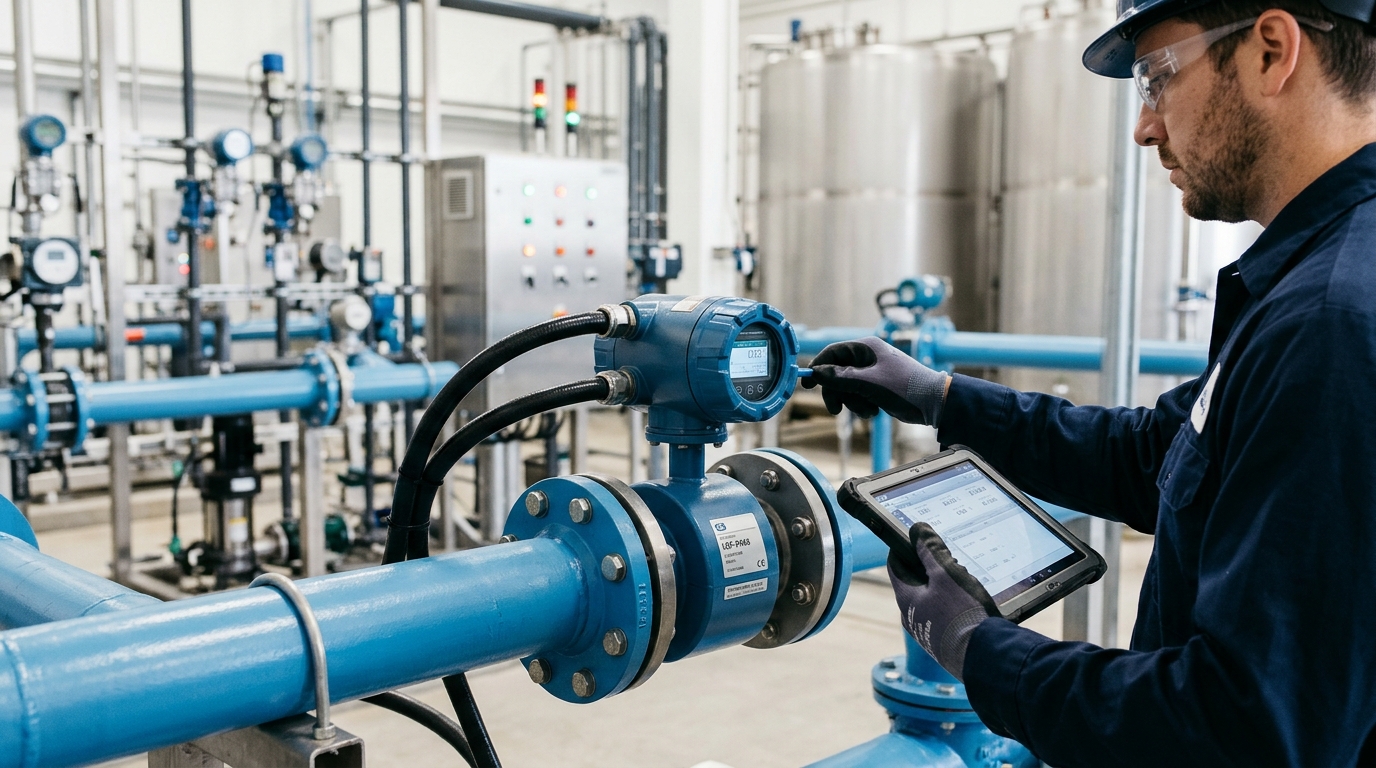
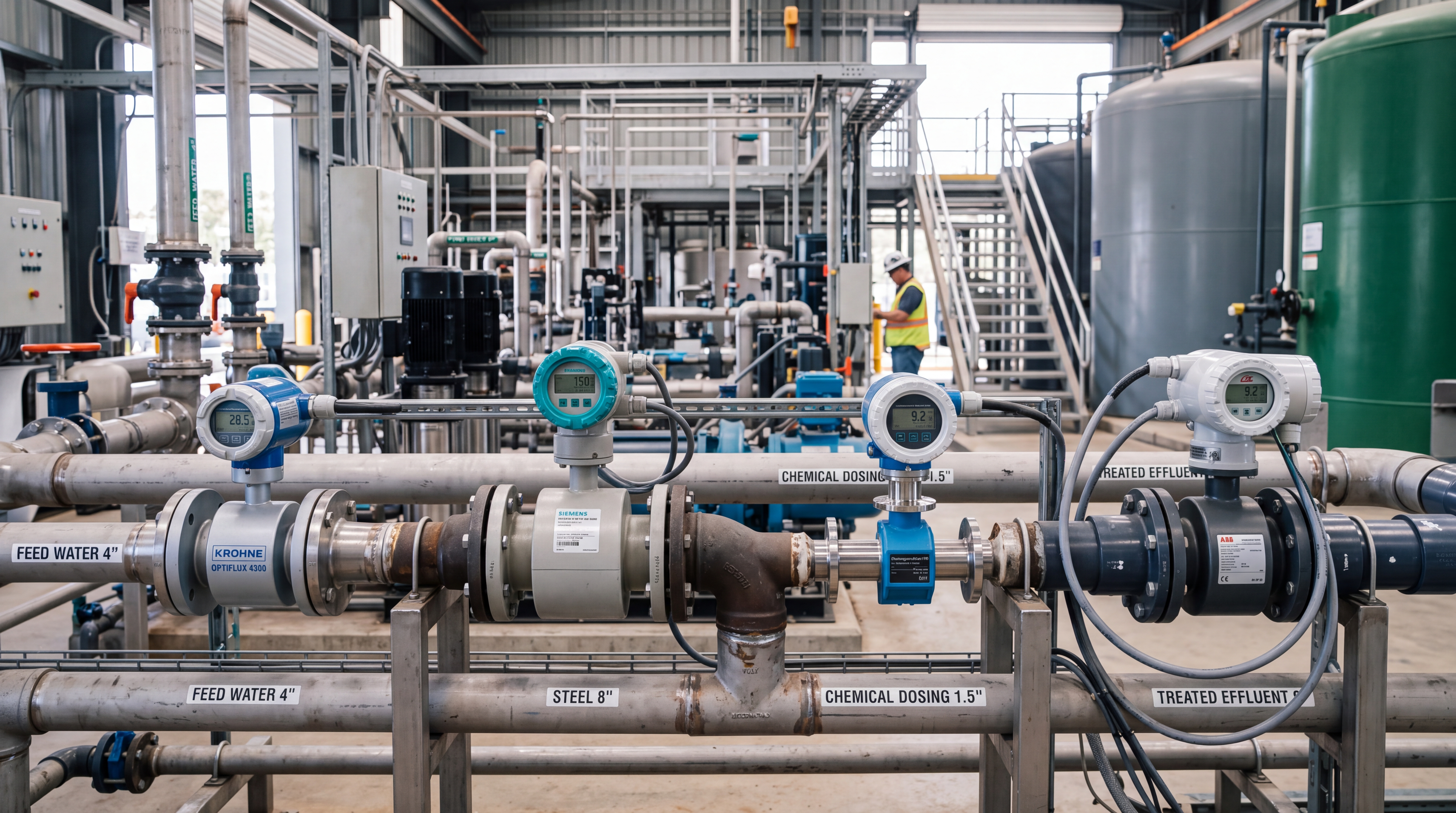
Full-pipe electromagnetic flowmeters represent the mainstream technical route. The inner wall of the measuring tube is covered with a lining, and the electrodes are in contact with the medium, enabling the measurement of the average flow velocity in the pipeline. Typical accuracy can reach 0.5% or 0.2%, with a turndown ratio of up to 100:1. They are suitable for various pipe sizes from DN15 to DN2000, and are particularly ideal for custody transfer, process control, and batch accumulation. However, full-pipe flowmeters require the medium to completely fill the pipe, making them sensitive to empty pipes, air bubbles, and strong vibrations, and they have a basic threshold for conductivity.
Insertion & Capacitive Types
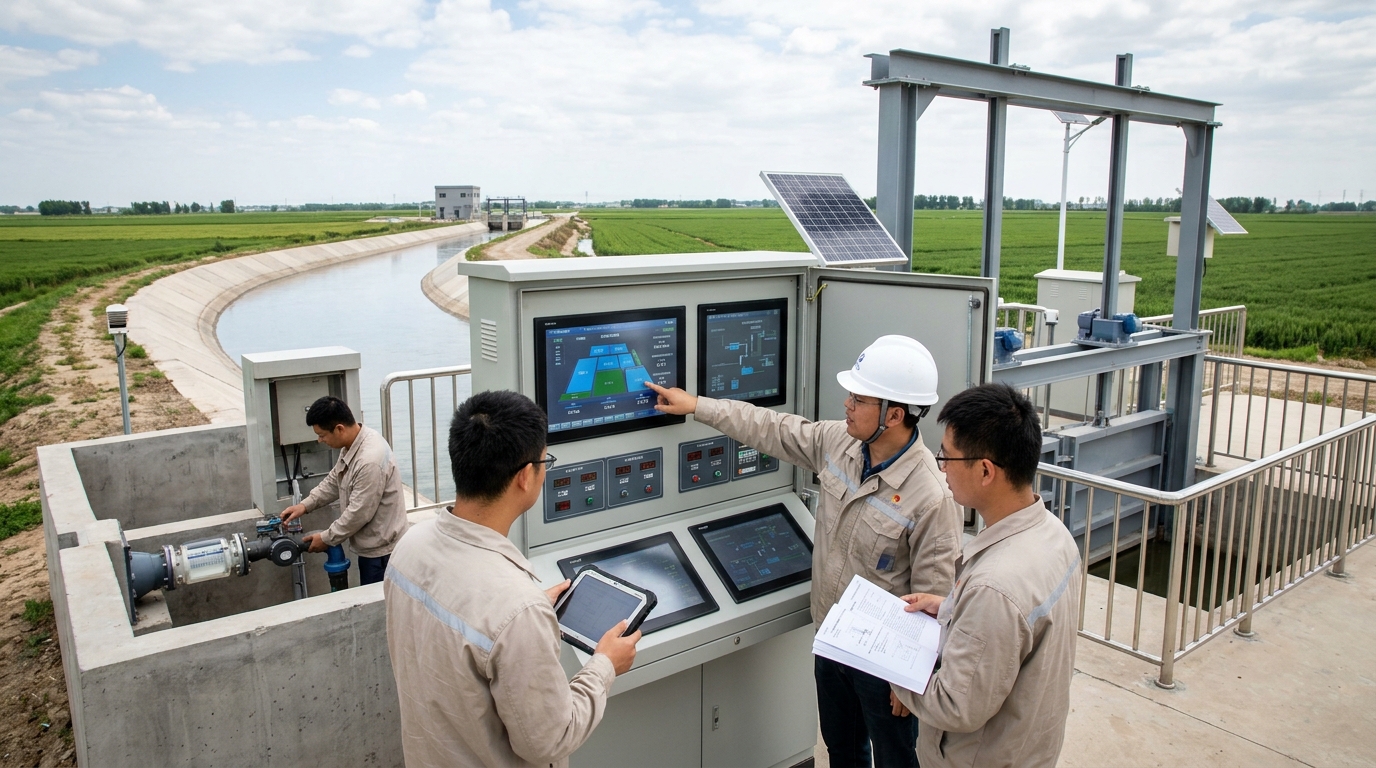
- Insertion Type: Suitable for large-diameter pipelines and retrofit projects. The sensor is inserted into the pipeline, and the procurement and installation costs are generally lower than those of full-pipe flowmeters of the same size. However, they measure local flow velocity and are significantly affected by flow profile distribution. If the upstream straight pipe section is insufficient, or if there are disturbances from elbows, valves, or pump outlets, the error may increase. Therefore, insertion flowmeters are more suitable for trend monitoring and process reference.
- Capacitive Type: Detects signals through non-contact electrodes, making them suitable for highly corrosive, easily crystallized, or high-purity media. Their advantage lies in reducing the risk of electrode corrosion and fouling; however, the signal is relatively weak, placing higher demands on lining thickness, dielectric properties, converters, and algorithms. For complex media, on-site testing or prototype verification should be conducted.
2. Excitation and Signal Processing
The excitation method determines zero-point stability and anti-interference capability.
Low-Frequency Rectangular Wave
Reduces zero-point drift caused by electrode polarization by periodically switching the magnetic field direction. Ideal for clean water, wastewater, and conventional acid-alkali solutions.
Dual-Frequency / Composite
Combines different frequencies to balance low-frequency stability and high-frequency noise suppression. Best suited for complex slurries like pulp, sludge, and fiber-containing fluids where friction generates noise.
For DN50 chemical dosing pipelines, if used for closed-loop control, the response time is typically required to be in the order of seconds; if only used for accumulation statistics, filtering can be enhanced.
3. Comparison of Anti-Corrosion Routes
The anti-corrosion performance of electromagnetic flowmeters primarily depends on the wetted parts. Selection must match the specific medium characteristics.
| Component | Material Options | Typical Application |
|---|---|---|
| Lining | Rubber, PTFE, PFA, Polyurethane, Ceramic | Rubber (Water/Wastewater); PTFE/PFA (Acids/Alkalis); Ceramic (Slurries) |
| Electrode | 316L, Hastelloy C, Titanium, Tantalum | 316L (Mild Corrosion); Hastelloy/Ti (Severe Acid/Alkali/Chloride); Tantalum (Strong Acid) |
Note on External Sealing: For outdoor wells, coastal areas, or food workshop washdown zones, the long-term retention capability of IP65, IP67, or even IP68 ratings is more critical than laboratory specifications.
4. Structural and Process Routes
Traditional Metal Housing
Features high mechanical strength and resistance to high temperatures and pressures. Suitable for heavy industry.
Drawback: Numerous housing joints; susceptible to rust and seal failure if coating is damaged.
One-Piece Injection Molding
Forms the housing, terminal chamber, and part of the installation structure in a single molding process using LGF-PA66 (long glass fiber-reinforced polyamide 66).
Advantage: Reduces assembly gaps, enhances impact resistance, and improves environmental sealing for DN50 skid-mounted systems.
5. Typical Applications for DN50
DN50 electromagnetic flowmeters are commonly used for flocculant dosing, acid-alkali metering, cooling water branch lines, small reactor feeding, and CIP return liquid monitoring.
Installation Best Practices
- Straight Pipe Requirements: Upstream ≥ 5D, Downstream ≥ 3D (where D is pipe diameter).
- Velocity Control: Recommended 0.5–3 m/s. Too low affects signal-to-noise ratio; too high increases erosion.
- Grounding: Grounding rings should be configured for plastic or lined pipes to reduce common-mode interference.
Case Studies
Case 1: Wastewater Plant Flocculant Pipeline
Problem: Outdoor humidity and chemical mist caused terminal dampness and signal drift.
Solution: Retrofit with DN50 flowmeter featuring PTFE lining, 316L electrodes, and one-piece injection-molded housing.
Result: Zero significant zero-point drift over 12 months.
Case 2: Food Batching Project
Requirement: Withstand 85°C hot water CIP cleaning.
Solution: Selected ceramic lining and hygienic clamp connections for thermal shock resistance.
6. Selection Recommendations: Seven Key Considerations
- Confirm Medium Parameters: Name, concentration, pH, conductivity (>5 µS/cm), temperature, pressure, solids content.
- Clarify Application: Custody transfer (accuracy focus) vs. Process control (repeatability/response speed) vs. Trend monitoring.
- Match Pipe Size & Velocity: For DN50, typical flow is 3.5–21.2 m³/h. Adjust size if flow falls outside this range.
- Select Lining & Electrode: Rubber/316L for water; PTFE/Hastelloy for acids; Ceramic/Polyurethane for slurries.
- Evaluate Structure & Protection: One-piece injection molding for harsh environments; Metal housing for high temp/pressure.
- Confirm Output & Communication: 4-20mA, Pulse, Modbus, HART, or Industrial Ethernet. Check diagnostic features.
- Calculate Lifecycle Cost: Avoid low-configuration failures in corrosive conditions and over-configuration in clean water scenarios.
7. Future Outlook
In the future, the development of electromagnetic flowmeters will place greater emphasis on material adaptability and structural reliability. High-performance engineering plastics such as LGF-PA66 and one-piece injection molding processes will continue to expand their applications in small to medium sizes, anti-corrosion, and lightweight scenarios.
Meanwhile, intelligence features such as excitation self-adaptation, electrode condition monitoring, and remote diagnostics will become important indicators for selection. As the process industry's requirements for safety, environmental protection, and energy efficiency increase, the comparison of electromagnetic flowmeter technologies will place greater emphasis on engineering adaptability. Only by achieving a balance among measurement principles, material systems, structural processes, and intelligent diagnostics can flow measurement progress from being merely usable to being trustworthy, controllable, and maintainable.