In-Depth Comparison of Four Technological Approaches for Electromagnetic Flowmeters
DN50, Anti-Corrosion, and Injection-Molded Integrated Designs are Reshaping Technical Discussions on Electromagnetic Flowmeters.
Introduction: The Shift in Industrial Measurement
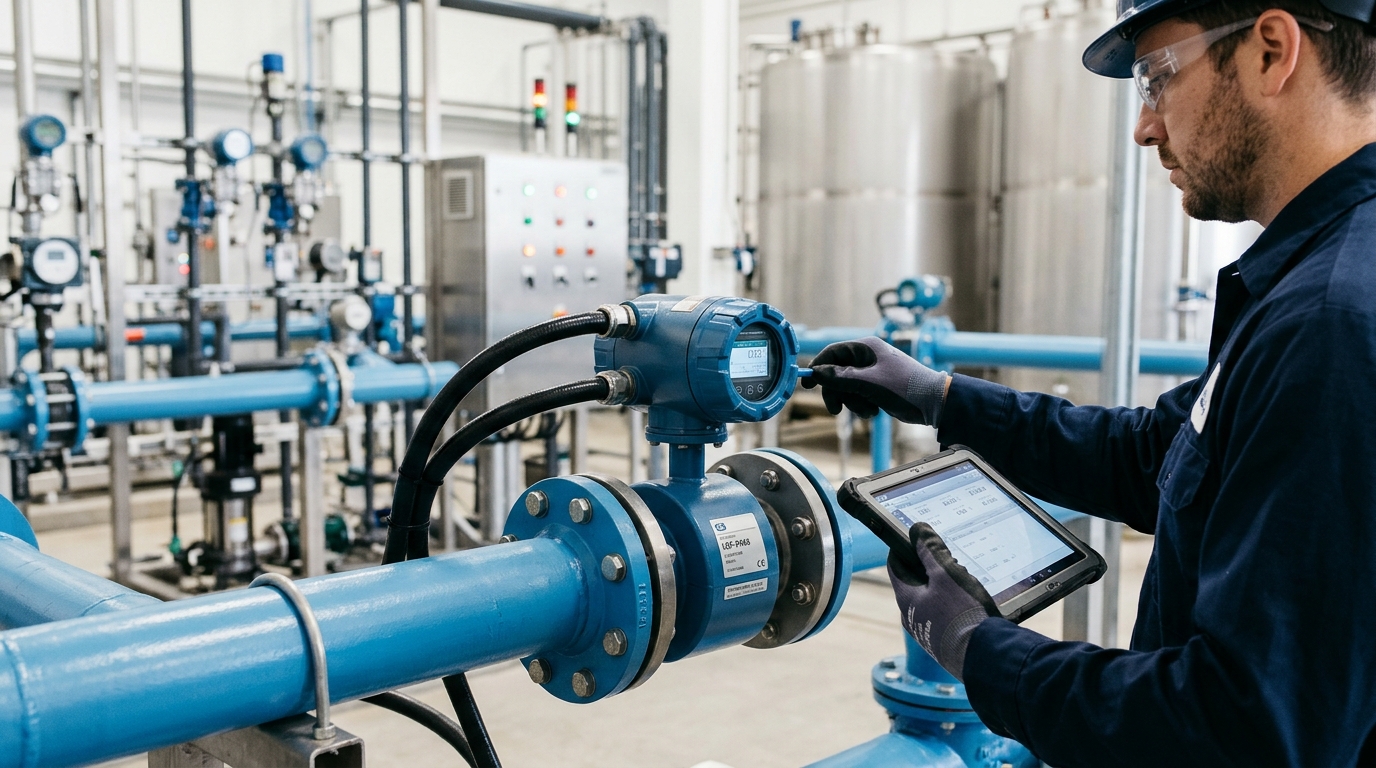
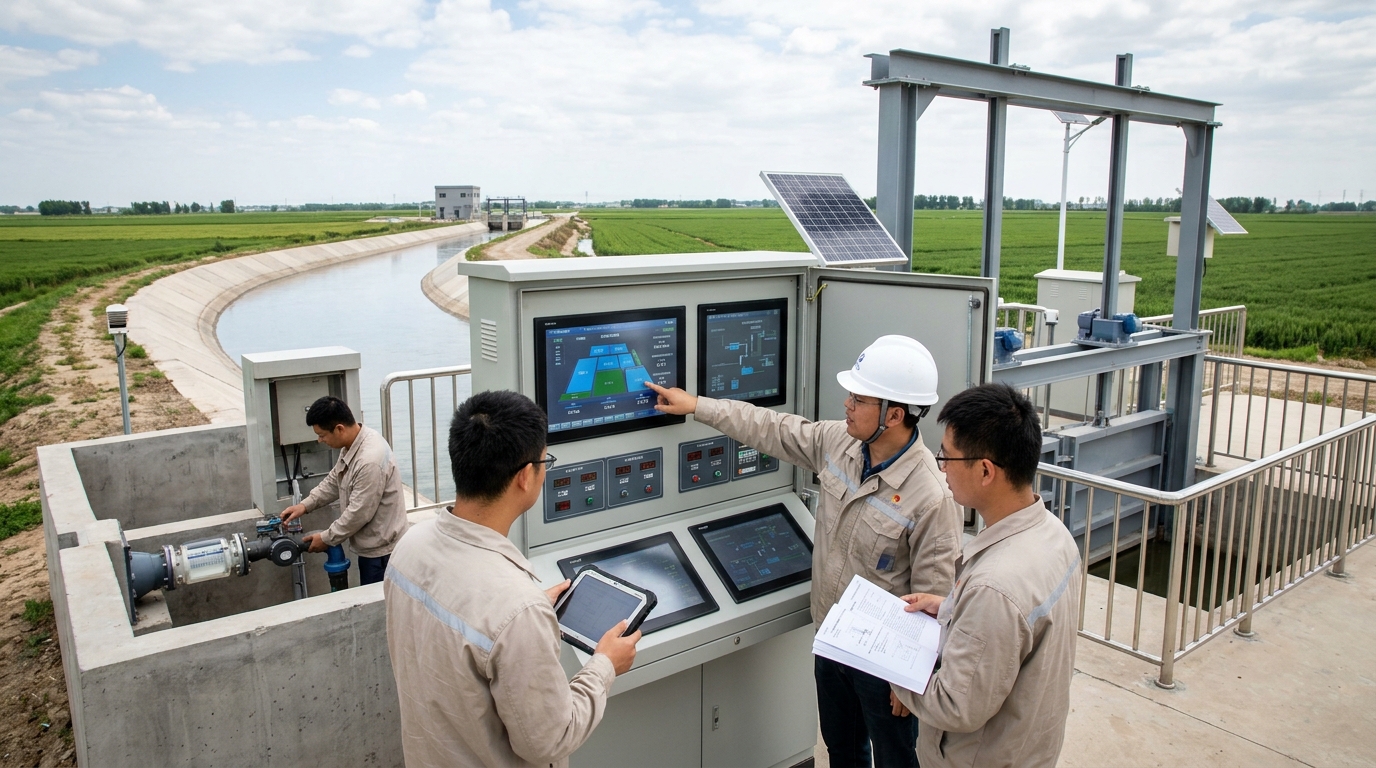
In industrial process measurement, electromagnetic flowmeters perform non-contact measurement of conductive liquids based on Faraday's law of electromagnetic induction. Since there are no moving parts or flow-obstructing components in the measuring tube, resulting in low pressure loss, and they possess a certain adaptability to suspended solids, fibers, and sludge in the medium, electromagnetic flowmeters have been widely used in industries such as water management, chemical engineering, metallurgy, papermaking, food and pharmaceuticals, and new energy materials.
With the increasing demand for small-size measurement in fine chemicals, dosing systems, building energy metering, circulating water management, and food-grade pipelines, small-size electromagnetic flowmeters from DN15 to DN100 have gradually become the market focus. Among them, DN50, often used for branch pipe metering, chemical dosing, bypass monitoring, and small equipment inlets and outlets, has become one of the most frequently selected sizes.
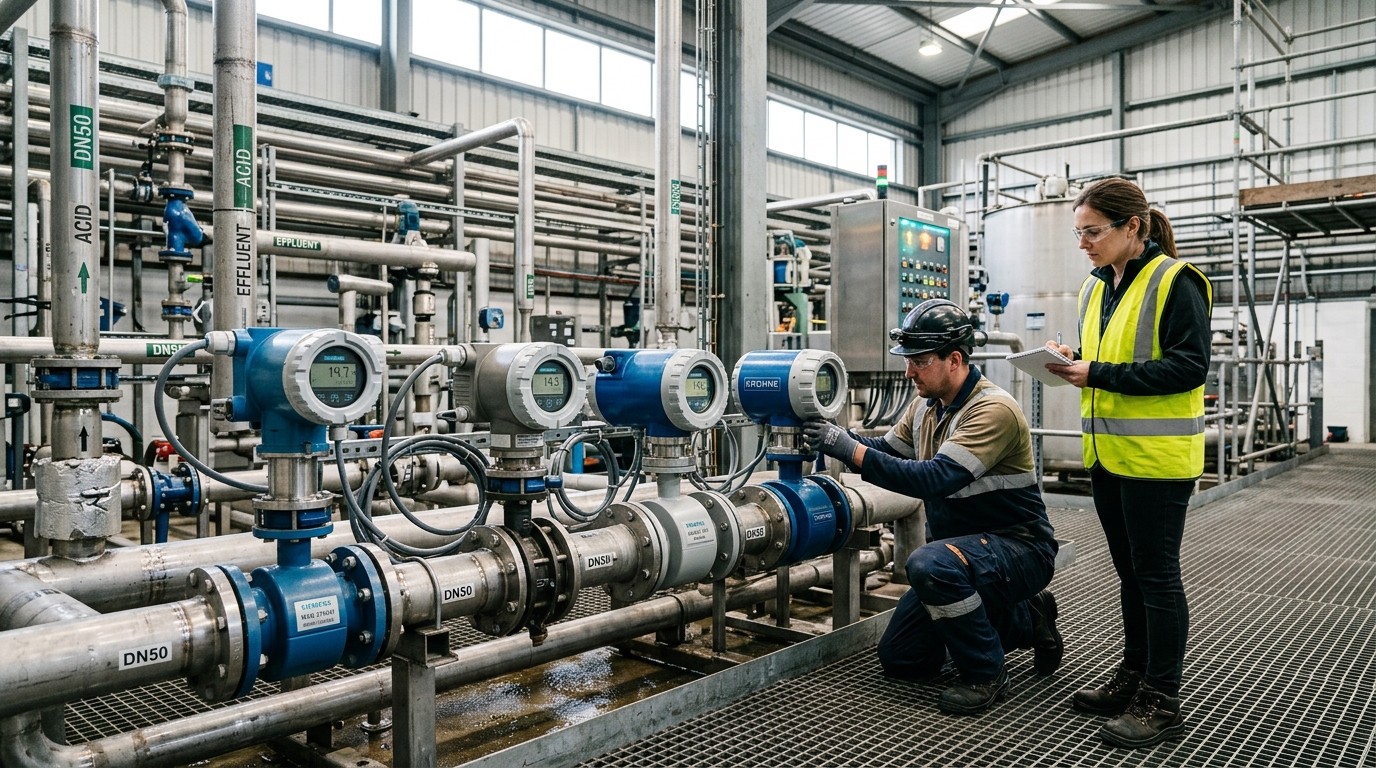
"Users' understanding of 'anti-corrosion' is also evolving. Early anti-corrosion efforts primarily focused on the liner and electrodes in contact with the medium. However, field experience shows that housing corrosion, liquid seepage through flange gaps, water ingress into the wiring chamber, bolt rust, and limited installation space can equally affect measurement stability."
1 Excitation and Signal Processing Routes
The core measurement principle of electromagnetic flowmeters is that conductive liquids cut magnetic flux lines to generate an induced electromotive force. However, in actual engineering, electrode surface polarization, slurry noise, grounding interference, empty pipe conditions, and electrode contamination can all affect signal quality. Therefore, excitation methods and signal processing algorithms constitute a crucial technical route for electromagnetic flowmeters.
Low-Frequency Rectangular Wave
Pros: Good zero stability, moderate power consumption.
Ideal For: Clean water, wastewater, general conductive liquids.
Dual-Frequency Excitation
Pros: Suppresses slurry noise via spectrum analysis.
Ideal For: Mineral slurries, paper pulp, mud, wastewater with solids.
Another route is programmable pulse excitation and smart signal processing, where the converter can automatically adjust the excitation cycle, sampling window, and filtering intensity based on the medium's condition. Some mid-to-high-end products can achieve a turndown ratio of 100:1, with a common-mode rejection ratio exceeding 100dB. Coupled with 24-bit or high-precision analog-to-digital conversion, this improves low-flow measurement stability.
2 Liner and Electrode Material Routes
The anti-corrosion performance of electromagnetic flowmeters primarily depends on the liner and electrode materials. Common liners include neoprene, nitrile rubber, polyurethane, PTFE, PFA, and ceramics.
- Rubber Liners (Neoprene/Nitrile/Polyurethane): Good elasticity and impact resistance. Suitable for tap water, oil-based media, and slurries. Limited resistance to strong acids/alkalis.
- Fluoroplastics (PTFE/PFA): High chemical stability. Suitable for most acid, alkali, and salt solutions. Risks include negative pressure blistering and mechanical damage.
- Ceramic Liners: Wear-resistant and high-temperature resistant. Highly brittle; sensitive to mechanical impact.
Electrode Selection Strategy
For a DN50 chemical branch pipe with circulating water (500mg/L chloride ions, 60°C, 1.0MPa), choosing a PTFE liner paired with Hastelloy C-276 electrodes is generally safer than simply using 316L electrodes. Avoid looking solely at the "corrosion-resistant" label; judge comprehensively based on medium composition and temperature.
3 Structural Molding Routes
Traditional electromagnetic flowmeters mostly adopt metal housings or an assembly structure of metal flanges plus inner liners. While metal structures offer high pressure-bearing capacity, they are heavy and prone to rust in corrosive environments.
The Rise of LGF-PA66 Injection-Molded Integration
LGF-PA66 (Long Glass Fiber Reinforced Polyamide 66) represents a new approach for small-size anti-corrosion electromagnetic flowmeters. With glass fiber content of 30% to 50%, it offers tensile strength up to 220MPa and excellent dimensional stability.
Limitations: Plastic housings have inferior creep resistance compared to metal. They are generally suitable for PN16/PN25 levels and temperatures around 80°C–100°C. For temperatures consistently exceeding 120°C or severe vibration, metal housings remain the priority.
4 Installation Configurations
Classified by structural configuration, electromagnetic flowmeters can be divided into integral, remote, insertion, and full-pipe types.
| Type | Best Application | Key Consideration |
|---|---|---|
| Integral | DN50, pipe shafts, skid-mounted | Simple wiring, IP65/67 protection |
| Remote | High temp/vibration, control cabinets | Cable length & shielding critical |
| Insertion | Large pipes (>DN300) | Lower accuracy; not for DN50 |
For DN50 pipelines, full-pipe electromagnetic flowmeters remain the mainstream choice, with typical accuracy reaching Class 0.5 or Class 1.0. Insertion types are generally not recommended for small sizes due to sensitivity to flow velocity distribution changes.
5 Typical Scenarios and Parameter Cases
Taking the DN50 size as an example, if the pipe inner diameter is calculated as 50mm, the flow cross-sectional area is approximately 0.00196 square meters. When the flow velocity is 1.0m/s, the volumetric flow rate is about 7.07 cubic meters per hour.
Case 1: Municipal Wastewater Dosing
Medium: Polyaluminum chloride dosing. Temp: 35°C. Conductivity: 800μS/cm.
Solution: Low-frequency rectangular wave, neoprene liner, 316L electrodes, LGF-PA66 injection-molded housing (IP67).
Result: Minimal zero fluctuation, maintenance extended from quarterly to semi-annual.
Case 2: Fine Chemical Circulating Water
Medium: 500mg/L Chloride ions. Temp: 60°C. Environment: Acid-alkali mist.
Solution: PTFE liner, Hastelloy C-276 electrodes, LGF-PA66 integrated housing.
Result: Prevented rust issues seen with previous carbon steel housings.
Case 3: Food Industry CIP Return
Medium: High temp (~85°C), frequent cleaning.
Solution: Sanitary stainless steel tube, food-grade liner, remote converter.
Result: Protected electronics from heat and washing cycles.
6 Selection Recommendations
- Medium Applicability: Ensure conductivity ≥ 5μS/cm. Not suitable for deionized water, oil, gas, or steam.
- Clarify Corrosion Targets: Differentiate between medium corrosion (liner/electrodes) and external environment corrosion (housing/flanges). Use LGF-PA66 for harsh external environments.
- Structural Route: Prioritize metal housings for >120°C or high pressure (>PN25). Choose LGF-PA66 integration for DN50 applications with moderate temps and corrosive surroundings.
- Installation: Ensure 5D upstream and 3D downstream straight pipe sections. Avoid top/bottom electrode orientation in horizontal pipes to prevent bubble/solid accumulation.
- Budget vs. Lifecycle Cost: For trade settlement, choose Class 0.5 accuracy. For general monitoring, Class 1.0 suffices. Consider total cost including downtime and maintenance.
Concluding Outlook
From an industry trend perspective, the technical competition for electromagnetic flowmeters is shifting from a single accuracy indicator to comprehensive competition involving materials, structures, algorithms, and operation and maintenance capabilities.
On one hand, high-performance engineering plastics like LGF-PA66 and injection-molded integration processes are providing new anti-corrosion and lightweight pathways for small-size products of DN50 and below. On the other hand, smart diagnostics, empty pipe detection, and cloud data access are transforming electromagnetic flowmeters from simple measuring instruments into pipeline network operation status monitoring nodes.
Yicai Technology believes that the focus of the next stage for the electromagnetic flowmeter industry will be material reliability verification, standardization of smart diagnostics, and the development of scenario-based selection capabilities. Only by deeply integrating measurement principles with actual working conditions can the long-term stability and economy of industrial flow measurement be improved.