How to Select the Right Electromagnetic Flowmeter? Accuracy and Stability Are Key
In scenarios such as municipal water supply, chemical dosing, circulating water, food and pharmaceuticals, new energy materials, and environmental governance, electromagnetic flowmeters have become one of the mainstream instruments for process flow measurement. This is thanks to their advantages of no flow-obstructing components, low pressure loss, wide turndown ratio, and the ability to measure conductive liquids.
As industrial sites demand higher measurement stability, corrosion resistance, installation space efficiency, maintenance cost-effectiveness, and digital integration, the technical routes for electromagnetic flowmeters are continuously being refined. In the past, users often focused only on caliber, accuracy, and price; nowadays, they need to comprehensively evaluate fluid conductivity, temperature and pressure, lining materials, electrode materials, structural configurations, excitation methods, communication protocols, and long-term operational reliability.
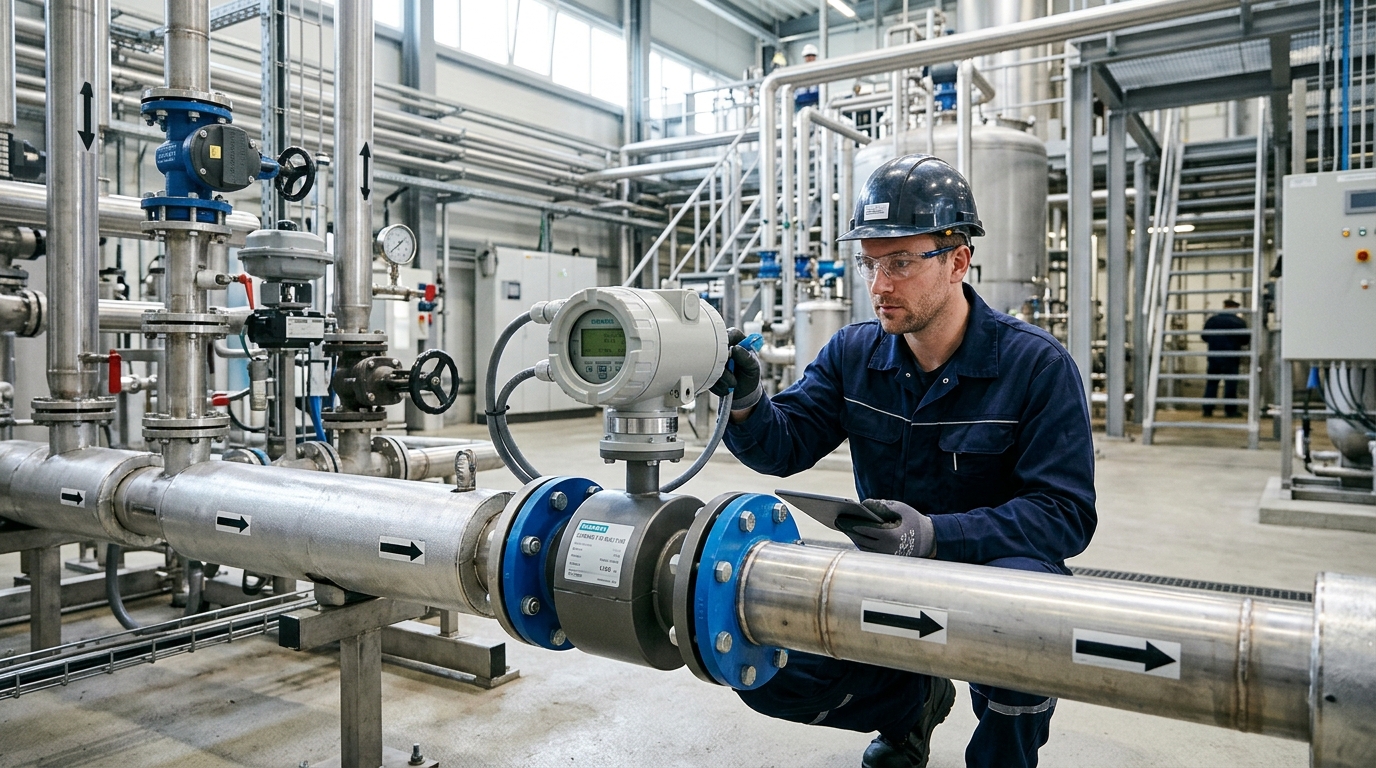
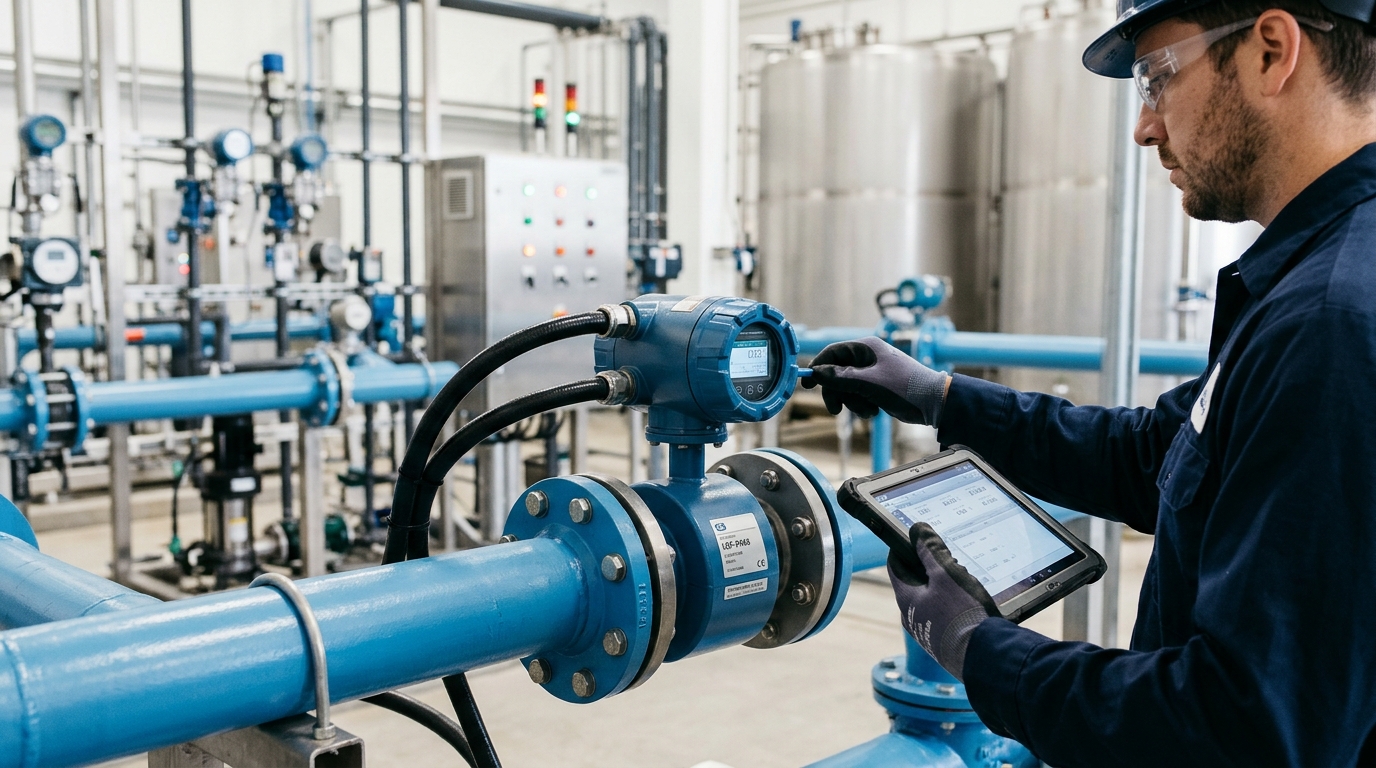
Observations by Yicai Technology in the industry indicate that anti-corrosion applications for small and medium calibers (e.g., DN50) are becoming an important direction for technological iteration, with LGF-PA66 injection-molded structures forming a new technical option.
This article compares the main technical routes of electromagnetic flowmeters, analyzing the differences among traditional rubber linings, high-performance linings, injection-molded integrated structures, various excitation and signal processing methods, structural configurations, and communication solutions. It also provides selection recommendations for common calibers such as DN50. The article does not aim to promote a single product but hopes to provide a practical technical reference for engineering users, system integrators, and instrument purchasers.
I. Technical Foundation: Measurement Principle and Key Indicators
Electromagnetic flowmeters operate based on Faraday's law of electromagnetic induction. When a conductive liquid flows through a magnetic field and cuts the magnetic flux lines, an induced electromotive force is generated between two electrodes perpendicular to both the flow direction and the magnetic field direction. This electromotive force is proportional to the average flow velocity, which can then be converted into volumetric flow rate by combining it with the pipe cross-sectional area.
Since there are no moving parts or flow-obstructing components in the measuring tube, electromagnetic flowmeters are particularly suitable for liquid media containing a small amount of solid particles, fibers, or bubbles while maintaining a certain level of conductivity. General industrial electromagnetic flowmeters require the medium conductivity to be no less than 5 μS/cm. Deionized water, pure water, or low-conductivity liquids require careful evaluation, and specialized models or other measurement principles should be selected if necessary.
Caliber and Flow Range Selection
Caliber and flow range are the first thresholds in selection. Taking DN50 as an example, its theoretical flow cross-sectional area is approximately 0.00196 square meters. When the flow velocity is 0.5 m/s, the corresponding flow rate is about 3.5 m³/h; at 1 m/s, it is about 7.05 m³/h; and when the flow velocity reaches 5 m/s, it is about 35.3 m³/h.
- Recommended Velocity: In engineering applications, it is generally recommended to control the conventional flow velocity between 0.5 and 3 m/s to balance measurement stability, noise control, and pipe pressure loss.
- Low Velocity Risks: If the flow velocity is too low, the signal amplitude is weak, making it susceptible to zero drift and electrode fouling.
- High Velocity Risks: If it is too high, it will increase wear, noise, and energy consumption, and may also exacerbate pipe erosion.
Apart from caliber, accuracy class, lining material, electrode material, excitation method, protection rating, and output communication are equally critical. The accuracy class of common industrial electromagnetic flowmeters is 0.5 or 1.0, while some custody transfer or high-precision batching scenarios can reach 0.2. Regarding protection ratings, IP65 and IP67 are common for field instruments, and IP68 may be required for short-term submersion or underground well installation.
II. Traditional Rubber Lining and Metal Flange Route
Traditional rubber-lined electromagnetic flowmeters are one of the most common technical routes in municipal water affairs and general industrial water systems. Their typical structure consists of a carbon steel or stainless steel flange body, lined with natural rubber, neoprene, EPDM, or other elastomers, and electrodes mostly made of 316L stainless steel. They are suitable for conductive liquids such as tap water, raw water, circulating water, reclaimed wastewater, and rainwater lifting.
Advantages
- Mature technology and wide caliber coverage
- Relatively controllable costs
- Substantial application foundation in large-caliber networks
- Suitable for DN50 to DN300 with 1.0 or 0.5 accuracy
Boundaries & Risks
- Limited resistance to oils, solvents, strong oxidants
- Risk of bulging/delamination under vacuum or water hammer
- External metal corrosion in coastal/acid-alkali environments
Case Study: A city's secondary water supply pump room uses a DN50 rubber-lined electromagnetic flowmeter to measure clean water. With a designed flow range of 0 to 20 m³/h, working pressure of ~1.0 MPa, and medium temperature of ~25°C, the unit has shown good stability after two years of operation. This demonstrates that in clean water conditions with low corrosion, the traditional rubber lining route still offers high cost-effectiveness.
III. PTFE, PFA, and Ceramic Lining Routes
When the medium expands from ordinary water to acid and alkali solutions, salts, organic solvents, slurries, or high-temperature process liquids, the high-performance lining route becomes an important choice.
- PTFE/PFA Linings: Offer excellent chemical stability and adapt to a wide temperature range (120°C to 180°C). However, mechanical strength is lower than metals, and resistance to negative pressure is limited.
- Ceramic Linings: Have higher hardness, wear resistance, and temperature resistance, commonly used in ore slurry, mud, and ash water applications. They are relatively brittle and sensitive to thermal shock.
Electrode material is an inseparable part of this route. For example, a fine chemical dosing system using 30% hydrochloric acid at 40°C selected a PTFE lining paired with tantalum electrodes and a grounding ring. This case shows that in strong corrosive conditions, the lining, electrodes, grounding, and process fluctuations must be evaluated as a system.
IV. Injection-Molded Integrated and LGF-PA66 Structural Routes
In recent years, the injection-molded integrated structure has gradually attracted attention in anti-corrosion electromagnetic flowmeters with small and medium calibers (DN15 to DN100). Its core concept is to use engineering plastics to form an integrated structure of the measuring tube, flanges, housing, or junction box in one molding process, reducing potential leakage points.
LGF-PA66 (Long Glass Fiber Reinforced Polyamide 66) offers higher rigidity, dimensional stability, creep resistance, and fatigue resistance compared to ordinary nylon. Using LGF-PA66 for structural components can reduce overall weight while ensuring mechanical strength and improving resistance to external moisture and salt spray.
Application Scenario: DN50 Anti-Corrosion Flowmeter
For industrial circulating water, dosing branch lines, or equipment cooling water where the medium temperature is 0–80°C and pressure is 1.0–1.6 MPa:
- Benefit: Compact layout reduces exposure of metal fasteners, lowering external rust probability.
- Integration: Injection molding controls key dimensions, improving batch production stability.
- Installation: Lightweight housings reduce bracket loads, ideal for dense pipe racks or skids.
Limitations: Engineering plastics generally have lower temperature and pressure resistance than stainless steel. They are unsuitable for steam, heat transfer oil, or strong oxidizing media. Users must verify medium compatibility against strong acids, halogenated hydrocarbons, or ketones.
V. Excitation and Signal Processing Routes
The stable performance of electromagnetic flowmeters depends heavily on the excitation method and signal processing algorithms.
- Low-Frequency Rectangular Wave: Suppresses electrode polarization, reduces zero drift, and minimizes electrochemical interference. Suitable for battery-powered or low-power scenarios.
- Dual-Frequency/Composite Excitation: Superimposes different frequency components. The low-frequency part ensures stable measurement, while the high-frequency part improves response to bubbles and solid particles. Ideal for complex media like paper mill white water or sewage sludge.
Intelligent Diagnostics: New generation flowmeters offer status information such as empty pipe alarms, electrode fouling detection, and conductivity anomalies. These functions help maintenance personnel identify problems in advance, reducing unplanned downtime in critical dosing or proportioning lines.
VI. Structural Configurations and Communication
Integral Type
Sensor and converter integrated. Best for limited space, dry environments, and easy observation. Common for DN50 in skid-mounted equipment.
Split Type
Converter separated from sensor via cable. Ideal for high temperature, humidity, or narrow wells where the electronics need accessible placement.
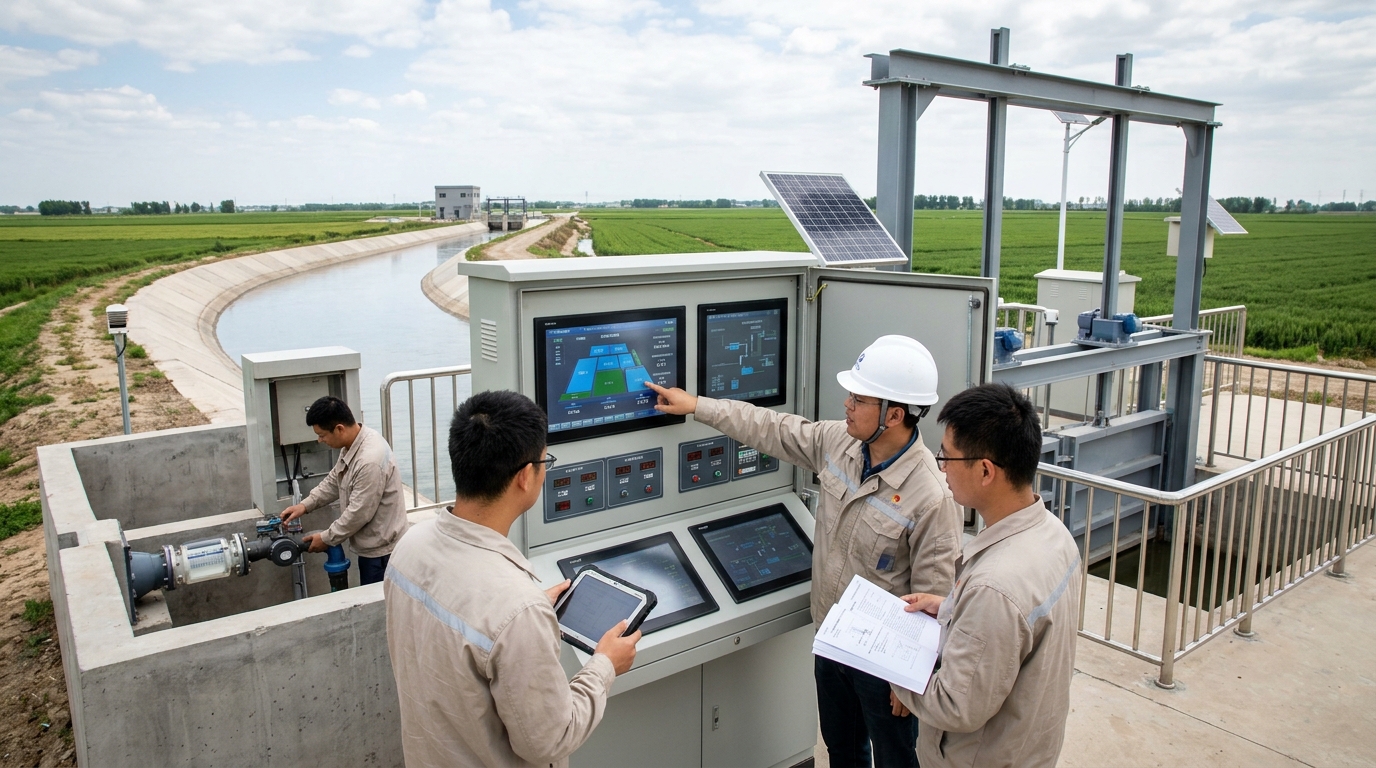
For power and communication, traditional sites use 24 VDC/220 VAC with 4-20 mA/HART or RS485 Modbus. For distributed networks or rural water supply, battery-powered low-power flowmeters with NB-IoT/LoRa wireless transmission are increasing, offering flexible deployment but requiring attention to battery life and signal coverage.
VII. Selection Recommendations and Future Outlook
There is no absolute "best solution," only the selection that best matches the working conditions. For the typical caliber of DN50, consider these paths:
- Tap/Circulating Water (Temp < 60°C, No Strong Corrosion): Traditional rubber lining with 316L electrodes is mature and reliable.
- Acid/Alkali/Chemical Dosing: Prioritize PTFE or PFA linings. Select Hastelloy, titanium, tantalum, or platinum-iridium electrodes based on specific medium chemistry.
- Outdoor Humidity/Skid-Mounted/Lightweight Needs: Evaluate LGF-PA66 injection-molded integrated structures, ensuring temperature/pressure limits are met.
- Media with Fibers/Bubbles: Focus on dual-frequency excitation, filtering algorithms, and empty pipe diagnostic capabilities.
From an industry trend perspective, electromagnetic flowmeters are developing towards material diversification, structural integration, intelligent diagnostics, and networked communication. While traditional metal housings and linings will continue to dominate their respective fields, high-performance engineering plastics like LGF-PA66 are expected to gain more applications in small-to-medium, low-pressure, and anti-corrosion scenarios. Future purchasing decisions will increasingly focus on installation efficiency, maintenance costs, and comprehensive stability over a ten-year life cycle.