Electromagnetic Flowmeters in Wastewater Treatment: Material Selection, Grounding Design, and Long-Term Stability
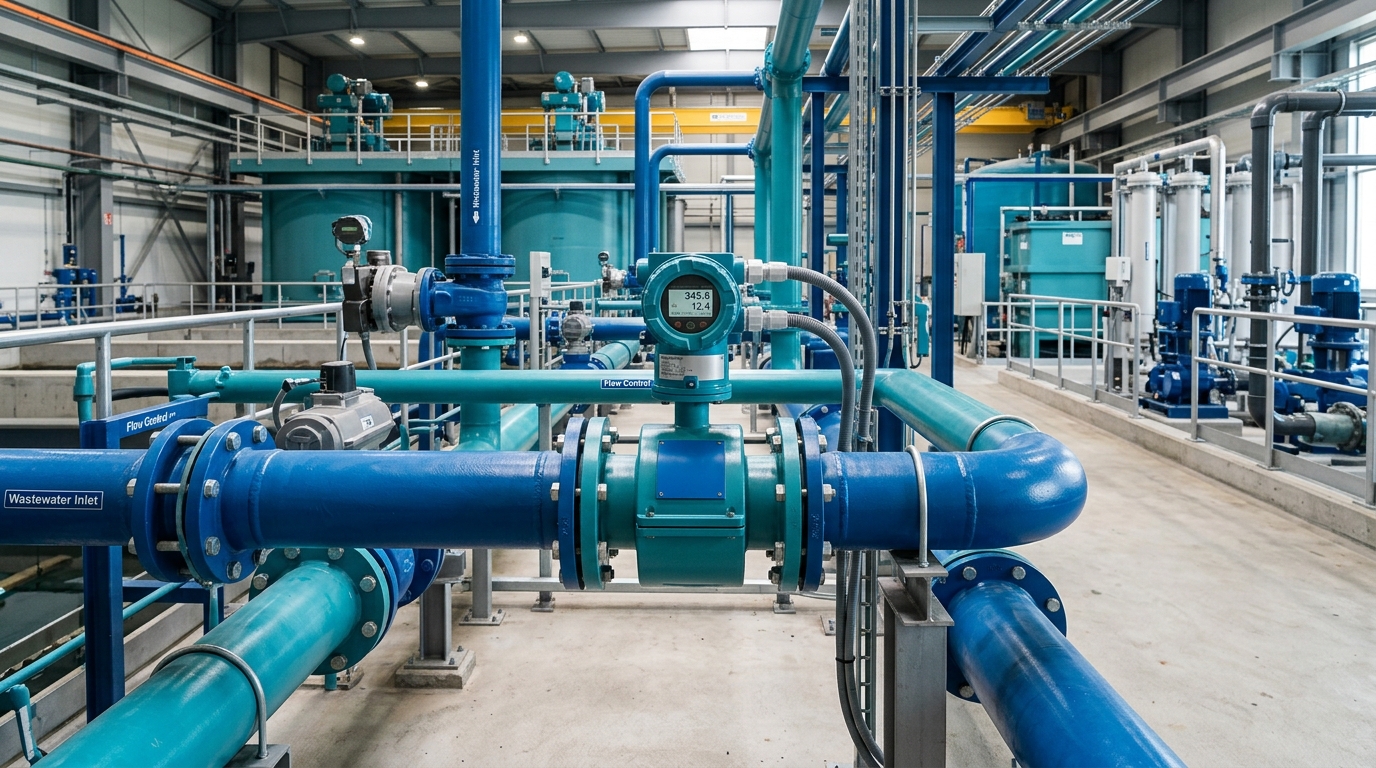
Wastewater treatment plants (WWTPs) represent one of the most demanding applications for electromagnetic flowmeters (magmeters). Unlike potable water networks, sewage carries high suspended solids (SS 200–600 mg/L), wide pH swings (2–12), corrosive ions (Cl⁻, SO₄²⁻, H₂S), and extreme diurnal flow variation. Improper material selection or installation practices lead to electrode corrosion, liner blistering, and signal drift — directly compromising billing accuracy and regulatory compliance.

1. Critical Metering Points in a Typical WWTP
A municipal plant rated 50,000–200,000 m³/d typically requires magmeters at four key nodes:
Influent Header
Size: DN800–DN1600
Specs: IP68-rated for underground vault installation.
Purpose: ±0.5% accuracy for mass-balance accounting and load assessment.
Bioreactor Feed / RAS Line
Size: DN300–DN600
Conditions: Mixed liquor (MLSS 3,000–8,000 mg/L) with abrasive biological floc.
Sludge Feed to Dewatering
Size: DN100–DN250
Conditions: 3–8% dry solids, high viscosity and abrasion — the most punishing service for liner wear.
Effluent Discharge
Size: DN600–DN1200
Regulatory: Subject to continuous environmental monitoring mandates (e.g., EU IED, US NPDES), with data reported to regulatory platforms.
2. Electrode and Liner Material Engineering
Electrode alloy selection governs service life in corrosive media. Field-proven recommendations include:
- Standard Municipal Sewage: 316L SS electrodes + chloroprene rubber (CR) liner — optimal cost-performance for pH 4–10, ≤80 °C.
- High-Chloride or Industrial Co-treatment: Hastelloy C-276 electrodes + PTFE liner — resistant to Cl⁻ up to 20,000 mg/L, continuous service to 180 °C.
- Sludge / High-Solids Slurry: Titanium electrodes + polyurethane (PU) liner — PU abrasion resistance is 3–5× natural rubber, suitable for >5% solids.
Engineering Caution: PTFE liners collapse under vacuum. Where siphoning or pump-suction negative pressure exists, specify PFA liners or add an internal stainless-steel support mesh.
3. Grounding and EMI Mitigation
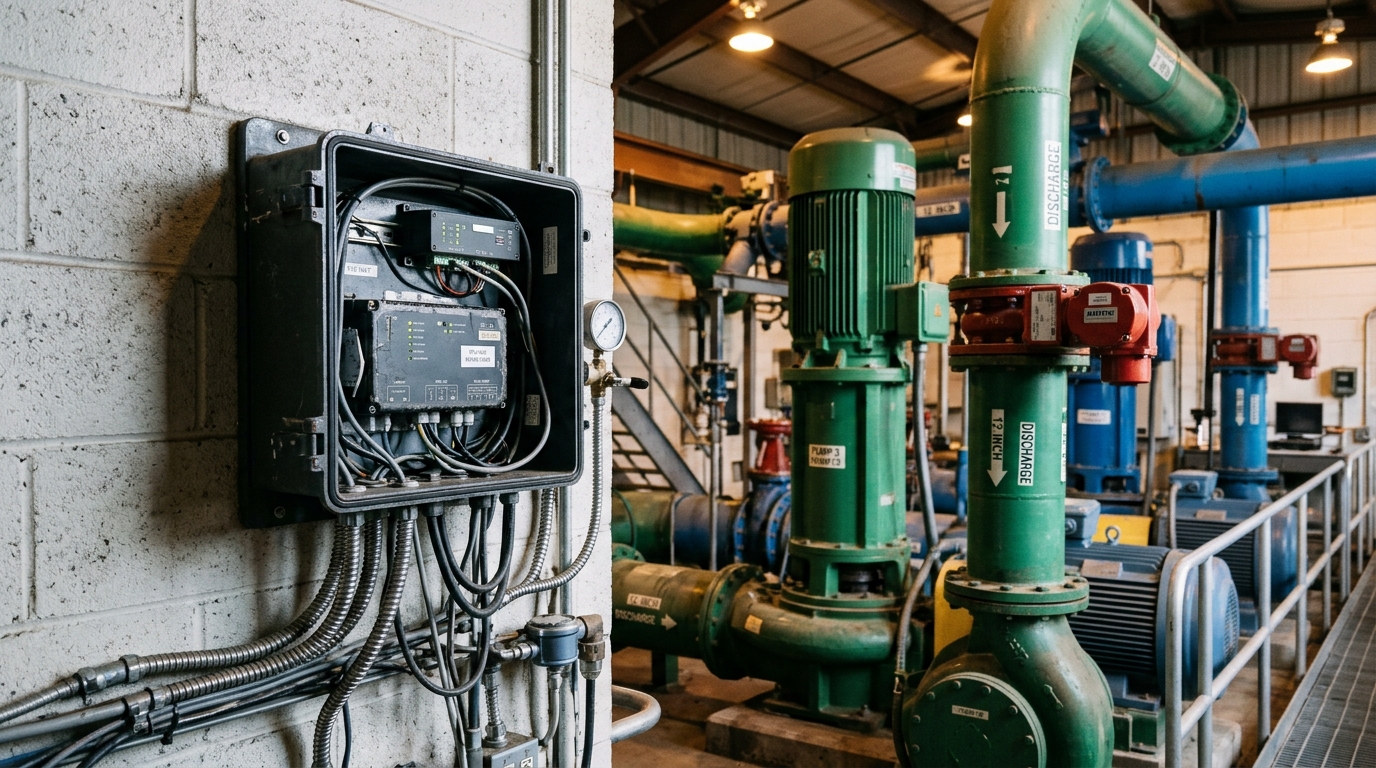
WWTPs are dense with variable-frequency drives (blowers, lift pumps, centrifuges), making electromagnetic interference the primary source of signal distortion:
- Install dedicated grounding rings at each meter; ground resistance ≤10 Ω. Never share a ground electrode with VFD cabinets.
- Use double-shielded signal cable with single-point shield termination; maintain ≥30 cm separation from power cables, crossing at 90°.
- Mount transmitters ≥1.5 m from VFD enclosures; add metallic shielding enclosures where space is constrained.
- For DN1000+ lines, prefer external clamp-on grounding rings over internal grounding electrodes to reduce pressure loss and simplify maintenance.

4. Straight-Run Requirements and Preventive Maintenance
Magmeters require only ≥5D upstream straight run — but in WWTPs, pump discharge elbows and isolation valves often consume available pipe. Prioritize installation ≥10D downstream of the last pump, or install a flow conditioner. Downstream requirement is ≥2D.
Maintenance Protocol
- Quarterly Zero Calibration: Deviation ≤±0.5% FS under full-pipe static conditions.
- Annual Liner Integrity Inspection: Visual check + spark test.
Advanced Solutions
For oily or scaling media, specify automatic electrode cleaning (ultrasonic or mechanical wiper) to extend service intervals beyond six months.
5. Summary
Reliable magmeter performance in wastewater service hinges on three principles: media dictates materials, environment dictates protection, installation dictates accuracy. Engineers should obtain full water-quality assays (Cl⁻, pH, TSS) before specification, enforce strict grounding and shielding standards during commissioning, and institutionalize periodic calibration.
Integrating meter data via IoT RTU telemetry into a Smart Water platform further enables influent load alarm, chemical dosing optimization, and regulatory reporting — transforming raw flow data into actionable engineering intelligence.