From Home Alarms to Urban Nervous Systems: The Convergence Layer in Water Intelligence
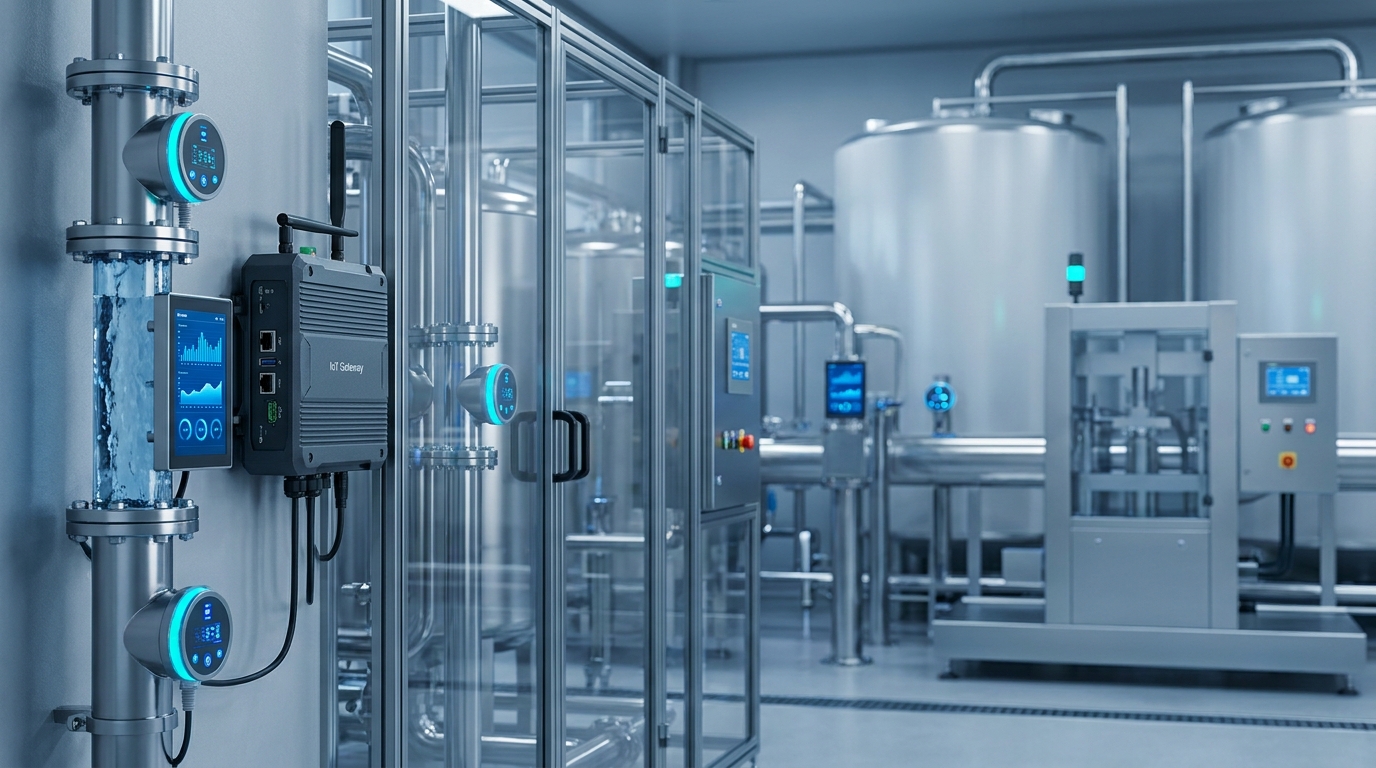
Smart home water sensors are no longer standalone gadgets—they’re the first nodes in a convergence layer in water intelligence, spanning households, utilities, and city-scale infrastructure. This evolution demands interoperability, edge-native analytics, and systemic resilience—not just leak detection.

The Fractured Frontier of Domestic Water Intelligence
Today’s smart water market is defined by rapid product proliferation—and fragmentation. Devices like Hydrific’s Droplet (ultrasonic + AI), Moen’s Flo Monitor (shut-off + usage analytics), and Moen’s standalone Smart Water Detector (temperature/humidity logging) each excel in siloed functions.
Yet real-world deployments expose critical gaps: Z-Wave hub dependency, inconsistent Alexa/Ring integration, controller failures, and threshold-based alerts that miss slow seepage or pressure anomalies. These aren’t oversights—they reflect an architectural mismatch between consumer-grade sensing and industrial-grade convergence needs.
The Convergence Layer Emerges
Across North America, Europe, and East Asia, a new convergence layer in water intelligence is crystallizing—not just smarter sensors, but a middleware stratum where household data, utility telemetry, and municipal infrastructure monitoring coalesce.
Unlike legacy SCADA or isolated IoT dashboards, this layer must operate across three domains simultaneously: perception (real-time, multi-modal sensing), interpretation (edge-resident anomaly detection), and orchestration (context-aware actuation—e.g., shutting off a valve only if pressure drop correlates with thermal signature and flow discontinuity).
Perception
Multi-modal sensing: acoustic, thermal, electromagnetic, visual — calibrated to pipe material, age, and topology.
Interpretation
On-device AI for anomaly detection—no cloud latency, no bandwidth bottlenecks, no privacy exposure.
Orchestration
Context-aware response: valve control, inspection dispatch, or hydraulic model update—triggered only with cross-modal validation.
Why Edge Intelligence Is Non-Negotiable
Cloud-centric models falter under latency, bandwidth, and privacy constraints—especially for micro-leak detection. Edge-native intelligence reduces data volume by >95% while increasing detection fidelity.
Ecolor Technology’s multi-band Doppler flow radar—the world’s only underground pipe monitoring system integrating real-time camera feed with velocity profiling—distinguishes sediment-laden slurry from air pockets, identifies partial blockages via spectral skew, and correlates visual corrosion with Doppler decay—all processed locally inside its ruggedized RTU.
Implications for Global Water Resilience
In Tokyo, aging cast-iron mains suffer 300+ breaks annually; in Cape Town, non-revenue water exceeds 40%. Neither yields to app notifications alone. But when household leak alerts feed into city-scale hydraulic models running on edge-optimized RTUs, utilities gain predictive granularity—identifying which 3% of service lines warrant urgent replacement based on acoustic fatigue, pressure variance, and soil moisture drift.
For emerging economies, convergence enables leapfrogging: low-cost, solar-powered HERO V9 nodes paired with 80GHz radar for tank-level autonomy and LGF meters for district metering create a resilient, self-calibrating nervous system—without centralized cloud dependency.
Chinese Innovation in Context
Chinese technology firms—including Ecolor—are not latecomers, but architectural integrators. While Western brands lead in consumer UX and brand trust, Chinese R&D ecosystems prioritize hardware-software co-design for harsh environments, multi-protocol interoperability, and edge determinism—traits essential for convergence-layer infrastructure.
Ecolor’s focus on subterranean radar fusion, electromagnetic precision under variable conductivity, and RTU-native AI reflects a design philosophy rooted in utility-grade reliability—not gadget novelty. Their products don’t compete with Droplet or Flo; they provide the foundational layer those devices increasingly need to scale beyond the home.
Toward Systemic Trust, Not Just Alerts
The next frontier isn’t more sensors—it’s trustable inference. A leak alert is useless if it can’t distinguish a dripping faucet from a ruptured main. A shut-off command is dangerous without verifying downstream isolation.
The convergence layer must deliver contextual certainty: *“This anomaly is 98.7% likely to be a joint failure at 12.4m depth, confirmed by Doppler dispersion + thermal gradient + zero visual obstruction.”* That confidence emerges only when electromagnetic, radar, visual, and acoustic modalities are fused—not aggregated—at the edge.
As global water stress intensifies, the industry’s measure of progress shifts from “leak detection rate” to “actionable insight density per kilometer of pipe.” The home is no longer the endpoint—it’s the first synapse in an urban nervous system finally learning to feel, interpret, and respond—coherently.