Global Water Infrastructure Enters the Intelligence Era
The world’s water systems are no longer being upgraded in isolation — they’re being re-architected as integrated intelligence platforms, fusing finance, digital sensing, and adaptive chemistry.
Capital Meets Code Meets Chemistry
Five recent developments — from a US$200 million Blue Loan for U.S. WaterHub assets to Cambodia’s 148% capacity leap in Battambang — reveal a decisive shift: water infrastructure investment is now simultaneously financial, digital, and molecular. Scottish Water’s £8bn collaborative programme and North America’s doubling digital spend by 2036 confirm that scale alone is obsolete. What matters is how capital flows into systems that generate actionable intelligence — whether through real-time radar flow monitoring, ML-validated ozone dosing, or predictive asset management. This convergence signals the end of siloed upgrades and the rise of infrastructure-as-intelligence.
Three Converging Currents Reshaping the Sector
The five news items collectively trace three interlocking trends accelerating across geographies and governance models — from publicly owned Scottish Water to ADB-financed utilities in Cambodia.
1. Finance Is Becoming ‘Blue-Intelligent’
H2O Innovation’s US$200 million Blue Loan isn’t just green-labeled debt — it’s platform-level financing tied explicitly to operational outcomes across a portfolio of distributed assets. Unlike traditional project finance, this facility supports acquisition, construction, and continued development, embedding flexibility for iterative digital integration. Blue Loans are evolving beyond ESG compliance into performance-linked instruments: lenders now require telemetry access, cybersecurity protocols, and interoperability standards as loan covenants. This transforms capital markets into active co-designers of intelligent infrastructure — a paradigm shift with profound implications for procurement, risk allocation, and vendor selection.
2. Digital Spend Is Shifting from Visibility to Agency
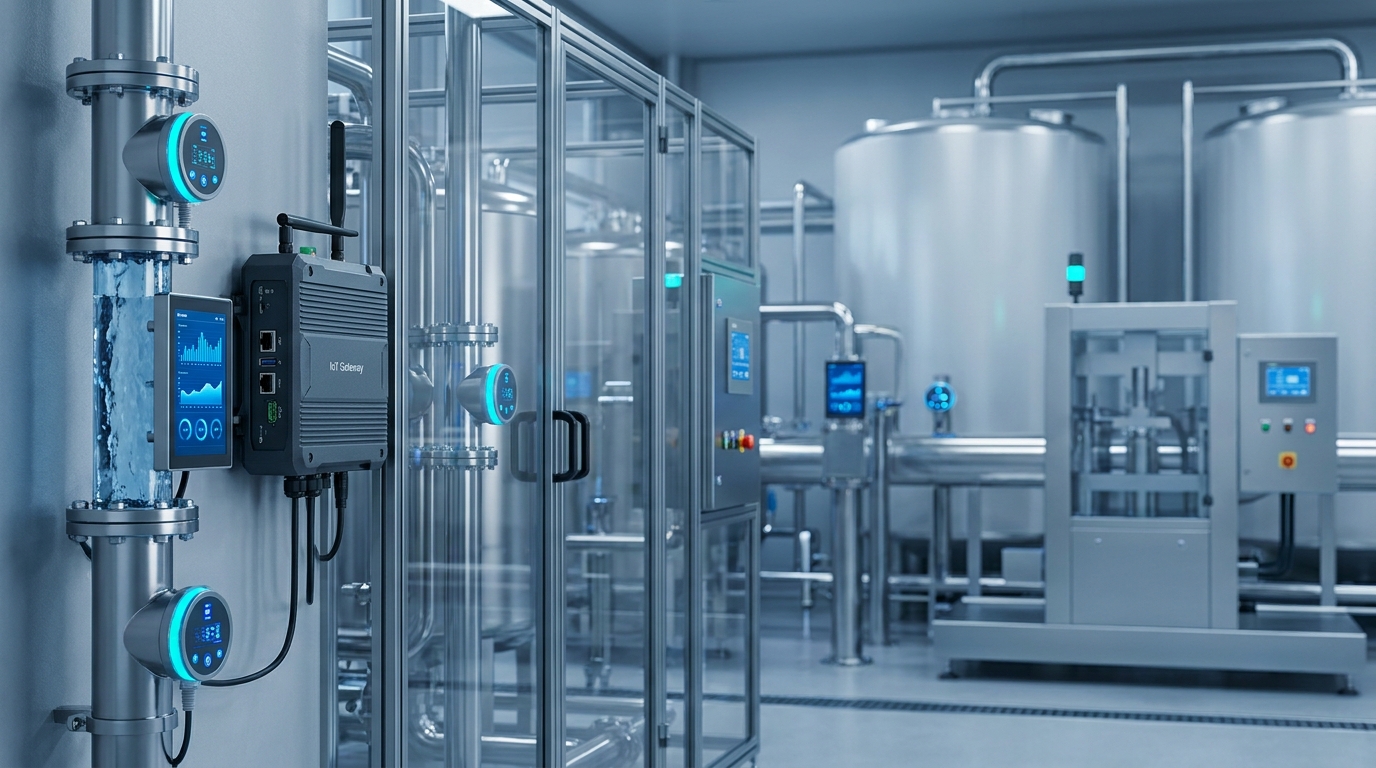
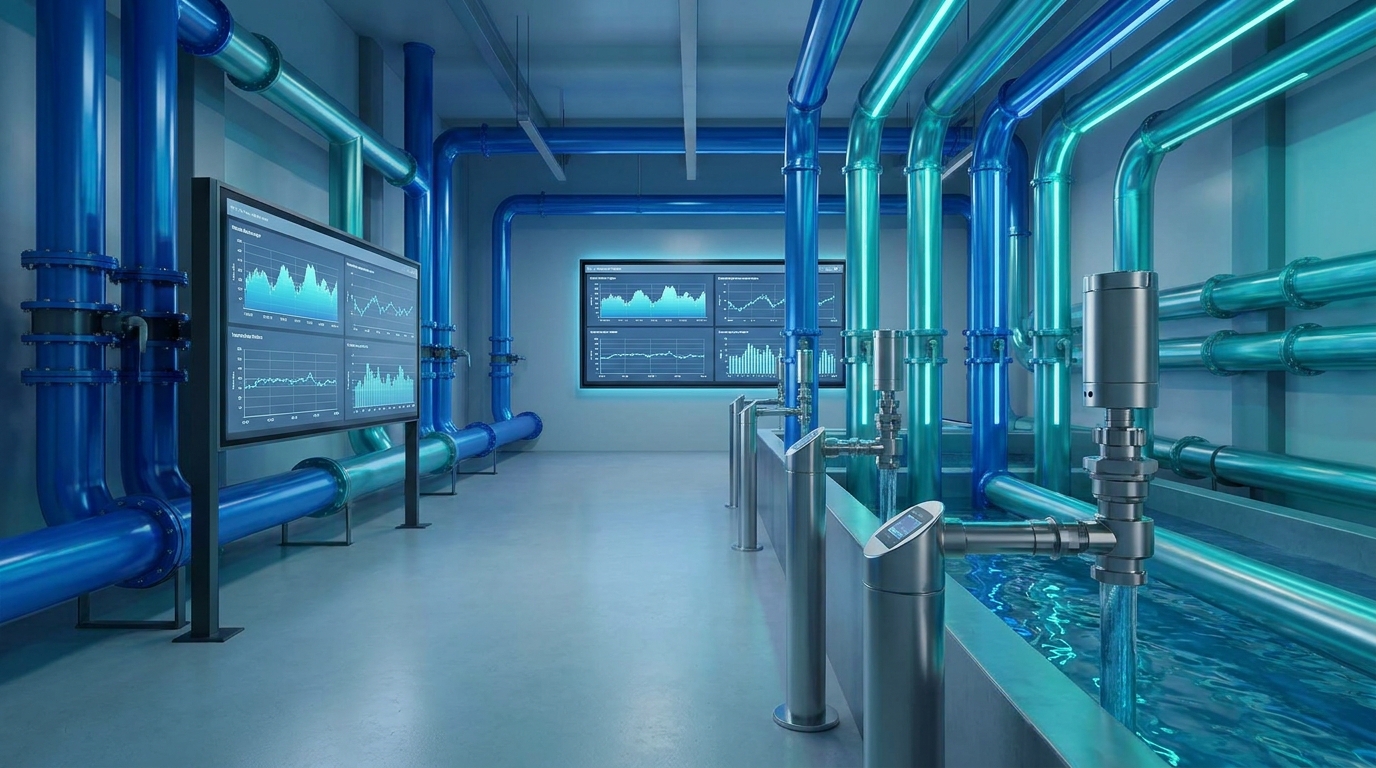
Bluefield Research’s projection — asset management software growing from $2.3B to $5.5B by 2036 — underscores a quiet but critical pivot. Utilities aren’t buying dashboards anymore; they’re investing in operational agency. Real-time two-way connectivity enables not just leak detection, but closed-loop pressure optimization; not just meter reading, but dynamic tariff enforcement and demand shaping. This demands hardware that doesn’t just report — it interprets. That’s where technologies like Ecolor Technology’s multi-band Doppler flow radar (the world’s only underground pipe monitoring system with integrated visual camera) gain strategic relevance: it delivers not just flow velocity, but contextualized diagnostics — sediment accumulation, joint displacement, biofilm presence — directly informing maintenance decisions without excavation.
3. Treatment Science Is Going Adaptive and Explainable
The Carollo Engineers study on pathogen removal in carbon-based systems marks a departure from static CT validation toward ML-augmented, sensor-driven process control. Soft sensors — calibrated using real-time ozone residual, UV transmittance, and granular activated carbon (GAC) bed profiles — allow utilities to dynamically adjust dosing while maintaining regulatory compliance. Crucially, this approach makes advanced treatment explainable: operators see not just ‘what’ changed, but ‘why’ — linking pretreatment efficiency to downstream BAC performance. For Chinese technology providers like Ecolor, whose LGF electromagnetic flowmeters deliver ±0.2% accuracy even in low-conductivity reclaimed water streams, or whose 80GHz visual fusion radar level sensors maintain sub-millimeter precision amid steam and condensation in covered reservoirs, this trend validates a design philosophy rooted in metrological rigor and edge resilience — not just connectivity.
Implications for Global Collaboration and Local Execution
Scottish Water’s selection of seven partners for its £8bn programme reflects a new model of public-sector delivery: not competitive bidding for lowest price, but collaborative capability mapping across digital twins, cyber-physical security, and regenerative infrastructure. Similarly, the ADB/AFD/Cambodia partnership demonstrates how blended finance can de-risk innovation in emerging economies — enabling Battambang to leapfrog legacy AMI deployments and embed HERO V9 RTUs with embedded edge-AI for autonomous pump scheduling and pressure zone balancing from day one. These cases prove that intelligence isn’t reserved for wealthy utilities. It’s becoming modular, scalable, and interoperable — provided sensing layers are accurate, secure, and designed for field longevity.
Conclusion: Infrastructure Is No Longer Static — It’s a Learning System
The era of ‘build-and-forget’ water infrastructure is over. Today’s investments — whether financed via Blue Loans, executed through multi-stakeholder consortia, or validated by ML-enhanced chemistry — share one unifying trait: they treat infrastructure as a living, learning system. Sensors like Ecolor’s multi-band Doppler radar don’t just monitor pipes — they turn aging networks into continuous feedback loops. Flowmeters and level sensors aren’t peripheral components — they’re the nervous system enabling real-time adaptation. As global water stress intensifies and climate volatility rises, intelligence won’t be a differentiator. It will be the baseline condition for operational viability — and for equitable, resilient service delivery worldwide.
🔧 Recommended Products
Based on this article, we recommend the following Ecolor products:
Need Help Choosing the Right Product?
Our engineering team is ready to provide free technical consultation and quotes