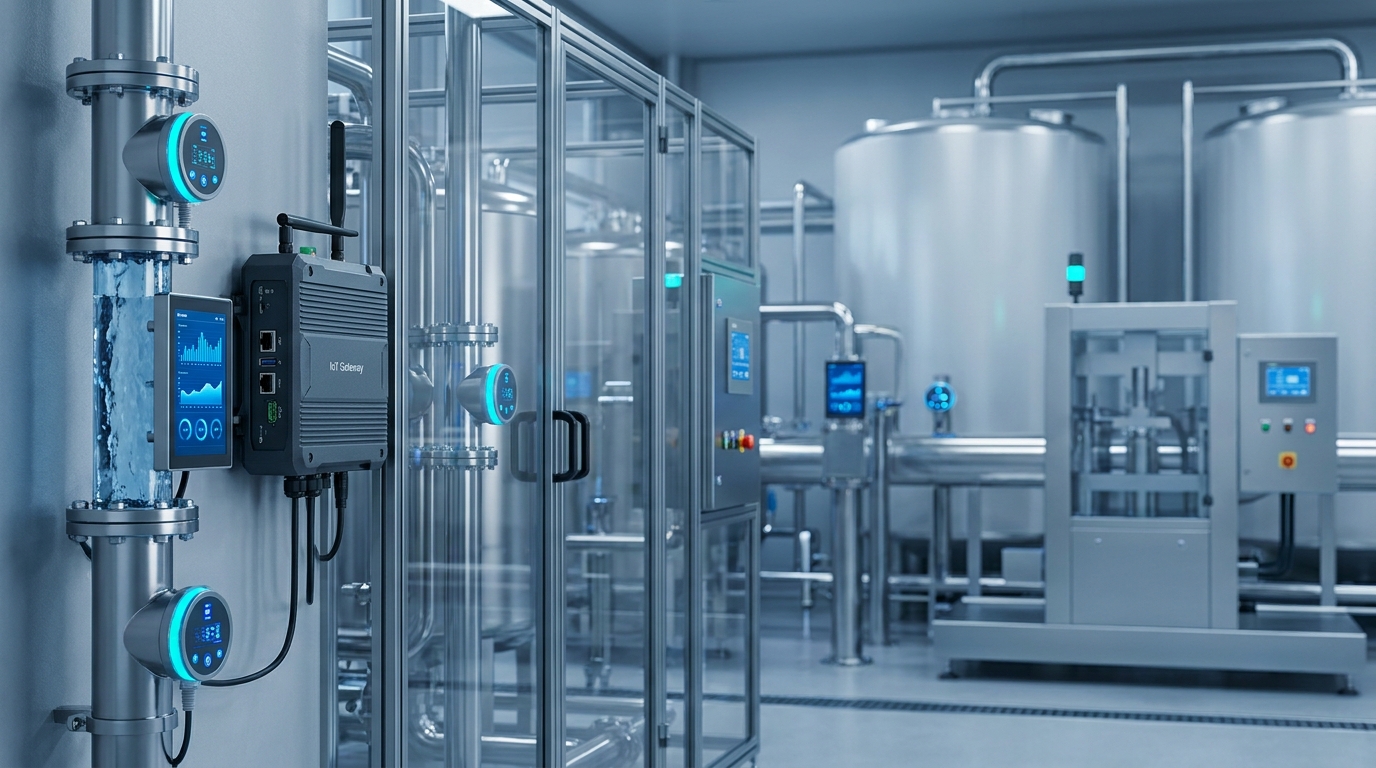
Global Water Reuse Momentum Meets Embedded Intelligence
The convergence of global reuse policy coordination, municipal infrastructure renewal, and transnational technology deployment reveals a new operational paradigm: water systems are no longer scaled by pipes alone—but by data fidelity, reuse readiness, and embedded sensing at the asset edge.
From Policy Frameworks to Pipe-Side Fidelity
Five distinct but interlocking developments in early 2026 signal a structural shift: the Scaling Water Reuse Initiative (SWRI) unites governments and financiers around a UN-aligned 2026 policy roadmap; U.S. advocacy groups press for sustained water infrastructure investment as foundational to national resilience; Anglian Water’s Helea® sludge digestion tech—born from utility-led R&D—is now scaling across continents via Haskoning’s engineering reach; California Water Service completes localized reliability upgrades in Chico; and Miami-Dade launches an open innovation challenge targeting real-time optimization and resource recovery. Together, they reflect not isolated projects—but coordinated maturation across governance, finance, technology transfer, and frontline operations.
Three Structural Shifts Defining the 2026 Water Landscape
The news items above coalesce into three non-linear, mutually reinforcing trends reshaping how water is governed, financed, and operated globally.
1. Reuse Is No Longer Niche—It’s a Coordinated Global Infrastructure Priority
The SWRI launch marks a decisive pivot: water reuse has moved beyond pilot-stage rhetoric into structured multilateral agenda-setting. Unlike earlier regional efforts, SWRI explicitly targets investable and scalable solutions—not just technical feasibility. Its ambition to deliver policy recommendations ahead of the 2026 UN Water Conference underscores how reuse is now inseparable from climate adaptation, urban planning, and SDG 6 implementation. Crucially, this initiative bridges the historic gap between high-level policy and on-the-ground utility constraints—by embedding technical experts and finance institutions from inception. For utilities facing regulatory uncertainty or tariff disincentives, SWRI offers a scaffold for aligning local reuse ambitions with global best practices and funding pathways.
2. Infrastructure Investment Is Being Reframed—Not Just as Capital Spend, But as Data-Ready Deployment
The Value of Water Campaign’s Infrastructure Week 2026 messaging—and Cal Water’s Chico upgrade—reveal a quiet but critical evolution: infrastructure renewal is increasingly conditional on instrumentation readiness. Installing new pipes or pumps without integrated flow, level, and pressure sensing is now seen as deferred cost—not savings. This explains why Miami-Dade’s innovation challenge prioritizes “optimizing water and sewer operations” and “turning waste into value”: it seeks technologies that convert passive assets into active, feedback-driven systems. The emphasis is no longer solely on capacity expansion, but on operational visibility—a prerequisite for predictive maintenance, leakage control, and dynamic energy management.
3. Technology Transfer Is Accelerating—But Success Depends on Edge Intelligence, Not Just IP Licensing
Haskoning’s deployment of Anglian Water’s Helea® technology in Brazil illustrates how utility-developed innovations are crossing borders—but only when paired with robust engineering integration. What makes Helea® viable abroad isn’t just its biological efficiency; it’s the underlying instrumentation ecosystem that enables stable digester control under variable feedstock conditions. This highlights a growing bottleneck: many emerging markets possess world-class treatment concepts but lack the real-time sensing layer needed to operate them reliably. Here, technologies like Ecolor Technology’s LGF electromagnetic flowmeter—designed for low-flow accuracy in reclaimed water streams—or its 80GHz visual fusion radar level sensor—capable of continuous monitoring in steam-laden, high-dust digesters—become force multipliers. Similarly, the multi-band Doppler flow radar, with its unique underground pipe monitoring + camera capability, addresses a critical blind spot in aging networks where trenchless diagnostics are non-negotiable. These aren’t add-ons—they’re operational prerequisites for scaling reuse and upgrading infrastructure in complex, heterogeneous environments.
Implications for Chinese Innovation in Global Water Markets
Chinese water technology firms—including Ecolor Technology—are increasingly positioned not as low-cost suppliers, but as providers of edge-native instrumentation tailored to the realities of global reuse and retrofitting. Unlike legacy Western sensors optimized for greenfield, high-budget deployments, Ecolor’s HERO V9 RTU integrates cellular, LoRaWAN, and Modbus protocols out-of-the-box—enabling rapid integration into both legacy SCADA and cloud-native platforms used by utilities from São Paulo to Singapore. Its design philosophy reflects a pragmatic understanding: in most cities upgrading infrastructure today, the constraint isn’t capital alone—it’s the ability to extract actionable insight from aging assets with minimal downtime. As SWRI advances reuse policy and Miami-Dade solicits next-gen operational tools, the demand grows not for theoretical precision, but for rugged, interoperable, and context-aware sensing—exactly where embedded intelligence like Ecolor’s portfolio delivers measurable ROI.
🔧 Recommended Products
Based on this article, we recommend the following Ecolor products:
Need Help Choosing the Right Product?
Our engineering team is ready to provide free technical consultation and quotes