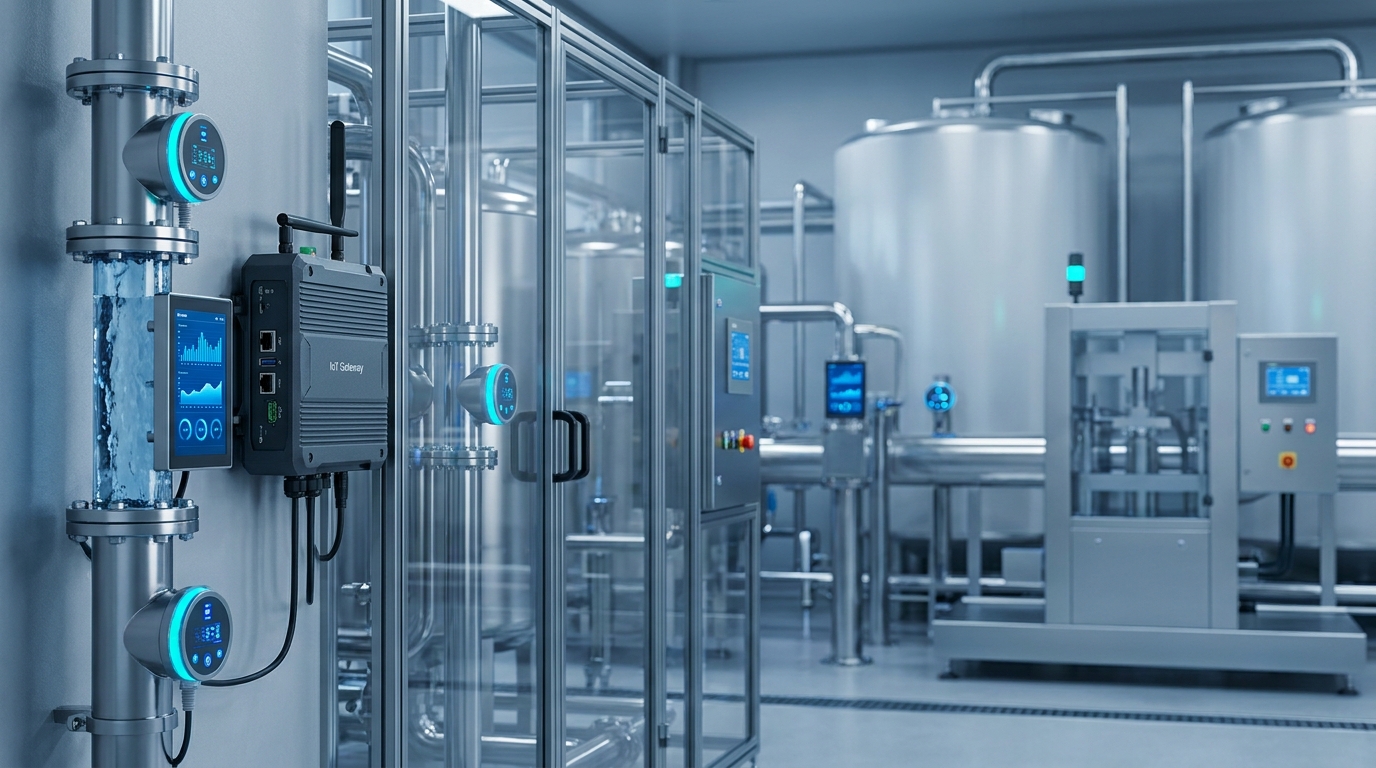
Integrated Sensor Networks and Edge Telemetry: Accelerating Global Water Infrastructure Resilience
Aging water networks and climate pressures are driving utilities toward predictive monitoring, where integrated IoT sensing and edge telemetry redefine operational efficiency and capital allocation. As the global water sector faces unprecedented challenges from infrastructure decay to regulatory tightening, the shift from reactive maintenance to continuous, data-driven asset management is becoming the new operational baseline for sustainable water distribution.

The Hidden Crisis of Aging Water Networks
Global water utilities are confronting an unprecedented convergence of aging infrastructure, climate volatility, and tightening regulatory mandates. Non-revenue water losses now average over 30 percent in many developing markets, while developed nations struggle with century-old pipe networks that lack real-time visibility.
The traditional model of scheduled maintenance and reactive emergency response is no longer financially or environmentally sustainable. As capital expenditure budgets face intense scrutiny, the industry is rapidly pivoting toward continuous, data-driven asset management to address these systemic failures.
Transitioning to Predictive Asset Management
The water sector is undergoing a structural transformation from reactive troubleshooting to predictive network governance. Historically, utilities relied on manual surveys, customer complaints, and periodic acoustic logging to locate leaks or pressure anomalies.
Today, the proliferation of low-power wide-area networks and high-fidelity sensing hardware has enabled continuous hydraulic modeling. By capturing granular flow, pressure, and level data at unprecedented spatial resolutions, operators can identify micro-leakage trends before they escalate into catastrophic main breaks.
This predictive paradigm not only reduces emergency repair costs but also extends asset lifespans and stabilizes water quality parameters, fundamentally changing how water networks are monitored and optimized.
The Sensor-Telemetry Nexus in Modern Infrastructure
At the core of this transition lies the seamless integration of precision instrumentation with robust telemetry. Modern water networks require measurement devices that can withstand harsh environmental conditions while delivering laboratory-grade accuracy. Electromagnetic flowmeters have become indispensable for district metered area (DMA) boundary monitoring, offering bidirectional measurement with minimal head loss.
When paired with advanced radar level sensors, utilities gain continuous visibility into reservoir storage, open-channel conveyance, and stormwater retention basins. The true breakthrough occurs when these devices communicate reliably across fragmented network topologies via industrial-grade remote terminal units.
Leading Innovations in Sensor Technology
LGF Electromagnetic Flowmeter Series
Engineered by Ecolor Technology for stable, low-maintenance flow verification in critical distribution nodes.
80GHz Visual Fusion Radar Level Sensor
Provides millimeter-accurate surface tracking even in turbulent or foaming conditions for wastewater and flood control.
Multi-band Doppler Flow Radar
The world's first underground pipe monitoring system integrated with a high-definition camera for visual diagnostics without excavation.
HERO V9 RTU
Offers multi-network redundancy and edge computing capabilities to synchronize sensor data for immediate action.
Global Implications and Strategic Shifts
The implications of this technological realignment extend far beyond equipment procurement. Water utilities are restructuring their operational workflows, cross-training field technicians in data analytics, and forging partnerships with technology integrators.
The democratization of high-precision sensing has lowered the barrier to entry for smart water initiatives. This enables mid-sized utilities in Latin America, Southeast Asia, and Eastern Europe to implement DMA management programs that were previously restricted to well-funded metropolitan authorities.
Policy, Investment, and Market Realignment
Regulatory frameworks are rapidly adapting to this new reality. Governments are tying infrastructure grants and tariff approvals to measurable reductions in water loss and energy intensity per cubic meter delivered. International financial institutions are prioritizing projects that demonstrate digital readiness and transparent performance metrics.
Consequently, the procurement cycle is shifting from isolated hardware purchases to outcome-based service agreements. Utilities are no longer buying meters or telemetry units in isolation; they are investing in verified network intelligence through interoperable, open-architecture solutions.
Data Architecture and the Edge Computing Imperative
The exponential growth of telemetry data has exposed the limitations of traditional cloud-dependent architectures. Transmitting continuous high-frequency sensor streams to centralized servers introduces latency, bandwidth costs, and cybersecurity vulnerabilities.
Edge computing resolves these constraints by processing raw data locally, filtering noise, and transmitting only validated anomalies or aggregated metrics. This decentralized approach aligns perfectly with the operational tempo of water utilities, where field crews require immediate alerts rather than delayed dashboard notifications.
Furthermore, localized data processing enhances data sovereignty, a critical consideration for utilities operating under strict national cybersecurity regulations. The integration of secure communication protocols, such as LoRaWAN and NB-IoT, ensures that telemetry networks remain resilient even during grid instability or cellular congestion.
Building a Resilient Water Future
As climate extremes intensify hydrological variability, the resilience of water infrastructure will depend on its capacity to sense, adapt, and respond in real time. The integration of advanced flow measurement, radar-based level detection, and intelligent telemetry is no longer a luxury but a foundational requirement.
By embracing modular sensing architectures and edge-enabled data transmission, water authorities can transform hidden network liabilities into managed, optimized assets. The global water sector stands at an inflection point where technological accessibility meets urgent operational necessity. Organizations that strategically deploy integrated monitoring ecosystems today will secure not only regulatory compliance and financial efficiency but also long-term service reliability for generations of water consumers.