IoT RTU Deployment in Urban Water Networks: A Field Engineering Guide
Bridging the gap between field sensors and SCADA platforms requires more than just connectivity. This guide covers power budgets, RF trade-offs, and data integration strategies for reliable urban telemetry.
The Challenge
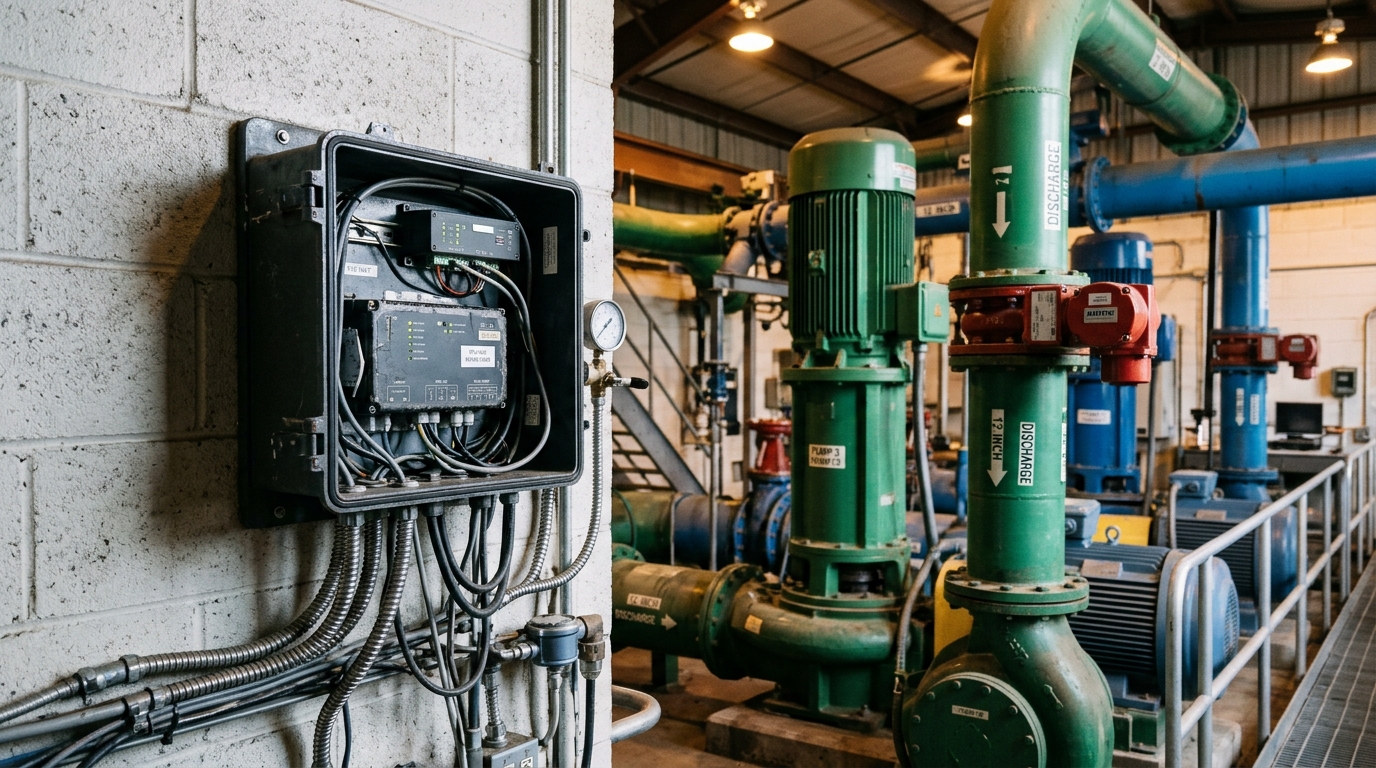
Distribution networks span hundreds of kilometers with monitoring points in harsh environments: valve chambers, pump sumps, and underpasses. Most locations face three critical constraints: no grid power, persistent condensation, and significant RF attenuation (15–25 dB) below manhole covers.
The Solution
The Remote Terminal Unit (RTU) is the linchpin. Selecting the right hardware determines the overall online rate and data completeness of your entire monitoring system.

Technical Analysis: Four Engineering Dimensions
1. Low-Power Selection Strategy
For battery-fed installations, do not rely solely on datasheet headlines. Verify the manufacturer's measured power profile.
- Sleep Current: Target 2 mA or less.
- Annual Consumption: With a 15-minute sampling cycle and ~10s uplink time, expect 1.5–3 Ah/year.
- Enclosure: Must meet IP68 (IEC 60529) and withstand -20°C to +70°C (IEC 60068).
2. Energy Budgeting & Sizing
Compute the power budget first; battery capacity follows from the duty cycle, never the other way around.
Surface Cabinets (Sun Exposure)
Use a 20 W PV panel paired with a 12 V / 20 Ah LiFePO4 bank. Size to survive 7+ consecutive overcast days.
Underground Chambers (No Daylight)
Use primary Li-SOCl2 cells (e.g., ER34615) designed for a 5-year service life. Relax reporting interval to 30 minutes.
3. Radio Technology Trade-offs
Always perform a per-site RF survey before installation. Received signal below a cast-iron cover routinely drops 15–25 dB versus street level.
| Technology | Best Use Case | Key Advantage |
|---|---|---|
| NB-IoT (Rel 13+) | Vaults, small payloads (<2 KB) | Superior link budget, low cost |
| LTE Cat.1 | Cameras, high-frequency flood data | Higher bandwidth |
| LoRa | Private gateway coverage areas | Long range, private infrastructure |
4. Interfaces & Data Integration
"Cellular outages should never translate into data loss."
A utility-grade RTU should provide:
- At least two RS-485 ports (Modbus RTU) for pressure transmitters and flow meters.
- One 4–20 mA analogue input and one pulse input.
- MQTT over TLS for secure upstream transmission.
- Local buffering of 100,000+ records with automatic store-and-forward.
Deployment Recommendations
Installation Best Practices
- Mount RTUs and antennas on 304 stainless steel brackets inside chambers.
- Route cables through certified glands to block condensate migration.
- For critical DMA boundary meters, specify dual power inputs with automatic failover.
Acceptance Criteria
≥99% online rate and ≥98% data completeness over a continuous 72-hour soak test. Include a power-loss store-and-forward drill on a 10% sample of sites.
Operations & Maintenance
Maintain a unified asset registry. Track battery voltage and RSSI as leading indicators. Ensure low-battery alerts fire at least 30 days before projected depletion.
Conclusion
Deploying RTUs in urban networks is an optimization problem across power, radio coverage, and long-term reliability. Engineers who front-load the energy budget and RF surveys, enforce strict interface and protocol conventions, and operate against online-rate and completeness KPIs can build a stable, low-cost sensing layer.
This robust data foundation is essential for effective DMA leakage management and urban lifeline safety programmes.