Practical Guide for Irrigation District Informatization
With the advancement of agricultural water conservation and the construction of digital twin irrigation districts, informatization in these districts is shifting from single data collection to the integration of water measurement, smart irrigation, dispatch management, and operation and maintenance services. To improve the implementation quality of projects, Yicai Technology has summarized the practical key points for irrigation district informatization, providing a reference for grassroots management units and engineering and technical personnel.
I. Pre-Installation Preparation and Site Layout
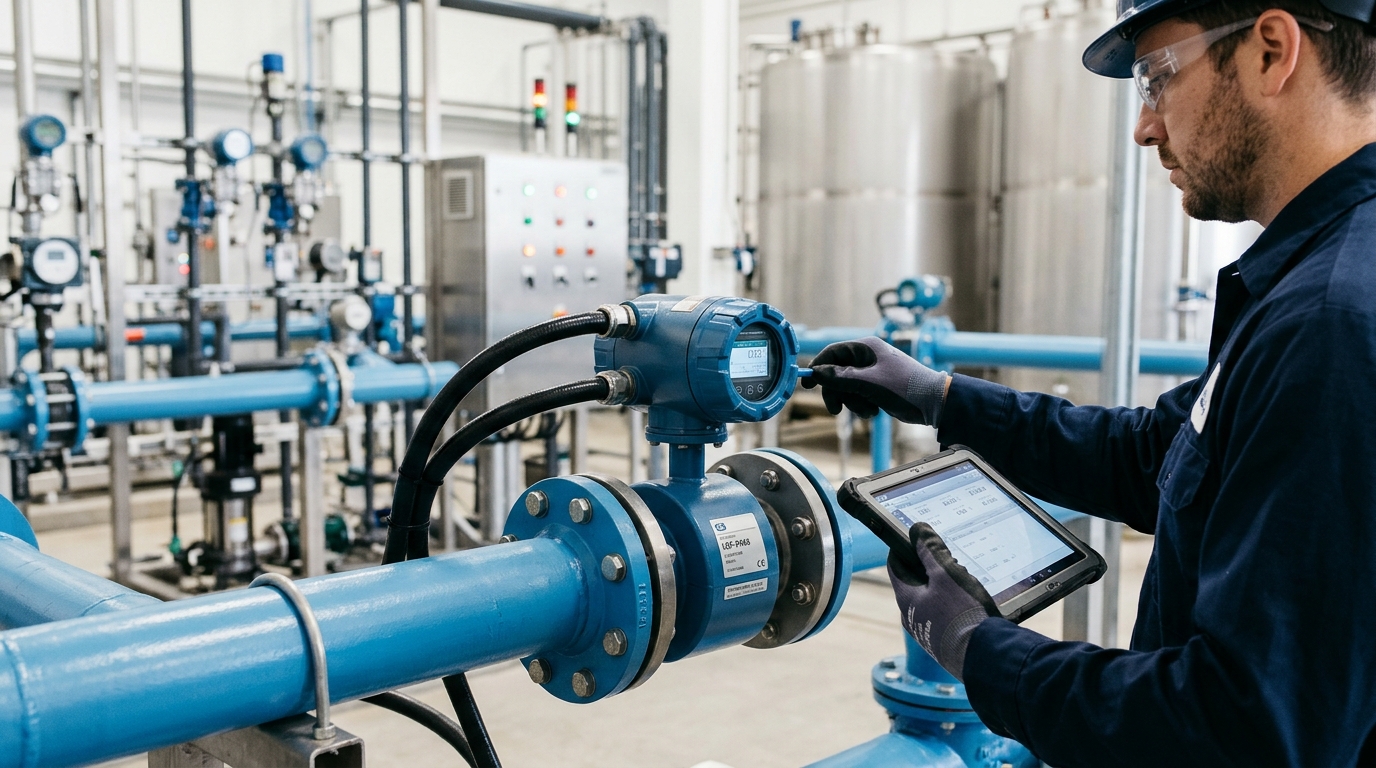
Before installation, surveys of canals, pump stations, gates, and nodes of main and branch canals must be completed to clarify water measurement cross-sections, control areas, and communication conditions. Monitoring points should be selected in locations with stable flow regimes, free from severe siltation and drops, avoiding direct installation of flowmeters in bends or turbulent zones near gates. Power supply should be configured using municipal power or solar energy, with maintenance access routes reserved.
II. Equipment Installation Steps
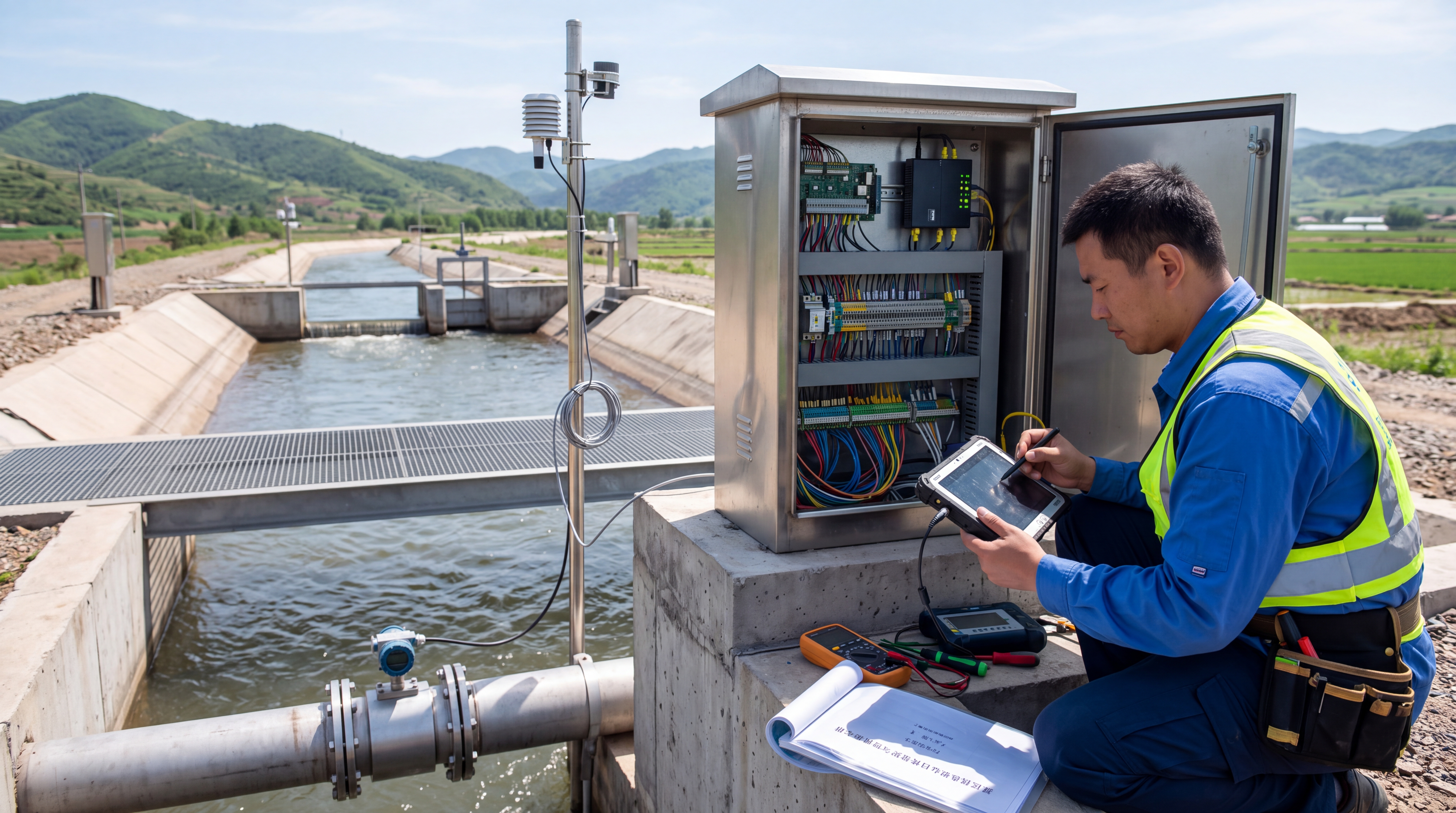
- Pole & Bracket Setup: Install poles, brackets, foundations, water level gauges, flowmeters, RTU gateways, and control cabinets.
- Wiring & Protection: Connect sensors, power, antennas, and lightning protection grounding wires according to diagrams. Route cables through protective conduits and apply waterproof labeling.
- Power System: Install solar panels, batteries, and power controllers.
- Actuator Integration: Complete the installation of gate actuators, limit switches, and manual/automatic switching devices, ensuring both remote control and on-site emergency operations are fully functional.
III. Network Access and Platform Configuration
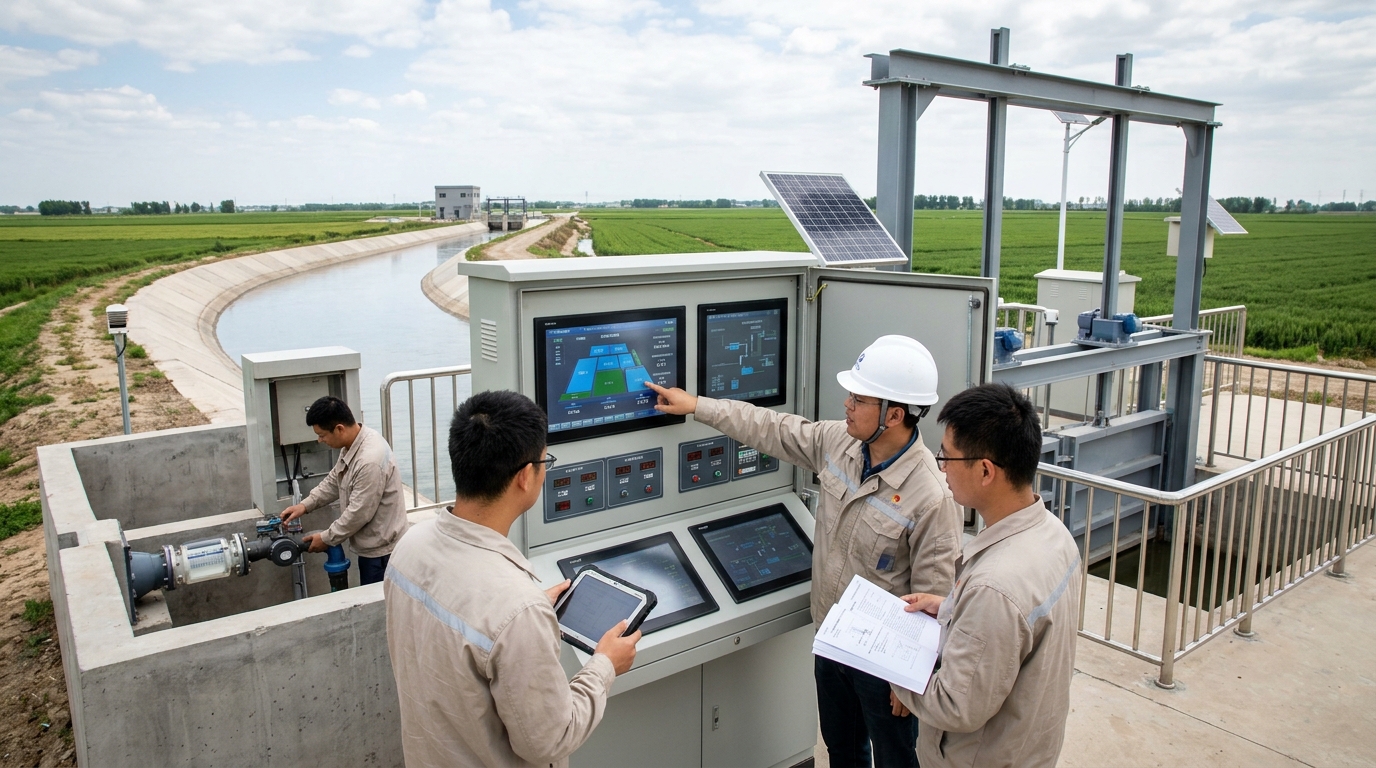
Equipment can access the platform via 4G, 5G, LoRa, BeiDou, or Ethernet. During configuration, verify device addresses, communication protocols, data point tables, and sampling frequencies to ensure the accurate uploading of water level, flow rate, power consumption, and gate status. On the platform side, an irrigation district ledger should be established, dividing the system into main canals, branch canals, laterals, and water usage units, while setting up water measurement cross-sections, irrigation plans, and alarm rules.
IV. Commissioning Methods
Commissioning should follow the principles of single-unit testing before integrated linkage, and data verification before control operations.
After power-on, check the self-diagnostic status, signal strength, and battery voltage, and confirm that the sensor ranges, zero points, and address parameters are correct. For ultrasonic, radar, or electromagnetic flowmeters, zero-point calibration must be performed, combined with manual staff gauge observations for stage-discharge rating. Gate commissioning requires testing the opening feedback, opening/closing direction, limit protection, and response time.
V. Smart Irrigation and Water Conservation Commissioning
Once the data is stable, soil moisture, crop water requirements, rainfall forecasts, and canal conveyance capacity can be incorporated into the dispatch strategy. During commissioning, set up scenarios such as dry-period water replenishment, rainy-day suspension, water level over-limit alarms, and total water usage control. By comparing planned water volumes with actual measured water data, correct conveyance losses and rotational irrigation schedules to improve water distribution accuracy and reduce water spillage and over-irrigation.
VI. Key Points for Daily Maintenance
Since irrigation district equipment operates outdoors for long periods, a periodic inspection system must be established.
- Pre-Irrigation Season: Inspect sensors, cables, power supplies, and mechanical components of gates.
- During Operation: Check data integrity rates and abnormal alarms monthly.
- Post-Flood Season: Promptly dredge silt and clean probes in sections with heavy sediment.
- Platform Side: Regularly back up configurations, manage permissions, and retain logs.
VII. Data Quality Management
Water measurement data directly impacts water conservation assessments and water fee collection. A manual comparison mechanism should be established to regularly review water levels, flow rates, and cumulative water volumes. When data drift, sudden changes, or long-term constant values are detected, the sensor installation locations, parameter settings, and communication links must be checked. Manual observation records should be retained for critical cross-sections as a basis for rating and auditing.
VIII. Common Fault Troubleshooting
| Fault Symptom | Likely Causes | Solution |
|---|---|---|
| Missing Data | Communication interruption, under-voltage, unpaid SIM, loose antenna | Check power/signal, restart gateway, replace module |
| Flow Rate Deviation | Siltation, weed obstruction, cross-section change, parameter error | Clean sensor, re-rate parameters |
| Gate Unresponsive | Cabinet power loss, address mismatch, limit switch trigger, motor protection | Check cabinet power, verify address, reset limits |
IX. Emergency Response Requirements
In the event of rainstorms, floods, canal hazards, or equipment failures, priority should be given to switching to on-site manual control to ensure engineering safety. The system should set up tiered permissions to prevent misoperations. Important control commands must retain approval and log records, and critical nodes can be configured with dual power supplies or backup communications to enhance reliability.
Conclusion
Overall, the informatization of irrigation districts is not merely about installing equipment, but about establishing a long-term operational mechanism centered on water measurement, smart irrigation, water conservation, and refined management. Only through standardized installation, thorough commissioning, regular maintenance, and rapid fault troubleshooting can the informatization system truly serve water resource dispatch, water usage supervision, and the modernization of irrigation district management.