Practical Guide to Irrigation District Informatization: Key Points for Installation, Commissioning, and O&M
The informatization of irrigation districts serves as a crucial foundation for supporting smart irrigation, agricultural water conservation, and refined water resource management. Centered around water measurement, remote control, data platforms, and operational management, project construction should establish mechanisms for standardized installation, closed-loop commissioning, and routine maintenance to avoid the pitfall of "valuing construction over operation and maintenance." Below are the practical key points for project implementation.
I Pre-Installation Preparation: Verify Site Conditions Before Organizing Construction
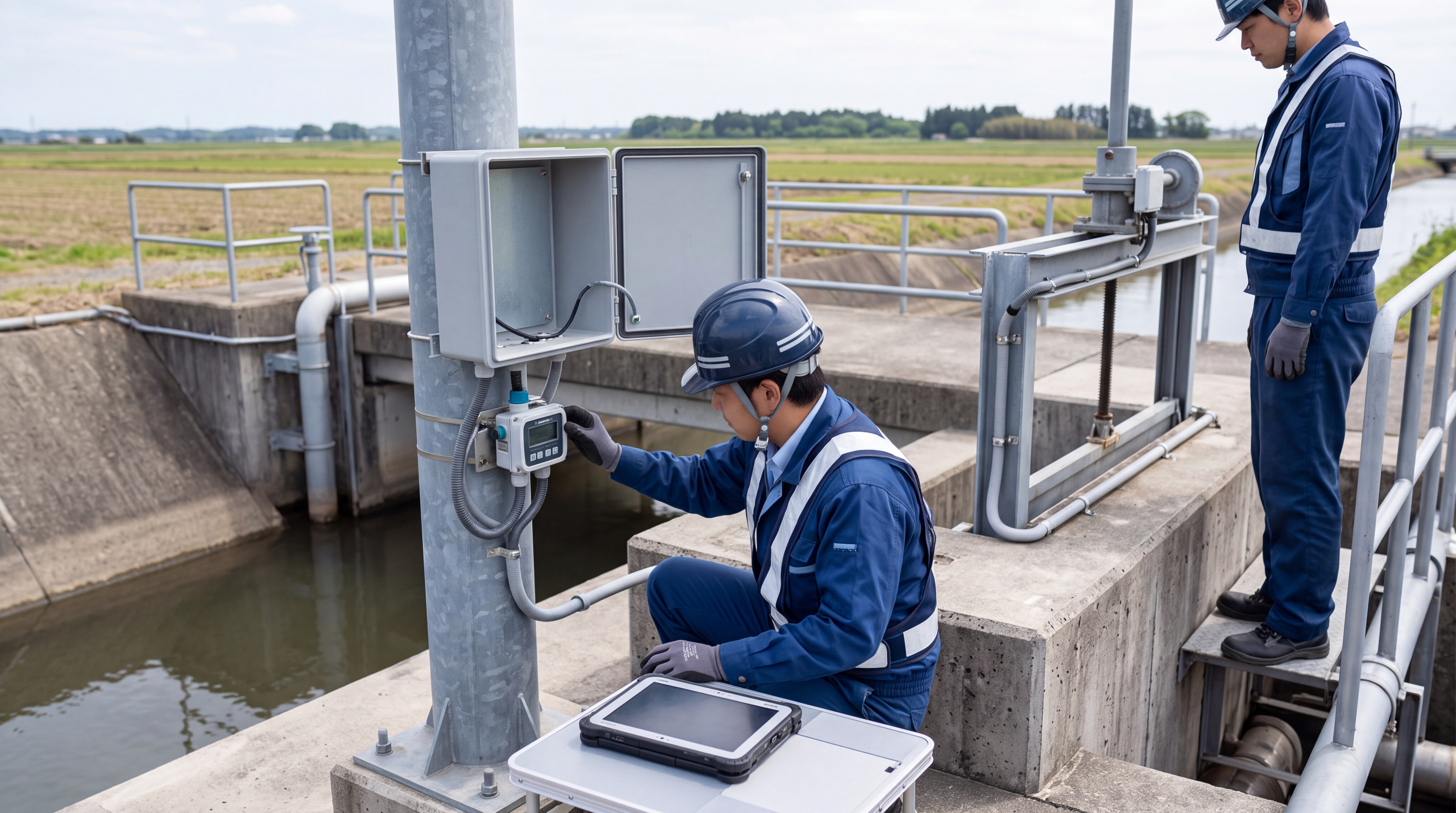
Before installation, on-site verification of canal cross-sections, gate locations, power supply conditions, communication signals, and management requirements must be completed. Water measurement points should be selected in straight, stable-flow canal sections free from severe siltation, avoiding bends, drops, confluences, and gate disturbance zones. For informatization equipment, the power supply mode, lightning protection and grounding, waterproof rating, and data access protocols must be determined in advance. Equipment coding, point names, and management ledgers should be standardized to prevent confusion during subsequent platform integration.
II Installation Steps: Implement in the Sequence of "Water Measurement, Control, Communication, and Platform"
Water Measurement & Control Equipment
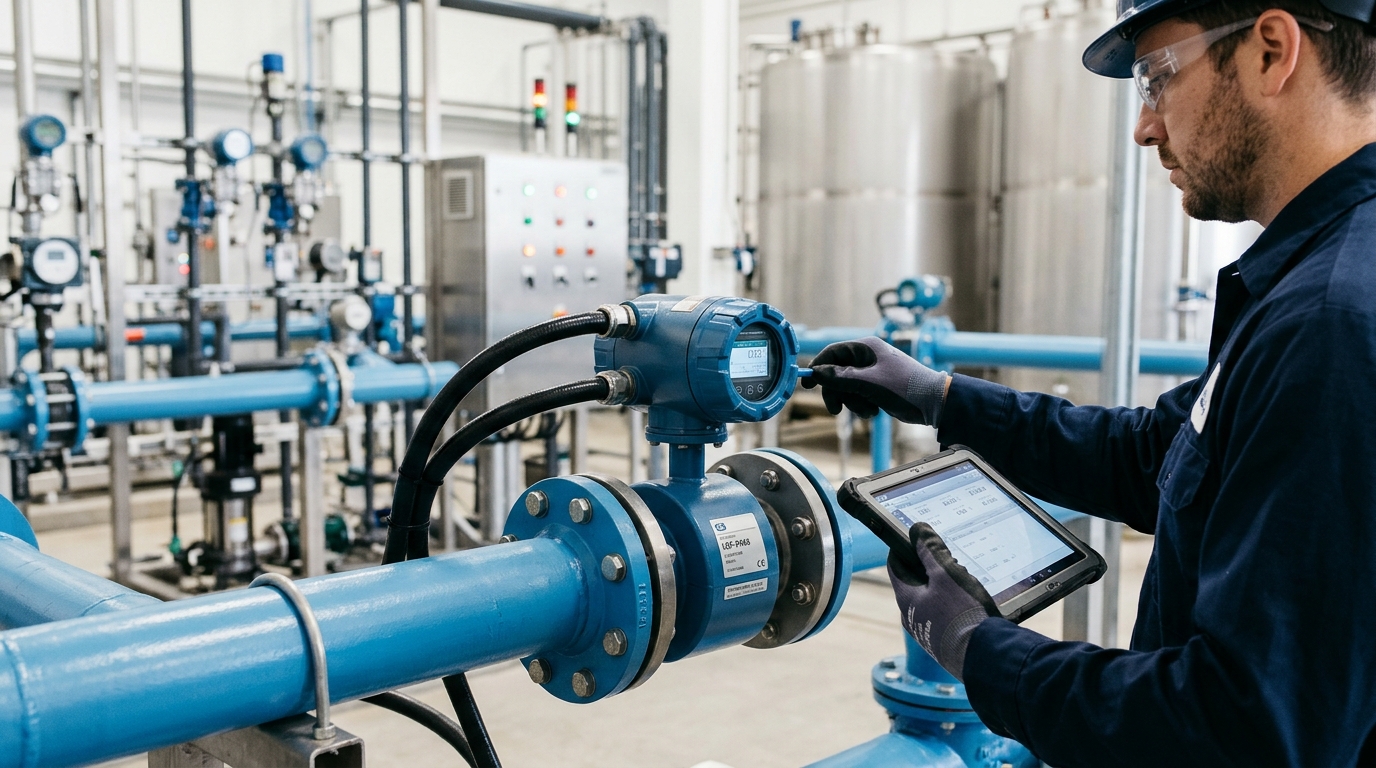
The installation of water measurement equipment is fundamental. Water level gauges, ultrasonic open-channel flowmeters, or electromagnetic flowmeters must be fixed at the designed elevation, ensuring that the sensor installation angle, measurement range, and upstream/downstream straight pipe section requirements comply with specifications. Upon completion, the initial zero point, cross-section parameters, installation coordinates, and equipment ID should be recorded.
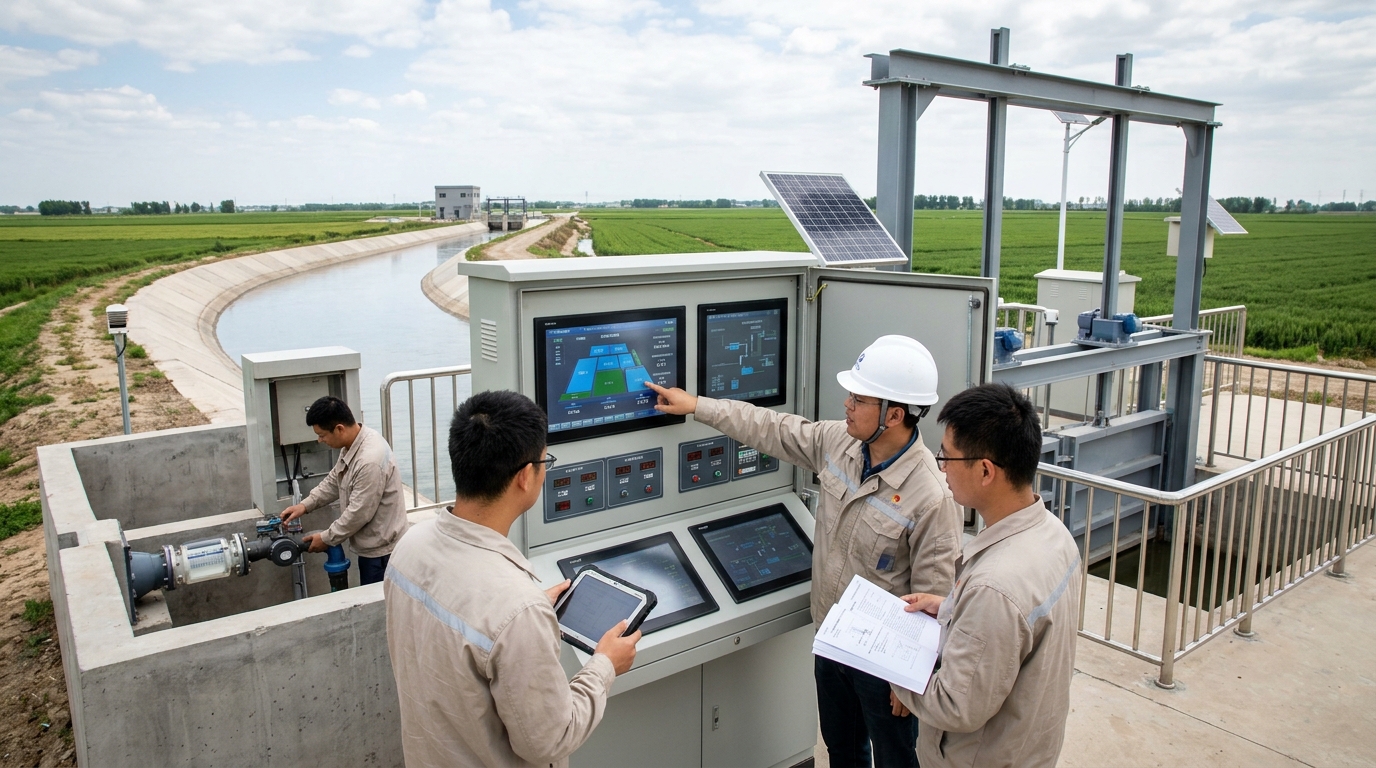
The installation of gates, valves, and electric actuators must prioritize mechanical safety. Post-installation, manual and electric switching tests are required to verify the effectiveness of limit switches, opening feedback, overload protection, and emergency manual functions. Control boxes must undergo waterproof, dustproof, lightning-proof, and grounding treatments. Power and signal cables should be laid separately to minimize electromagnetic interference.
Communication & Platform Integration
The installation of communication and power supply systems should balance stability and maintainability. RTUs, DTUs, or edge control terminals should be installed in easily accessible locations for maintenance; solar panels must face directions with ample sunlight and be securely fixed; batteries should be housed in waterproof, ventilated enclosures. For areas with weak signals, external antennas, signal boosters, or alternative communication methods can be deployed as supplements.
During the platform integration phase, equipment codes, canal names, stake numbers, measurement ranges, units, and communication parameters must be entered into the informatization platform. A corresponding relationship of "equipment—cross-section—gate—management unit" should be established to ensure a one-to-one match among field equipment, acquisition terminals, and platform points.
III Commissioning Methods: From Single-Point Calibration to Intelligent Linkage
Commissioning should begin with individual equipment testing. Water level gauges require zero-point and elevation verification; flowmeters need re-verification of cross-section coefficients, roughness coefficients, and flume/weir types; gate openings must undergo multi-point calibration and be compared with actual on-site openings. Subsequently, joint data debugging should be conducted to check the consistency of on-site readings, local displays, and platform data. It is recommended to compare water measurement data with manual flow measurements or portable current meters to observe stability under different water level conditions.
Smart irrigation commissioning should revolve around water use plans. A semi-automatic mode of "manual confirmation and automatic execution" can be adopted initially, gradually transitioning to automatic control based on thresholds, rotational irrigation sequences, and water demand conditions. Meanwhile, alarm delays should be set to prevent frequent actuations caused by short-term water level fluctuations.
IV Routine Maintenance: Establish Inspection, Calibration, and Data Auditing Systems
Routine maintenance should aim for "accurate data, available equipment, and reliable control." Operation and management personnel can check water levels, flow rates, power levels, communication status, and gate feedback daily via the platform; conduct on-site or video inspections of key gates and measurement cross-sections weekly; and inspect sensors, solar panels, batteries, antennas, and wiring terminals monthly. Specialized maintenance should be carried out before and after the peak irrigation season and flood season to promptly clear canal siltation, weeds, and floating debris, verify water measurement equipment data, and establish records for abnormal work orders, calibration logs, and O&M ledgers. Equipment reactivated after long-term shutdown should first undergo a manual test run before switching to automatic control mode.
V Common Troubleshooting: Diagnose According to "Power Supply, Communication, Sensors, Actuators, and Platform Parameters"
- Data Missing/Interrupted: Prioritize checking the power supply voltage, solar charging status, SIM card data allowance, antenna connections, and communication module status.
- Terminal OK but No Platform Data: Verify the server address, port, APN, and protocol configurations.
- Abnormal Flow Data: Inspect the cross-section parameters, installation position, water level zero point, and the impacts of canal siltation and floating debris.
- Gate/Valve Failure: Confirm whether the control authority is set to remote mode, and check the limit switches, overload protection, relay outputs, motor wiring, and mechanical jamming.
- Frequent Alarms: Do not simply disable alarms; analyze whether they are caused by water level fluctuations, sensor jitter, overly narrow thresholds, or insufficient delays. Stability can be improved by increasing filtering time, setting deadbands, and implementing tiered alarm strategies.
VI Practical Recommendations: Ensure Water Conservation Effects Through Standardized Processes
The informatization of irrigation districts is not merely the stacking of individual devices, but the coordinated operation of water measurement, water conveyance and distribution, control execution, and management platforms. It is recommended to standardize data formats, equipment coding, and O&M forms at the initial stage of the project, retain calibration records during the installation phase, and use data to verify water conservation effects during the operation phase. Only by forming a closed loop of installation, commissioning, maintenance, and troubleshooting can smart irrigation truly serve precise scheduling, reduce water wastage, and improve water use efficiency.