Proper Utilization Methods for Informatization in Irrigation Districts under Complex Operating Conditions
Against the backdrop of the comprehensive reform of agricultural water prices, the modernization transformation of large and medium-sized irrigation districts, and the continuous advancement of high-standard farmland construction, the informatization of irrigation districts is shifting from "whether there is equipment" to "whether the data is accurate, whether the gates can be controlled, and whether the water-saving effects can be accounted for." Smart irrigation is no longer just remote control, but a closed-loop management based on water measurement, soil moisture, rainfall, gate status, and water use plans. For irrigation district management units, if the informatization system is installed improperly, debugged insufficiently, and maintained inadequately, it is easy to encounter problems such as "screens without data" and "gates without linkage."
This article takes practical operation as the main thread, sorting out the installation steps, debugging methods, daily maintenance, and common fault troubleshooting of irrigation district informatization projects, which are applicable to scenarios such as canal water measurement, remote gate control, pump station monitoring, and irrigation dispatch platforms.
Referring to common industry requirements, the system availability rate should reach over 98%, the water measurement data completeness rate should reach over 99%, and the comprehensive flow error should be controlled within 5%. In the transformation of a medium-sized irrigation district in East China, after 218 water measurement points and 46 electric gates were connected to the platform, the irrigation water utilization coefficient increased from 0.556 to 0.615, with an annual water saving of about 9 million cubic meters, verifying the value of standardized implementation.
System Composition and Construction Goals: First Clarify "What to Measure, What to Control, What to Transmit, and What to Calculate"
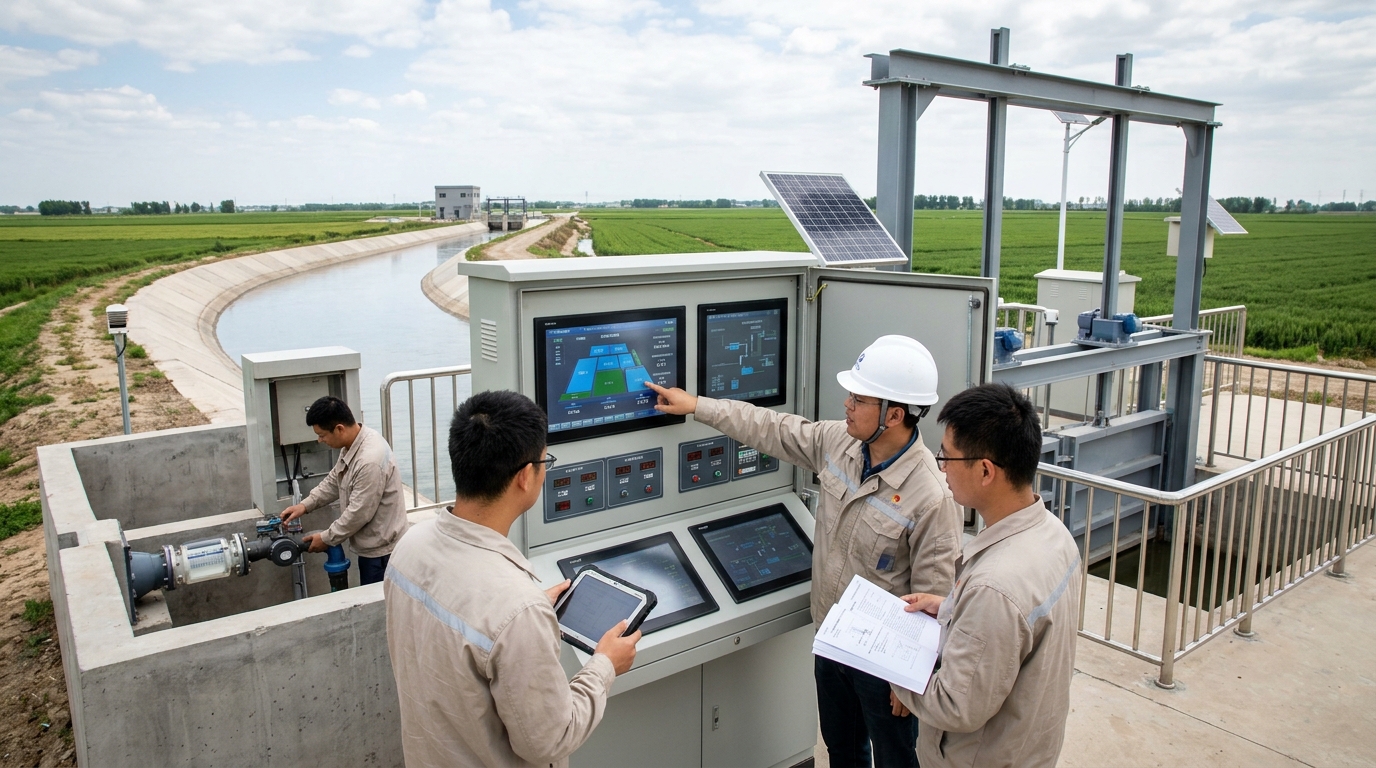
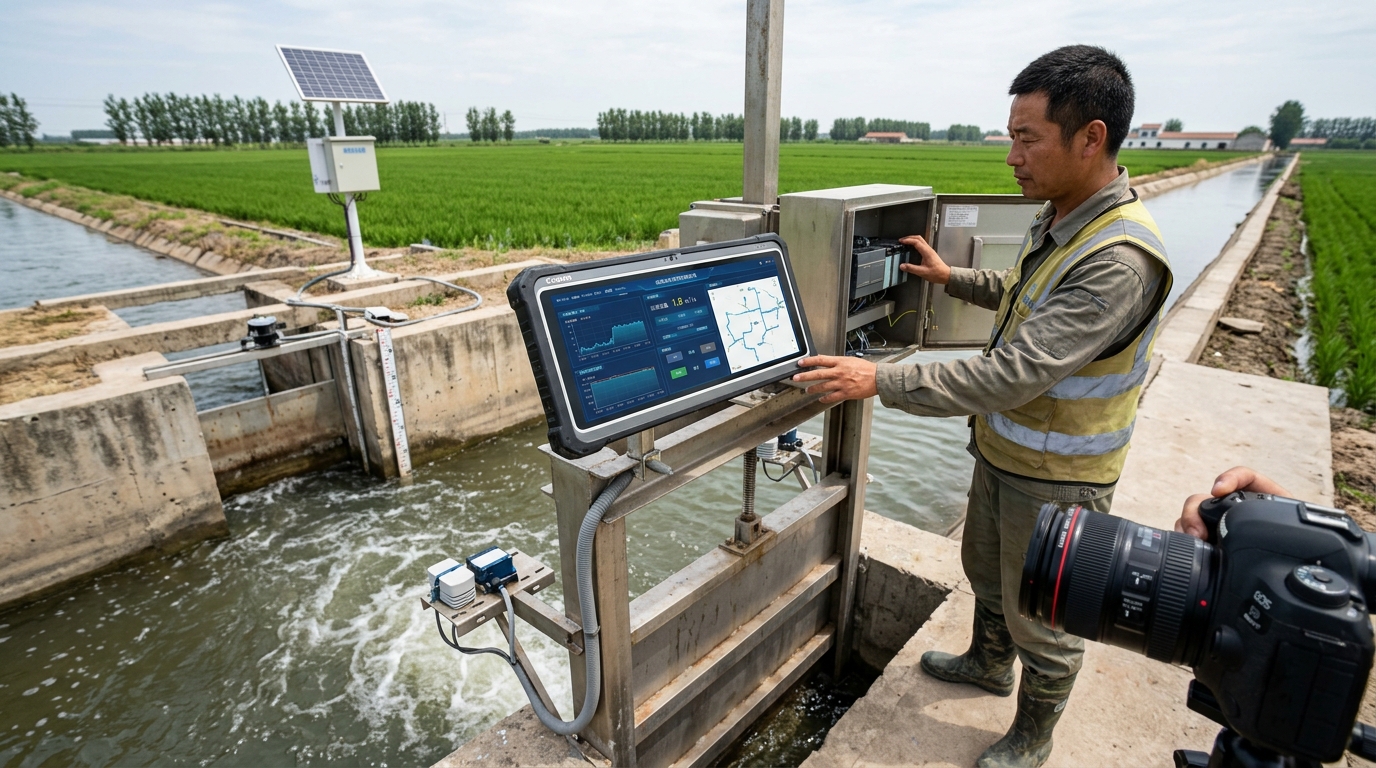
The informatization system of irrigation districts usually consists of the perception layer, communication layer, control layer, and platform layer. The perception layer is responsible for collecting data such as water level, flow rate, flow velocity, rainfall, soil moisture, gate opening, power, and video; the communication layer can adopt 4G/5G, LoRa, optical fiber, BeiDou short messages, etc.; the control layer includes electric gates, hoists, solenoid valves, and pump station units; the platform layer completes data access, alarming, dispatch models, water use statistics, and mobile inspection. A shortcoming in any of the four layers will affect the effect of smart irrigation.
Before construction, quantitative indicators should be clarified. The water level monitoring error should be controlled within ±1 cm, the radar water level meter range can be selected from 10 to 30 meters, and the protection rating should not be lower than IP68; the accuracy of the electromagnetic flowmeter can be selected as Class 0.5, applicable to DN300 to DN1200 pipelines; the comprehensive error after open channel flow rating should not be greater than 5%. The remote control response time of the gate should not be greater than 30 seconds, and the opening feedback error should not be greater than 1%. On the platform side, daily water consumption, rotational irrigation plans, fault work orders, and water-saving reports should be generated to avoid mere display without decision-making.
Key Metrics
- System Availability > 98%
- Data Completeness > 99%
- Flow Error < 5%
- Gate Response Time < 30s
Data Governance
The platform should support access to Modbus RTU/TCP, MQTT, and relevant hydrological industry protocols, and mark abnormal data, such as water levels exceeding the canal embankment elevation, sudden flow changes exceeding 30% in a short time, and abnormal drops in battery voltage.
Pre-installation Preparation: Survey, Selection, List, and Construction Organization
The first step of pre-installation preparation is on-site survey. The canal cross-section form, design flow, maximum water depth, siltation condition, upstream and downstream structures, power supply conditions, and communication signals should be recorded point by point. For open channel water measurement points, priority should be given to locations with regular cross-sections, stable flow patterns, and easy maintenance, avoiding bends, drops, and gate turbulence areas. If the canal is severely silted or has many weeds, dredging should be arranged before installation; otherwise, it will lead to the drift of the water level-flow relationship.
The second step is equipment selection and list verification. For solar-powered sites, it is recommended to configure batteries for 7 to 15 days of continuous rainy days. Common configurations include 20W to 100W photovoltaic panels, 12V 65Ah or two 100Ah batteries; for areas with weak communication signals, 4G signal strength should be tested in advance, and external antennas or LoRa relays should be used if necessary. Hot-dip galvanized or 304 stainless steel materials should be selected for battery boxes, poles, and bolts, and 316 stainless steel can be used in coastal, saline-alkali, or highly corrosive environments. Panoramic, close-up, and equipment nameplate photos should be taken in advance for each site to form "one file for one site."
Installation Steps: Key Points for Water Measurement Equipment, Gates, Communication, and Power Supply Construction
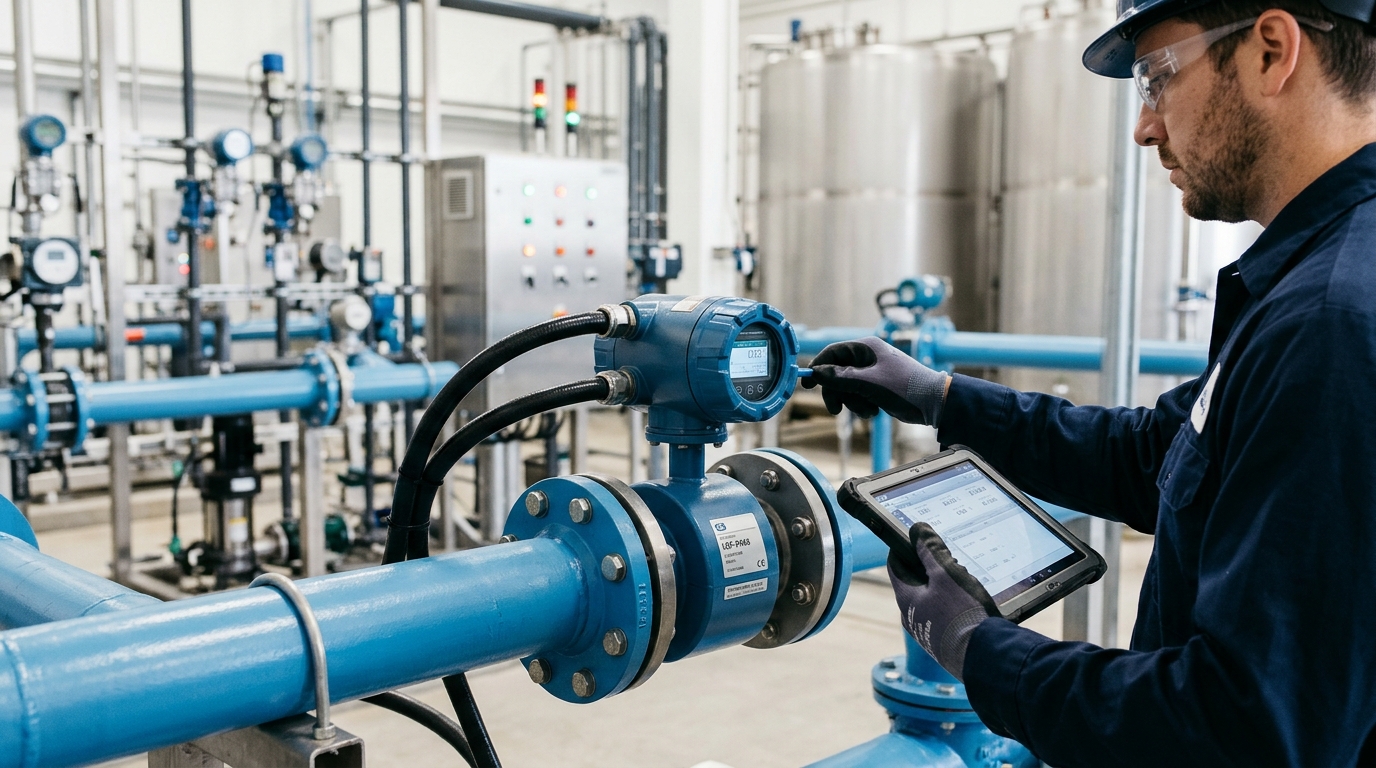
During the installation phase, it is recommended to proceed in the order of "foundation—sensing—control—power and communication—platform access." Foundations and brackets should use hot-dip galvanized steel or stainless steel parts, and the installation height should be at least 0.5 meters higher than the historical maximum water level, with maintenance passages reserved. The radar water level meter should be installed vertically downward, avoiding floating objects and wave disturbances; the ultrasonic open channel flowmeter should be matched with a Parshall flume or standard weir, and the throat should be kept smooth; when the electromagnetic flowmeter is installed in a full pipe section, the upstream and downstream straight pipe sections should meet the requirements of 5D upstream and 3D downstream, and grounding rings and equipotential connections should be made according to specifications.
The focus of gate and hoist installation is on limit switches, opening feedback, and manual priority. The electric actuator should first complete the manual test and then the electric debugging; the opening sensor should calibrate the two reference points of 0% fully closed and 100% fully open, and check the linearity of the intermediate opening. For screw hoists, it should be checked whether the limit switches and mechanical limits are synchronous and reliable; for winch hoists, attention should be paid to the status of wire ropes, pulleys, brakes, and height meters to prevent over-winding or loose ropes.
Power & Communication Standards
- PV Panel Tilt: Local Latitude ±5°
- Box Protection Rating: ≥ IP65
- Lightning Grounding Resistance: ≤ 4 Ohms
- Cable Separation: Strong/Weak electricity distance ≥ 20cm
When accessing the platform, equipment coding, communication protocols, coordinates, and clocks should be unified to avoid "multiple names for one site and data dislocation" in the later stage. It is recommended to synchronously include newly built sites in the irrigation district basic database, clarifying the canal name, stake number, cross-section type, design flow, control range, and management unit. This not only facilitates smart irrigation dispatch but also facilitates subsequent water fee metering, water-saving evaluation, and asset management.
Debugging Methods: Standalone Calibration, Linkage Control, and Data Rating
Debugging should be divided into four steps: standalone debugging, linkage debugging, data rating, and platform verification. Standalone debugging includes sensor zero point, range, sampling interval, and filtering parameter settings. Common sampling intervals can be set to 1 to 5 minutes, and alarm data can be reported with increased density. Communication debugging should check heartbeat packets, signal strength, breakpoint resume, and retransmission success rate; for battery-powered sites, sleep and wake-up currents should be tested to avoid excessive standby power consumption. Gate standalone debugging should test local buttons, remote commands, opening feedback, over-torque protection, and limit stop, and the opening error should not be greater than 1%.
Linkage debugging needs to solve the problem of "automatic but not erratic." Control targets can be set according to canal water levels or downstream flow, and a dead zone of 3 to 5 cm can be set to prevent frequent opening and closing of gates; for long canals, delay and speed limit logic should be added to avoid the superposition of water level fluctuations. In smart irrigation scenarios, rotational irrigation plans, water demand, rainfall forecasts, and soil moisture can be incorporated into the dispatch model, but it is recommended to initially target stable water levels and flows, and gradually introduce optimization algorithms after sufficient data accumulation.
Daily Maintenance: Periodic Inspection, Calibration, and Data Governance
Daily maintenance should form a schedule rather than waiting for faults to occur before handling them. Daily, the online rate, data curves, and alarm information can be viewed through the platform, focusing on confirming whether key gates and metering sites are normal; weekly, power supply voltage, solar charging status, and communication signals should be checked; monthly, the appearance of sensors, bracket bolts, cable connectors, and lightning arresters should be inspected, and spider webs, bird droppings, and weeds near the radar radome and ultrasonic probe should be cleaned.
Quarterly maintenance should include gate screw lubrication, limit re-measurement, and manual/automatic switching tests; before and after the flood season, special inspections should be conducted on foundation scouring, box water ingress, grounding resistance, and photovoltaic panel fixation. Flow rating and battery capacity testing should be conducted at least once a year, and batteries are generally replaced every 2 to 4 years, depending on the number of charge-discharge cycles and ambient temperature. For irrigation districts with a lot of sediment, the frequency of cross-section re-measurement should also be increased to prevent metering distortion caused by siltation.
Common Fault Troubleshooting: Five-step Positioning According to "Power Supply—Communication—Sensing—Control—Platform"
It is recommended to position common fault troubleshooting according to the five steps of "power supply—communication—sensing—control—platform." Power supply faults are manifested as site offline or night restart, and common causes include dust accumulation on photovoltaic panels, battery aging, controller parameter errors, or terminal oxidation; battery voltage can be measured first, and the charging circuit should be focused on checking if it is below 11.5V. Communication faults are manifested as intermittent data, and common causes include SIM card arrears, loose antennas, signal strength below -105dBm, or box shielding; they can be solved by replacing antennas, adjusting installation height, or adding relays.
Sensing faults are commonly manifested as water level jumping or abnormal flow. Water level jumping is mostly caused by waves, installation angle, floating objects, or insufficient filtering; anti-wave tubes can be added, installation positions adjusted, or moving average windows extended; abnormal flow should check cross-section parameters, siltation, weir and flume dimensions, and zero drift. For example, if the water level at a certain station is normal but the flow is zero, it may be that the flowmeter power supply is normal but the coefficient is mistakenly changed; if a gate remote command is successful but it does not move on site, it is common that the local switch is in the manual position.
For control faults such as gate inaction, the power phase sequence, thermal relay, limit switch, encoder, and local/remote switch should be checked in sequence. If the platform lacks data, the protocol, whitelist, port, device address, and clock synchronization should be verified. The handling principle is to first ensure engineering safety and manual controllability, and then restore the data closed loop. For key faults affecting water delivery safety, priority should be given to switching to local or manual operation, and the fault period and manually supplemented data should be recorded in the platform to avoid affecting subsequent water use statistics.
Conclusion and Outlook: Releasing the Value of Water Saving and Dispatch through Standardized Operation and Maintenance
Looking forward to the future, the focus of irrigation district informatization will shift from equipment coverage to data governance and dispatch effects. With the gradual implementation of digital twin irrigation districts, AI water demand prediction, water rights trading, and volumetric metering, the system requires higher quality basic data and more stable operation and maintenance mechanisms. The value of smart irrigation is not only reflected in remote control, but also in reducing water abandonment, lowering energy consumption, improving water supply guarantee rates, and supporting agricultural water saving.
For irrigation district management units, installation, debugging, maintenance, and fault troubleshooting are not project closing actions, but long-term operation capabilities. Only by making water measurement accurate, gate control stable, and platform data active can irrigation district informatization truly become a productive tool for water saving and efficiency enhancement. Industry practice shows that a standardized, replicable, and assessable operation and maintenance system will be the core competitiveness of irrigation district modernization construction in the next stage.