Development Opportunities for Smart Water Management in 2026: Navigating the Dual Carbon Goals
As water scarcity and extreme weather converge, the industry is transitioning from traditional engineering governance to digital, refined management. In 2026, smart water management moves beyond simple connectivity to focus on predictive capabilities, data accuracy, and quantifiable water savings.
Introduction: From "Seeing" to "Predicting"
China's per capita water resources stand at roughly one-quarter of the global average, with uneven distribution exacerbating the challenge. With agricultural water use accounting for over 60% of total societal consumption, improving efficiency is no longer optional—it is an industry consensus driven by limited arable land and intensifying climate change.
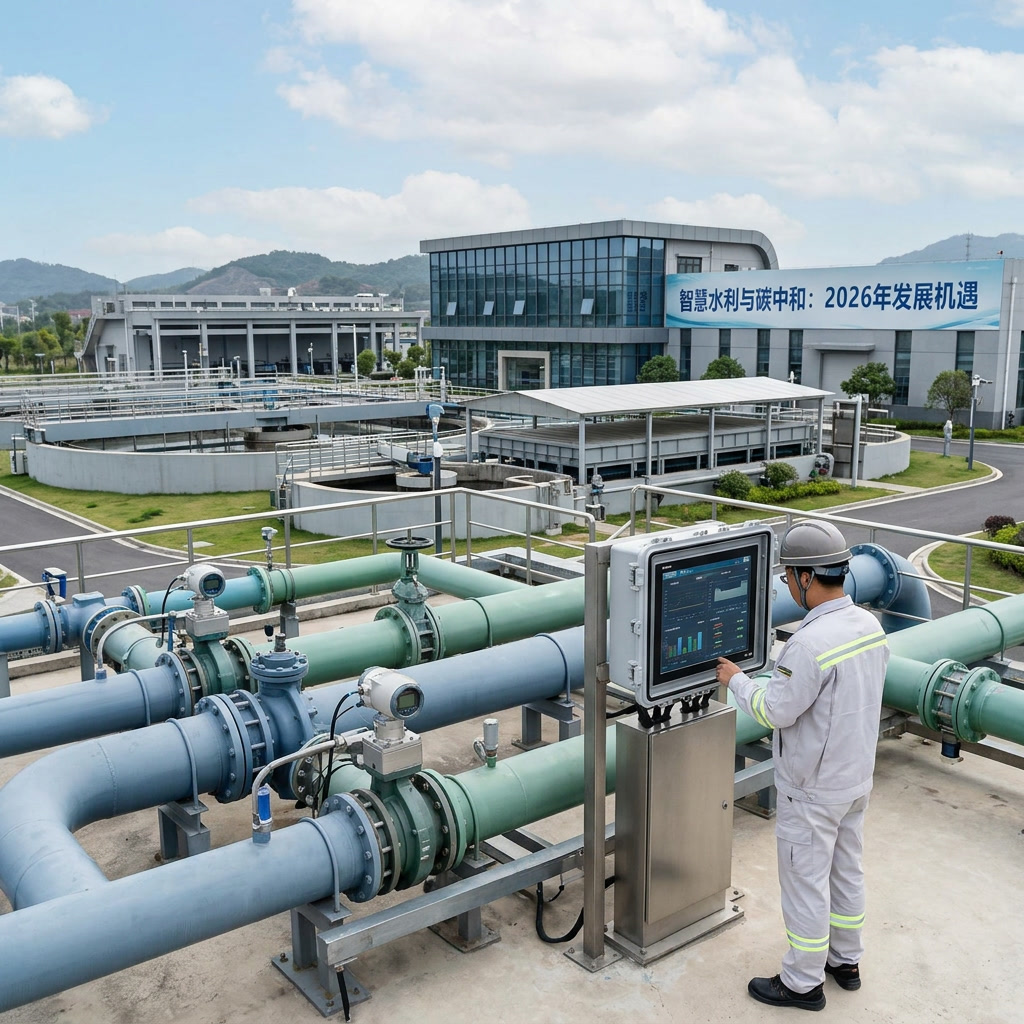
The core of modern smart water management lies in leveraging IoT, remote sensing, GIS, AI, and specialized hydrological models to achieve full-chain perception. The industry focus has shifted from basic connectivity ("is it online?") to operational excellence:
- Data Accuracy: Ensuring reliable inputs for decision-making.
- Model Applicability: Using models that reflect real-world hydrology.
- Closed-Loop Dispatching: Automating responses based on data.
- Quantifiable Savings: Measuring actual water conservation results.
We have moved past the concept introduction phase into scenario implementation. Market competition now favors long-term operation capabilities, data governance, and comprehensive water-saving services over simple project construction or large-screen displays.
Market Trends: Investment Shifts to Data Operations
While national investment in water conservancy remains high, the allocation strategy is evolving. Unlike traditional investments focused on reservoirs and dikes, smart water investments are increasingly directed toward:
Perception & Monitoring
Sensors, communication networks, and automated control facilities.
O&M Services
Long-term maintenance, data governance, and performance-based payment models.
Demand structure is shifting towards sustainable scenarios like smart irrigation and water-saving retrofitting. Procurement evaluation criteria are changing significantly. Future projects will prioritize quantifiable indicators such as:
"Online rate, data accuracy, control response time, fault closed-loop rate, water-saving rate, and water fee collection rate."
This shift supports business models like water-saving contracts and EPC+O (Engineering, Procurement, Construction + Operation), moving revenue streams from one-time project sales to long-term service income.
Policy Impact: Reshaping Demand Logic
Policy remains the primary driver. The strictest water resource management system establishes binding frameworks for total water use and efficiency. Key metrics include:
- Irrigation Efficiency: The national effective utilization coefficient of farmland irrigation water rose from ~0.516 in 2012 to over 0.57 in 2023, targeting 0.58 by 2025.
- Agricultural Water Price Reform: Shifting from extensive billing to precise metering and charging by volume, requiring measurement facilities to extend to field outlets.
- Water Rights Trading: Demanding credible, continuous, and traceable metering data to facilitate trading and regulation.
Furthermore, the promotion of Digital Twin River Basins provides new policy leverage. Authorities require enhanced digital capabilities for forecasting, early warning, and contingency planning, integrating data on rainfall, water conditions, and engineering status.
Smart Irrigation: Synergy Between Crop Needs and District Dispatching
Smart irrigation aims to meet crop needs with the right amount of water at the right time, minimizing deep percolation and runoff. This requires synergy across multi-source data, including soil moisture, meteorological evaporation, and crop growth status.
Key Performance Indicators
- Soil Moisture Management: Maintaining relative soil moisture between 60%-80% during critical growth stages.
- Water Savings: Drip irrigation saves 20%-40% more water per mu compared to traditional border irrigation.
- Productivity: Precise fertilization can increase water productivity by over 10%.
The technology has evolved from single-point equipment to a comprehensive system: "Field water-saving engineering + Measurement/Control Terminals + Dispatching Platforms." Success depends on supply-demand synergy at the district scale, linking source water, main canals, lateral canals, and field users to form a closed loop.
Water Measurement: The Foundation of Refined Management
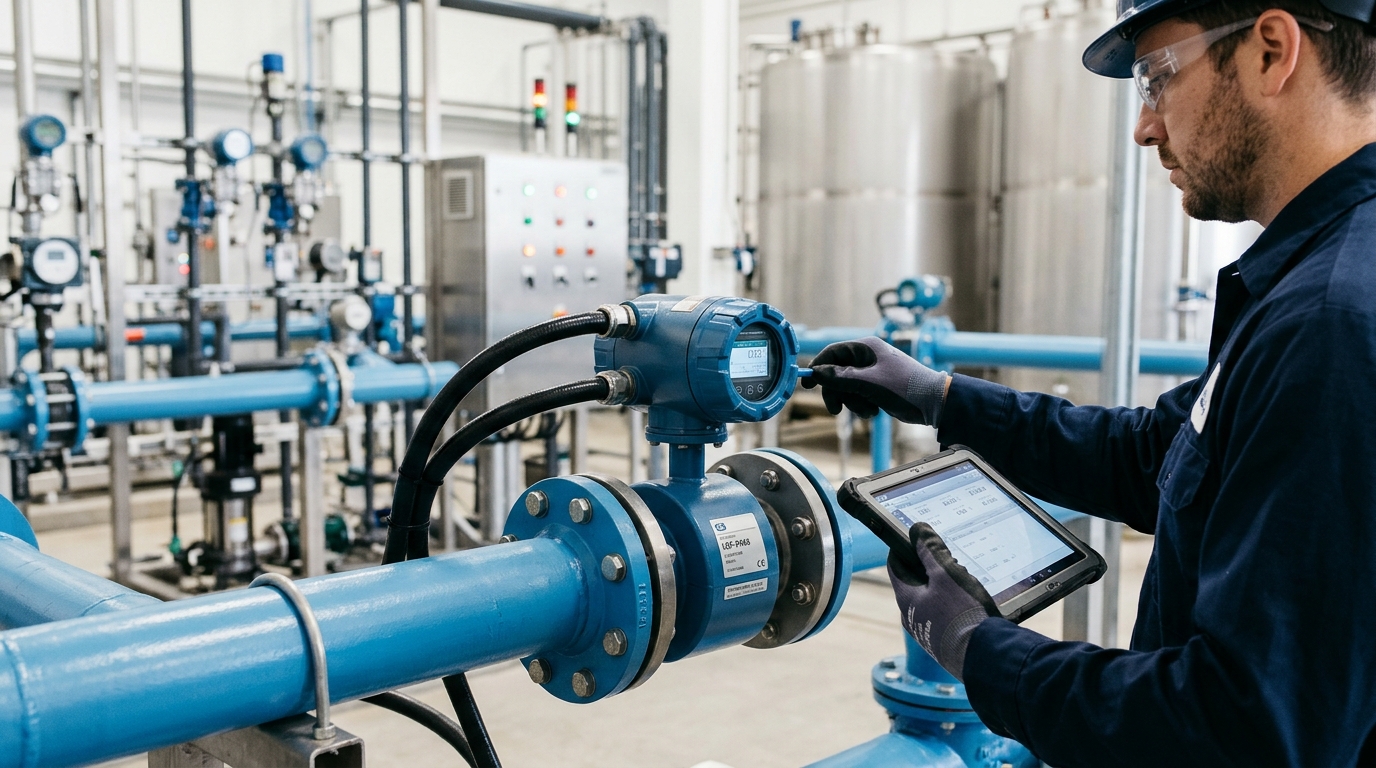
Without credible metering, smart water management remains conceptual. The water measurement system covers sources, canal heads, main/lateral canals, and user terminals. Common technologies include radar level gauges, ultrasonic flowmeters, and electromagnetic flowmeters.
Reliability varies by scenario. Main canals require high precision (error within ±5%), while field terminals prioritize low cost, freeze resistance, and remote reading. Facilities must be not just installable, but accurate, durable, and calibratable against challenges like winter freezing, sediment flushing, and aquatic weed entanglement.
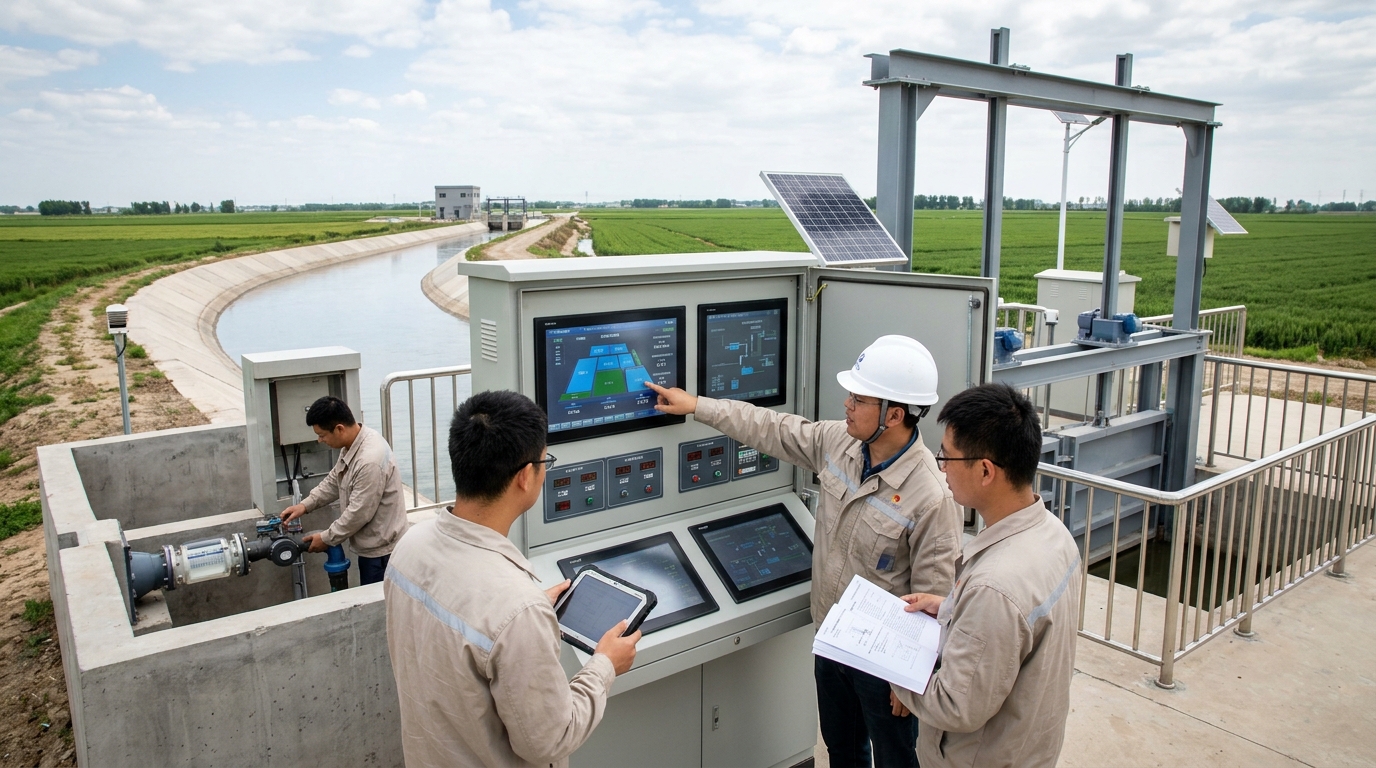
In modernized districts, deploying integrated measurement and control gates has increased metering coverage at lateral outlets to over 80%. This data enables volume-based charging, reduces conveyance losses by ~10%, and provides an objective basis for water fee collection and saving assessments.
Informatization & Digital Twins: From Visualization to Prediction
Informatization platforms aggregate data from rain, water levels, flow, soil moisture, and video. As sensor density increases, platform timeliness becomes critical for flood control and drought assessment.
Digital Twins drive the next leap, moving from "viewing data" to "using models." By combining hydrological, hydrodynamic, and allocation models with physical mappings, digital twins allow for:
- Forecasting: Simulating river levels and flood peak propagation under different rainfall scenarios.
- Rehearsal: Predicting canal supply-demand gaps during peak irrigation to optimize water allocation plans.
- Data Fusion: Integrating satellite remote sensing (crop structure, soil moisture), UAV inspections, and Video AI for hazard detection.
Technological Directions: Edge Intelligence & AI
At the edge, computing power is becoming crucial. Given communication interruptions and unstable power in remote sites, edge intelligent terminals perform local threshold judgment and gate control, ensuring continuity even when disconnected from the cloud.
Communication & Power
NB-IoT/LoRa for plains; Satellite for mountains. Solar/battery systems designed for 15-30 days of autonomy in rainy conditions. IP68 protection for extreme temperatures (-40°C to 70°C).
AI Applications
Visual AI for hazard recognition; Time-series models for flow/soil prediction; Optimization algorithms for multi-objective dispatching (irrigation vs. flood control).
AI in water conservancy emphasizes safety and interpretability. It complements, rather than replaces, professional mechanistic models, forming a verifiable decision support system.
Outlook: Benefit Verification and Standardized Operations
Over the next 3-5 years, smart water management will shift from demonstration-led projects to large-scale replication. Evaluation criteria will become more pragmatic, focusing on:
- Increased effective utilization coefficients of irrigation water.
- Decreased canal conveyance losses.
- Improved water fee collection rates.
- Proactive drought and flood responses.
The ecosystem requires collaboration among water professionals, automation experts, software developers, and financial institutions. Equipment manufacturers must shift from selling hardware to providing reliable data services, while integrators ensure operational effectiveness.
Ultimately, smart water management represents the modernization of the water governance system. Through smart irrigation, precise metering, digital twins, and supportive policies, the industry is realizing the transition from "seeing water" to "understanding water," and from "passive response" to "active prediction."