Low-Cost High-Density Water Sensor Networks: Architecture Design and Field Deployment Guide
As water utilities face increasing pressure to reduce non-revenue water (NRW) and manage aging infrastructure, the traditional reliance on sparse instrumentation is no longer sufficient. This guide explores the architecture, design, and deployment strategies for high-density sensor networks that provide granular visibility across entire water systems.

1. Why High-Density Monitoring Matters in Water Infrastructure
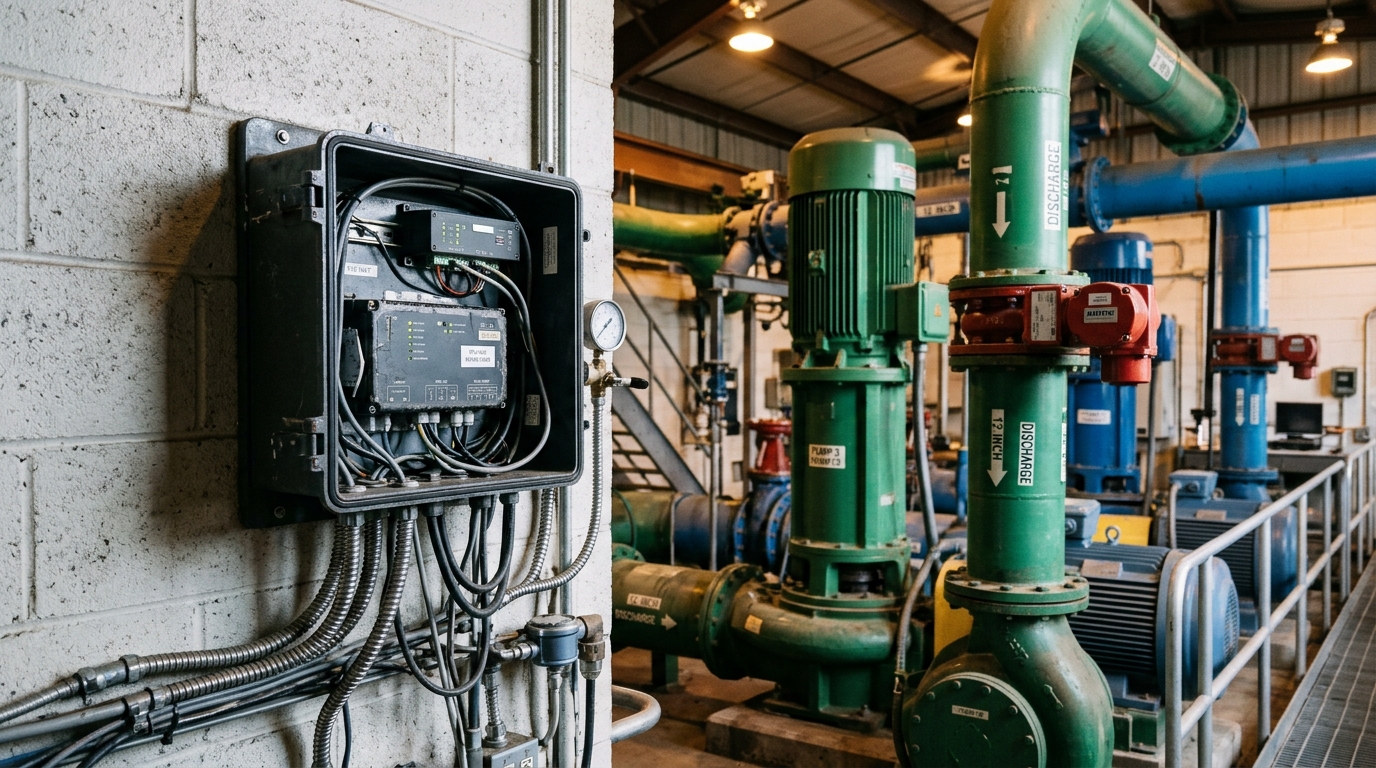
Conventional water network monitoring relies on sparse instrumentation at critical nodes — major trunk mains, pump stations, and treatment plant inlets. While this approach served the industry well for decades, it falls short when utilities face aging infrastructure, increasing frequency of combined sewer overflows (CSOs), and regulatory pressure to reduce non-revenue water (NRW) below 10%.
The fundamental limitation is spatial resolution. A single ultrasonic flow meter at a DMA boundary cannot reveal internal hydraulic gradients, identify micro-leaks in service connections, or detect surcharge events in lateral sewers. High-density sensor networks address this gap by deploying large numbers of low-cost nodes that collectively provide continuous, granular visibility across the entire network.
2. System Architecture
A well-designed high-density water sensor network follows a three-tier architecture aligned with ISO/IEC 30141 IoT Reference Architecture.
2.1 Perception Layer — Sensor Node Design
The node must balance measurement accuracy, power consumption, and unit cost. A typical configuration includes:
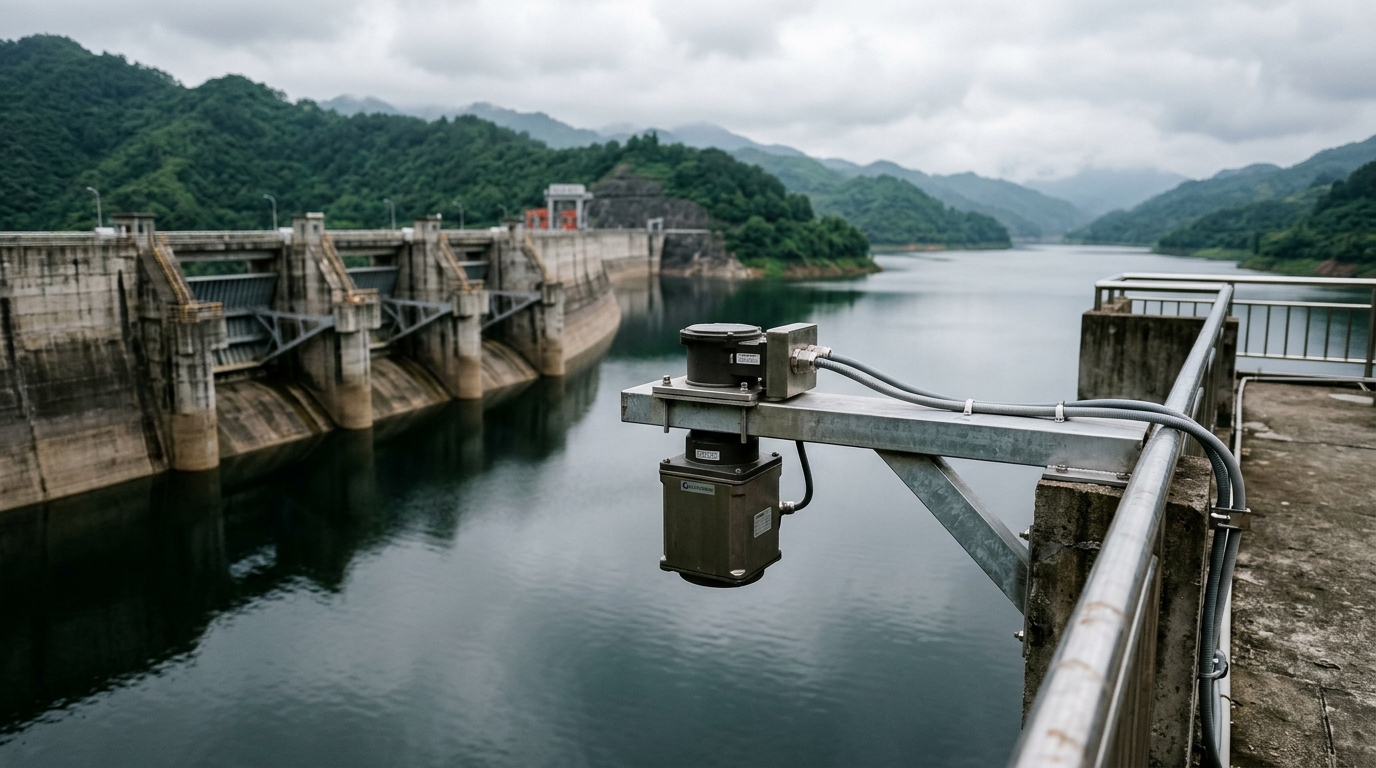
- Level measurement: 26 GHz FMCW radar sensor, range 0–5 m, accuracy ±3 mm, active power < 0.5 W. Radar is preferred over ultrasonic in sewer environments because it is immune to condensation, H₂S corrosion, and temperature stratification.
- Velocity measurement: Miniature Doppler ultrasonic module (pipe diameters DN200–DN600) for flow velocity at critical cross-sections.
- Water quality screening: Combined conductivity + pH + turbidity probe for anomaly detection at outfall points.
- Edge processing: ARM Cortex-M4 MCU performing local filtering (moving average, outlier rejection) and event-triggered reporting to reduce uplink traffic.
Target BOM cost per node: USD 120–200, representing an 80%+ reduction compared to traditional telemetry stations (USD 1,500–3,000).
2.2 Communication Layer — LPWAN Selection
Communication is the primary challenge in high-density deployments. A hierarchical approach is recommended:
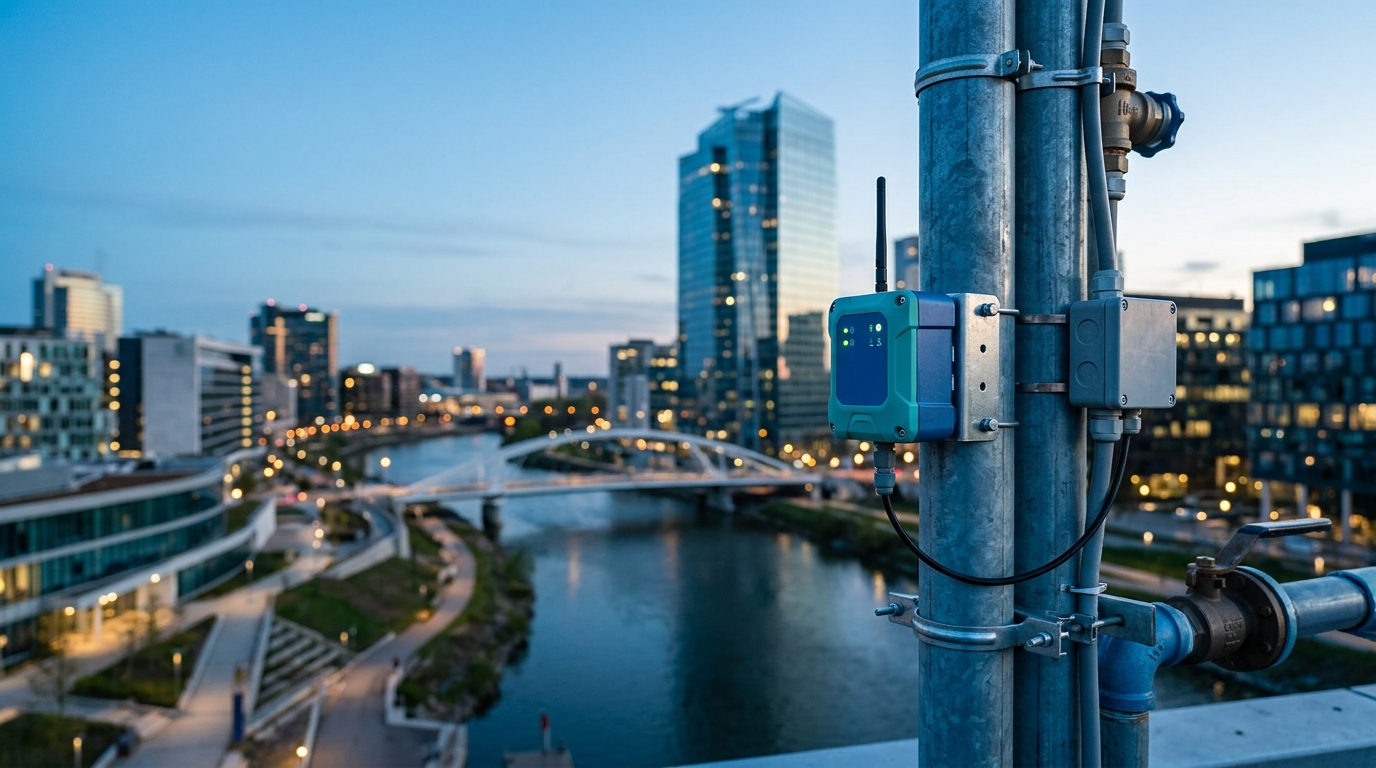
- Last-mile connectivity: LoRaWAN (EU868 / US915 / CN470) or NB-IoT (3GPP Rel. 14+). LoRaWAN supports 200+ end nodes per gateway in typical urban conditions with 500 m range; NB-IoT leverages existing cellular infrastructure for wider coverage.
- Backhaul: Gateways aggregate data and forward via 4G/LTE or fiber to the cloud platform.
- Protocol stack: MQTT-SN or CoAP over UDP minimizes packet overhead (2–4 bytes header vs. 20+ bytes for HTTP), extending battery life by 30–40%.
2.3 Platform Layer — Cloud and Edge Computing
The cloud platform provides time-series data storage, visualization, alerting, and analytics. Key design elements include:
- Time-series databases (e.g., TimescaleDB, InfluxDB) optimized for high-frequency ingestion and aggregation queries.
- Edge computing gateways performing local data cleansing, compression, and protocol translation, reducing upstream bandwidth by 70%+.
- Integration with hydraulic simulation models (EPANET, SWMM) for real-time model calibration using dense field data.

3. Power Management Strategies
Power supply is a critical constraint for dense deployments in manholes, pipes, and remote channels. Recommended approaches:
- Primary lithium batteries (e.g., Saft ER34615, 19 Ah): Combined with ultra-low-power sleep modes (average current < 50 µA), these achieve 3–5 year operational life at 15-minute sampling intervals.
- Solar + lithium supercapacitor: Suitable for open-channel and river installations; supercapacitors buffer cloudy periods.
- Energy harvesting: Micro-hydro turbines driven by pipeline pressure differential are emerging as a viable option for pressurized networks.
4. Deployment Methodology
We recommend a phased deployment strategy:
Phase 1 — Pilot DMA
Deploy 20–30 nodes within a single DMA to establish baseline data quality and validate hydraulic models.
Phase 2 — Optimization
Use data from Phase 1 to identify information gaps and reposition nodes for maximum coverage.
Phase 3 — Scale-out
Expand to full network coverage using standardized node designs with interchangeable sensor modules.
Standardization is essential: uniform mechanical interfaces (DN100 flange mount), electrical interfaces (plug-and-play sensor modules), and firmware OTA update capabilities reduce lifecycle O&M costs by 40–60%.
5. Summary
Low-cost high-density water sensor networks represent a paradigm shift from point measurement to pervasive sensing. By optimizing node cost through integrated circuit design, leveraging LPWAN for scalable communications, and adopting phased deployment methodologies, utilities can achieve network-wide visibility within realistic budget constraints.
As IEC 62443 security standards and OIML R49 metrology requirements continue to evolve, the next generation of dense water monitoring systems will combine affordability with the precision demanded by modern utility asset management.