Background: Density Is What Creates Value
For urban flood warning, sewer network monitoring or DMA leakage control, a single measurement point describes only a local state. It is a dense sensor network that provides the spatial resolution required for model calibration and dispatch decisions. Covering flood-prone spots and CSO outfalls in an urban drainage system typically requires a level or flow measurement point every 500 m to 1 km. Conventional monitoring stations cost tens of thousands of USD per point to build, with annual O&M running at 10%–20% of CAPEX — clearly not scalable. A low-cost, high-density sensing network therefore hinges on two things: cutting communication cost and extending battery life, both of which must be resolved at the architecture stage.
Technical Analysis: Where Each Communication Option Fits
The communication module accounts for 30%–50% of per-node hardware cost and dominates the power budget. Three options are common in field deployments, each with a clear boundary:
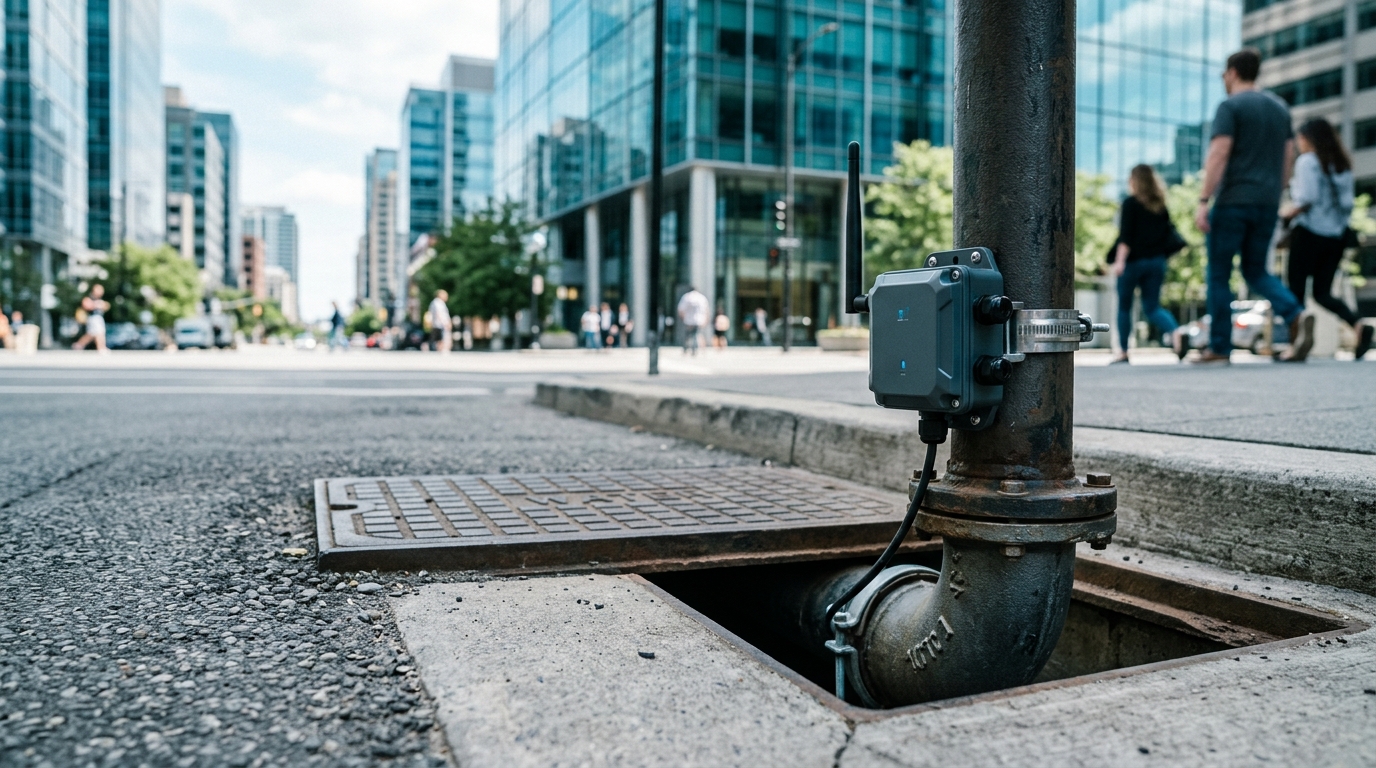
- NB-IoT (3GPP Release 13+): Runs on carrier infrastructure, so no gateways to build. PSM deep-sleep current is in the low microamp range, which suits manholes and chambers with adequate coverage. In deep manholes (>5 m) or remote river reaches, however, retransmission rates climb sharply — insist on an external antenna connector and verify RSSI on site before bulk deployment.
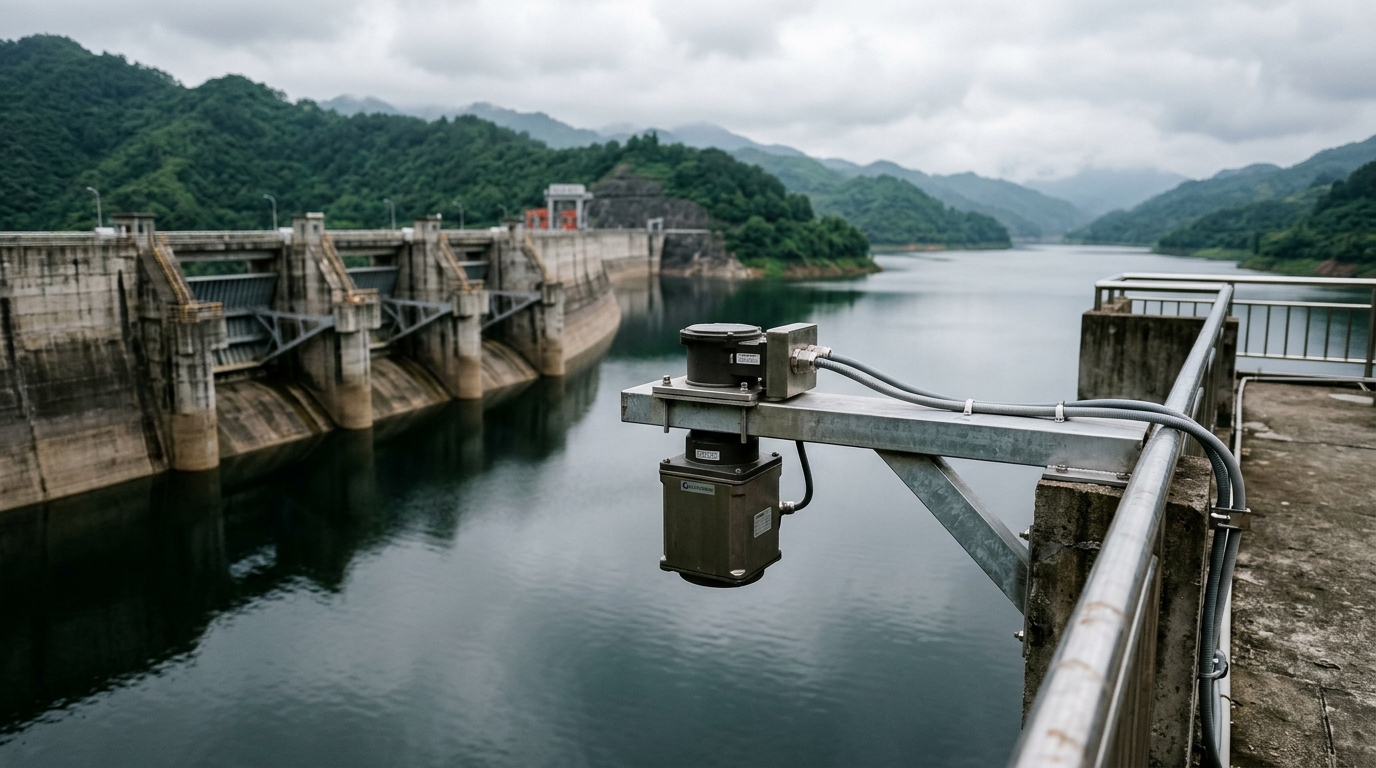
- LoRa / LoRaWAN (470/868 MHz): Urban range of 2–5 km, over 10 km in open suburban terrain. The right choice for irrigation districts, small reservoirs and rivers where carrier coverage is absent or a private network is preferred; one solar gateway can amortize across dozens of nodes. The trade-off is network planning — site selection and backhaul — plus limited channel capacity at high spreading factors.
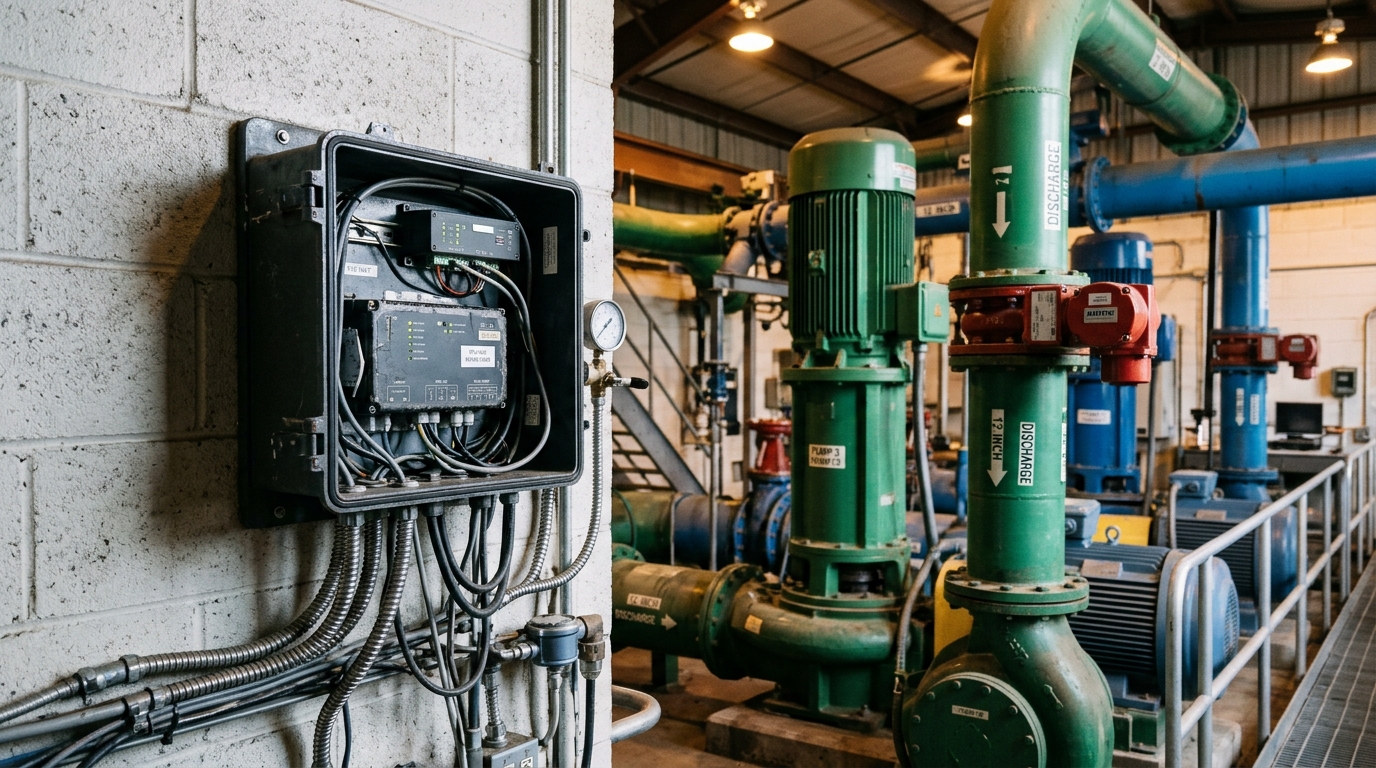
- LTE Cat.1: An order of magnitude hungrier than NB-IoT, but with stable bandwidth for video or 1-minute-interval data at pump stations and gate nodes, normally paired with solar-plus-battery supply.
Field experience: use NB-IoT as the default in urban pipe networks, with LoRa filling coverage holes; LoRa with solar aggregation gateways for irrigation districts and rivers; Cat.1 wherever remote control is required. Hybrid architectures typically cut total cost of ownership by 20%–35% versus an all-cellular design.
Recommendations: Do the Power Budget, Node by Node
Radio selection is only half of the story; the power budget sets battery life. Consider a sewer level-monitoring node: a 19 Ah Li-SOCl₂ cell, NB-IoT wake-and-report every 15 minutes (≈150 mC per attempt including attach and retransmission margin), ≈30 mC per cycle for sensor excitation and MCU processing, and quiescent current held under 10 μA. Daily consumption works out to ≈18.1 C, roughly 6.6 Ah per year — a theoretical life beyond 2.5 years. Derating to 60%–70% usable capacity for low-temperature passivation, the engineering figure is 18–21 months. To reach 3 years, relax routine reporting to 30–60 minutes and add event-triggered behavior: sample hourly in dry weather, switch to 5-minute reporting automatically when the level ramp rate exceeds a threshold (e.g., 2 cm/min) during storms.
Three details that are routinely overlooked. First, Li-SOCl₂ passivation can cause voltage sag of up to 2 V in cold weather — design in storage capacitors or pulse activation, or winter will produce false "dead battery" failures. Second, excite sensors with pulsed power and use MΩ-class divider resistors so static branches stay in the microamp range. Third, firmware must buffer data locally and retransmit after link recovery; gaps in the time series undermine every downstream analysis.
Conclusion
There is no silver bullet for low-cost, high-density water sensor networks: communication selection caps the cost, the power budget floors the O&M. The recommended sequence is: define the spatial density the business case requires, layer the communication architecture around measured signal conditions, then complete a per-node power budget with a 30% margin. Done this way, a sensing network can run 3–5 years at affordable cost and genuinely become the perception layer of urban lifeline infrastructure.