1. Background: The Density-vs-Cost Contradiction
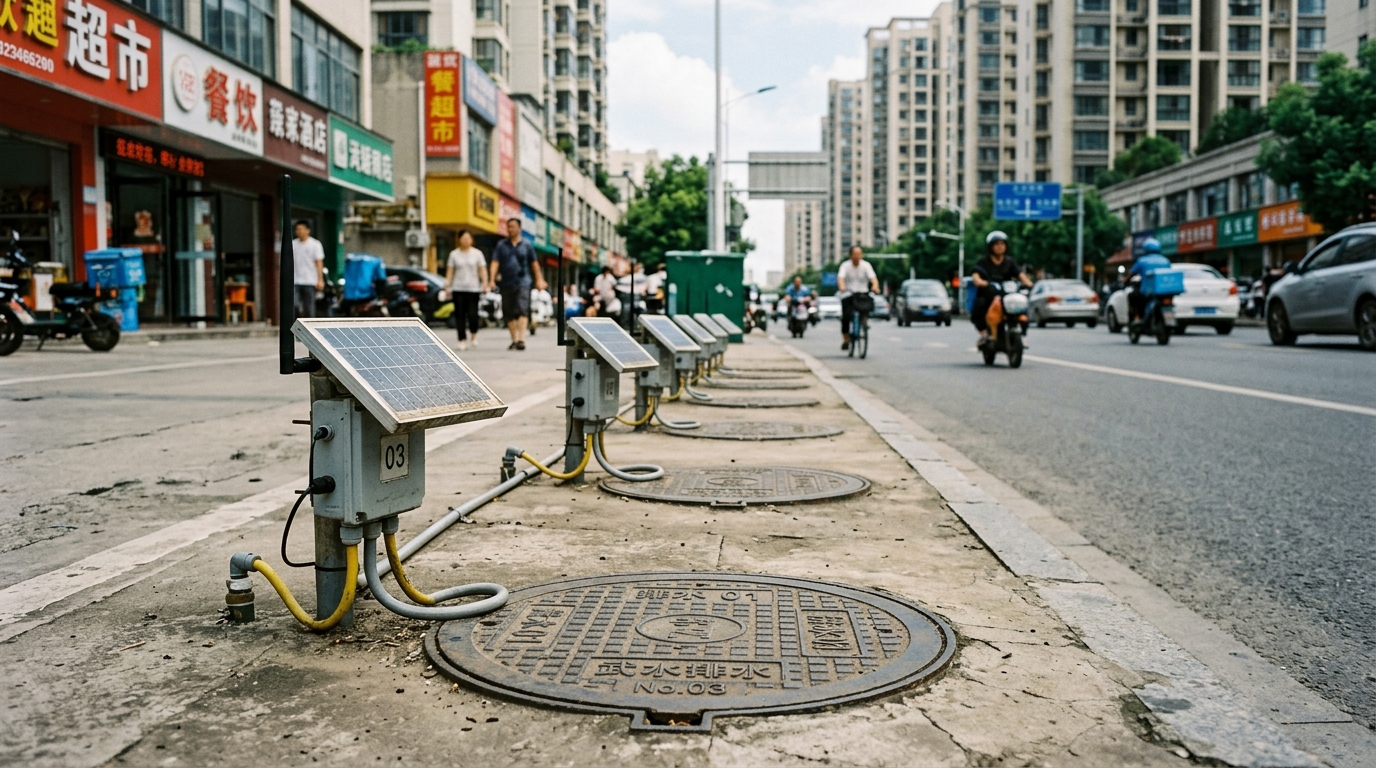
For urban drainage monitoring and DMA leakage control, one lesson keeps repeating: a handful of high-accuracy reference meters cannot resolve the spatial complexity of a pipe network. Only a dense grid of low-cost sensors reveals how level, flow and pressure actually distribute across space and time. But density and cost work against each other. When node counts grow from tens to thousands, hardware spend scales linearly while operations, connectivity and data-governance effort scale superlinearly. Most network expansions fail not at the pilot stage but at scale-up, precisely because system-level cost was underestimated.
2. Technical Analysis: Three Engineering Challenges at Scale
Data quality is the first challenge. Budget-grade level and flow sensors typically ship at ±0.5% to ±1% FS with annual drift of 1–2% FS. When hundreds of nodes report anomalies simultaneously, the platform must separate genuine events (leaks, CSO overflows) from sensor faults (drift, fouling, battery brownout). Without edge-side filtering, false-alarm rates above 30% are common — enough to destroy operator trust in the whole system.
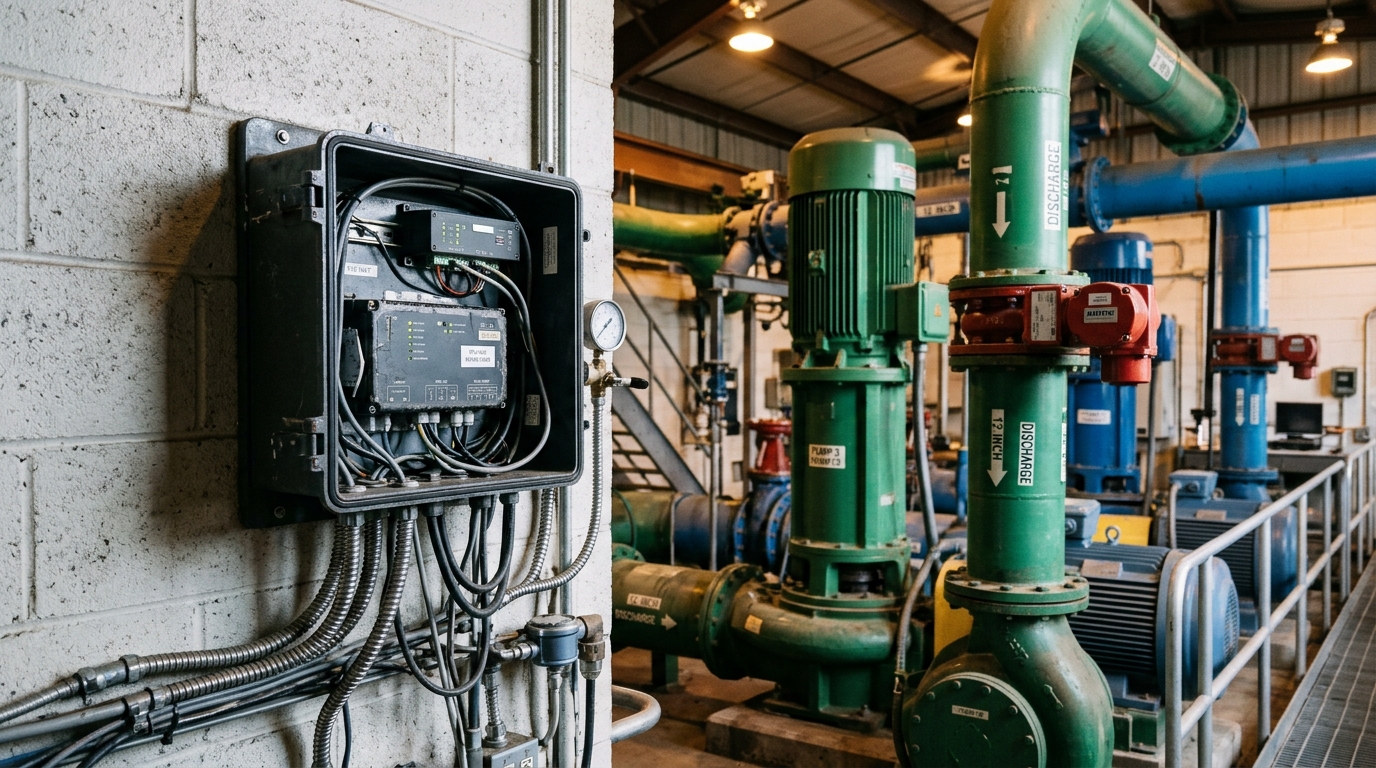
Remote fault management is the second. Nodes sit in manholes, along riverbanks and at remote abstraction points. Field rounds are impractical. Sensors and RTUs must therefore provide self-diagnostics (electrode fouling detection, echo signal strength, battery health) and accept remote configuration, otherwise a single fault triggers repeated truck rolls.
Total cost of ownership is the third. Over a five-year service life, hardware typically represents only 30–40% of TCO; connectivity fees, battery replacements, calibration and fault handling make up the rest. Choosing the cheapest node often raises, not lowers, the five-year bill.
3. Recommended Architecture: Layered Sensing, Edge Governance, Tiered Calibration
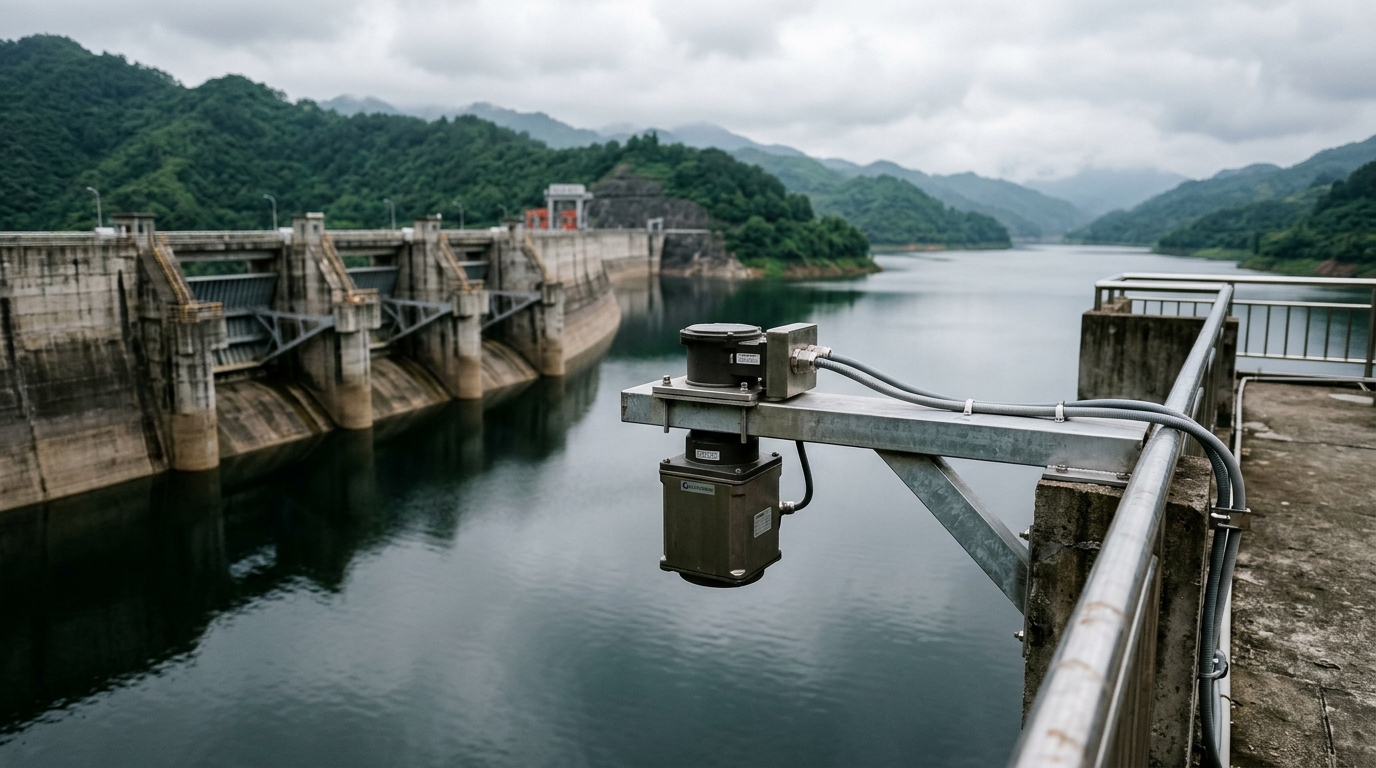
- Layer the sensing tier. Backbone nodes use custody-transfer-grade instruments (electromagnetic flow meters, 80 GHz radar level meters, IP68 per IEC 60529) where data feeds billing or regulatory reporting. Mesh nodes use budget sensors (submersible or ultrasonic level transmitters) for trend detection. This typically cuts average cost per point by 40–60% without sacrificing settlement accuracy.
- Push data governance to the edge. Perform limit checks, spike rejection, stuck-value detection and rate-of-change validation inside the RTU. Event-driven reporting for exceedances, low-frequency batch uploads (1–4 times per day) for routine data — this reduces airtime by more than 80% and kills false alarms at the source. For metering-grade data, align validation logic with the data-quality characteristics defined in ISO/IEC 25012 (accuracy, consistency, credibility).
- Calibrate in tiers. Verify backbone meters annually against applicable metrological requirements (e.g. OIML R49 for water meters). For mesh nodes, use reference-point comparison plus batch sampling: check 5–10% of nodes in the field, estimate fleet-wide drift statistically, and replace only out-of-tolerance units instead of recalibrating everything.
- Model TCO before procurement. Score every candidate node as hardware + connectivity + battery service + (field visits × node count) over five years. Compare low-cost and high-reliability options on lifecycle cost, never on purchase price alone.
4. Conclusion
A low-cost, high-density water sensor network is not a procurement exercise in buying cheap sensors. It is a system-engineering trade-off among sensing layers, edge-side data governance and maintenance strategy. Utilities that move data-quality control and TCO analysis to the front of the architecture phase are the ones whose networks still deliver trustworthy data at the thousand-node scale — the sensing backbone that urban drainage monitoring, DMA programs and urban-lifeline platforms all depend on.