Background: The Cost Constraint of High-Density Monitoring
Urban drainage monitoring and irrigation telemetering share one structural problem: many measurement points, small per-point budgets. A medium-sized city's waterlogging early-warning scheme typically requires 200-500 nodes across manholes, culverts and flood-prone spots; an irrigation district may cover more than a thousand offtakes. Reusing the classic "industrial RTU plus cellular private APN" architecture pushes the all-in cost per point (device, connectivity, power, installation) well beyond USD 1,000, which breaks the business case. Low-cost, high-density water sensor networks - targeting an all-in cost of roughly USD 200-400 per node - have therefore become the mainstream architecture for Smart Water deployments.
Technical Analysis: Three-Layer Architecture and Link Selection
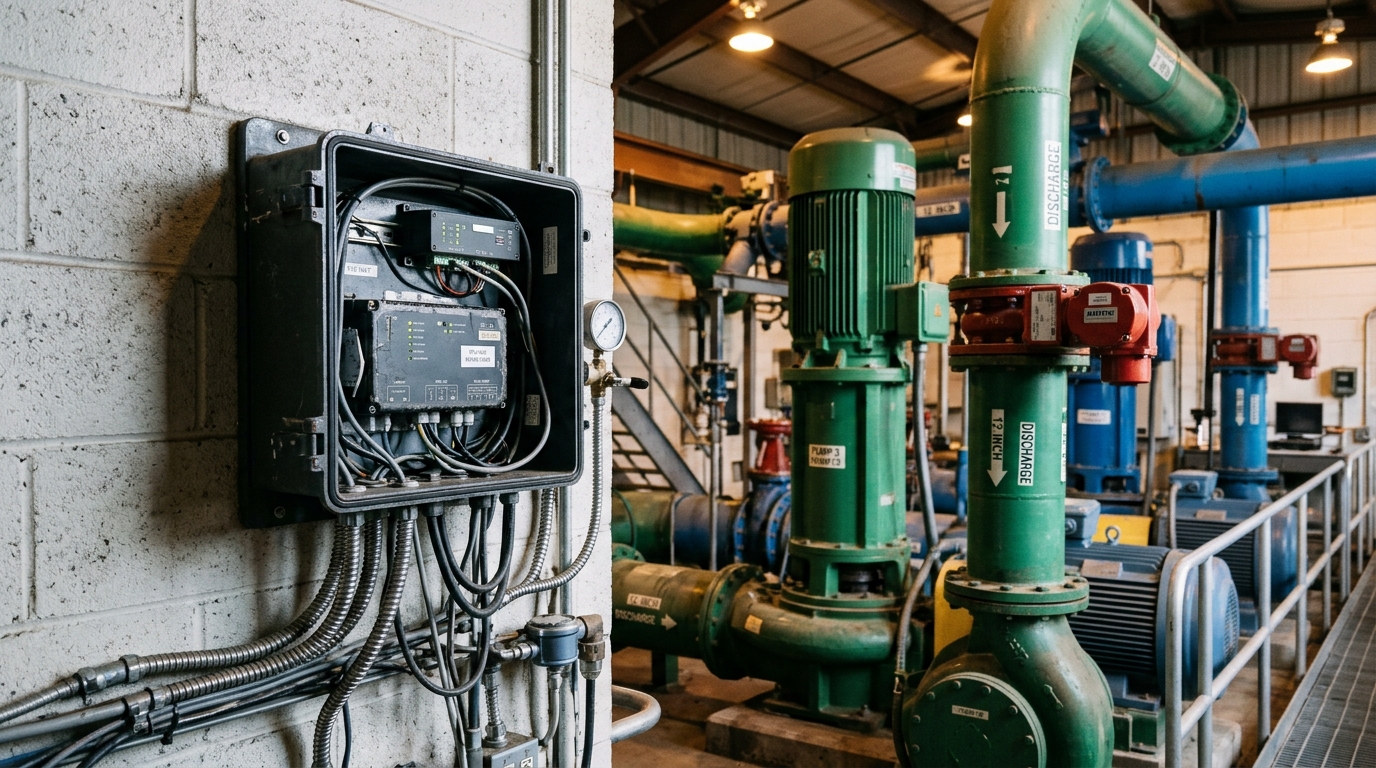
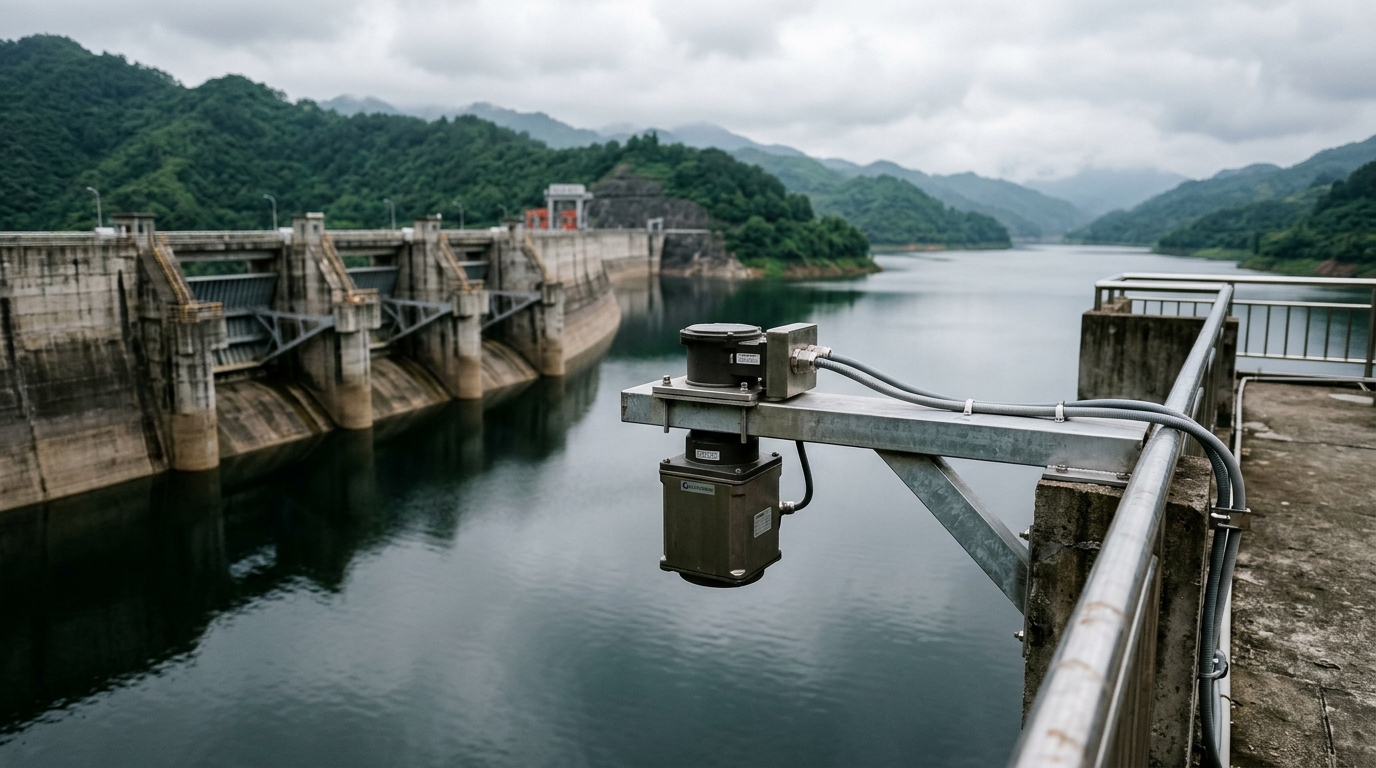
The field-proven architecture has three layers: a sensing layer (non-contact radar level sensors, submersible level loggers, low-power IoT RTU acquisition units), a transport layer (private LoRaWAN or operator NB-IoT) and a platform layer (ingestion, data quality governance, applications). Transport selection is the decisive engineering choice:
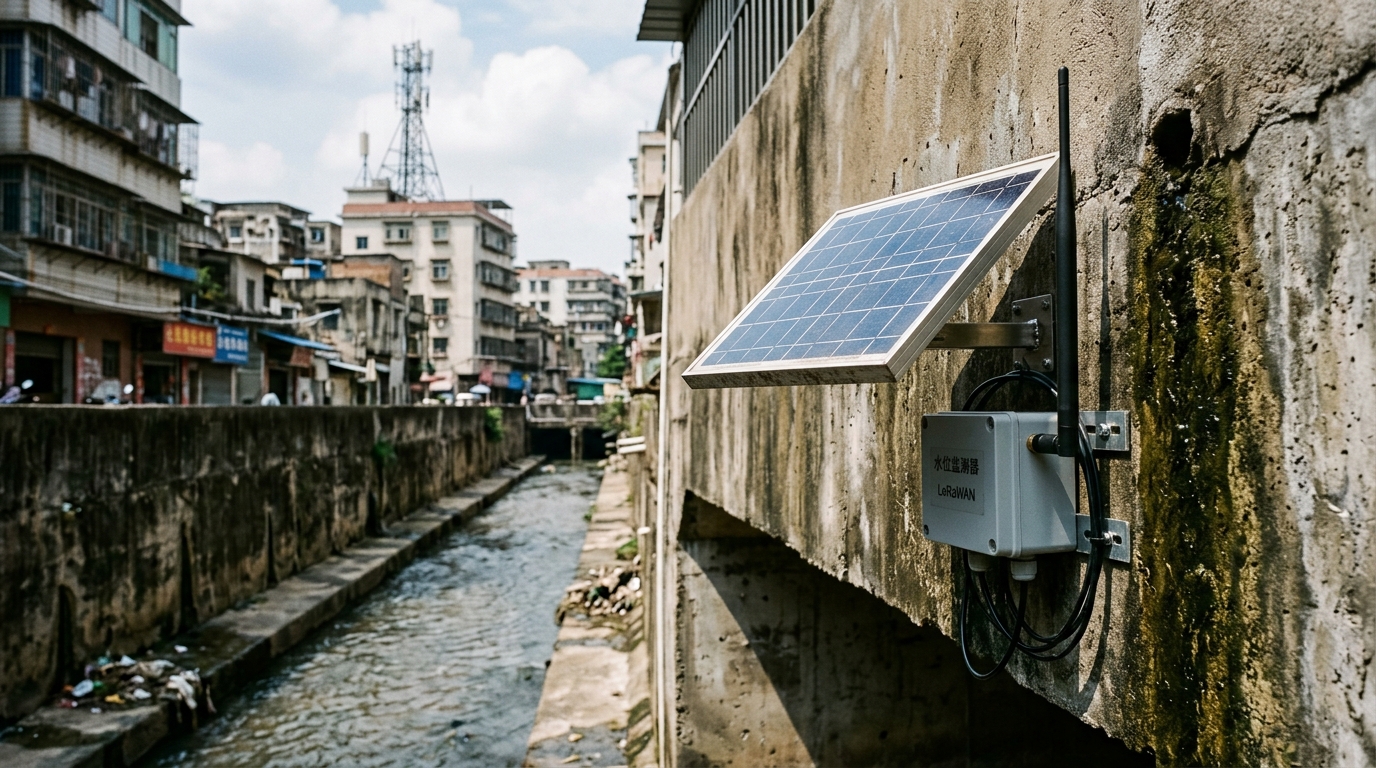
- Propagation environment. Under-ground manholes are deep-indoor scenarios with 20-30 dB of additional attenuation. NB-IoT benefits from the operator's base-station power spectral density and typically outperforms surface-mounted LoRa gateways in penetrating manhole covers. LoRaWAN remains viable for Urban Drainage Monitoring if an external antenna is routed through the cover seam.
- Gateway capacity. A LoRaWAN gateway's theoretical capacity is several thousand end devices, but duty-cycle and spreading-factor limits dominate in practice. At SF9/125 kHz, 11-byte payloads and one uplink per node per hour, an 8-channel gateway reliably serves 500-800 nodes. Design to a 60% load factor.
- Link budget. Plan urban LoRa links for 128-135 dB budget; every additional 6 dB of margin extends reliable range by roughly 40%. For double-shielded manhole installations, measured in-pit RSSI and SNR - not map-based estimates - must gate the design.
- Cost model. NB-IoT is billed per SIM (about USD 3-7 per year). Scattered sites favour NB-IoT; dense clusters within one gateway radius favour LoRaWAN, whose three-year TCO wins despite the upfront gateway cost of USD 700-2,000.
Recommendations: Power Budget and Data Quality
On the node side, keep the LoRa module's sleep current below 2 uA; with one uplink per hour an 8,000 mAh Li-SOCl2 pack then exceeds five years of service, while solar nodes must be sized for seven consecutive overcast days. On the data side, low-cost sensors must be paired with edge-side data quality governance in the RTU - outlier rejection, temperature compensation and range validation - so that a dense network does not flood the platform with noisy records. A hybrid design (NB-IoT below the cover, LoRaWAN for surface stations) is the cost-optimal answer for most sewer flow monitoring projects.
Conclusion
The success of a low-cost, high-density water sensor network is decided not by sensor unit price but by scenario-fit link selection, honest gateway capacity planning and lifecycle power management. Validate the radio link at 3-5 representative sites - the deepest pit, the farthest node, the noisiest environment - before freezing the architecture; this single step removes most of the post-deployment connectivity rework.