Advances in Non-Contact Flow Measurement Technology
In municipal drainage, river hydrometry, and industrial fluid metering, conventional contact-type flowmeters face significant challenges due to installation constraints and maintenance overhead. Non-contact flow measurement technology has emerged as the fastest-growing segment in water monitoring, offering clamp-on installation, independence from media conductivity, and near-zero maintenance requirements.
This article provides an engineering-oriented analysis of four mainstream non-contact flow measurement methods, helping professionals select the optimal solution for specific media characteristics and accuracy requirements.
Core Principles of Transit-Time and Doppler Ultrasonic Flowmeters
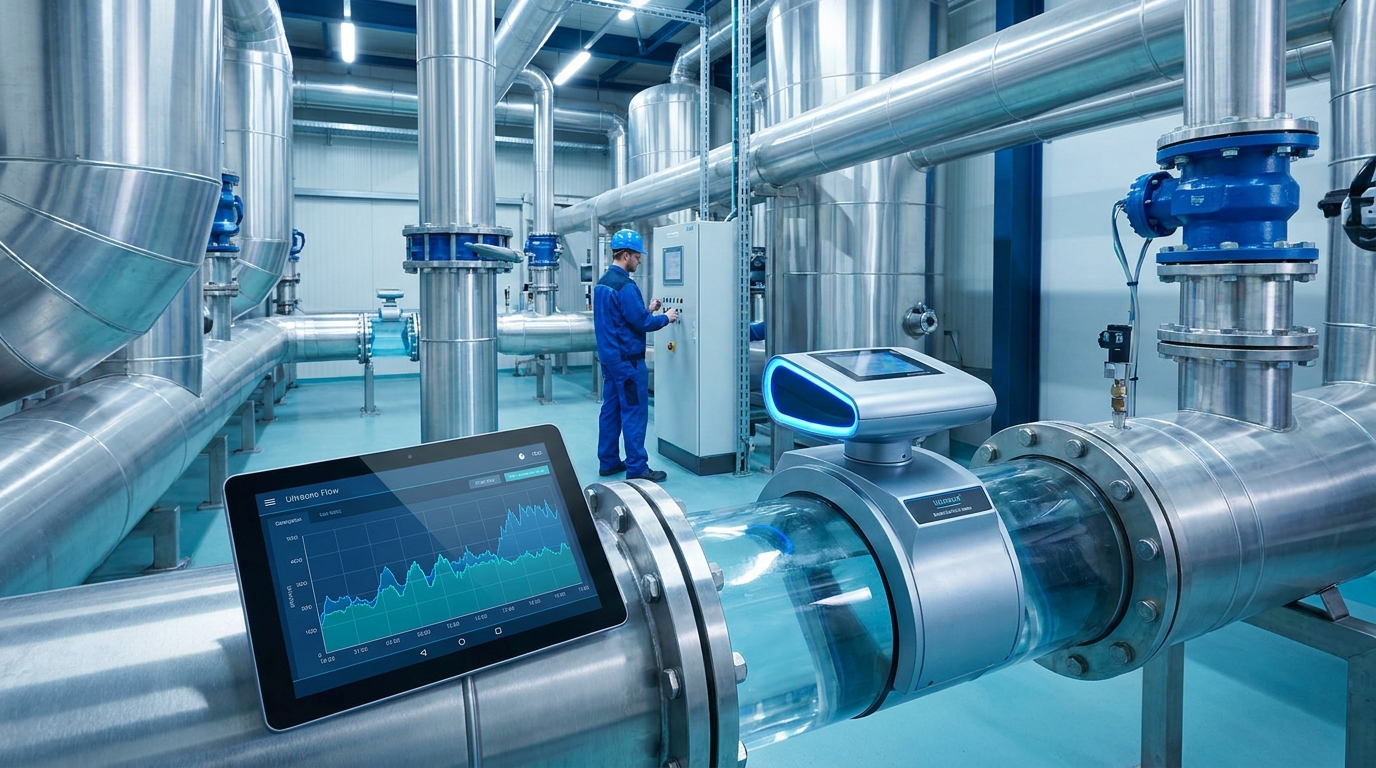
Transit-time ultrasonic flowmeters transmit pulses between upstream and downstream transducers, calculating flow velocity based on time differences. Suitable for full-pipe clean liquids, these devices achieve high accuracy reaching ±0.5%–1.0% per ISO 12242 standards, with transducer frequencies ranging from 0.5–4 MHz.
Doppler ultrasonic technology exploits frequency shifts of ultrasound reflected by suspended particles or bubbles. Ideal for wastewater and slurries containing ≥100 ppm solids, these meters offer ±1%–3% accuracy but require careful consideration of pipe material and liner types during installation.
Radar Surface Velocity and Laser Doppler Applications
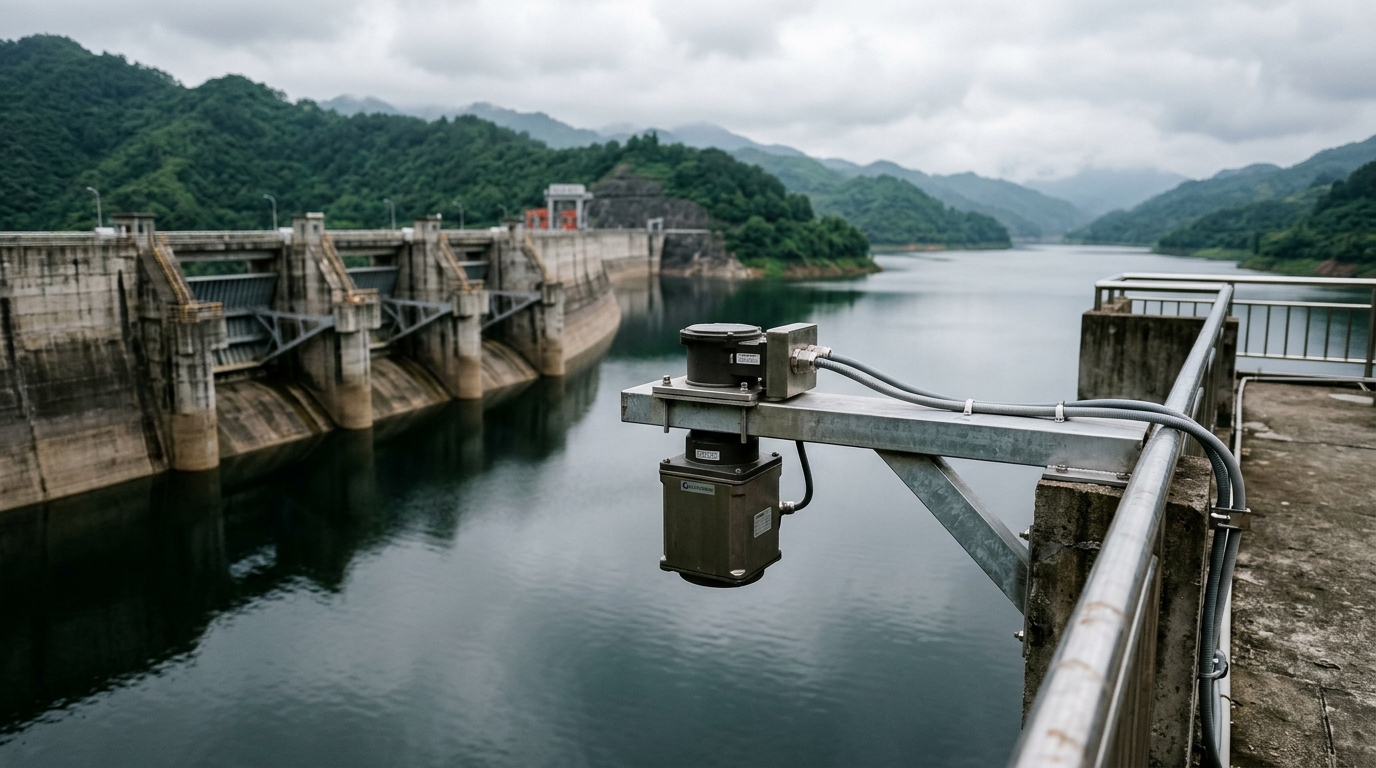
80 GHz FMCW radar sensors emit electromagnetic waves toward water surfaces, deriving surface velocity from Doppler shifts. Particularly suited to open channels, rivers, and sewer environments where pipes are not full, these systems comply with ISO 748 for discharge computation using cross-sectional water level data.
Laser Doppler Velocimetry (LDA/LDV) leverages laser interference to achieve micron-scale spatial resolution for high-precision laboratory calibration. While limited in field deployment for production environments, it remains essential for research and validation of other measurement techniques.
Critical Engineering Selection Factors for Non-Contact Flowmeters
Media Condition Matching
Transit-time requires gas <1% and solids <10,000 ppm; Doppler needs sufficient scatterers (>50 ppm); Radar is sensitive to wind speeds exceeding 15 m/s.
Installation Environment
Clamp-on units need wall thickness checks and grinding if scale ≥2 mm exists; Radar sensors require 30°–60° beam angles avoiding debris occlusion.
Accuracy vs Cost
Dual-path ultrasonic: $1,200–3,500 (±1%); Multi-path: $7,000+ (±0.3%); Radar: $400–1,800 (±5%); Doppler: $700–2,200.
Field Deployment Strategies for Drainage and Water Supply
For drainage network monitoring points, prioritize radar velocity sensor + ultrasonic level sensor combinations to prevent fouling and meet IEC 60068 environmental reliability standards.
Water supply trunk main metering benefits from dual-path transit-time clamp-on flowmeters with proper pipe surface preparation, achieving custody-transfer-grade accuracy.
At WWTP inlet/outlet, use Doppler at the inlet for high suspended solids and transit-time at the outlet for clean water, creating a complementary measurement strategy.
River hydrometric stations should calibrate radar sensors per ISO 748 using multi-point methods, with RTU terminals uploading data at 1–5 minute intervals for real-time monitoring.
Future Trends in Non-Contact Flow Measurement Technology
Non-contact flow measurement technology has definitively moved beyond the "insufficient accuracy" phase, driven by declining costs of 80 GHz mmWave radar chipsets and maturation of ultrasonic signal processing algorithms.
Cross-correlation and adaptive filtering techniques continue to improve precision across drainage networks, river hydrometry, and industrial process control applications.
The core engineering decision is no longer a binary "contact vs. non-contact" choice, but rather selecting the optimal combination of non-contact techniques tailored to specific media characteristics, installation conditions, and accuracy requirements.