Latest Advances in Non-Contact Flow Measurement: From Radar Principles to Multi-Sensor Fusion System Design
1. Background: Why Non-Contact Measurement Is Gaining Traction
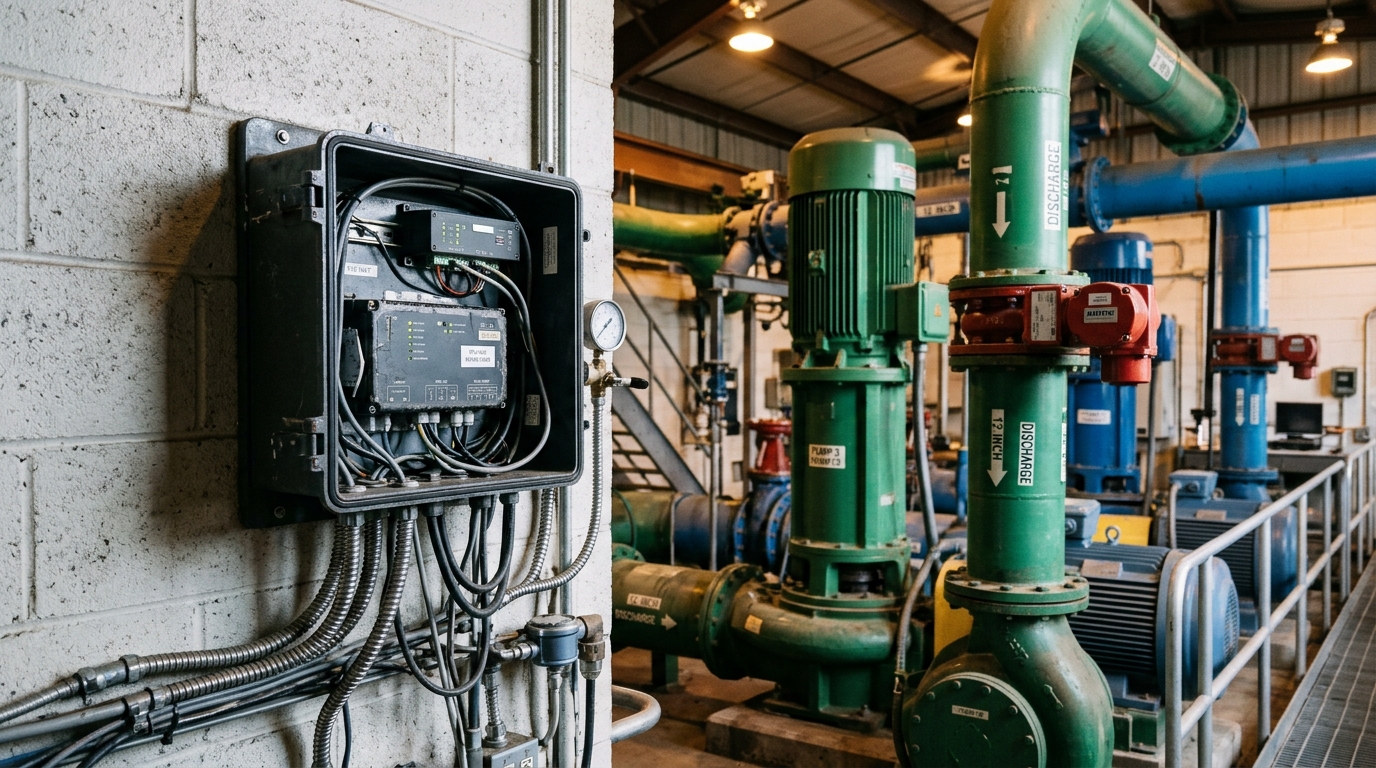
Traditional contact-based flow metering — electromagnetic meters, full-bore ultrasonic meters — performs well in clean-water supply networks but faces severe challenges in sewer networks, open channels, and rivers: high suspended solids, non-uniform velocity profiles, difficult access, and high maintenance costs.
Non-contact flow measurement eliminates sensor-medium contact, fundamentally avoiding corrosion, blockage, and abrasion. These technologies are now rapidly deployed across urban drainage monitoring, smart hydrology, and irrigation metering worldwide.
2. Comparison of Leading Non-Contact Technologies
2.1 80 GHz FMCW Radar
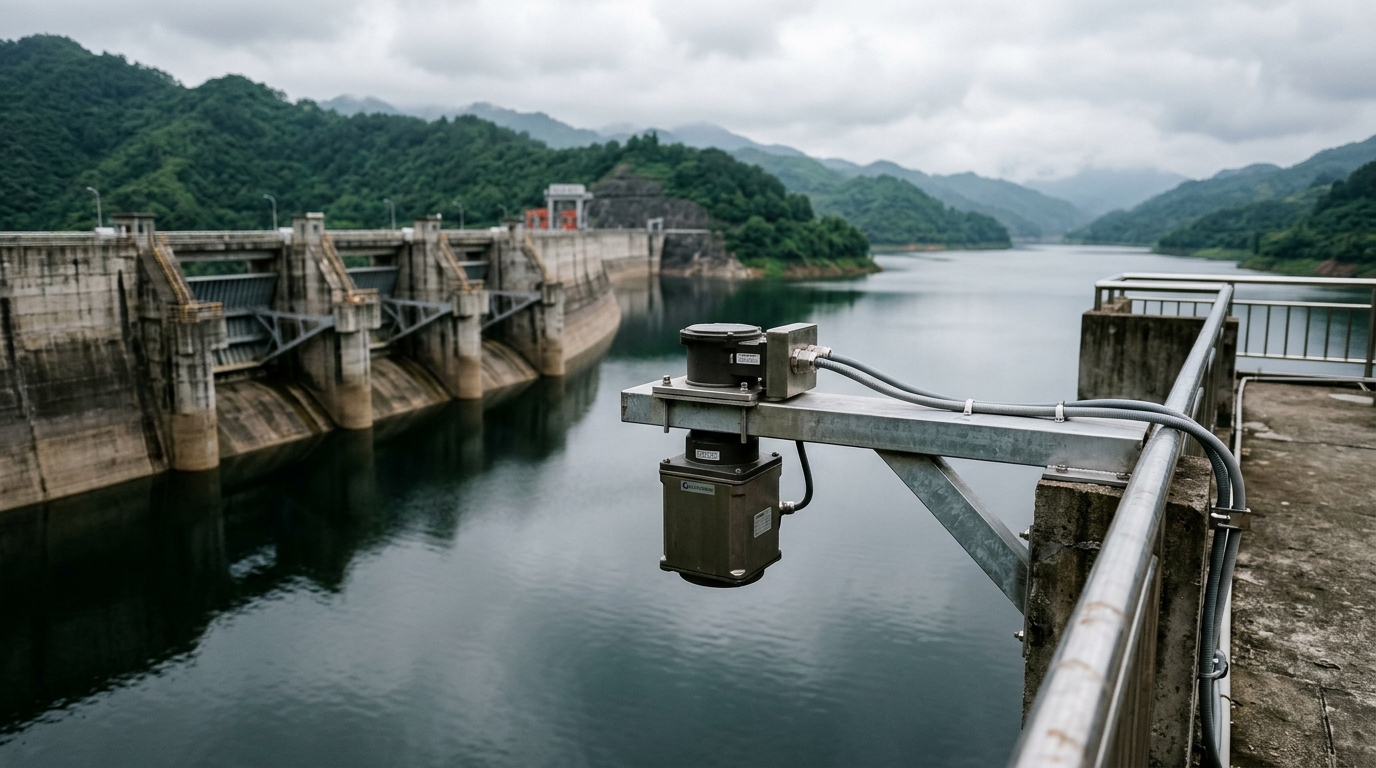
Frequency-Modulated Continuous-Wave (FMCW) radar delivers the highest accuracy among non-contact solutions. The 80 GHz band provides a narrower beamwidth (typically 3°–5°) compared to legacy 26 GHz devices, effectively suppressing wall reflections in small-diameter pipes. Range accuracy reaches ±2 mm; integrated Doppler velocity modules enable simultaneous level and velocity measurement, outputting discharge directly.
Performance Specs
- Range: 0–30 m (level), 0–5 m/s (velocity)
- Blanking distance: ≤ 0.2 m
- Ingress protection: IP68, submersible installation
- Power consumption: ≤ 0.5 W typical, solar-compatible
Compliance Standards
- IEC 61298 (process measurement)
- IEC 60068-2 (environmental testing)
- OIML R 49 (water meters)
2.2 Video-Based Velocimetry (LSPIV / STIV)
Large-Scale Particle Image Velocimetry (LSPIV) and Space-Time Image Velocimetry (STIV) extract surface velocity from camera imagery using cross-correlation algorithms. The key advantage is zero in-water infrastructure — ideal for emergency flood monitoring and unattended gauging stations. Accuracy is affected by lighting, surface texture, and wind; tracer particles or natural floating debris may be required.
2.3 Clamp-On Ultrasonic Transit-Time
Multi-path clamp-on ultrasonic meters achieve ±0.5 %–1 % accuracy in full-pipe conditions but require homogeneous pipe material with smooth outer walls. In gravity sewers with concrete or HDPE pipes, signal attenuation limits practical applicability.
3. Multi-Sensor Fusion: An Engineering Pathway to Reliability
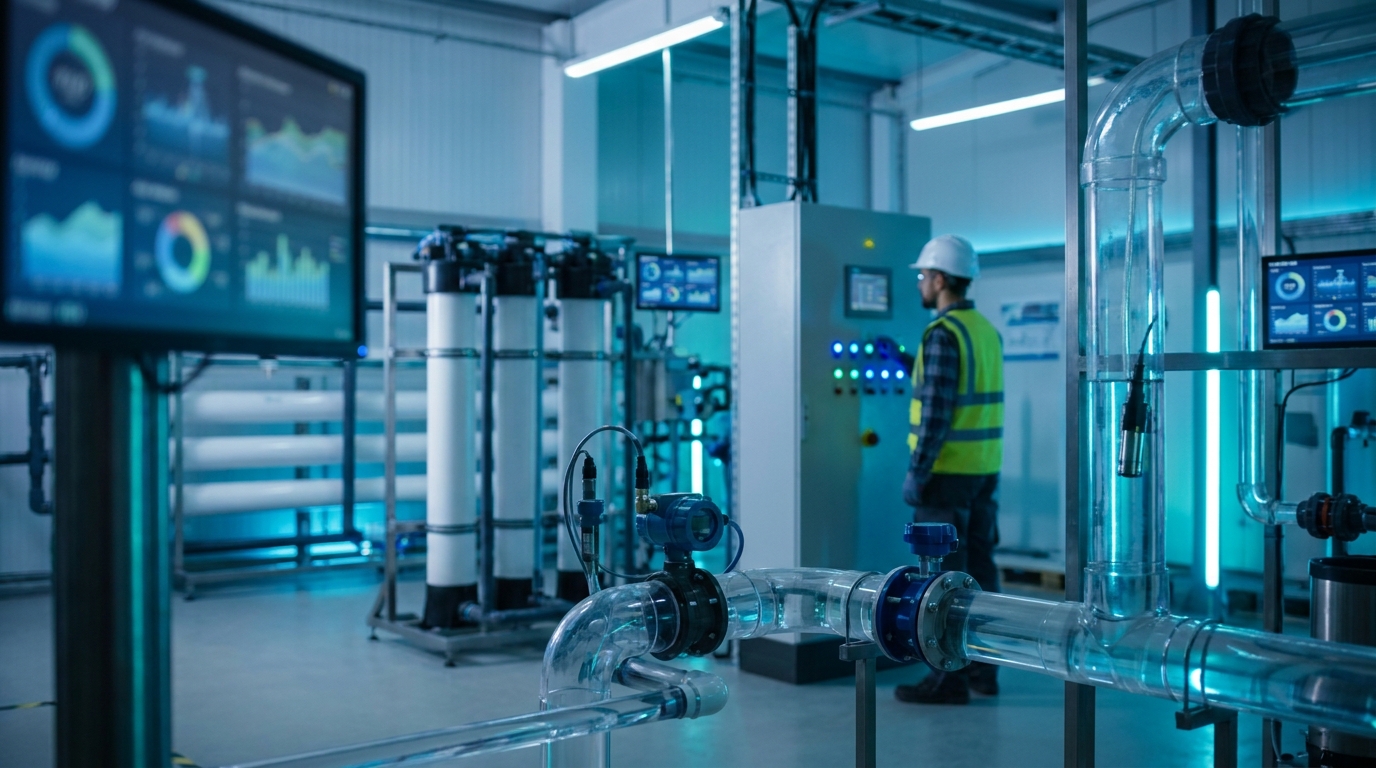
No single sensor covers all operating conditions. Field-proven practice recommends a three-parameter fusion approach: radar level + Doppler velocity + rain gauge.
Normal Conditions
Radar level combined with a pre-established stage-discharge rating curve; update rate 1–4 readings/hour.
Storm Events
When water level exceeds the rating curve range, the system automatically switches to Doppler velocity measurement, computing instantaneous discharge from velocity × cross-sectional area.
Quality Control
The IoT RTU runs embedded anomaly detection, flagging sudden jumps and drift, with remote parameter adjustment capability.
4. Deployment Guidelines
1 Siting
Install the radar sensor upstream of a straight run ≥ 5D and downstream ≥ 3D (D = pipe diameter) to ensure stable flow profiles. For open channels, select a reach with regular cross-section and no backwater eddies.
2 Antenna Selection
In environments with high humidity, foam, or condensation, specify a PTFE-encapsulated planar antenna to prevent signal degradation from moisture buildup.
3 Communications & Power
Pair with 4G / NB-IoT telemetry and solar + LiFePO₄ battery systems for fully unattended operation. Typical system power ≤ 2 W; a 100 W panel with 50 Ah battery sustains ≥ 7 consecutive overcast days.
4 Calibration & Maintenance
Recalibration interval: 12 months recommended. Routine maintenance is limited to antenna face cleaning and battery voltage checks, dramatically reducing O&M expenditure.
5. Conclusion
Non-contact flow measurement is transitioning from an alternative to the preferred solution. 80 GHz FMCW radar now approaches contact-meter accuracy, while multi-sensor fusion extends reliable operation across the full range of hydraulic conditions. For new urban drainage monitoring networks, smart hydrological station networks, and irrigation metering projects, non-contact architectures should be the first option evaluated for whole-life cost-effectiveness.