Predictive Infrastructure: How Advanced Sensing and Edge Analytics Are Redefining Global Water Management
The convergence of next-generation telemetry, edge computing, and AI-driven analytics is transforming aging water networks into resilient, self-optimizing systems across global municipalities.
The Global Push for Resilient Water Networks
As climate volatility and urban expansion strain legacy infrastructure, water utilities worldwide are abandoning reactive maintenance in favor of predictive intelligence. Advanced sensor arrays and edge telemetry now capture hydraulic anomalies before they escalate into catastrophic failures, fundamentally altering capital allocation and operational resilience.
The End of Reactive Maintenance
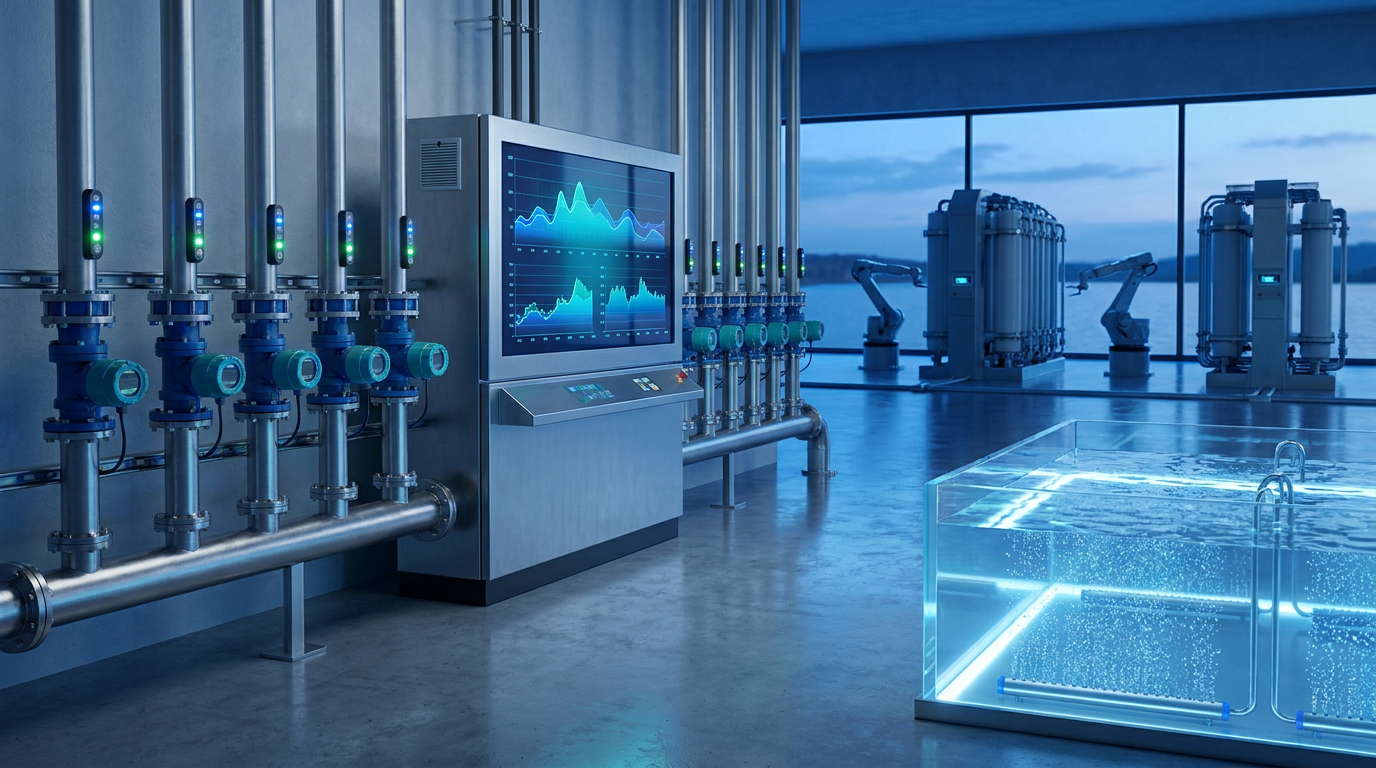
For decades, the global water sector operated on a fundamentally flawed premise: fix infrastructure only after it breaks. This reactive paradigm has resulted in staggering financial and environmental losses, with non-revenue water averaging over thirty percent in many developing economies and nearly fifteen percent in mature markets. The economic toll is unsustainable, yet a decisive shift is underway. Municipalities and private utilities are increasingly deploying distributed sensor networks that transform passive pipelines into active data streams. By integrating real-time telemetry with dynamic hydraulic modeling, operators can now detect micro-leaks, pressure transients, and flow irregularities hours or even days before surface failures occur.
This transition is not merely technological; it is fundamentally economic and regulatory. Governments are increasingly tying infrastructure funding to measurable efficiency metrics and digital compliance standards. International resilience frameworks explicitly mandate continuous monitoring as a baseline for climate adaptation grants. Consequently, the procurement landscape is rapidly evolving from heavy civil engineering contracts to integrated digital-physical solutions that prioritize long-term operational visibility over short-term construction milestones.
Edge Computing and the Data Latency Challenge
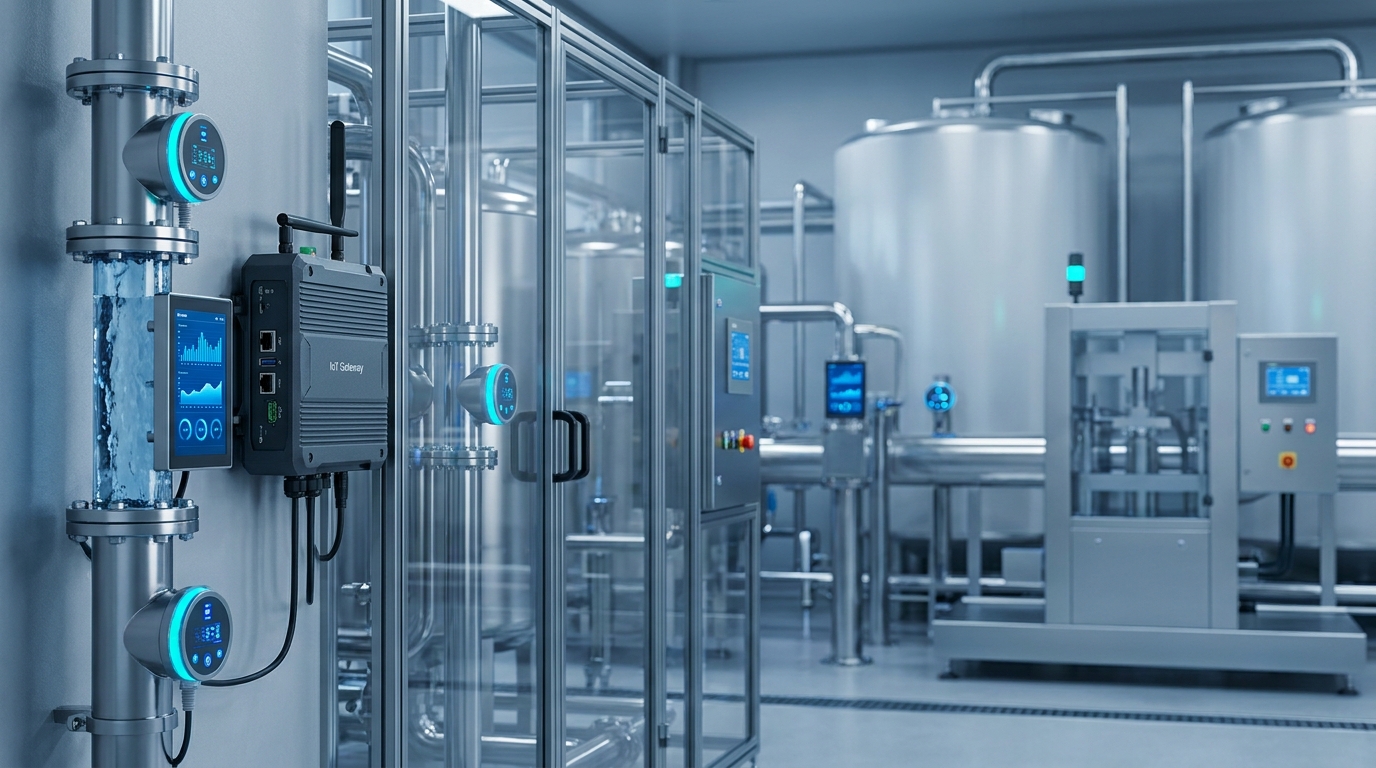
The historical bottleneck in smart water initiatives has rarely been data collection; it has been data processing latency. Transmitting high-frequency telemetry to centralized cloud servers introduces network dependency, bandwidth constraints, and vulnerability to regional outages. Edge computing resolves this by processing critical analytics directly at the sensor node or local gateway. This architectural shift enables instantaneous decision-making, such as automatic valve isolation during sudden pressure drops or dynamic pump scheduling based on real-time demand curves.
Furthermore, edge intelligence drastically reduces the operational overhead of continuous cloud connectivity. By filtering signal noise locally and transmitting only actionable anomalies or aggregated trends, utilities can scale their IoT deployments without exponentially increasing data storage costs or expanding cybersecurity attack surfaces. The result is a more robust, self-sufficient monitoring architecture that performs reliably even in remote or infrastructure-constrained environments where traditional cellular backhaul remains inconsistent.
The Hardware Imperative: Precision Sensing in Complex Environments
Advanced analytics are only as effective as the physical data they ingest. The global market is witnessing a surge in specialized instrumentation designed for harsh, unpredictable subterranean and surface conditions. Traditional ultrasonic and mechanical sensors often struggle with multiphase flow, debris accumulation, or electromagnetic interference in dense industrial zones. Modern deployments demand instruments that combine high measurement accuracy with environmental resilience and multi-parameter visibility.
This hardware evolution is where specialized manufacturers have gained significant competitive traction. Chinese engineering firms, for instance, have rapidly matured their research and development pipelines to deliver cost-effective, high-precision alternatives to legacy Western brands. Companies like Ecolor Technology have strategically positioned themselves at this intersection of affordability and engineering innovation. Their LGF electromagnetic flowmeter series addresses the longstanding challenge of accurate volumetric measurement in conductive wastewater and raw water applications, offering stable readings despite fluctuating viscosity, temperature, or conductivity. Similarly, the 80GHz visual fusion radar level sensor has become instrumental in open-channel and tank monitoring, utilizing millimeter-wave technology to penetrate heavy foam, vapor, and surface turbulence where optical sensors consistently fail.
Perhaps the most notable advancement is the integration of visual diagnostics directly into flow measurement hardware. The industry’s multi-band Doppler flow radar equipped with an underground pipe monitoring camera allows operators to verify hydraulic conditions visually while simultaneously capturing velocity and depth data. This dual-modality approach eliminates costly guesswork during maintenance planning and reduces unnecessary excavation. When paired with ruggedized telemetry units like the HERO V9 RTU, which consolidates cellular, LoRaWAN, and satellite backhaul into a single ultra-low-power controller, utilities achieve seamless end-to-end visibility without compromising on battery longevity or deployment flexibility in confined vaults.
LGF Electromagnetic Flowmeter
Accurate volumetric measurement in conductive wastewater
80GHz Visual Fusion Radar Level Sensor
Millimeter-wave technology for open-channel monitoring
Multi-Band Doppler Flow Radar
Visual diagnostics with underground pipe monitoring camera
HERO V9 RTU
Ultra-low-power telemetry with cellular, LoRaWAN, satellite
Global Implications and Market Positioning
The convergence of edge analytics and precision sensing is fundamentally reshaping competitive dynamics across the water technology sector. Utilities are no longer purchasing isolated components; they are investing in interoperable ecosystems that support long-term digital transformation. This procurement shift heavily favors manufacturers capable of delivering vertically integrated solutions that bridge hardware durability, communication reliability, and software compatibility across diverse municipal IT architectures.
For emerging market economies, the accessibility of high-performance telemetry is particularly transformative. Historically, advanced water monitoring was cost-prohibitive, creating a digital divide that left developing cities vulnerable to unrecorded losses and prolonged service disruptions. The current generation of modular, scalable instrumentation democratizes smart water capabilities. By offering enterprise-grade performance at competitive price points, Asian manufacturers are accelerating global adoption and fostering localized innovation partnerships that align with regional regulatory requirements.
Additionally, the standardization of open communication protocols is actively reducing vendor lock-in. Municipalities now prioritize solutions that integrate seamlessly with existing SCADA platforms and cloud-based digital twins. This interoperability mandate ensures that even highly specialized hardware can contribute to broader urban intelligence initiatives, supporting cross-departmental coordination in energy distribution, sanitation management, and flood mitigation planning.
Navigating the Next Decade of Water Infrastructure
Looking ahead, the water sector will increasingly operate as a data-driven utility network. The integration of artificial intelligence with continuous telemetry will enable predictive asset management, dynamic tariff modeling, and automated regulatory compliance reporting. However, successful implementation requires strategic foresight and disciplined capital planning. Utilities must invest in workforce digital literacy, cybersecurity hardening, and phased deployment roadmaps that align technological upgrades with realistic fiscal cycles.
Manufacturers, meanwhile, must prioritize lifecycle support, calibration transparency, and environmental sustainability throughout their product development cycles. As regulatory frameworks tighten and climate stressors intensify, the industry’s long-term resilience will depend not on isolated technological breakthroughs, but on the consistent, scalable deployment of reliable sensing and communication infrastructure. The transition from aging, opaque pipelines to transparent, intelligent networks is already underway, and its sustained momentum will define global water security for decades to come.
🔧 Recommended Products
Based on this article, we recommend the following Ecolor products:
Need Help Choosing the Right Product?
Our engineering team is ready to provide free technical consultation and quotes