Background: Open-Channel Flow Measurement Is a Chain, Not an Instrument
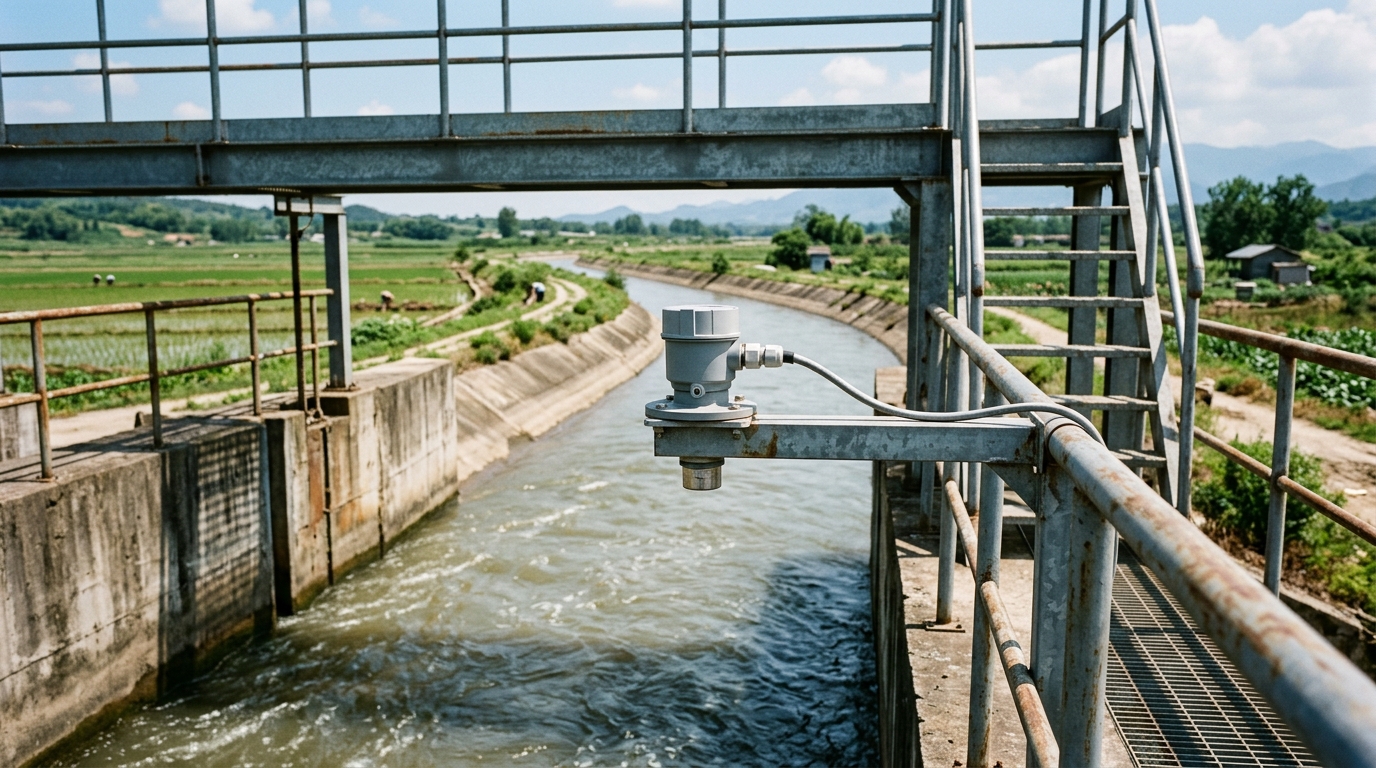
Unlike closed-conduit metering, open-channel flow measurement (irrigation canals, drainage ditches, natural rivers) is inherently indirect: a non-contact radar level meter measures water stage, and a rating curve or a standard flume/weir converts that stage into discharge. System accuracy is therefore the product of three links — stage measurement accuracy, stage-discharge conversion accuracy, and cross-section stability. A failure in any single link corrupts the entire data chain. Radar level meters have become the mainstream choice for this task, displacing float and submersible sensors thanks to contact-free operation, minimal maintenance and IP68 protection. Yet a common engineering mistake persists: procurement teams focus on the instrument's ±1 mm stated accuracy while ignoring that the stage-discharge conversion typically carries an uncertainty of ±5% to ±10% — the real bottleneck of open-channel measurement.
Technical Analysis: The Four Dominant Error Sources
1. Stage measurement error. Modern 26 GHz and 80 GHz radar level meters achieve ±1 mm to ±3 mm accuracy, but three open-channel-specific disturbances degrade this in the field: multipath reflections from concrete or metal channel walls in narrow channels (width <2 m); excessive dead zone that blinds the sensor during low-flow periods; and signal attenuation from condensation, frost and heavy rainfall.
2. Stage-discharge conversion error. Standard measuring structures designed per ISO 1438 (Parshall flumes, rectangular and V-notch weirs) hold their uncertainty to roughly ±2%–±5%. Natural-channel rating curves, by contrast, drift with sediment deposition, vegetation growth and post-flood geometry change, and routinely exceed ±10%. This is the most underestimated error source in monitoring system design.
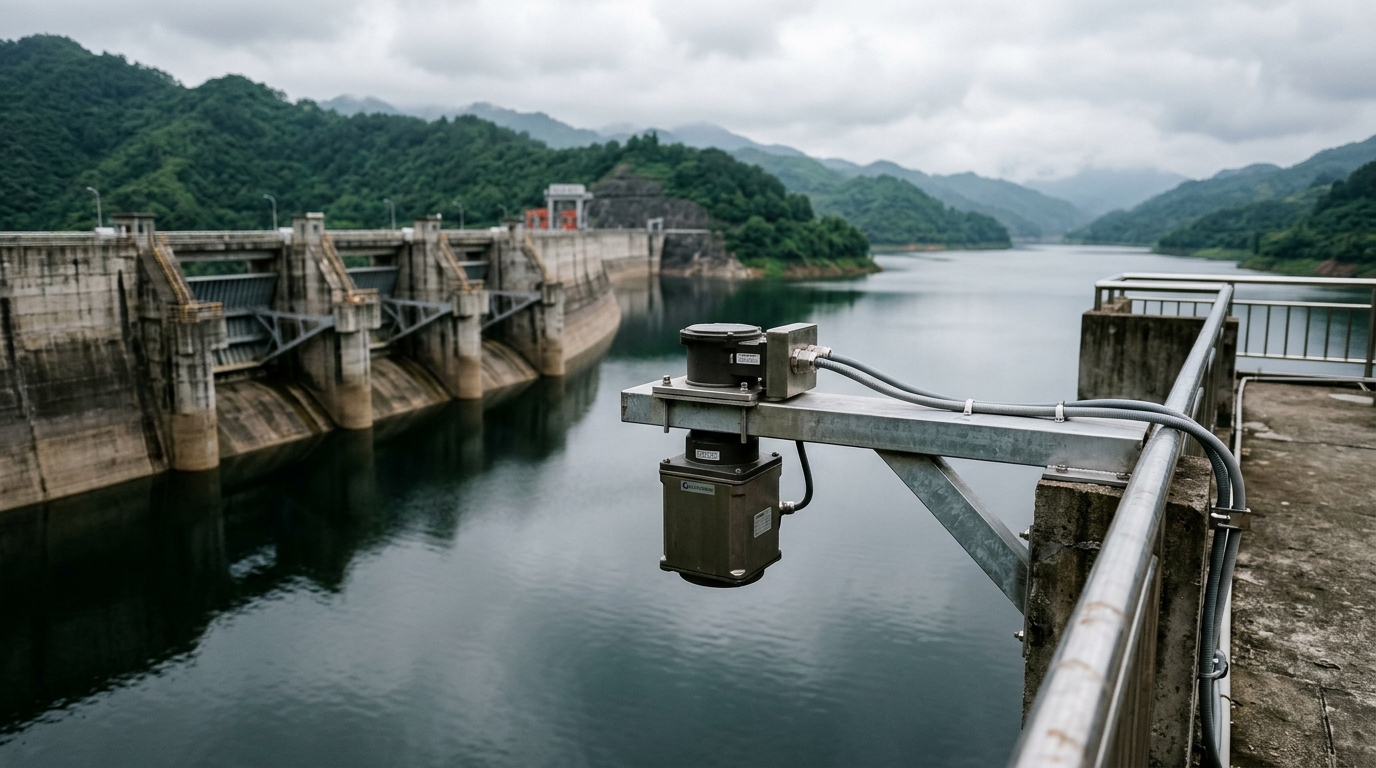
3. Installation geometry error. A non-vertical antenna, a resonating mounting bracket, or a measurement spot facing inlet turbulence all produce erratic readings; beam illumination of channel walls or aquatic vegetation generates false echoes.
4. Temporal cross-section drift. In irrigation canals and natural rivers the same stage can correspond to different discharges across seasons. Without periodic re-rating, metering error accumulates year after year — a direct threat to water-allocation accounting and ecological flow compliance.
Engineering Recommendations: Control the Chain Link by Link
- Select frequency and dead zone from channel geometry. For channels narrower than 2 m or confined manhole installations, choose 80 GHz radar (3°–4° beam angle); for wider channels, 26 GHz offers the better cost-performance ratio. The dead zone must be shorter than the headroom at minimum seasonal stage. Specify IP68 per IEC 60529 and immunity per IEC 61000-6-2; solar-powered sites should pair the sensor with a properly protected IoT RTU including surge protection.
- Standardize the stage-discharge conversion wherever possible. Prefer ISO 1438-compliant flumes and weirs, installing the radar level meter on the upstream approach section where flow is tranquil. For natural cross-sections, establish the initial rating curve by velocity-area gauging per ISO 748, and re-survey the section after every significant flood event.
- Apply a three-step commissioning protocol. Dry check: measure antenna-to-bed distance with a steel tape and verify the reading within ±2 mm. Wet check: cross-read against a staff gauge at high, mid and low stages. Operational validation: compare seven consecutive days of data against upstream/downstream station trends and gate operation logs, rejecting spikes and frozen values.
- Build re-rating into operations. Enable remote echo diagnostics and monitor signal-to-noise ratio trends — a declining SNR typically precedes visible data anomalies. Schedule curve verification before and after each irrigation or flood season, and rebuild the rating curve when sedimentation or scour is detected.
Summary
Open-channel measurement accuracy = stage accuracy × stage-discharge conversion accuracy × installation quality. Selecting a radar level meter is never just about instrument datasheets: rating-curve methodology, structure standardization and re-rating discipline must be managed as one accuracy chain. For smart water applications — irrigation district accounting, urban drainage monitoring and ecological flow compliance — only a fully controlled chain produces discharge data that survives audit.