Smart Water Management Market Trends: 2026 Radar Water Level Gauge Price Trends and Selection Recommendations
Driven by river channel management, safe reservoir operation, urban drainage, and modernization of irrigation districts, water level monitoring equipment is upgrading from traditional float-type, pressure-type, and ultrasonic-type sensors to more reliable radar-based solutions.
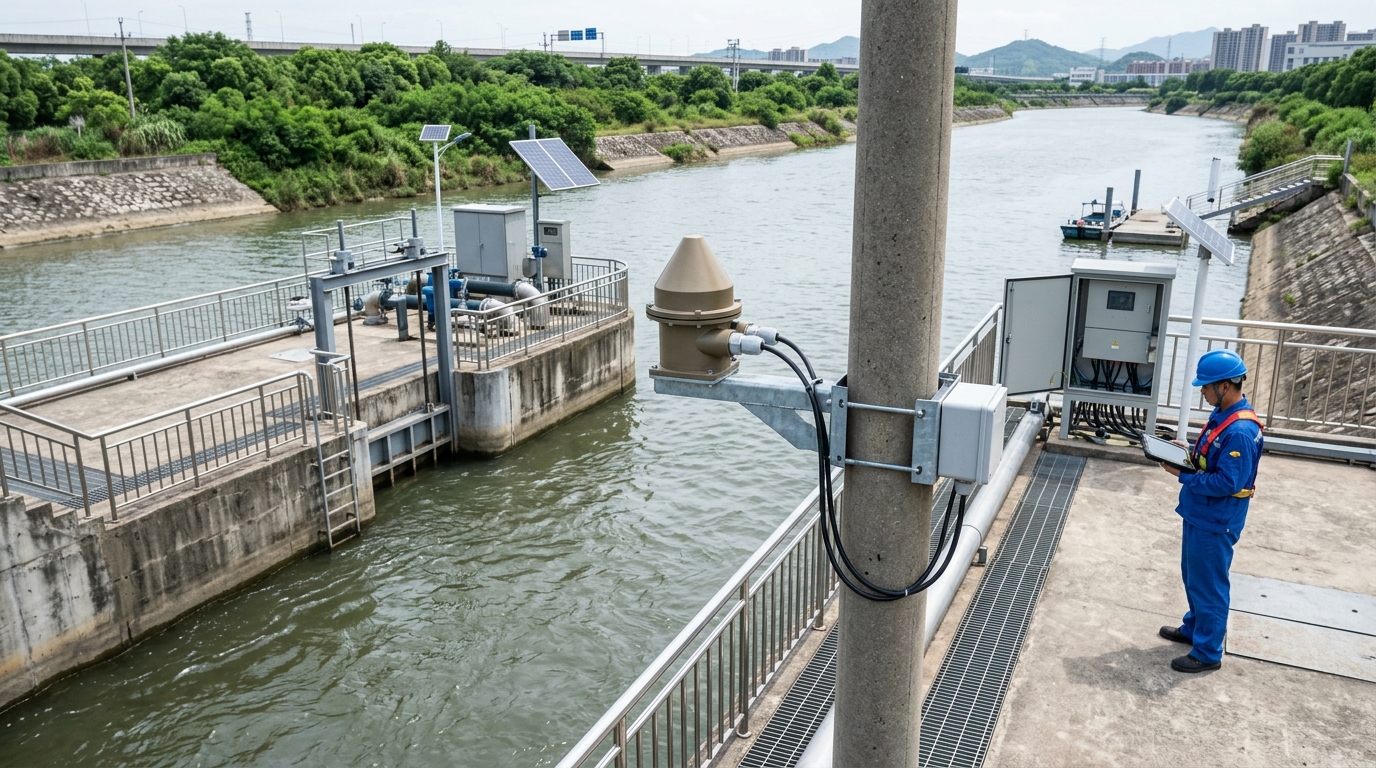
Radar water level meters measure the distance to the water surface in a non-contact manner, remaining unaffected by sediment load, floating debris, and sewage corrosion. Consequently, they are gaining more attention in open waters and complex operating conditions. In particular, with the gradual popularization of 80G radar products featuring narrower beams, smaller blind zones, and faster response times, high-precision water level monitoring has expanded from key projects to county- and district-level initiatives.
"Real-time monitoring has become a fundamental requirement for hydrological station networks, municipal pipeline networks, industrial parks, and agricultural irrigation."
Market Status: 80G Radar Becomes Mainstream
The demand for radar water level meters primarily stems from three types of scenarios:
Hydrological Monitoring
Rivers, reservoirs, sluice gates, flash flood channels. Emphasizes long-term stability, lightning protection, and low power consumption.
Municipal & Drainage
Underpasses, pump stations, detention tanks, wastewater treatment plants. Emphasizes corrosion resistance, anti-clogging, and real-time alarming.
Industrial Process
Circulating water tanks, fire water tanks, chemical storage tanks. Emphasizes explosion-proofing, corrosion resistance, and interface compatibility.
From a technical route perspective, 80G radar allows for smaller antenna sizes with beam angles controlled between 3° and 8°. This makes it easier to avoid interference sources in narrow wellheads, under-bridge installations, and small cross-section channels compared to older 26G models.
Market procurement exhibits a stratified pattern. Newly built standardized stations choose complete integrated systems, while county-level projects focus on cost-effectiveness and solar power compatibility. Keywords such as "non-contact," "high precision," and "real-time monitoring" appear with significantly increased frequency in public tenders.
Price Range: Configuration Determines Cost
Radar water level meters are not a single standardized commodity. Their price is determined jointly by the sensor, antenna, signal processing algorithms, communication modules, power supply methods, IP rating, and software platforms.
Basic Integrated Devices
¥6,000 - ¥15,000Suitable for smaller measurement ranges, simple environments, local display, or short-distance transmission.
Mid-Range Project Products
¥15,000 - ¥35,000Features temperature compensation, false echo suppression, multi-echo tracking, and remote configuration. Includes wireless comms (NB-IoT/4G), solar panels, and outdoor enclosures.
High-End / Complex Conditions
¥35,000 - ¥80,000+Large measurement ranges, high precision, explosion-proofing, redundant communication, edge computing, video linkage. Total station contracts (including civil engineering) may reach ¥30,000 - ¥150,000 per station.
Selection Advice: Conditions First, Parameters Second
- Assess Operating Conditions: Confirm measurement range, installation height, water surface fluctuation, and channel width. Ensure the actual maximum water level distance does not exceed 70%-80% of the device's range. For narrow channels, look for a blind zone less than 0.2-0.3 meters.
- Accuracy vs. Stability: Conventional hydrological monitoring accepts ±5mm to ±10mm error, while critical reservoirs require ±3mm or better. Laboratory accuracy does not equal field accuracy; prioritize devices with multi-echo identification, interference suppression, and outlier rejection algorithms.
- Real-Time Capabilities: Sampling intervals should be 1-5 minutes for urban waterlogging (intensifying to 10-30 seconds during alarms) and 5-15 minutes for routine patrols. Communication choice depends on location: RS485 for short distances, NB-IoT/4G for dispersed stations, and Beidou/Satellite for weak signal areas.
- Installation Methods: Sensors should aim vertically at the water surface, avoiding direct alignment with inlets or vortices. Suppliers must provide installation diagrams and beam coverage analysis.
Maintenance Costs: Lower Than Contact Devices
While radar meters are non-contact and reduce issues like float jamming, they are not maintenance-free. Dust, bird droppings, and condensation can affect echo quality. Industry experience shows a typical lifespan of 5 to 8 years for 80G radar meters.
Routine O&M Budget
Typically 3% - 6% of equipment price annually.
Example: A ¥20,000 station requires ~¥600-¥1,200/year for quarterly remote inspections, semi-annual site visits, and cleaning.
Station-Level Expenses
Includes communication fees, battery replacement, and surge protectors.
- Communication: ¥100-¥600/year
- Battery Replacement: ¥500-¥2,000 (every 3-5 years)
- Lightning Protection: ¥200-¥800 (every 1-2 years)
To reduce costs, select equipment supporting remote diagnostics and establish threshold alarms. Standardize grounding (resistance ≤10Ω) to prevent lightning damage, which can cost ¥1,000-¥5,000 to repair.
Application Cases: Value in Early Warning
Mountain River Flash Flood Monitoring
Deployed 80G radar meters across 12 flash flood channels and 3 small reservoirs. Data completeness reached over 98% after one year. Abnormal water level detection time was advanced by an average of 20-40 minutes compared to manual staff gauges. Non-contact measurement prevented damage from floating branches during floods.
Urban Drainage Underpass System
Installed at 38 underpasses and pump stations with three threshold levels (5cm prompt, 15cm warning, 30cm alarm). Enabled dispatchers to start pumps and implement traffic controls in advance. Key lesson: Beam anti-interference capability is critical in high-electromagnetic-interference urban environments.
Irrigation District Modernization
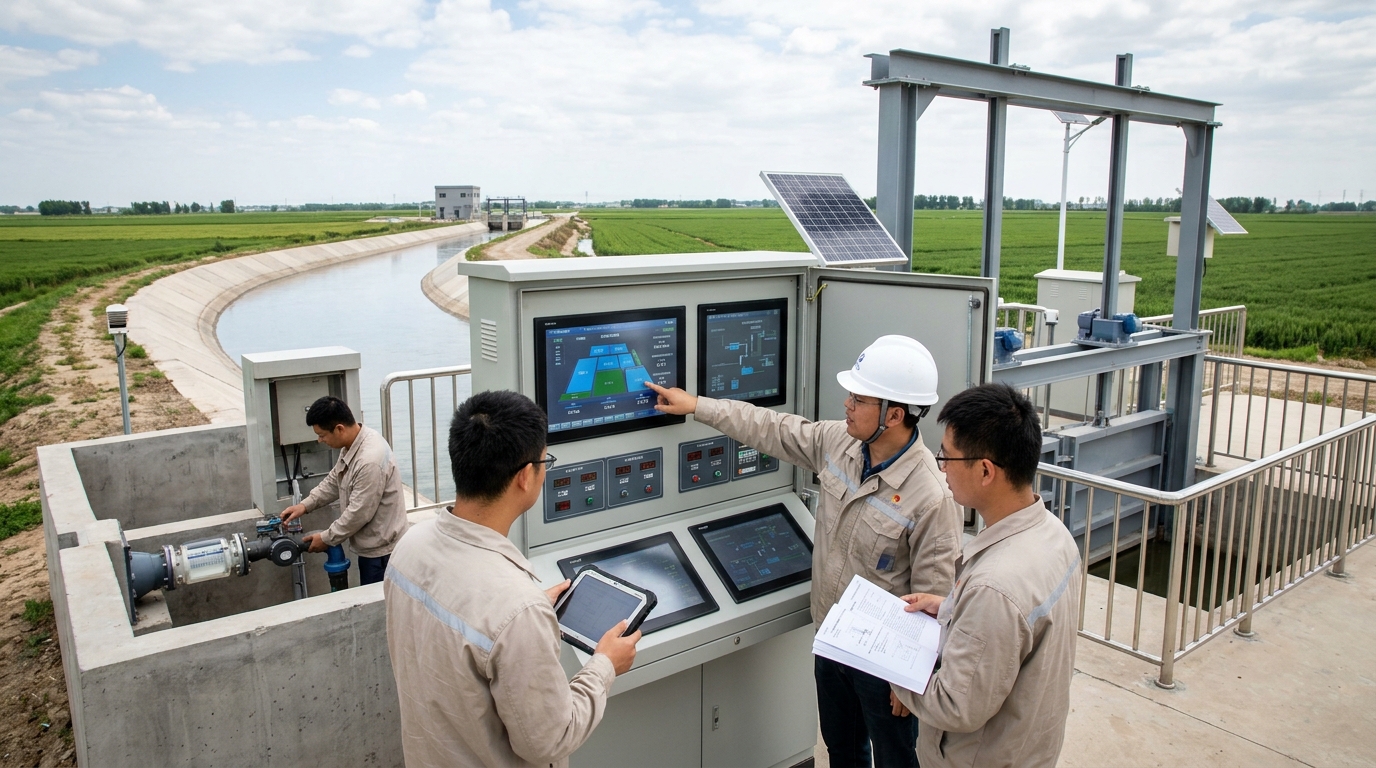
Over 150 meters deployed on main and branch canals with ±3mm control errors. Small beam angle 80G radar avoided interference from abundant canal-side weeds. Manual patrol frequency decreased by 30%, shifting dispatching from experience-based to data-driven decisions.
Competitive Landscape & Future Outlook
The market is seeing a shift from imported high-end products to domestic localization. With the maturation of domestic 80G radar modules and signal processing chips, mid-range product prices have become transparent, and delivery cycles have shortened significantly. Competition is now focused on overall service capabilities—such as on-site survey, installation guidance, and after-sales response—rather than just hardware parameters.
Future Trends
- Multi-Sensor Fusion: Evolution from standalone meters to stations integrating "water level + rainfall + video + flow calculation."
- Data Governance: Core competition will shift to data quality, calibration, and sharing standards.
- Sustainable Infrastructure: Purchasers are buying a "sustainably operating data infrastructure," not just a sensor.
For purchasers, selecting a radar water level meter is about building a foundation for flood forecasting, pipeline network dispatching, and emergency decision-making. Solidifying installation, communication, O&M, and platform governance will secure long-term returns in smart water conservancy and urban safe operation.