From Technical Challenges to Successful Implementation: Implementation Record of a Smart Water Management Project
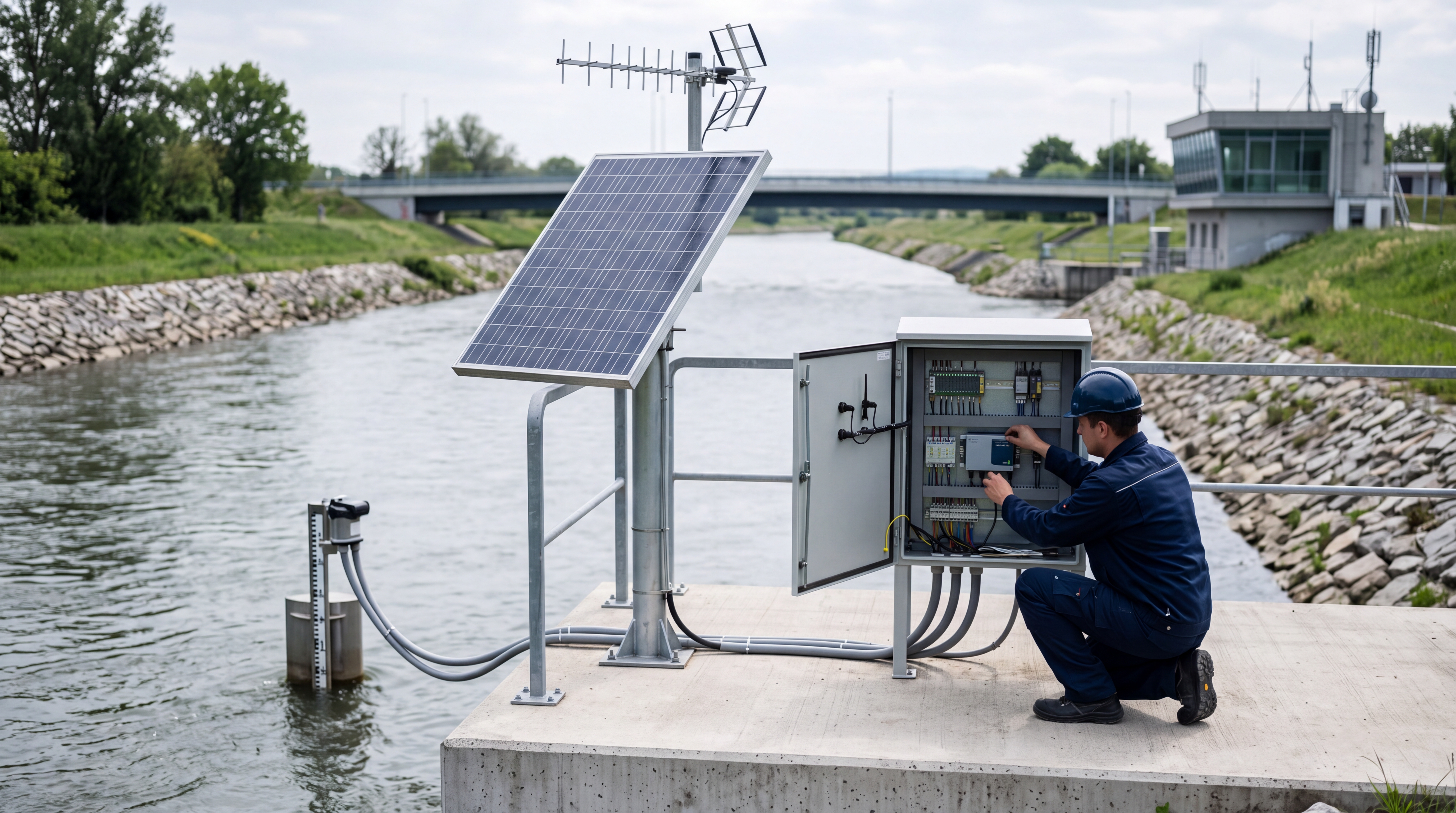
In the management of small and medium-sized rivers, safe operation of reservoirs, and flash flood disaster prevention, Remote Terminal Units (RTUs) are transforming from simple data acquisition devices into grassroots nodes responsible for field sensing, edge decision-making, remote transmission, and emergency coordination.
Introduction: Advancing from "Data Acquisition" to "Accurate Transmission"
The smart water conservancy monitoring project in a central China county, supported by Yicai Technology, builds a unified telemetry system around reservoirs, rivers, gates and pumps, irrigation districts, and flash flood risk points. The project deploys 118 monitoring stations, integrating 1,536 measuring points for water level, rainfall, flow rate, gate position, seepage pressure, displacement, power supply status, etc., forming a real-time monitoring network covering key water conservancy targets in the county.
The project uses the Hero V9 RTU as the core station equipment, focusing on solving issues such as lack of grid power at mountain stations, weak communication signals, complex sensor protocols, and high data concurrency during the flood season. After continuous operation and testing through multiple heavy rainfall events, the data reporting rate has remained stable above 99.6%, and the average alarm delay is controlled within 10 seconds.
Project Background: Sparse Station Network and Lagging Response
Located in the transition zone between mountains and hills in central China, the basin area exceeds 2,100 square kilometers. Before this project, the county had only 27 water conservancy monitoring stations with uneven distribution. During key flood periods, the data reporting rate was about 82%, with delays of 30 to 90 minutes due to low battery voltage or communication interruptions.
- Prominent Problem 1: On-site data for reservoirs and rivers was not obtained timely; small reservoirs lacked automatic monitoring.
- Prominent Problem 2: Single data transmission link; 4G signal in mountainous areas was unstable.
- Prominent Problem 3: Equipment built in different years adopted different communication protocols, resulting in isolated systems.
Construction Goals: Build and upgrade 118 telemetry stations to achieve full coverage; set routine data collection cycle to 10 minutes (non-flood) and 1 minute (flood); ensure response time for exceedance reports does not exceed 10 seconds.
Technical Challenges: A Perfect Storm of Constraints
1. Complex Power Supply
46 stations lack grid power. Pure solar power requires strict control over RTU, sensors, and heating components to cope with continuous rainy weather.
2. Unstable Communication
37 stations have 4G signal below -110dBm. Public network base stations may congest during rainstorms, risking delayed critical alarms.
3. Protocol Complexity
Integration of radar gauges, Doppler flowmeters, and encoders from different manufacturers using RS485, Modbus, SL651, and proprietary protocols.
4. High Concurrency
During floods, 118 stations uploading every minute creates over 35,000 messages/hour, requiring robust edge caching to prevent data loss.
Solution: Low-Power Telemetry Node Centered on Hero V9
The project adopts the Yicai Technology Hero V9 RTU as the core station equipment. Positioned for outdoor monitoring, it supports multi-interface data acquisition, local storage, edge alarming, and various remote transmission methods.
Key Hardware Capabilities
- Interfaces: 4 RS485 ports, 2 RS232 ports, 8 analog inputs, supporting SDI-12 and pulse counting.
- Power Design: Wide-voltage input (DC 9V-36V), compatible with solar panels and LiFePO4 batteries. Sleep mode consumption is minimized.
- Environmental Adaptability: IP68 protection structure, operating temperature range of -40℃ to +75℃.
Data Acquisition: Unified Access & Edge Quality Control
Relying solely on platform-side processing often leads to abnormal values and false alarms. The Hero V9 configures edge acquisition and quality control strategies, enabling the RTU to preliminarily judge data reasonableness before transmission.
Remote Transmission: 4G Primary Link & BeiDou Emergency Backup
The transmission link is designed as a three-tier structure: "4G primary link, BeiDou emergency backup, and local cache fallback."
- Dual-SIM Switching: Automatic switching within 15 seconds if the primary SIM fails or signal drops.
- BeiDou Backup: Configured for 12 blind-zone stations. Compresses and filters data to transmit only critical fields (Station ID, Time, Water Level, Alarm Status) when 4G is interrupted.
- Breakpoint Resume: Local cache stores over 180 days of data. Backfill success rate reached 99.9% after simulated network outages.
Operational data shows an average end-to-end delay of 1.2 seconds, with alarm display median delay of 8 seconds.
Implementation Process: Closed-Loop Advancement
| Stage | Key Actions | Outcome |
|---|---|---|
| Survey & Design March 2024 |
Recorded terrain, power, signal, and lightning environment for 118 stations. | Identified needs for independent solar power and grounding enhancements. |
| Pilot Construction May 2024 |
Selected 10 typical stations for 72-hour continuous testing. | Data integrity rate 99.3%; adjusted antenna angles and tilt. |
| Batch Deployment June 2024 |
Installed 6 stations/day, prioritizing reservoirs and flash flood points. | Completed "one-station-one-file" records with photo archives. |
| Joint Debugging July 2024 |
Sensor calibration, protocol parsing, and stress testing (42k msgs/hr). | Platform response time maintained within 3 seconds. |
Final Results: Synchronous Improvement in Efficiency
Since operation before the 2024 flood season, the project has generated approximately 86 million pieces of monitoring data.
During a heavy rainfall event in June 2025 (186mm rainfall), the system provided a 2.5-hour warning before the flood peak, allowing villages to evacuate personnel safely. No critical alarms were missed. O&M costs saved approximately 370,000 RMB annually due to reduced transportation and labor needs.
Industry Outlook: RTUs as Foundational Sensing Nodes
This case demonstrates that the focus of water conservancy telemetry is shifting from "whether there is equipment" to "whether data is reliable, links are resilient, and O&M is closed-loop." Future RTUs will evolve towards edge intelligence, performing anomaly recognition and trend judgment locally to reduce communication pressure.
As sensing networks and edge computing capabilities continue to evolve, RTU telemetry terminals like the Hero V9 will assume a more foundational and critical role in the water conservancy industry, ensuring safety and efficiency in digital transformation.