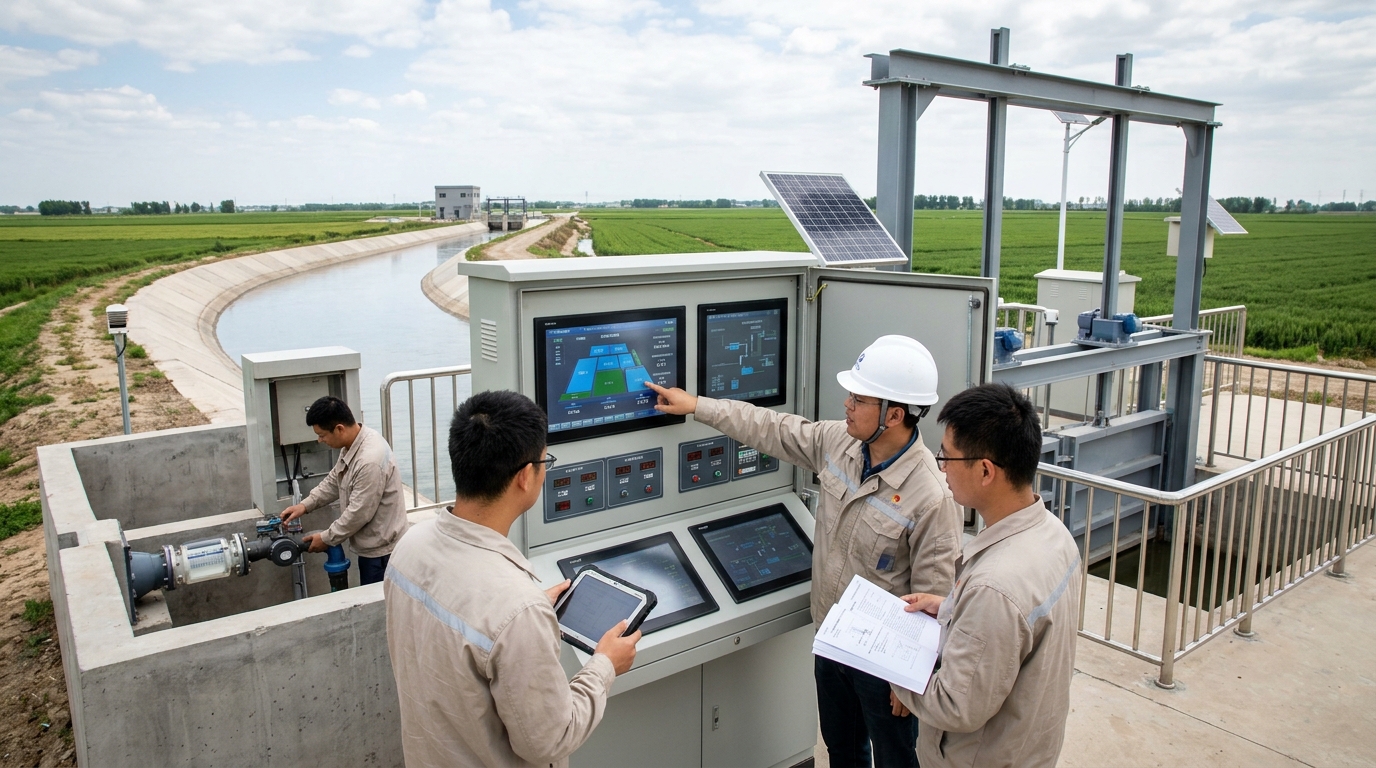
Smart Water Management Project in Practice: Application Case Study of RTU Telemetry Terminals
A comprehensive case study on transitioning from manual inspection to real-time telemetry in the Qingyu River Basin.
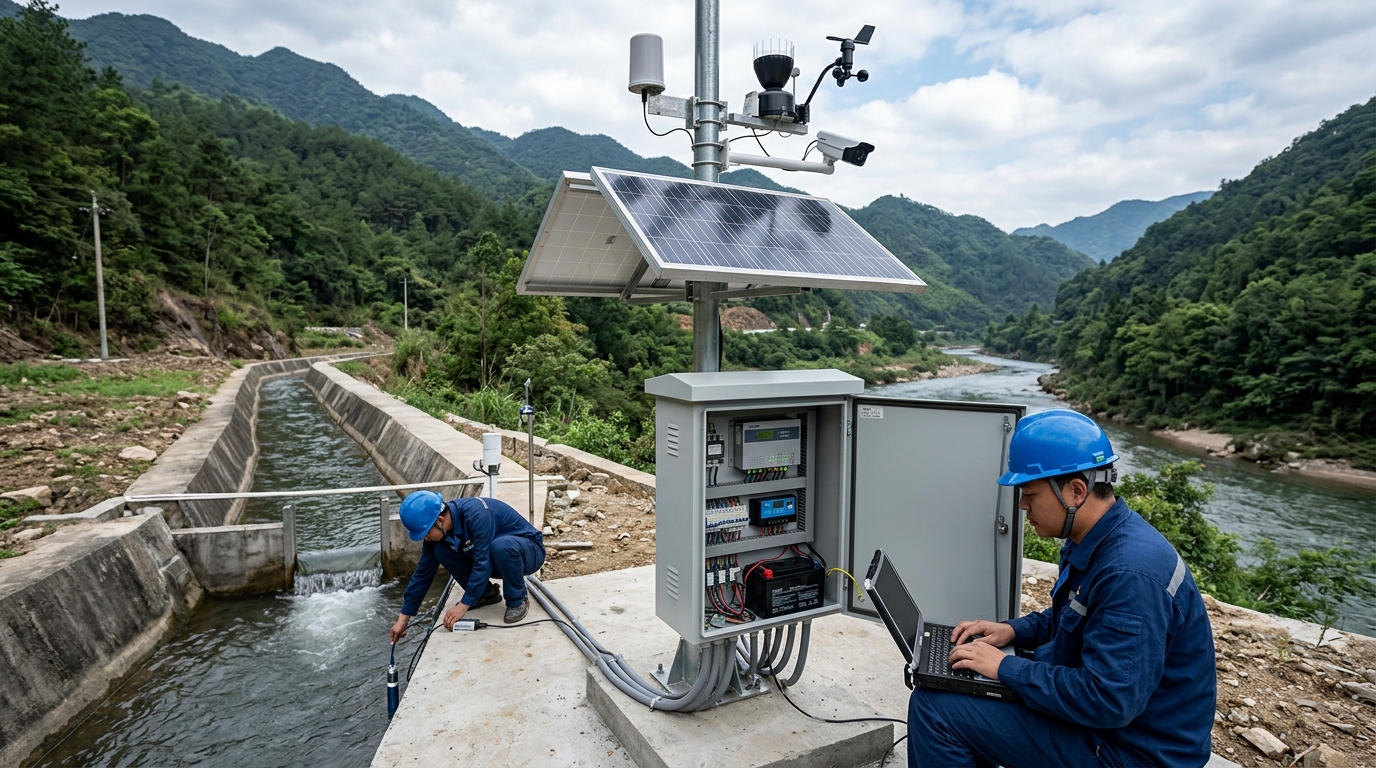
Project Scope
Completed between April 2023 and June 2024, covering the 1,862 km² Qingyu River Basin with 107 monitoring stations including reservoirs, irrigation channels, and flash flood risk points.
Key Performance Metrics
- Data Integrity Rate: 99.2%
- Average Latency: 6.8 seconds
- Emergency Reporting Cycle: 1 minute
- Flood Season Warnings Generated: 34 records
The core objective of this project was to resolve past issues of "few stations, slow reporting, and difficult maintenance" in water conservancy monitoring. By deploying Yicai Technology's Hero V9 RTU telemetry terminals, the system integrated 1,864 measuring points—covering rainfall, water level, flow rate, gate opening, soil moisture, and device status—to form an automatic perception network. During the 2024 flood season, the system supported four emergency responses, providing a critical real-time data basis for reservoir pre-discharge and flash flood avoidance.
Project Background: Practical Pressures of Basin Management
The Qingyu River Basin involves 12 towns and 86 administrative villages, with complex topography ranging from mountainous upstream areas to urban flood protection zones downstream. Before the renovation, the basin relied heavily on manual observation. With only 21 manual rainfall points and 43 water level stakes, data reporting delays averaged 2.5 hours, exceeding 6 hours during floods when roads were blocked.
"During the 2022 flood season, delayed information caused gate dispatching operations to be 30 to 70 minutes late compared to the plan, exposing severe shortcomings in the existing monitoring system."
To address these challenges, the project owner established strict requirements: key cross-sections must achieve 5-minute-level automatic acquisition, off-grid stations must endure at least 15 days without mains power, and communication availability must exceed 98%. These demands necessitated a robust solution capable of handling dispersed coverage and extreme weather conditions.
Technical Challenges: Power, Network, and Protocol Complexity
1. Off-Grid Power Supply
76 out of 107 stations lacked mains power. Connecting them would require ~62km of new lines (investment >9M RMB). The solution required balancing low-power design with solar configuration.
2. Weak Communication Links
43 stations had signal strength below -105dBm. Single-network transmission risked packet loss rates exceeding 12% during floods. Backup channels were essential.
3. Protocol Diversity
Stations utilized diverse sensors (radar, ultrasonic, electromagnetic) with interfaces like 4-20mA, RS485, and SDI-12. Protocols included Modbus RTU, SL651, and proprietary formats.
4. Data Quality & O&M
High dispersion led to high maintenance costs (avg. 42km round trip per station). Remote diagnostics and breakpoint resumption were required to reduce site visits.
Solution: Hero V9 RTU Architecture
The project selected the Yicai Technology Hero V9 RTU telemetry terminal as the core device. Designed specifically for water conservancy scenarios, it supports multi-interface data acquisition, edge computing, and multi-link remote transmission.
Hardware & Connectivity Specifications
- Interfaces: 8x 4-20mA analog, 6x RS485, 4x SDI-12, 8x digital inputs, 4x pulse inputs.
- Communication: 4G Cat.1 main channel; expandable with NB-IoT, BeiDou short message, and satellite modules.
- Storage: 8GB local storage for breakpoint data resumption (up to 120 days of minute-level data).
- Power: Sleep mode consumption <0.35W; paired with 60W/100W solar panels and LFP batteries.
- Durability: IP68 rating, -30℃ to 70℃ operating range, and three-stage lightning protection.
System Architecture Layers
(Sensors & Gates)
(Hero V9 RTU)
(4G/BeiDou/Private Net)
(Data & Visualization)
Implementation Process: From Survey to Deployment
Phase I: Survey & Design (Apr-Jun 2023)
Detailed survey of all 107 locations identified issues such as solar shading (29 stations), antenna height requirements (17 stations), and grounding resistance failures (23 stations). Solutions were adjusted accordingly before deployment.
Phase II: Pilot Construction (Jul 2023)
Five typical stations (Longtan Reservoir, Shimen Sluice, etc.) were piloted. A 72-hour test achieved a 98.7% reporting success rate. Issues like antenna condensation and surge alarms were resolved by adding waterproof valves and secondary surge protectors.
Phase III: Batch Installation (Aug 2023-Mar 2024)
Four batches of installations followed specific engineering standards for reservoirs, canals, and flash flood points. Routine cycles were set to 5 minutes, adjustable to 1 minute during floods.
Phase IV: Integration & Acceptance (Apr-Jun 2024)
Integration of 1,864 measuring points with the municipal platform. Acceptance testing showed a data integrity rate of 99.2%, command success rate of 98.9%, and time synchronization error <1 second.
Data Validation: Flood Season Performance
The 2024 flood season served as the ultimate test. Over 11 heavy rain events, the Hero V9 RTU reported approximately 12.86 million data records, achieving a 99.2% data integrity rate. Even during network interruptions (e.g., June 18-20), the system achieved a 100% resumption success rate after link restoration, with no process data loss.
Advanced edge-side data quality control mechanisms, including sliding median filtering and threshold verification, successfully filtered out false alarms while retaining critical variation data. This ensured that the 34 warning records generated during the flood season were accurate and actionable.
Final Results & Outlook
The project successfully transformed water management in the Qingyu River Basin. Monitoring coverage increased from 64 to 107 locations, and data reporting delay dropped from 2.5 hours to the 10-second level. In the irrigation district, water allocation error reduced from 8% to 3.1%, shifting dispatching from empirical judgment to data-assisted decision-making.
Operational Efficiency Gains
- Remote O&M: Accounted for 82% of fault handling.
- Fault Detection Time: Reduced from 18 hours to 22 minutes.
- On-site Inspections: Reduced from 24 times/year to 8 times/year per station.
- Cost Savings: Estimated 11.5M RMB saved in initial investment and 3.2M RMB annually in operating costs.
Looking ahead, the Qingyu River Basin plans to expand monitoring scope from 2025 to 2026, incorporating video intelligent recognition and ecological flow cross-sections. Yicai Technology will continue to enhance the Hero V9 series in edge computing and satellite transmission, promoting the extension of telemetry data from basic monitoring to predictive dispatching and decision support.