Return on Investment Analysis of RTU Telemetry Terminals: Cost-Benefit Comparison in Smart Water Management Projects
As monitoring networks extend from key cross-sections to terminal scenarios, RTU telemetry terminals have become the critical nodes connecting on-site sensors with business platforms. This analysis breaks down the market landscape, pricing structures, and lifecycle costs to help procurement teams make data-driven decisions for smart water management projects.
Introduction: The Shift to Full Lifecycle Procurement
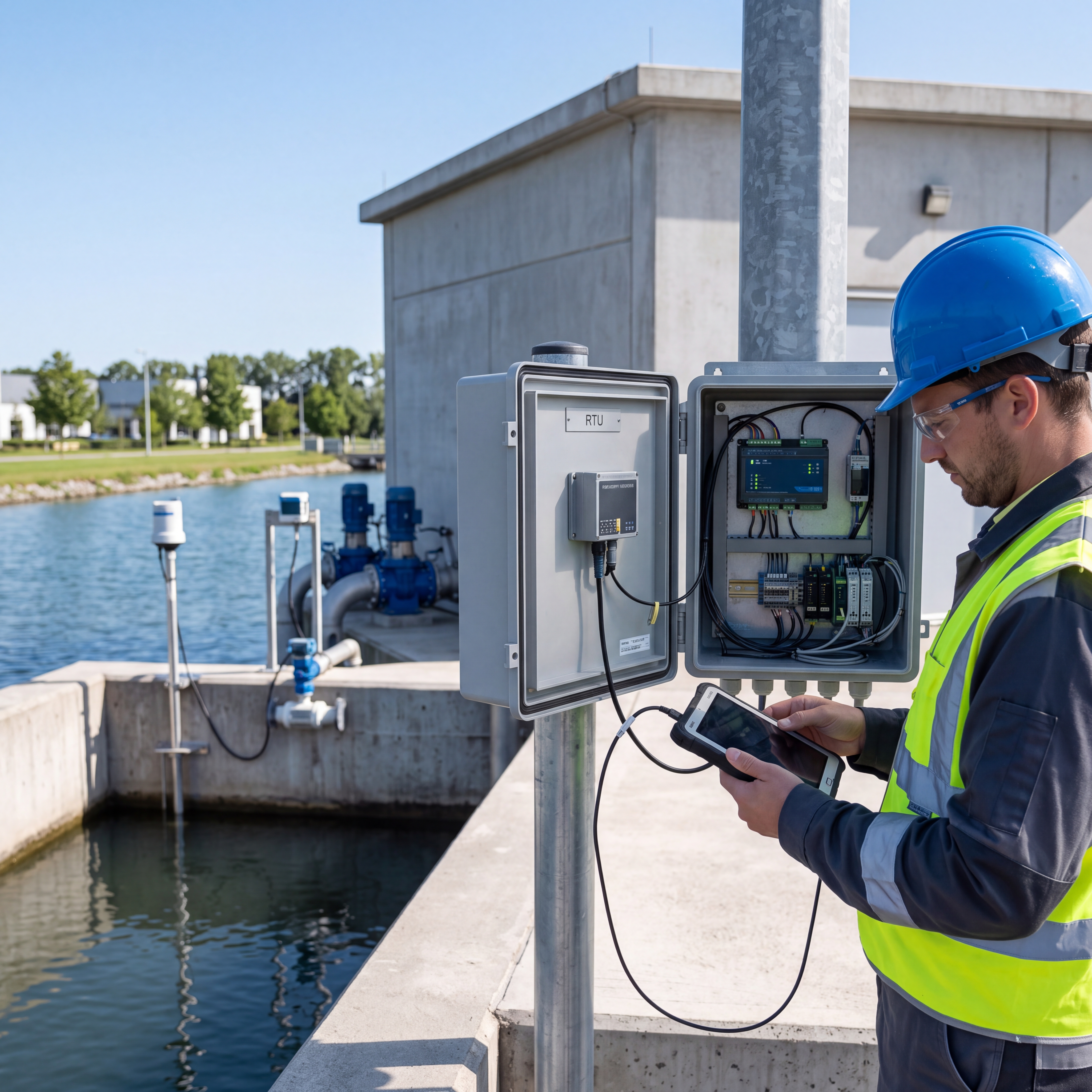
RTU telemetry terminals are the core on-site equipment in scenarios such as water conservancy, hydrology, irrigation districts, reservoirs, pump stations, and urban waterlogging prevention. They are primarily responsible for the acquisition, storage, protocol conversion, remote transmission, and linkage control of data including water level, rainfall, flow rate, flow velocity, gate opening, soil moisture, voltage, and equipment status.
From a procurement perspective, the industry's focus is shifting from "whether it works" to "whether it can work stably in the long term." Water conservancy stations are mostly distributed in mountainous areas, reservoir regions, and along canals—areas with weak signals or no grid power. Once equipment fails, inspection and replacement costs are high.
Therefore, data acquisition accuracy, remote transmission stability, low power consumption, protocol compatibility, protection rating, and post-maintenance convenience have become crucial indicators for project selection. Based on common industry configurations and project feedback, this article analyzes the market price range, procurement recommendations, and maintenance costs, referencing typical equipment forms such as the common Hero V9 on the market.
Market Growth: Stratified Demand Driven by Digitalization
The market growth of RTU telemetry terminals is primarily driven by the continuous densification of water conservancy monitoring networks. Scenarios such as small and medium-sized river management, flash flood disaster prevention, reservoir safety monitoring, modernization of irrigation districts, rural water supply security, and urban waterlogging monitoring all require a large number of on-site telemetry nodes. Unlike general environmental monitoring, water conservancy scenarios demand higher real-time performance, continuity, and adaptability to harsh environments.
Product Structure Trends
- Simple Terminals: Single-parameter monitoring.
- Standard RTUs: Connect to multiple sensors; suitable for general rainfall/water level stations (Accounts for >55% of conventional projects).
- High-Performance RTUs: Emphasize multi-link communication, edge computing, and local control.
- Integrated Terminals: Combine RTU, power, comms, enclosure, and sensors for rapid deployment.
Demand Side Shift
Demand is shifting from hardware procurement to data services. Projects increasingly require services such as data access, platform display, alarm pushing, operation and maintenance work orders, and online diagnosis.
Protocol compatibility (SL651, HJ212, Modbus, MQTT) and multi-center reporting support have become common requirements in bidding.
Price Range: From Bare Unit Prices to Total Station Costs
Understanding the true cost requires looking beyond the bare unit price. Below is a breakdown of typical market prices based on configuration and application scenario.
| Category | Typical Configuration | Price Range (RMB) |
|---|---|---|
| Entry-Level RTU | 1-2 Analog inputs, RS485, 4G Cat.1/NB-IoT | 1,500 - 3,500 |
| Standard RTU | 4-8 Analog inputs, Multi-interface, Solar management, Breakpoint resumption | 4,000 - 9,000 |
| High-Performance RTU | Multi-link (4G/5G/BeiDou), Edge computing, Dual power redundancy | 10,000 - 28,000+ |
| Complete Station Cost | Includes sensors, solar, battery, pole, installation | 15,000 - 150,000 |
Viewed from the perspective of a complete station, the price gap widens further. A typical solar-powered water conservancy telemetry station includes water level gauges, rain gauges, solar panels, batteries, poles, lightning protection, enclosures, and construction and installation. Therefore, when discussing RTU prices, one should not just look at the bare terminal but comprehensively calculate the total station construction and subsequent maintenance.
Procurement Recommendations: Define Scenario First
The first step in selecting an RTU telemetry terminal is to clarify the monitoring objects and on-site conditions. Common parameters in water conservancy scenarios include water level, rainfall, flow rate, flow velocity, gate opening, pump status, voltage, and soil moisture.
- Interface Planning: If only rainfall and water level are monitored, 2 analog inputs or 1 RS485 interface will suffice. For complex setups (radar gauges, Doppler meters, etc.), reserve at least a 30% expansion margin.
- Communication Redundancy: In mountainous/reservoir areas, use 4G primary link with BeiDou short message, ultra-shortwave, or LoRa backup. Equipment should support automatic switching, link heartbeat, offline caching, and breakpoint resumption.
- Protocol Compatibility: Confirm native support for SL651, HJ212, Modbus RTU, or MQTT. Protocol openness is vital if accessing provincial platforms or digital twin systems in the future.
- Power & Protection: Stations without grid power need solar/battery solutions with wide-voltage input and overcharge/discharge protection. Enclosures should be at least IP65 (IP68 for submersion). Operating temperature typically -20°C to 70°C.
Data Acquisition & Remote Transmission: Accuracy and Traceability
At the data acquisition level, evaluating an RTU requires looking beyond just the number of interfaces to sampling accuracy, acquisition frequency, channel isolation, sensor adaptation, and anomaly identification capabilities. Taking the commonly seen Hero V9 RTU telemetry terminal on the market as an example, its typical configuration supports various sensors and allows for flexible acquisition cycles (1 min, 5 min, 15 min, or 1 hour), which can be remotely increased during flood seasons.
Key Feature: Breakpoint Resumption
Local storage capacity is the foundation of data integrity. Standard RTUs typically store 30-90 days of historical data. Crucially, breakpoint resumption ensures that when signals are interrupted or power fluctuates, the device caches data locally and automatically retransmits it with original timestamps once communication is restored.
Remote transmission capability depends on link stability and retransmission strategies. Edge computing capabilities are also entering water conservancy projects, allowing terminals to perform data filtering, threshold judgment, and anomaly elimination locally, reducing invalid traffic and improving response speeds.
Maintenance Cost Analysis: Long-Term Operation is Key
The maintenance costs of RTU telemetry terminals are often underestimated. The cost of a station includes not only equipment procurement and installation but also communication fees, electricity or solar maintenance, sensor calibration, platform service fees, manual inspections, spare part replacement, and fault response. Procurement should be calculated based on the full lifecycle cost (typically 5-8 years for RTUs), rather than just the first-year construction cost.
Communication Fees
Annual fees for 4G/NB-IoT cards range from 20-120 RMB. BeiDou short messages cost 200-800 RMB/year.
Sensor & Battery Mgmt
Batteries replaced every 3-5 years (200-800 RMB/station). Sensors require regular cleaning and calibration.
O&M Labor
Monthly/quarterly inspections cost 200-600 RMB per visit. Annual O&M for standard stations ranges from 1,000-3,500 RMB.
Application Cases: Real-World Performance
Small & Medium River Monitoring
A county-level department built stations along 30 rivers using tipping bucket rain gauges, radar water level gauges, and RTUs with BeiDou backup. The data integrity rate remained above 98%, providing stable basic data for flood control dispatching.
Irrigation District Informatization
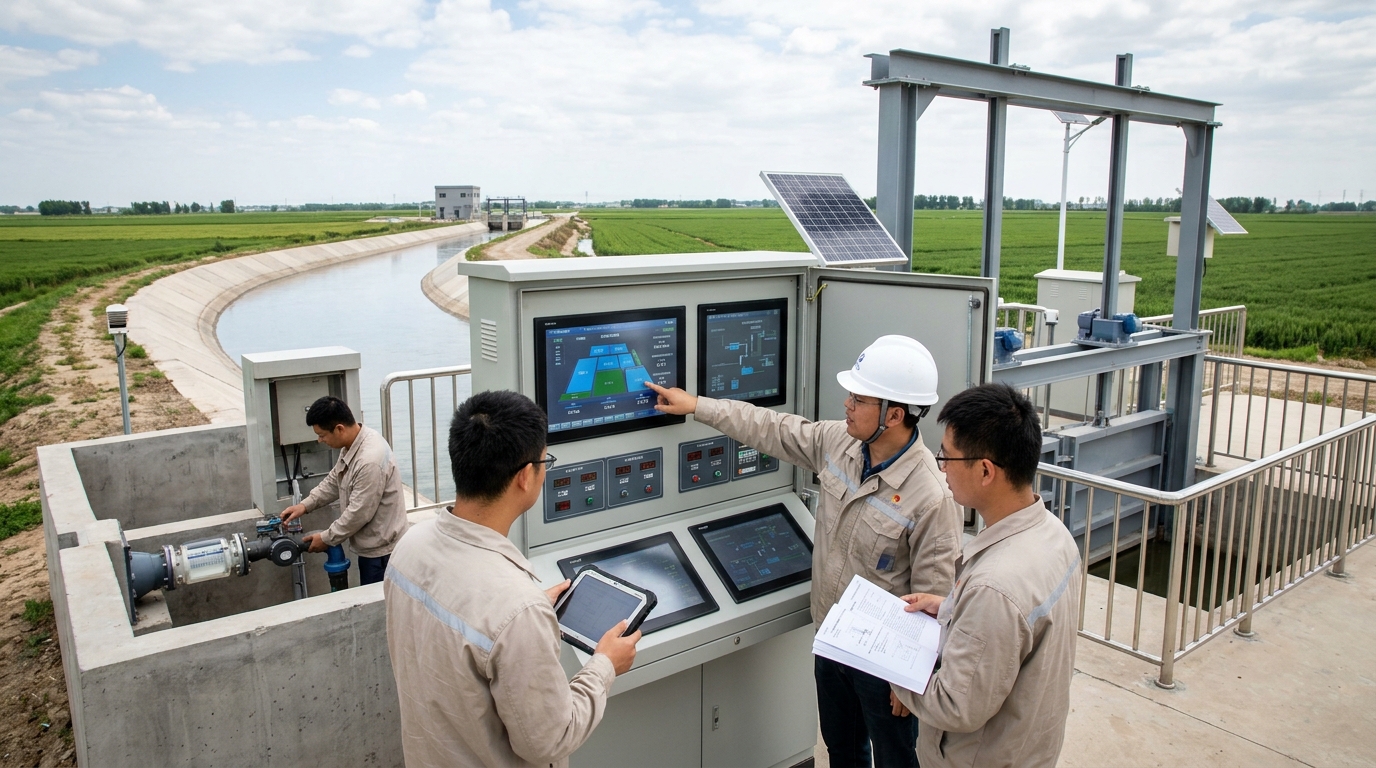
An irrigation district deployed RTUs at 45 key canal sections. By monitoring gate statuses and flow rates via Modbus, detection time for abnormal water levels shortened from hours to minutes, reducing manual patrol frequency by ~30%.
Small Reservoir Safety
RTUs connect to water level, rainfall, seepage, and displacement sensors. With breakpoint resumption and dual-center reporting, automatic alarms trigger for over-limits or device offline status, enabling uniform archiving of inspection records and events.
Concluding Outlook: From Hardware to Trusted Data Nodes
In the coming years, the RTU telemetry terminal market will continue to develop towards higher reliability, lower power consumption, multi-link capabilities, and intelligence. With the advancement of water conservancy digital twins, monitoring points will extend further to the terminal ends, and equipment deployment environments will become more complex.
At the technical level, edge computing, AI anomaly identification, domestic chips, low-orbit satellite communication, and unified data interfaces will become important directions. RTUs will no longer just passively upload data but will complete data cleaning, equipment health diagnosis, and simple predictions locally.
At the procurement level, full lifecycle costs will become a more critical decision-making basis. Project parties will pay more attention to equipment online rates, failure rates, spare part supply, remote O&M capabilities, and platform compatibility, rather than simply pursuing the lowest winning bid price. Overall, only telemetry systems that can transform on-site data into trusted, usable, and traceable decision-making information will play a greater value in the modernization of water conservancy.