Smart Water Management Market Trends: 2026 RTU Telemetry Terminal Price Trends and Selection Recommendations
Market Analysis & Procurement Guide
Introduction: Digitalization Drives RTUs to "Field Hubs"
RTU remote telemetry units are becoming critical infrastructure in water conservancy, municipal, irrigation, and emergency monitoring projects. In the past, the industry focused more on sensors and platform software, but in actual operation, the stability of on-site data collection, the continuity of remote transmission, and the reliability of equipment in low-temperature and humid environments often determine whether the entire monitoring system can function effectively in the long term.
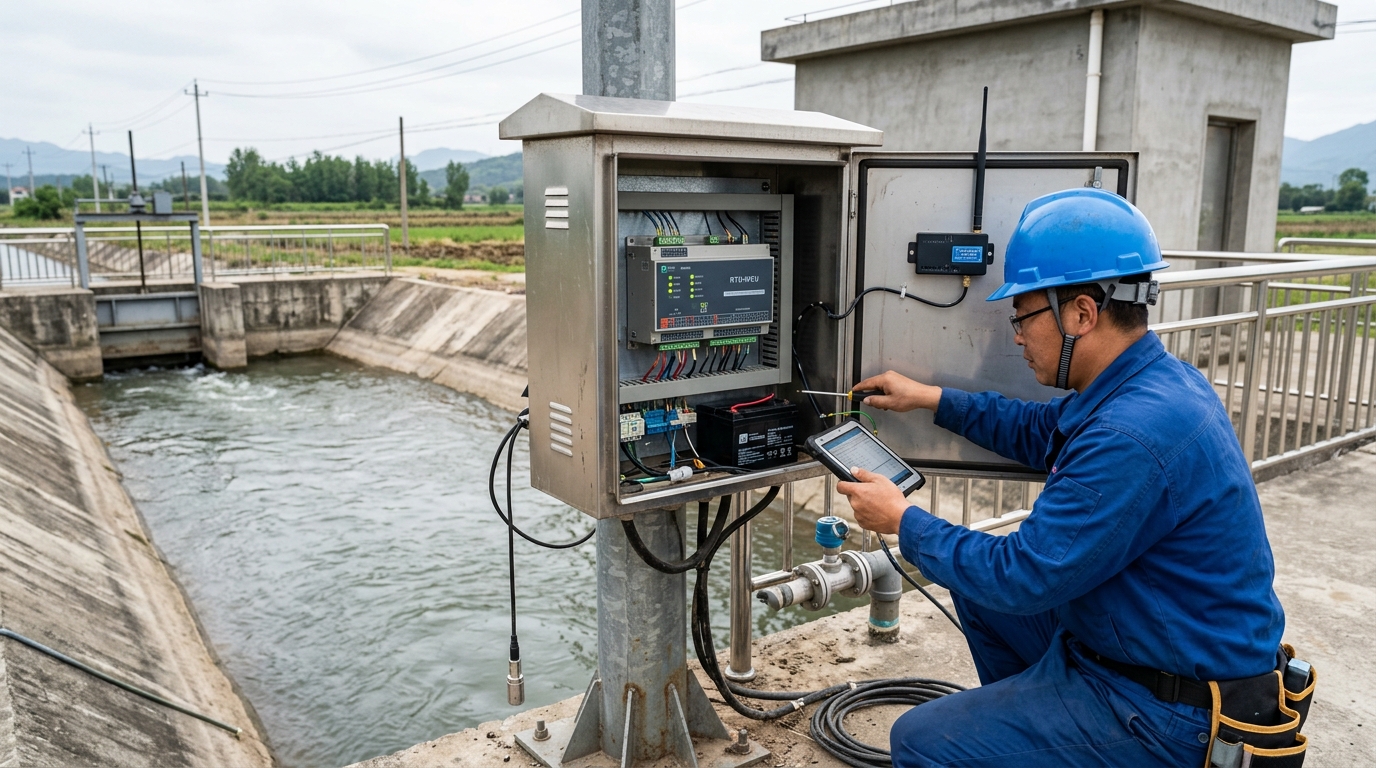
Especially in water conservancy scenarios, data such as water level, rainfall, flow rate, seepage pressure, gate opening, and pump station status need to be collected continuously over a long period and uploaded to the monitoring platform via 4G, BeiDou, LoRa, NB-IoT, etc. Therefore, RTUs undertake core tasks such as on-site data aggregation, protocol conversion, breakpoint resume, and power management.
Industry Shift: RTUs are no longer mere "data collection boxes" but field hubs connecting front-end sensors with business systems. The market is shifting from "having or not" to "being stable, cost-effective, and capable of long-term use."
Market Structure: Main Sources of Demand
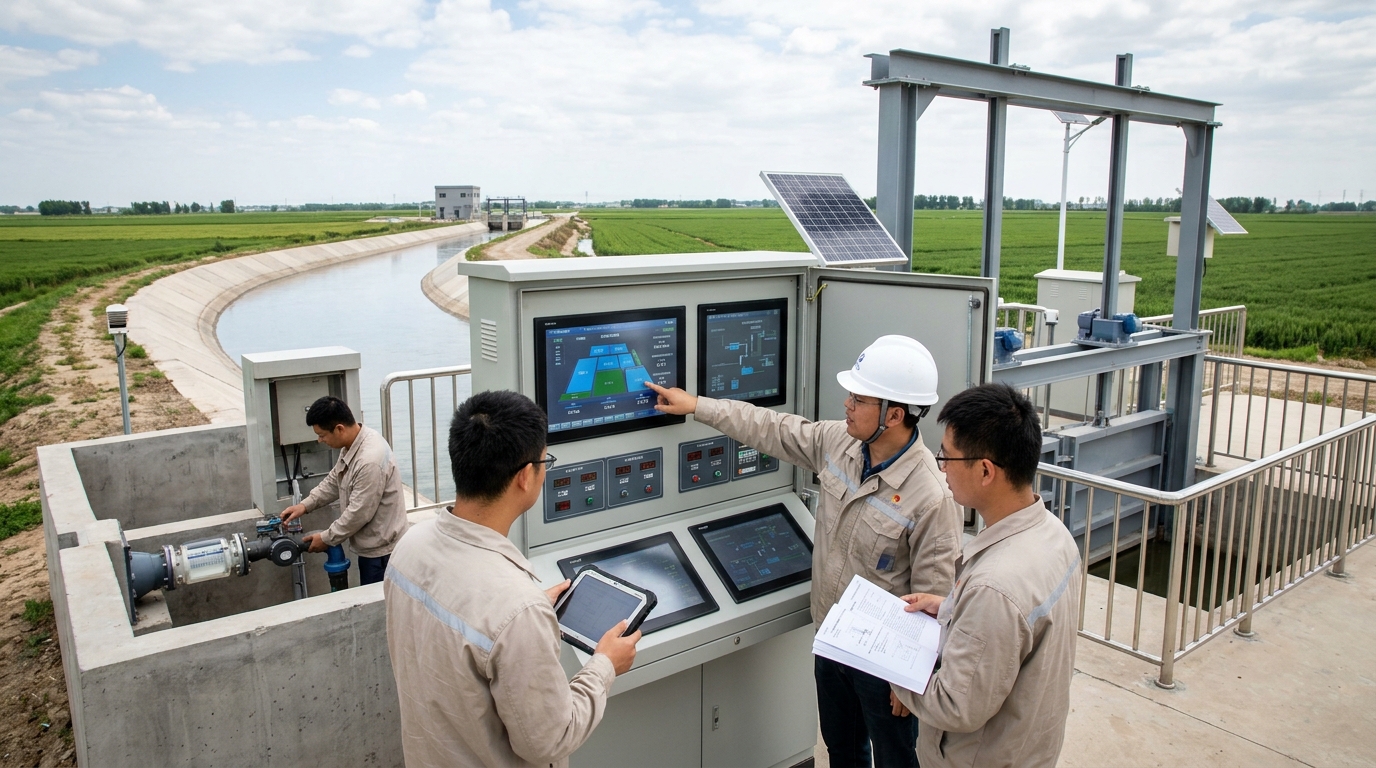
The demand for RTU remote telemetry units mainly comes from scenarios such as hydrological monitoring, reservoir safety monitoring, irrigation informatization, flash flood disaster warning, urban waterlogging monitoring, rural water supply, and pump station and gate automation. Among them, the water conservancy industry is the most typical application field.
- Project Scale: A medium-sized irrigation area renovation project often requires dozens to hundreds of monitoring points.
- Investment Range: Single water conservancy RTU station procurement is mostly concentrated between 5,000 and 30,000 RMB. With sensors and construction, comprehensive costs range from 30,000 to 150,000 RMB.
The demand structure is changing. Early projects emphasized "equipment being able to upload data," while now emphasis is placed on "data being usable, traceable, and maintainable." For example, rainfall stations during the flood season may require collection frequency to increase from 1 hour to 1 minute.
Price Range: Entry-Level vs. Mainstream vs. High-End
The price of RTU remote telemetry units is jointly affected by interfaces, accuracy, communication methods, storage, and customization. Based on current market configurations, they fall into three categories:
Entry-Level
¥1,500 - ¥4,000
- 4-8 Analog/Digital Inputs
- Basic RS485 & 4G Upload
- Simple Water Level/Rainfall Monitoring
- Limited Expansion Capability
Mainstream
¥5,000 - ¥12,000
- 8-16 Analog Inputs + DIO
- Dual RS485 / Ethernet
- SL651, HJ212, MQTT Protocols
- Long-term Local Caching (>1 Year)
High-End / Custom
¥15,000 - ¥35,000+
- Video & Edge Computing Integration
- Built-in BeiDou Short Message
- Dual Power Redundancy
- Reservoir Dams & Key Hydrology
Purchasing Suggestions: 4 Critical Steps
Clarify Signal Requirements
Prioritize equipment supporting 4-20mA, RS485, and pulse inputs. Look for high-precision ADC (0.2%FS or 0.5%FS) for water conservancy projects.
Evaluate Remote Transmission
In mountainous areas, consider BeiDou short message or dual-link backup ("4G primary, Satellite backup") to avoid data loss during floods.
Verify On-Site Conditions
Protection rating should be at least IP65. Operating temperature range of -40℃ to 70℃ is recommended. Ensure solar/battery capacity matches standby power consumption (0.1W-0.3W).
Focus on Scalability & O&M
Support for remote configuration, firmware upgrades, and fault self-diagnosis reduces on-site inspection costs significantly.
Sample Observation: Hero V9 Configuration Impact
The Hero V9 serves as a typical reference in the industry. Its common configuration includes 8 analog inputs, 12 digital inputs, 4 relay outputs, and 2 RS485 interfaces. This setup covers most rainfall, water level, and small gate monitoring needs.
Key Feature: Flexible reporting intervals. Regular monitoring can be set to every 10 minutes, increasing to 1 minute during floods. If communication is interrupted, local caching ensures data retransmission upon recovery, reducing data gaps.
Note: Mid-to-high-end solutions like the Hero V9 are not suitable for all projects. Simple single-signal sites with good power/network do not need high configurations. Conversely, harsh environments (high lightning, humidity) require strengthened sealing and protection regardless of base price.
Maintenance Cost Analysis: Total Lifecycle Cost
True cost includes communication fees, battery replacement, sensor calibration, and labor. For an 8,000 RMB unit with a 5-8 year life, annual maintenance can reach 2,000 to 8,000 RMB.
- Communication Fees: 4G IoT cards (¥60-360/year); BeiDou/Satellite (¥500-2,000+/year).
- Battery Replacement: Every 2-4 years, costing ¥300-1,200 depending on capacity and environment.
- Calibration & Labor: Sensor calibration (¥500-3,000); On-site inspection (¥200-800 per visit).
Tip: RTUs with remote diagnostics and restart capabilities can reduce invalid on-site inspections by 30% to 50%.
Typical Cases: Configuration Differences
Medium Irrigation Area
Config: 126 points, 86 mainstream RTUs (¥7,800/unit).
Result: Data completeness rose from 91.4% to 98.7%. Annual maintenance ~¥2,600/station.
Lesson: Prioritize communication stability over extra interfaces for canal points.
Small Reservoir Safety
Config: 42 stations, Hero V9-type + BeiDou Backup (¥12,500/unit).
Result: Missed reporting dropped from 6.2% to 1.1% during floods.
Lesson: Communication redundancy value exceeds simple equipment price reduction.
Trend Outlook: Standardization & Intelligent O&M
In the next few years, the RTU market will shift from "equipment procurement" to "system operation capability competition." Key trends include:
- Standardization: Unified protocols and modular designs.
- Low Power Consumption: Advanced sleep-wake mechanisms and battery health monitoring.
- Intelligent O&M: Edge analysis, anomaly identification, and automatic fault alarms.
Project parties should combine actual scenario needs—evaluating price ranges, data collection capabilities, remote transmission reliability, and maintenance costs—to select a truly suitable RTU solution for long-term project operation.