Return on Investment Analysis for RTU Telemetry Terminals: Cost-Benefit Comparison in Smart Water Management Projects
From simple data acquisition to core field nodes: A comprehensive guide to procurement, lifecycle costs, and ROI in the water conservancy industry.
Intro Introduction: RTU Telemetry Terminals Enter the Stage of Refined Procurement
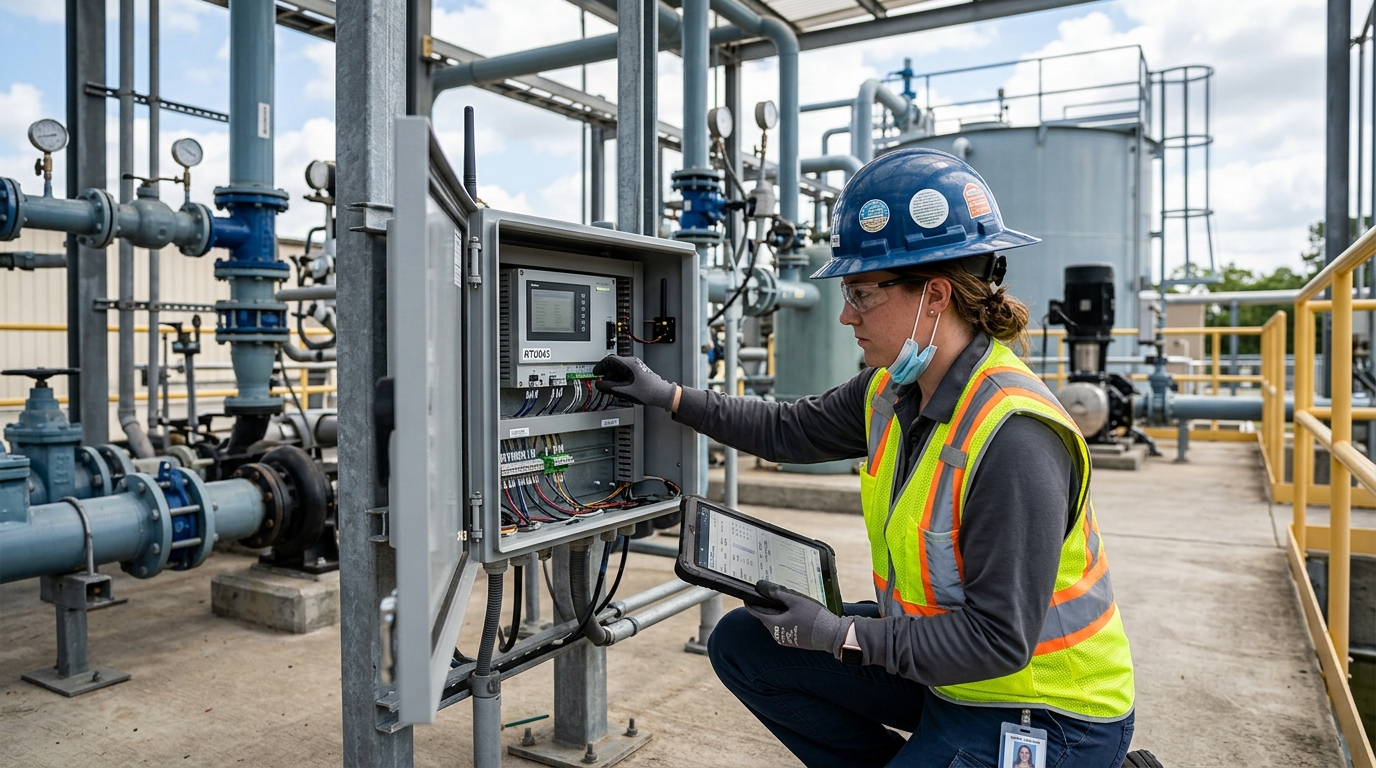
Against the backdrop of continuously expanding scenarios such as water resources informatization, urban waterlogging control, modernization of irrigation districts, ecological flow monitoring, and rural water supply security, the RTU (Remote Terminal Unit) has evolved from an early simple data acquisition device into a core field node integrating data acquisition, remote transmission, local storage, alarm linkage, low-power power management, and multi-protocol access.
Industry users' focus on RTUs has shifted from mere hardware pricing to comprehensive indicators such as communication stability, protocol compatibility, low-power performance, protection rating, post-maintenance costs, and platform integration capabilities. From a market perspective, the price range of RTU telemetry terminals is clearly stratifying: there are entry-level lightweight terminals costing around a thousand RMB suitable for simple water level and rainfall monitoring, as well as premium industrial terminals costing tens of thousands of RMB designed for complex scenarios like reservoirs, irrigation districts, rivers, and pump stations.
I. Market Price Ranges: From Entry-Level to Premium Terminals
The current RTU telemetry terminal market has not formed a single pricing standard; price differences mainly stem from interfaces, communication methods, power management, protection ratings, and protocol support. Based on common industry configurations, the market can be roughly divided into four price tiers:
Tier 1: Lightweight Acquisition Terminals
Price: ¥800 – ¥2,500
- Features: 1-2 analog inputs, basic RS485, NB-IoT/4G Cat.1/LoRa.
- Use Case: Single-point water level, rainfall, soil moisture.
- Pros: Rapid deployment, low power consumption.
Tier 2: Standard Industrial Terminals
Price: ¥2,500 – ¥6,000
- Features: 4-8 analog inputs, Modbus RTU/MQTT, IP65.
- Use Case: Small pump stations, urban waterlogging, irrigation wells.
- Pros: Mainstream choice for SME projects with breakpoint resume.
Tier 3: Enhanced Water Conservancy Terminals
Price: ¥6,000 – ¥15,000
- Features: Dual 4G + BeiDou, IP68, solar charging, SL651 protocol.
- Use Case: Reservoirs, flash flood channels, ecological flow monitoring.
- Pros: High reliability, long-term field operation.
Tier 4: Integrated Monitoring Cabinets
Price: ¥15,000 – ¥50,000+
- Features: RTU + Power + Lightning Protection + Sensors + Display.
- Use Case: Pump station control, automatic water quality stations.
- Pros: Multi-device linkage, complete on-site solution.
Note: Prices above generally refer to the RTU itself. Comprehensive investment per station (including sensors, poles, construction) can range from ¥10,000 to over ¥100,000. Distinguish between "equipment price," "station price," and "system price."
II. Demand Characteristics: Prioritizing Reliability & Transmission
The water conservancy industry requires RTUs that prioritize long-term stability, low power consumption, and ease of maintenance over raw processing speed. Key demands include:
- Data Acquisition Accuracy: Requirements typically include acquisition accuracy of no less than 0.2% FS, configurable sampling cycles (1 min to 1 hour), and local historical data retention for at least 6–12 months.
- Remote Transmission Resilience: In areas with unstable public networks (mountains, reservoirs), RTUs must support multi-channel switching (e.g., 4G to BeiDou/Satellite IoT). Industry projects require a data integrity rate of over 98% and an online rate of over 99%.
- Environmental Reliability: Equipment must withstand moisture, lightning, and sediment. Common standards include IP65/IP68 protection and operating temperatures covering -40℃ to 85℃.
III. Typical Application Cases: Cost Differences by Scenario
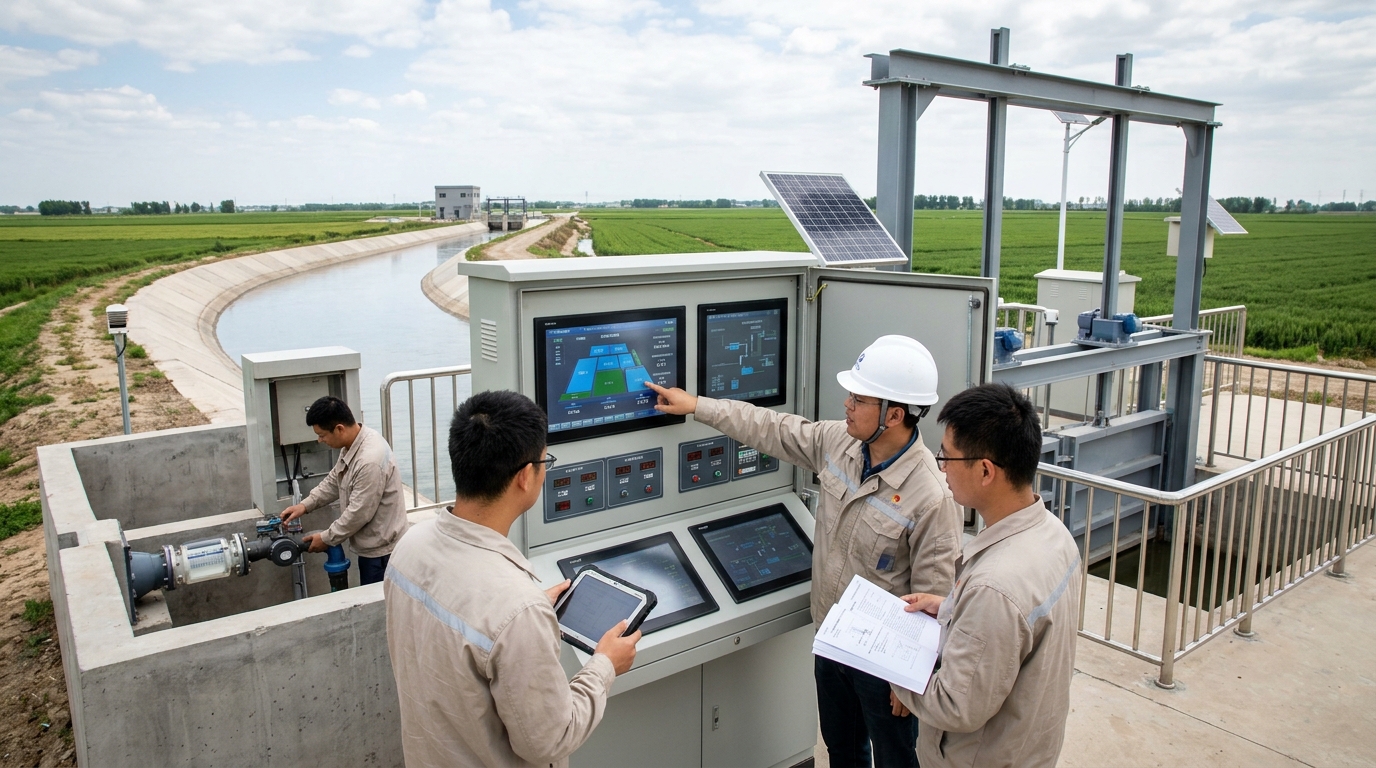
Irrigation District Modernization
Scale: 128 points
Avg Station Cost: ~¥28k-45k
Key Metric: 99.2% online rate
Projects using Hero V9-class terminals with 4G + BeiDou backup showed a 35% decrease in manual inspection frequency. Anomaly detection time dropped from hours to under 10 minutes, justifying the higher initial equipment cost through labor savings.
Small Reservoir Group
Scale: 23 reservoirs
Tech: 4G + BeiDou Dual Channel
Maintenance: Low RTU failure rate
In mountainous areas with poor signal, dual-channel RTUs ensured critical data reporting during heavy rains. Maintenance efforts focused primarily on solar panel cleaning and battery checks rather than unit replacement.
Urban Waterlogging
Scale: 46 underpasses
Tech: NB-IoT + Battery Power
Cost: Lower upfront, higher O&M
Low-power solutions reduced installation costs but introduced recurring battery replacement expenses. Purchasers must define battery life and replacement responsibilities clearly to avoid underestimated O&M costs.
IV. Observational Sample: Hero V9 Configuration Analysis
The Hero V9-class RTU serves as a benchmark for observing configuration trends. When evaluating such devices, purchasers should dissect parameters against actual project needs:
- Data Acquisition Capability: Look for 0.2% FS accuracy, configurable sampling, and local storage of at least 1 million records. For metering sections, ensure timestamp integrity and power-down data saving.
- Remote Transmission: Dual-channel automatic switching (e.g., 4G to BeiDou) is critical for resilience during flood seasons. Support for MQTT, Modbus RTU, and SL651 ensures platform flexibility.
- Power Management: Sleep power consumption below 0.5W is ideal. Features like timed wake-up, event-triggered reporting, and low-temperature protection significantly extend battery life in remote locations.
- Protection & Installation: High IP ratings, waterproof connectors, and DIN rail mounting options are essential for harsh environments like valve chambers and open channels.
V. Procurement Recommendations: Defining Boundaries by Scenario
Key Selection Criteria
- ✓ Clarify Objectives: Define monitoring elements, sampling frequency, and platform interface requirements in bidding documents to avoid scope creep.
- ✓ Match Communication to Site: Use 4G/5G where signals are good; evaluate BeiDou/Satellite IoT for mountains; use NB-IoT for underground points.
- ✓ Calculate Power Holistically: Don't just look at solar panel wattage. Calculate based on consecutive rainy days, battery capacity, and terminal sleep current.
- ✓ Reserve Interface Margin: Choose RTUs with 30% more interfaces than currently needed to allow for future sensor additions without full replacement.
- ✓ Protocol Compatibility: Ensure support for at least two mainstream protocols (e.g., SL651 + MQTT) to prevent vendor lock-in.
VI. Maintenance Cost Analysis: The Hidden Variables
Annual O&M costs typically account for 5% to 12% of the initial construction investment. These costs are often underestimated:
Communication Fees
NB-IoT: ¥20-60/yr
4G Cat.1: ¥60-200/yr
Satellite: ¥100-500/yr
Battery & Solar
Battery Replace: ¥200-800 every 3-5 yrs.
Cleaning: ¥100-300 per visit (2-4x/yr).
Sensor Calibration
Annual/Bi-annual calibration: ¥500-3,000 depending on sensor type (flow, water quality).
ROI Example: For a 100-station project with ¥30k/station investment, annual O&M is approx. ¥240k. Harsh environments or satellite comms can push this to >¥3k/station/year. Always request 3-5 year O&M estimates during bidding.
VII. Conclusion: Shifting from Hardware to Service
The RTU telemetry terminal market is evolving towards standardization, low power consumption, and intelligent O&M. As digital twins and agricultural water pricing reforms advance, the focus of competition will shift from hardware costs to long-term reliability, O&M efficiency, and data quality.
Future procurement logic will move from "buying equipment" to "buying site service capabilities." Purchasers should prioritize data integrity rates, fault response times, and platform compatibility. Only by combining construction costs with total lifecycle cost evaluation can organizations truly select telemetry solutions that deliver sustainable value in water conservancy, flood control, and urban monitoring scenarios.