RTU Telemetry Terminal Selection and Maintenance: How Much Does the Hero V9 Cost?
Introduction
In recent years, RTU telemetry terminals have seen continuous expansion in applications across water resources, agriculture, environmental protection, and urban waterlogging monitoring. Unlike traditional manual meter reading, RTUs leverage data acquisition, remote transmission, local storage, and edge computing to transform dispersed sites into continuous, traceable data networks. Market expectations now focus on low power consumption, anti-interference, protocol compatibility, offline retransmission, and total lifecycle cost rather than just connectivity.
Market Status: From Supplementary Devices to Infrastructure
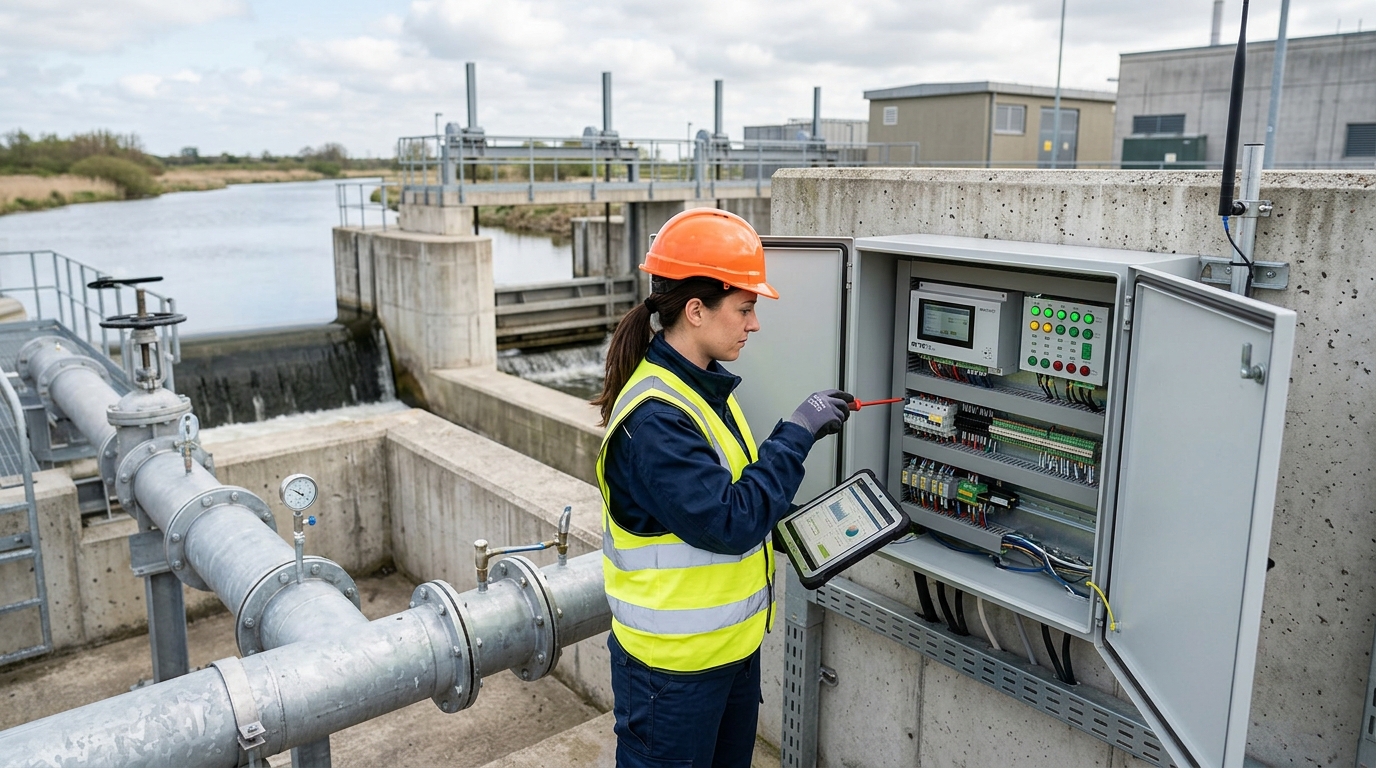
The expansion of the RTU market is driven by long-term demands such as water resources informatization, river chief systems, and flood prevention. As sensor costs decline and wireless coverage improves, RTUs are becoming standard nodes. In scenarios with numerous sites and complex environments—such as small reservoirs and flash flood channels—the deployment value is evident.
Industry data shows that new demand has expanded from pilot projects to large-scale construction. A typical county-level monitoring network may include dozens to hundreds of RTU sites covering rainfall, water level, flow, and video linkage. Requirements vary significantly: urban pipelines need stability; river cross-sections need lightning protection; mountainous stations need BeiDou/solar support; irrigation districts need multi-channel access.
1. Diversified Communication
4G Cat1, NB-IoT, LoRa, 5G, and BeiDou short messages form a heterogeneous transmission option set.
2. Enhanced Edge Intelligence
Terminals perform threshold judgment, anomaly filtering, local linkage, and offline caching beyond simple collection.
3. Changing O&M Models
Buyers prioritize fault rates, remote diagnostics, firmware upgrades, and data integrity over basic specs.
Product Price Ranges: Entry-Level to High-End Specifics
RTU prices are strongly affected by communication modules, interfaces, protection ratings, and software platforms. Considering only the device itself, the market divides into three ranges:
- Entry-Level / General-Purpose (CNY 1,500 – 3,500): Suitable for simple rainfall/water level acquisition. Uses 4G/NB-IoT, IP54-IP65 protection. Best for friendly environments with small data volumes.
- Mid-Range (CNY 3,500 – 8,000): Offers more RS485/SDI-12/Analog interfaces, Modbus/MQTT support, and 30-90 day local storage. Common in tenders for rivers, irrigation, and urban waterlogging.
- High-End Water Resources-Specific (CNY 8,000 – 20,000+): Features explosion-proofing, BeiDou backup, video linkage, and deep hydrological protocol adaptation. The Hero V9 terminal represents this category. Emphasizes IP66, wide-temperature operation, and remote O&M.
Note: If cabinets, solar panels, batteries, sensors, installation, and platform integration are included, the comprehensive cost per site may reach CNY 15,000 to CNY 50,000. Low-priced devices often carry hidden costs in poor communication stability and difficult maintenance.
Selection Recommendations: Derive Configuration from Scenarios
Avoid "uniform configuration for all sites." Define monitored objects, data frequency, transmission conditions, and power supply first.
Communication & Transmission
For low-frequency data, 4G Cat1/NB-IoT suffices. For video/high-frequency flow, use 4G/5G. In areas without public network, rely on BeiDou/Satellite/LoRa. Ensure support for MQTT, HTTP, TCP/UDP, and specific hydrological protocols. Check offline retransmission mechanisms to prevent packet loss.
Interface Capability
Verify compatibility with existing sensors (radar water level, electromagnetic flow meters, etc.). Mid-range RTUs typically offer 4 RS485, 2 SDI-12, and analog/digital channels. High-end terminals like the Hero V9 provide >8 RS485 channels and edge control capabilities.
Power Supply & Protection
Outdoor sites require Solar + Lithium or Mains + Backup. Calculate endurance during rainy days. Aim for IP65 minimum, IP66 for harsh environments. Consider temperature range (-20°C to 60°C standard, -40°C to 85°C for extremes).
Remote O&M Capabilities
Prioritize devices supporting remote diagnostics, OTA firmware upgrades, and log exports. Field maintenance is costly; remote troubleshooting reduces labor expenses significantly.
Maintenance Cost Analysis: The Hidden Expenditures
Maintenance costs are often underestimated. After procurement, annual costs consist of communication fees, battery replacement, sensor calibration, manual inspections, and platform services.
Communication Fees
Estimated at CNY 100–300/site/year for standard data. Video/high-frequency transmission can reach CNY 500–1,200/site/year.
NB-IoT offers lower costs but requires evaluating platform access fees.
Battery Replacement
Solar lithium batteries last 3–5 years. Replacement cost: CNY 500–1,500/site. Poor management (deep discharge/shading) halves lifespan.
Intelligent power management reduces on-site replacement frequency.
Sensor Calibration
Water level sensors: CNY 500–1,500/year. Multi-parameter water quality probes: CNY 2,000–6,000/year. Flow meters require higher maintenance.
Regular cleaning and zero-point calibration are essential for data accuracy.
Manual Inspection Labor
Remote sites cost CNY 500–2,000 per visit. Annual labor can exceed device price. Remote diagnostics can reduce inspection frequency by 50%+.
Industry cases show 15-30% reduction in annual maintenance costs with remote O&M.
Case Observation: Hero V9 in County-Level Networks
In a project deploying 120 sites before the flood season, challenges included dispersed locations, unstable signals, and limited personnel. The solution utilized water resources-specific RTUs, including the Hero V9 terminal, focusing on data acquisition, dual-channel transmission (4G + BeiDou), and remote O&M.
Key Configuration & Results
- Specs: IP66, -20°C to 60°C, 4x RS485, 2x Analog, 4x Digital, >90-day local storage, Solar powered.
- Data Integrity: Achieved ~98.5% integrity rate; >99% success rate for offline data retransmission.
- Reliability: During two rainy periods, critical alarms were uploaded via BeiDou when 4G failed, preventing contact loss.
- Maintenance: Monthly fault rate dropped from 12% to ~5% after initial rectification. On-site labor decreased by ~30% due to remote diagnostics.
Cost Perspective: Device procurement was CNY 12,000–18,000/site. Comprehensive construction (including cabinets/sensors/installation) was CNY 30,000–50,000/site. Annual maintenance averaged CNY 2,500–4,500/site. While higher upfront than entry-level devices, the total lifecycle cost is more controllable due to superior stability and reduced labor.
Procurement Risks: Hidden Costs of Low-Price Competition
Be wary of extremely low-priced RTUs. Shortcomings in communication stability, lightning protection, and battery management can lead to data loss during critical flood events.
Major Risk Factors
- Protocol Mismatch: Differences in message formats/timestamps cause data gaps or command failures during platform integration.
- Poor Installation Quality: Incorrect antenna orientation, grounding, or sealing leads to "device faults" that are actually environmental issues.
- Lack of Remote Support: Without OTA/firmware upgrades, minor bugs require expensive on-site visits.
Conclusion: RTUs as Edge Entrances for Digital Twins
Over the next few years, RTU development will focus on low power consumption, multi-network convergence, and edge intelligence. Technologies like 5G RedCap and satellite internet will enable wider coverage. Terminals will undertake more preprocessing tasks, reducing platform pressure.
In scenarios like water resources digital twins and smart irrigation districts, RTUs are no longer isolated collectors but edge entrances connecting sensors, networks, and dispatch systems. Devices like the Hero V9 reflect the industry's shift toward "reliable acquisition, stable transmission, and scenario adaptation." Rational selection should always be based on Total Lifecycle Cost, prioritizing data integrity and fault recovery time over initial purchase price.