Hero V9 vs. Data Acquisition: A Selection Guide for Smart Water Management Scenarios
Against the backdrop of the continued digital transformation of the water resources industry, RTU telemetry terminals are evolving from single data-backhaul nodes into intelligent field nodes with protocol adaptation, edge computing, anomaly detection, and link redundancy capabilities. This guide compares different types of RTU telemetry terminals to provide a reference for water resources informatization.
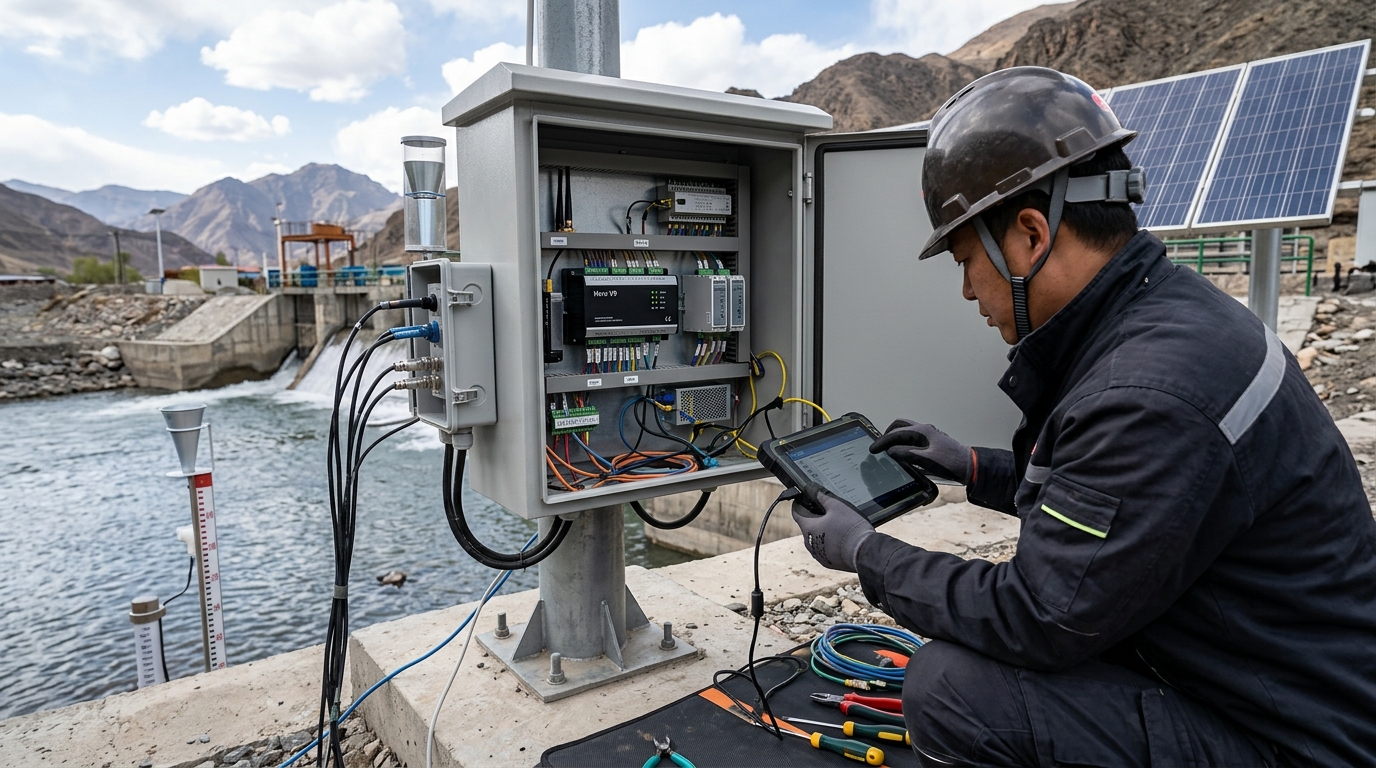
Whether for rain gauges, water level gauges, reservoir safety monitoring, irrigation district water measurement facilities, or urban waterlogging early-warning systems, RTUs must strike a balance among complex field environments, unstable communication conditions, and multi-source sensor access. Using industrial-grade telemetry terminals such as the Hero V9 as a sample for observation, one can see that current RTU technology paths are pursuing differentiated competition around data acquisition capabilities, remote transmission methods, power supply reliability, protocol compatibility, and O&M costs.
1. Panoramic View of Technology Paths: From “Acquisition—Transmission” to “Edge Intelligence”
The core tasks of RTU telemetry terminals can be summarized into three main lines: first, on-site data acquisition; second, remote transmission and data reporting; third, exception handling and on-site linkage. Early RTUs mostly used a simple “sensor—analog/pulse—4G transmission” architecture. As demands strengthen, RTUs now need to undertake tasks such as protocol parsing, data verification, threshold judgment, breakpoint continuation, remote control, and security authentication.
Traditional & Industrial Edge RTUs
- Traditional: RS485/DI/AI interfaces, 4G/Ethernet. Simple structure, lower cost.
- Industrial Edge (e.g., Hero V9): Multi-interface, supports Modbus/MQTT/SL651, edge computing, IP66 protection.
Low-Power & Gateway Types
- Low-Power: NB-IoT, LoRa, BeiDou. Focus on low power and wide coverage for remote areas.
- Gateway: Stronger processors, video AI, containerized software for complex hubs like pump stations.
Different technology paths are not simple replacement relationships. Selection requires comprehensive judgment based on on-site point scale, communication coverage, device power consumption, protocol standards, future expansion, and full lifecycle cost.
2. Traditional Serial and Analog RTUs
Traditional RTU telemetry terminals still account for a large proportion in the industry. Their typical architecture involves tipping-bucket rain gauges connected via pulse signals and water level meters via RS485 or analog. They usually support 2–4 RS485 channels and operate at common rates like 9600 bps.
Advantages
- Mature technology and lower hardware cost.
- Simple maintenance logic suitable for basic monitoring.
- High cost-effectiveness for scheduled rain data backhaul.
Limitations
- Limited interface count and processing capacity.
- Weak data verification; relies heavily on central platform.
- Single-link 4G risks data loss in poor coverage areas.
- Limited protocol expansion capability (hard to shift to MQTT/SL651).
These RTUs are best suited for basic monitoring, low-frequency acquisition, and limited budget scenarios. For complex requirements involving real-time warning and multi-source fusion, their capability boundaries are obvious.
3. Industrial-Grade Multi-Interface Edge RTUs: The Hero V9 Sample
Industrial-grade edge RTUs represent a key upgrade direction. Terminals like the Hero V9 typically offer multiple RS485 channels, digital/analog I/O, Ethernet, 4G, Wi-Fi, and optional satellite backups. They support protocols such as Modbus RTU/TCP, MQTT, HTTP, DL/T645, and SL651, with operating temperatures covering -20°C to 70°C and IP66 protection.
Key Advantage: On-Site Processing
Unlike traditional RTUs, these devices complete data cleansing, anomaly filtering, unit conversion, threshold judgment, and alarm generation at the terminal side.
- Rainfall: Calculates minute/hourly/accumulated rainfall and judges pulse jitter/disconnection.
- Water Level: Connects radar/ultrasonic meters, reads instantaneous data, and identifies abnormal jumps via historical comparison.
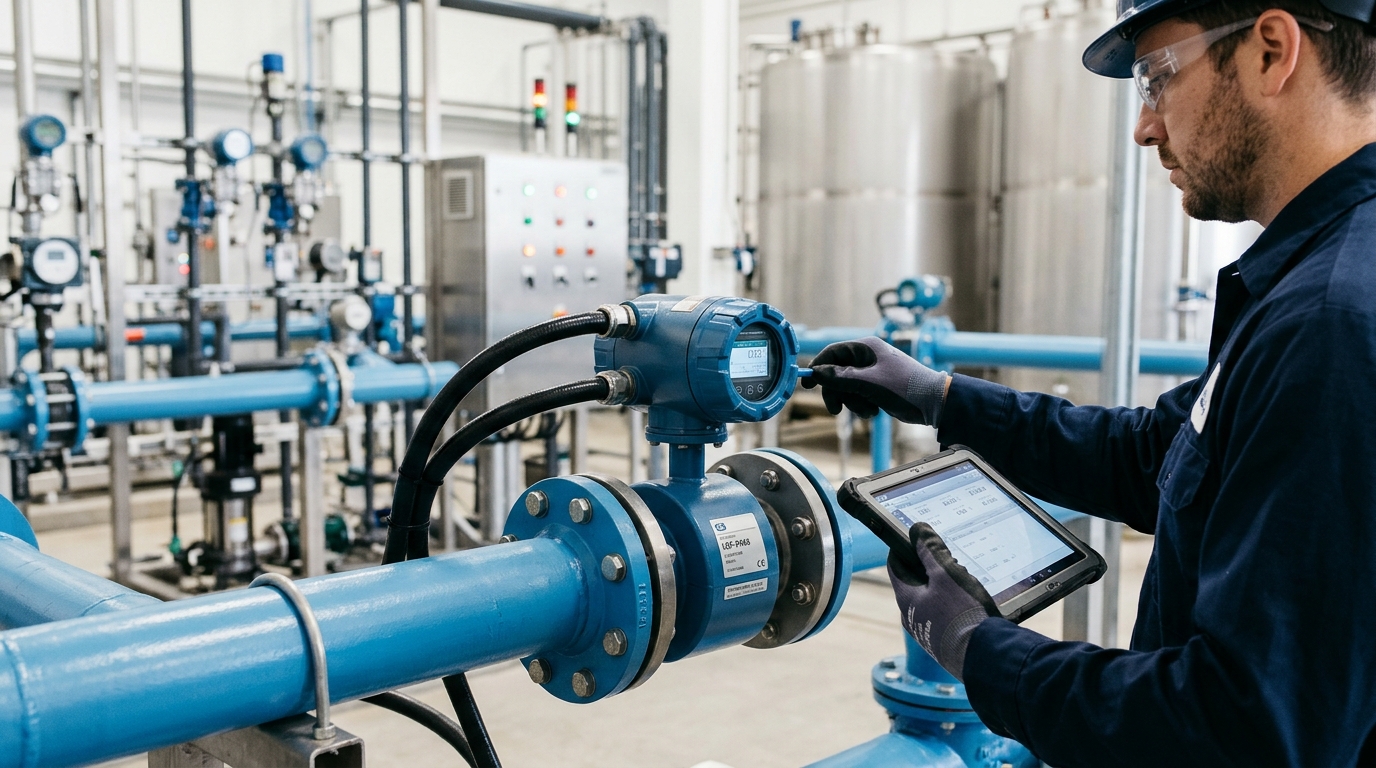
- Irrigation: Converts electromagnetic flowmeter and gate encoder data into standard messages for MQTT/SL651 upload.
Case Study: Basin Flash Flood Monitoring
In a project deploying ~320 monitoring stations using Hero V9-like RTUs, the configuration included 4G primary and BeiDou backup links. Terminal local breakpoint continuation cached ~100,000 records, achieving >99.9% data completeness and <10-second alarm latency. Central platform received traffic decreased by ~30% due to edge-side filtering.
Considerations: Higher standby power consumption than narrowband terminals and more complex configuration (sensor addresses, MQTT topics, etc.) require skilled O&M personnel. However, they are ideal for medium-to-large monitoring, flash flood warnings, and reservoir safety.
4. Low-Power Narrowband and Satellite Communication RTUs
These terminals use NB-IoT, LoRa, or BeiDou short messages. The core goal is low power, wide coverage, and long battery life, making them suitable for remote mountain areas, groundwater wells, and ecological flow monitoring where public network coverage is poor.
NB-IoT
Relies on cellular coverage. Ideal for small-medium data volumes. Can achieve 3–5 year battery life with 8–20 Ah batteries.
LoRa / LoRaWAN
Suitable for self-built local networks (2–10 km range). Requires gateway deployment and spectrum management.
BeiDou SMS
For areas without public network. Limited message length (78–560 chars). Best for key status/alarm transmission, not high-frequency data.
Shortcomings: Low uplink rate makes it difficult to carry video or high-frequency vibration data. Latency is uncertain during congestion. Control capability is weak, unsuitable for millisecond-level linkage like gate control.
Best Use: "Low data, low frequency, wide coverage, and long life" scenarios such as rainfall, soil moisture, and remote station status monitoring.
5. Gateway-Type and Platform-Type Telemetry Terminals
As water resources informatization moves toward system dispatching, gateway-type terminals blur the lines between RTUs and edge servers. They feature stronger processors, larger storage, and capabilities for video AI, OPC UA, and CAN bus connections, serving as an on-site data middle platform.
Case: Smart Irrigation District
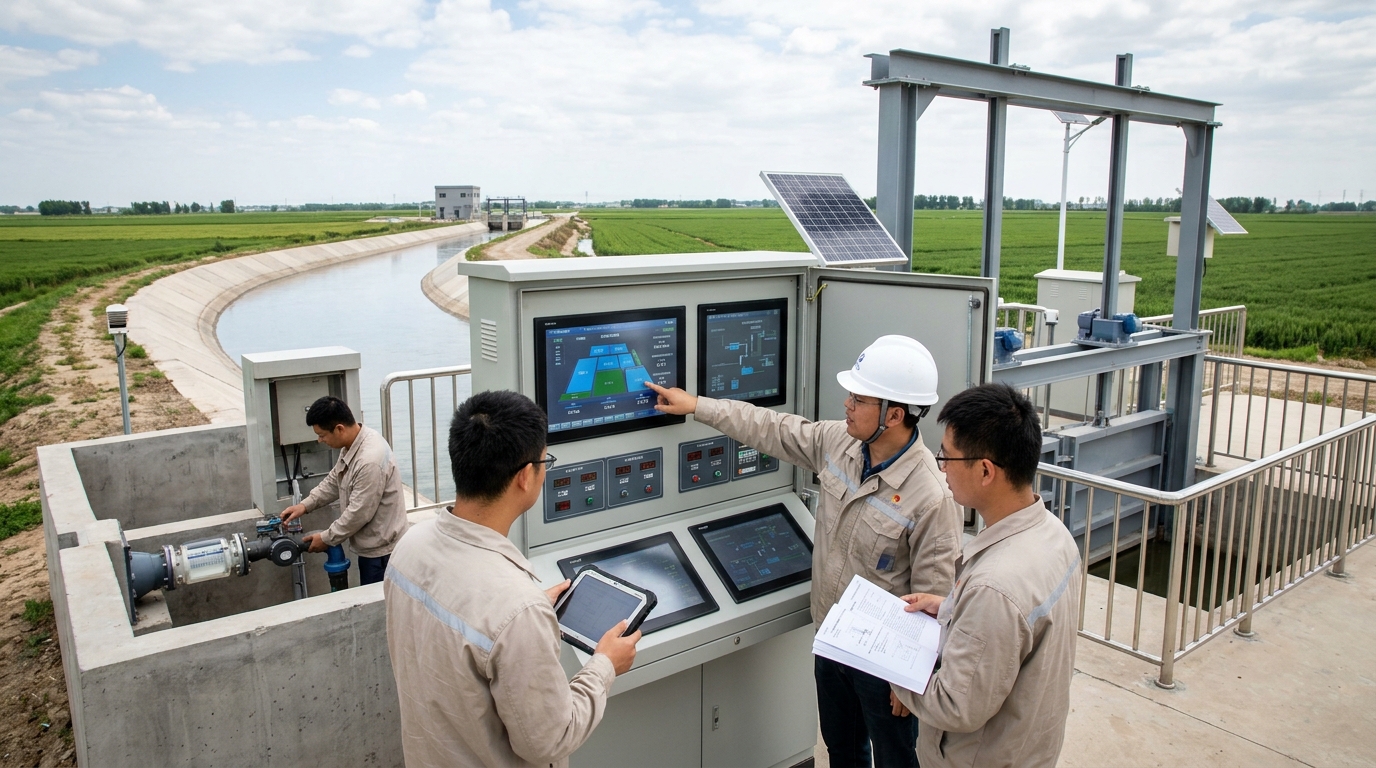
In a project with 10 gate control stations, gateway terminals connected flowmeters, encoders, video, and PLCs. By downsampling vibration data and triggering event-based video uploads, central platform bandwidth decreased by ~50%, while alarm response time shortened to within 10 seconds.
Pros & Cons
- Pros: Strong scalability, unified protocol conversion, supports digital twin inputs.
- Cons: Higher hardware/software cost, larger power consumption, complex security boundary (requires TLS, firmware signing).
These terminals are ideal for gate stations, pump stations, waterworks, and comprehensive urban waterlogging monitoring. For simple rain/water level stations, their capability may be excessive.
6. Water Resources Scenario Adaptation
| Scenario | Recommended Type | Key Requirements |
|---|---|---|
| Rain/Water Level (Basic) | Traditional or Low-Power RTU | Cost-effective, 1-5 min acquisition, 5-30 min reporting. |
| Flash Flood Warning | Industrial Edge (Hero V9 type) | Minute-level recognition, immediate alarms, dual-link backup. |
| Irrigation Measurement | Industrial RTU or Gateway | Flow/gate linkage, MQTT/SL651 support, control command issuance. |
| Reservoir Safety | Industrial RTU or Gateway | Multi-source fusion (piezometers, stress), high reliability, local caching. |
| Urban Waterlogging | Industrial RTU or Gateway | High density, low latency, strong linkage with pumps/gates, mains power available. |
| Remote/Ecological | Low-Power (NB-IoT/LoRa) | Long battery life, hourly/daily reporting, minimal data volume. |
7. Selection Recommendations: Five Dimensions
RTU selection should evaluate full lifecycle needs across five key dimensions:
Communication Link
Determine coverage (4G/5G/Fiber). For important warning stations, use primary-backup dual links (e.g., 4G + BeiDou). Check for operator tariff costs and latency/jitter for control scenarios.
Power Supply & Consumption
Calculate standby vs. peak power. Low-power RTUs suit solar/battery setups (milliwatt standby); Industrial RTUs need larger PV panels (10-50W) and batteries (20-100Ah) to handle several watts of operating power.
Data Acquisition Capability
Count sensors and interface types. Ensure sufficient RS485/DI/AI channels. Verify resolution, accuracy, and debouncing capabilities for specific sensor types (e.g., pulse counting for rain gauges).
Protocol Compatibility
Align with central platform standards (SL651, MQTT, Modbus). Verify actual message formats, QoS levels, TLS encryption support, and heartbeat mechanisms rather than just nominal protocol support.
Security & O&M
Prioritize device identity authentication, transmission encryption, and remote diagnosis capabilities. Lack of remote config/log viewing significantly increases field maintenance costs in remote areas.
"Scenarios determine the path, standards determine the boundaries, and O&M determines the lifespan."
8. Outlook: Standardization, Resilience, and Data Governance
Future development of RTU telemetry terminals will present several key trends:
- Data Quality Focus: Shift from "availability" to "accuracy and usability for model calculations," requiring better terminal-side verification and health management.
- Multi-Link Resilience: Integration of 4G, 5G, NB-IoT, LoRa, and satellite internet to ensure continuity during network failures or congestion.
- Standardized Edge Computing: Capabilities like those in the Hero V9 will become standard, carrying lightweight hydrological algorithms and edge AI inference for local risk judgment.
- Industry Integration: Unification around SL651, MQTT, and device thing models will reduce integration costs and facilitate cross-region management.
- Predictive Maintenance: Transition from field maintenance to remote diagnosis using logs, voltage curves, and RSSI data to predict faults before they occur.
Ultimately, competition among water telemetry terminals will extend beyond acquisition and transmission to encompass data governance, secure O&M, and system resilience.