In-Depth Comparison of Four RTU Telemetry Terminal Technical Approaches
Engineering Selection Logic from Data Acquisition to Remote Transmission
RTU (Remote Terminal Unit, telemetry terminal) is a key node between field sensing and remote dispatch in industries such as water resources, municipal utilities, energy, and transportation. Over the past decade, industry expectations for RTUs have shifted from "able to transmit data" to "stable, low-power, maintainable, capable of connecting multiple types of sensors, and supporting edge computing and remote O&M." This article focuses on RTU technology paths, compares the advantages and disadvantages of conventional 4G/5G, NB-IoT, LoRa, satellite communications, industrial Ethernet/wireless private networks, and hybrid networking solutions, and analyzes their application boundaries in scenarios including water resources, hydrology, irrigation districts, and urban waterlogging monitoring.
I. Technical Essence of RTUs: More Than Just a "Remote Transmitter"
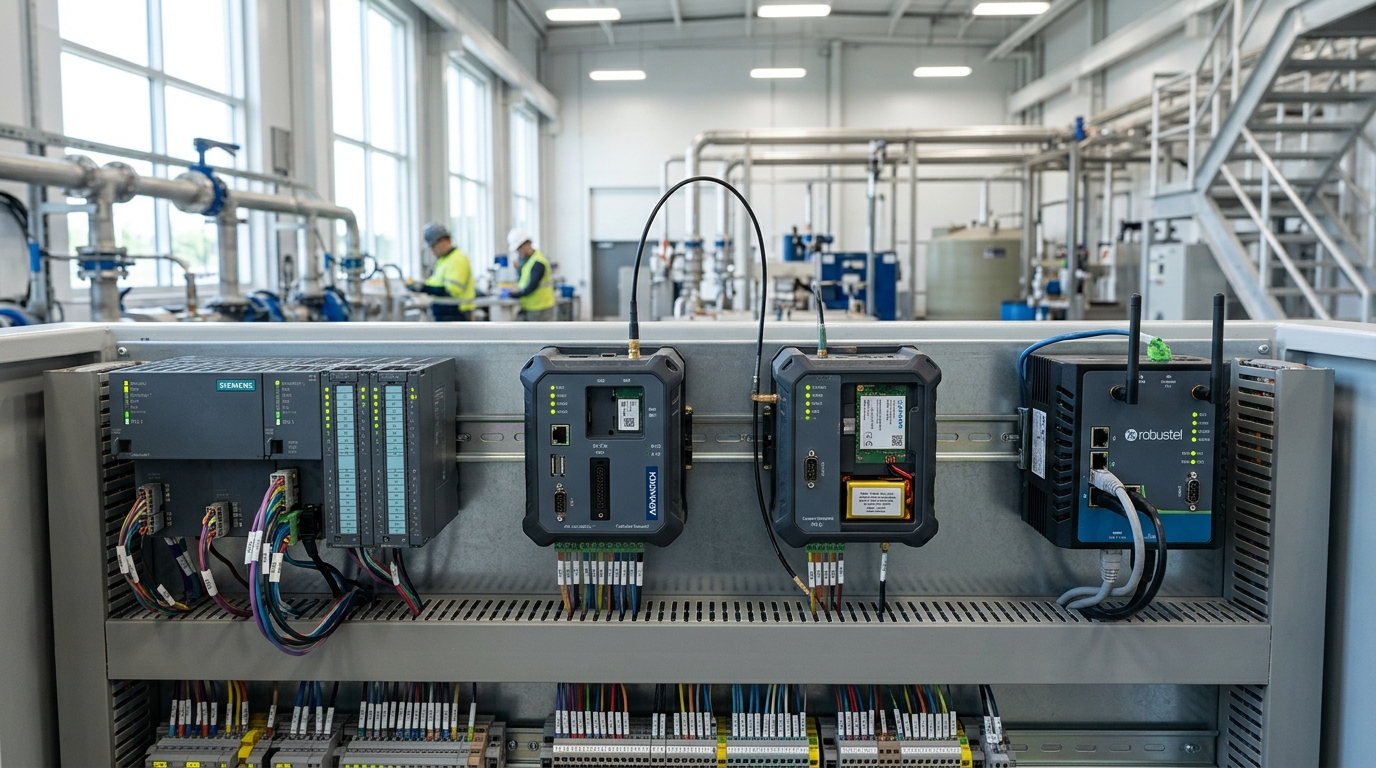
In engineering practice, RTUs are often simplistically understood as devices that upload field sensor data to cloud platforms via wireless means. From a system architecture perspective, however, an RTU performs tasks such as protocol conversion, data acquisition, cached retransmission, control execution, security verification, and edge processing between the field layer and the platform layer.
A mature RTU typically includes functional modules for analog/digital/pulse acquisition, serial device access, Modbus RTU parsing, MQTT/HTTP upload, local storage, breakpoint-resume transmission, scheduled wake-up, low-power management, remote configuration, firmware upgrade, alarm linkage, and output control.
"What truly affects project stability is often whether the device can adapt to complex conditions such as field sites without mains power, weak networks, high temperature, high humidity, lightning, insect damage, and limited installation space."
Therefore, RTU selection should be evaluated across three dimensions:
- Communication Layer: Determines how data is transmitted remotely.
- Acquisition & Control Layer: Determines what sensors can be connected and what linkages can be performed.
- O&M Layer: Determines long-term stability, remote diagnosis capabilities, and business continuity during interruptions.
II. Comparison of Mainstream Technology Paths
1. 4G/5G Cellular Public Networks
Best For: Video, High-Frequency Data, Real-time Alarms
Cat.1/Cat.4 modules offer broad coverage and rapid deployment. Suitable for flood-control sluice stations, drainage pump stations, and video surveillance.
Pros: High bandwidth, mature network maintenance.
Cons: Higher power consumption than NB-IoT, tariff costs, dependency on base station coverage.
2. NB-IoT
Best For: Low-Frequency Small-Data Monitoring
Ideal for battery-powered scenarios like rain gauges, soil moisture, and pipeline pressure. Uploads once a day or hour.
Pros: Low power, strong penetration, low cost.
Cons: Limited uplink bandwidth, unsuitable for video/control, latency affected by load.
3. LoRa/LoRaWAN
Best For: Campus & Private Network Scenarios
Uses unlicensed spectrum and self-built gateways. Suitable for factories, mines, and localized irrigation districts.
Pros: Local data aggregation, low communication cost.
Cons: Coverage affected by obstruction, gateway failure risks total loss, requires professional siting.
4. Satellite Communications
Best For: Remote Areas Fallback
BeiDou short messages or Tiantong satellites for areas without cellular coverage (plateaus, deserts). Core value is "accessibility."
Pros: Global coverage, no blind spots.
Cons: High cost, high power, rain attenuation, unsuitable for high-frequency data/video.
III. Next-Generation RTU Characteristics (Hero V9 Class)
Next-generation RTUs integrate data acquisition, remote transmission, edge processing, and remote O&M. They evolve from single-purpose communication devices to comprehensive edge nodes.
Multi-Protocol Fusion Acquisition
Supports RS485/RS232, SDI-12, HTTP/MQTT, and video snapshots. Includes optoelectronic isolation, TVS protection, and outlier removal to ensure data quality in harsh environments.
Intelligent Multi-Mode Switching
Automatically switches between 4G, NB-IoT, LoRa, and Satellite based on signal strength and priority. Ensures critical alarms are sent even when primary networks fail, with timestamped retransmission upon recovery.
Edge Computing & Local Linkage
Executes local rules (threshold alarms, rate-of-change detection) to trigger relays, cameras, or SMS notifications directly at the site, reducing dependence on cloud round-trips and improving response speed.
IV. Typical Scenario Selection Recommendations
| Scenario | Recommended Path | Key Considerations |
|---|---|---|
| Key Reservoirs & Flood Control | 4G/5G Primary + BeiDou/NB-IoT Backup | High reliability required. Use dual SIM/network switching. Link video via RS485/Ethernet for automatic snapshot on alarm. |
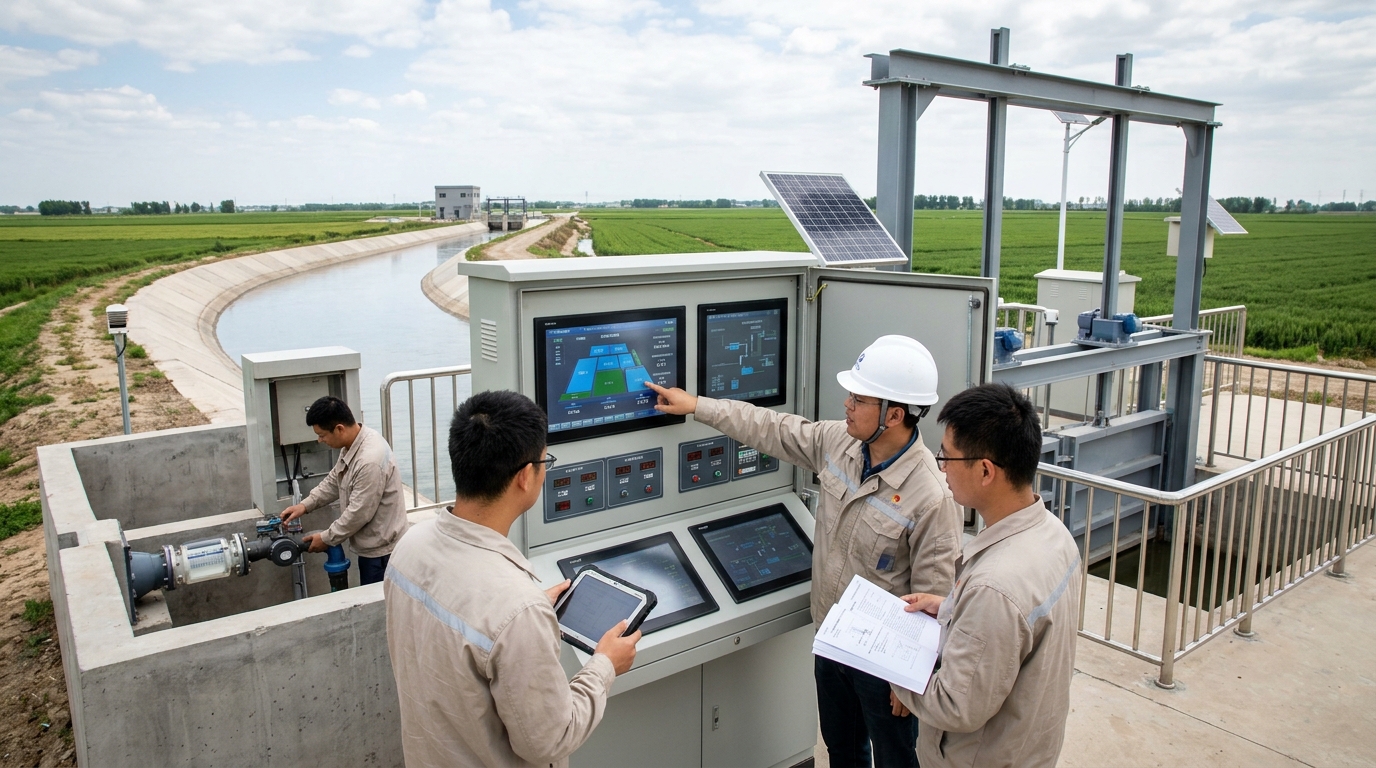
| Irrigation Districts | Hybrid: 4G for Trunk Canals, LoRa/NB-IoT for Branches | Focus on flow meter protocol compatibility and gate control safety interlocks. Aggregate data via local gateways if using LoRa. |
| Urban Waterlogging | 4G/5G Cat.1/4 + Edge Gateways | Second-to-minute level alarms needed. Strong electromagnetic interference requires surge protection. Prioritize wired/5G for pump stations. |
| Mountain Flood Warnings | Low-Power RTU + Solar + 4G + BeiDou Short Message | Do not rely solely on cloud. Local alarm output and short-message fallback are critical for life safety. Use dual-sensor redundancy. |
| Water Quality Monitoring | 4G Cat.1 / Industrial Gateway | Complex protocols (HJ212, Modbus). Focus on sensor power isolation, anti-biofouling linkage, and uploading calibration coefficients/status logs. |
V. Common Selection Pitfalls & Engineering Risks
Pitfall 1: Choosing Cheap over Matched
NB-IoT is cheap but fails if video or second-level control is needed later. Rework costs exceed initial savings. Select based on business criticality.
Pitfall 2: Ignoring Network Surveys
Coverage changes with seasons and terrain. Test signal strength and upload latency before commissioning. Consider dual-SIM or backup channels for single-network risk.
Pitfall 3: Underestimating Power Supply
Low power ≠ unlimited endurance. Calculate energy budget based on sunlight, battery degradation, and upload traffic. Retain 20%-30% margin.
Pitfall 4: Protocol & Platform Mismatch
Ensure support for SL651, HJ212, MQTT, etc. Lack of multi-protocol parsing significantly increases integration costs and delays.
VI. Conclusion: Technology That Fits the Field Is Good Technology
There is no absolute answer in comparing RTU technologies. 4G/5G is not omnipotent, NB-IoT is not low-end, and satellite is not just an expensive toy. The real selection logic returns to specific business needs: data frequency, sensor types, power stability, network availability, and maintenance capability.
Future trends point toward communication multi-modality, enhanced edge intelligence, and digital full-lifecycle O&M. By balancing technology paths, scenario requirements, and cost structures, RTUs can truly deliver the closed-loop value of "sensing—transmission—decision—execution."