Silent Infrastructure, Speaking Data: The Unseen Shift in Water Intelligence
The water sector’s 2026 inflection point isn’t marked by flashy launches—but by the silent convergence of predictive physics, unmonitored asset behavior, and hyper-accurate subsurface sensing that finally makes infrastructure audible.

Beyond Flipbooks and Forecasts: The Visibility Gap
While Water Tech Corp’s interactive 2026 digital catalog signals industry-wide digitization of sales and service touchpoints, it sits in stark contrast to Yorkshire Water’s £53 million AI sewer monitoring program—where Electrical Signature Analysis (ESA) detects micro-failures in pumps and valves before they cascade.
Meanwhile, a Georgia data center drained 29 million gallons unnoticed for months—a sobering reminder of how legacy metering fails at scale. These stories reveal a growing schism between visible digital engagement and invisible physical accountability.
What’s missing isn’t more data—but physically grounded, multi-modal data: flow velocity, sediment load, pipe wall condition, and hydraulic transients—all captured continuously, without excavation or downtime.
The Quiet Crisis of Unseen Flow
The POLITICO report on Georgia’s unaccounted-for 29 million gallons is not an anomaly—it’s a diagnostic symptom. Traditional mechanical meters lack real-time diagnostics, fail under low-flow or turbulent conditions, and offer no insight into pipe integrity or usage patterns.
When a data center’s withdrawal goes undetected until residents experience pressure drops, it confirms that water infrastructure operates largely blind below the billing layer. This invisibility enables waste, delays intervention, and erodes public trust.
Where Physics Meets Predictive Fidelity
Yorkshire Water’s ESA-based ‘predict to protect’ initiative succeeds because it embeds intelligence directly into the electromechanical signature of assets—not via add-on IoT sensors, but through native electrical waveform analysis.
This reflects a broader trend: the shift from monitoring what we can install to sensing what the system inherently reveals. Without high-fidelity, time-synchronized, context-aware measurements—especially underground—the most sophisticated AI models produce elegant hallucinations, not actionable insights.
The Water-AI Nexus Advisory Council’s expansion underscores institutional recognition that AI models are only as robust as their underlying physical data streams.
Chinese Innovation in the Subsurface Layer
Within this landscape, Chinese instrumentation firms like Ecolor Technology are advancing not at the application layer (e.g., dashboards or catalogs), but at the foundational sensing stratum—where accuracy, reliability, and deployment pragmatism converge.
LGF Electromagnetic Flowmeter
±0.2% repeatability in low-conductivity or aerated flows—ideal for reclaimed water systems.
80GHz Visual Fusion Radar Level Sensor
Millimeter-precision level measurement through foam, vapor, and surface turbulence.
Multi-Band Doppler Flow Radar
World’s only commercially deployed solution combining real-time flow profiling, structural imaging, and live camera feed inside buried pipes.
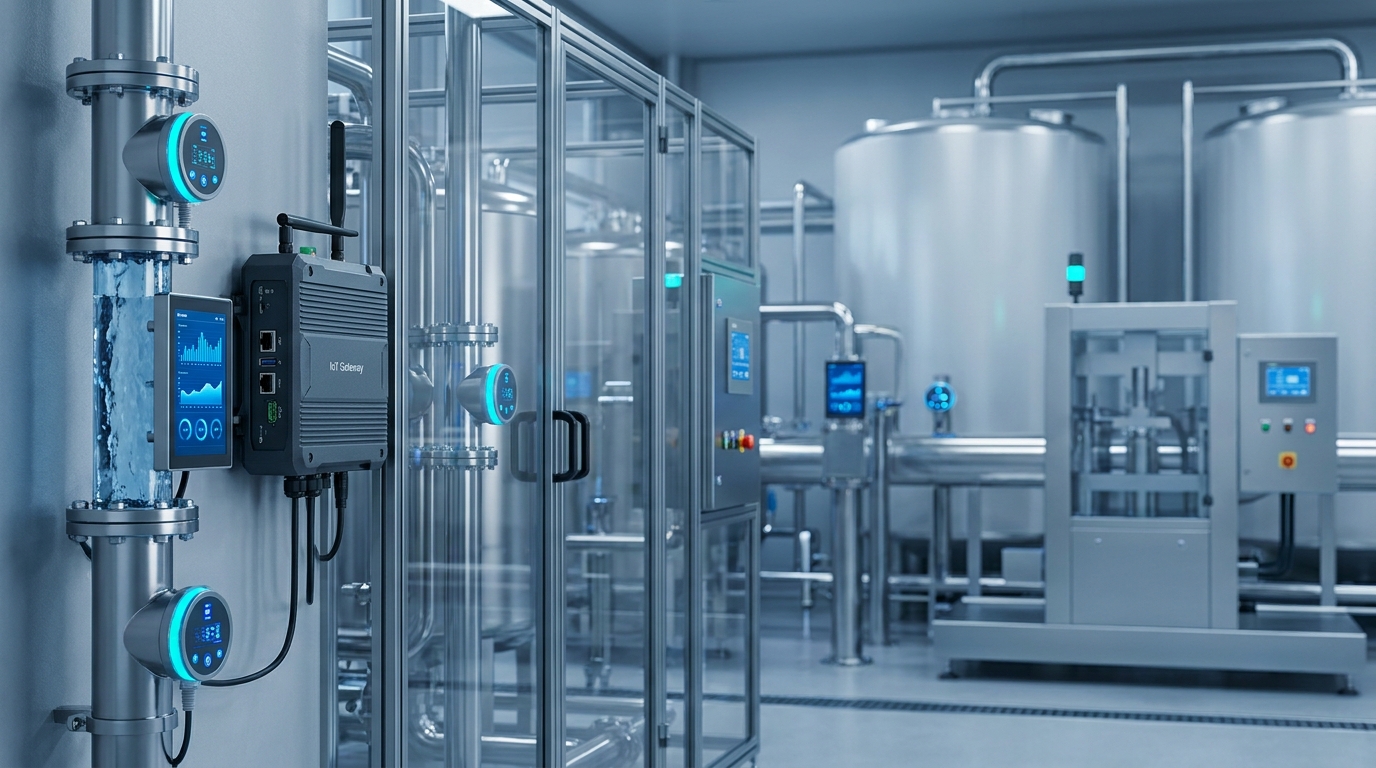
Paired with the HERO V9 RTU—a rugged, edge-AI-ready remote terminal unit that compresses, validates, and prioritizes telemetry—this stack transforms passive infrastructure into an active, self-reporting nervous system.
From Catalogs to Continuity: Integrity-Aware Sensing
Water Tech Corp’s digital catalog represents an important evolution in commercial accessibility—but it addresses the ‘last mile’ of procurement, not the ‘first mile’ of truth. In contrast, the £53M AI program and the Georgia incident underscore that water resilience begins where visibility ends: beneath pavement, behind walls, inside aging conduits.
The real 2026 milestone isn’t interactivity—it’s integrity-aware sensing: instruments that don’t just report numbers, but contextualize them within physical reality. As global utilities face tightening regulatory scrutiny, climate-induced volatility, and rising public expectations for transparency, competitive advantage will accrue not to those with the flashiest interfaces—but to those who’ve mastered the silent language of infrastructure: flow, vibration, dielectric change, and spectral reflection.
Toward a Unified Sensing Ontology
The path forward demands interoperability across sensing modalities—not vendor lock-in to single-technology platforms. A truly intelligent water network integrates ESA-derived motor health, radar-based level dynamics, Doppler-derived flow anomalies, and electromagnetic flow validation into a unified time-series ontology.
This requires open protocols, edge-native processing, and calibration traceability that survives field conditions. It also demands rethinking procurement: moving beyond unit price toward total cost of insight—factoring in installation labor, recalibration cycles, false-positive rates, and integration latency.
For cities scaling smart water programs, the lesson of 2026 is clear: invest first in the fidelity of the signal, then build intelligence upon it. Everything else is interface.
Sources
- Water Tech™ Corp Launches Interactive 2026 Digital Catalog – PoolMagazine.com
- Yorkshire Water £53m AI sewer monitoring programme predicts great results – Water Magazine
- Water Tech Corp Launches 2026 Interactive Digital Catalog – PoolPro Magazine
- Water-AI Nexus Welcomes Global Organizations to Advisory Council – PR Newswire
- A data center drained 30M gallons of water unnoticed — until residents complained about low water pressure – POLITICO