Background: Acceptance and O&M Are the Real Dividing Line
Smart water monitoring has moved from pilots to city-scale deployments, yet an uncomfortable industry consensus persists: two years after commissioning, many systems see availability drop below 70%, and dashboards become showpieces. The root cause is rarely design-stage technology selection — it is the absence of quantified acceptance criteria in tender documents, combined with operations budgets that were never modelled. This article examines five key technical points, each with measurable acceptance criteria suitable for tender specifications.
Point 1: Sensing Layer — Turndown Ratio Sets the Data Floor
The most common metering mistake is specifying accuracy only at nominal flow while ignoring turndown ratio (R-value). Minimum Night Flow analysis is the backbone of DMA leakage control, and network flows between 2:00 and 4:00 AM typically fall to 10%–20% of nominal demand. Insufficient turndown pushes night flows below the measurement range, and leakage analysis loses its data basis.
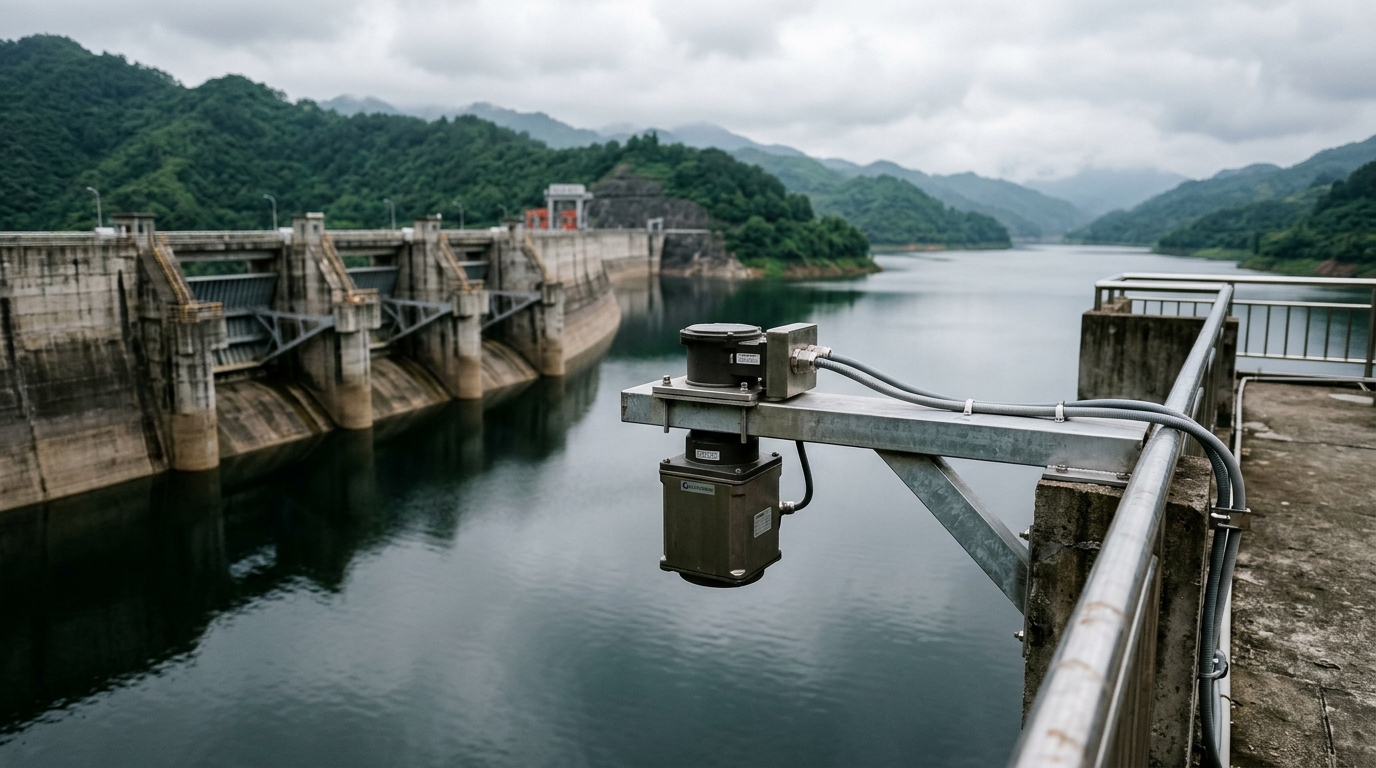
- Selection baseline: electromagnetic meters with R≥100, conforming to ISO 4064 / OIML R49 low-flow error requirements; for partially filled sewers, prefer non-contact radar flow measurement.
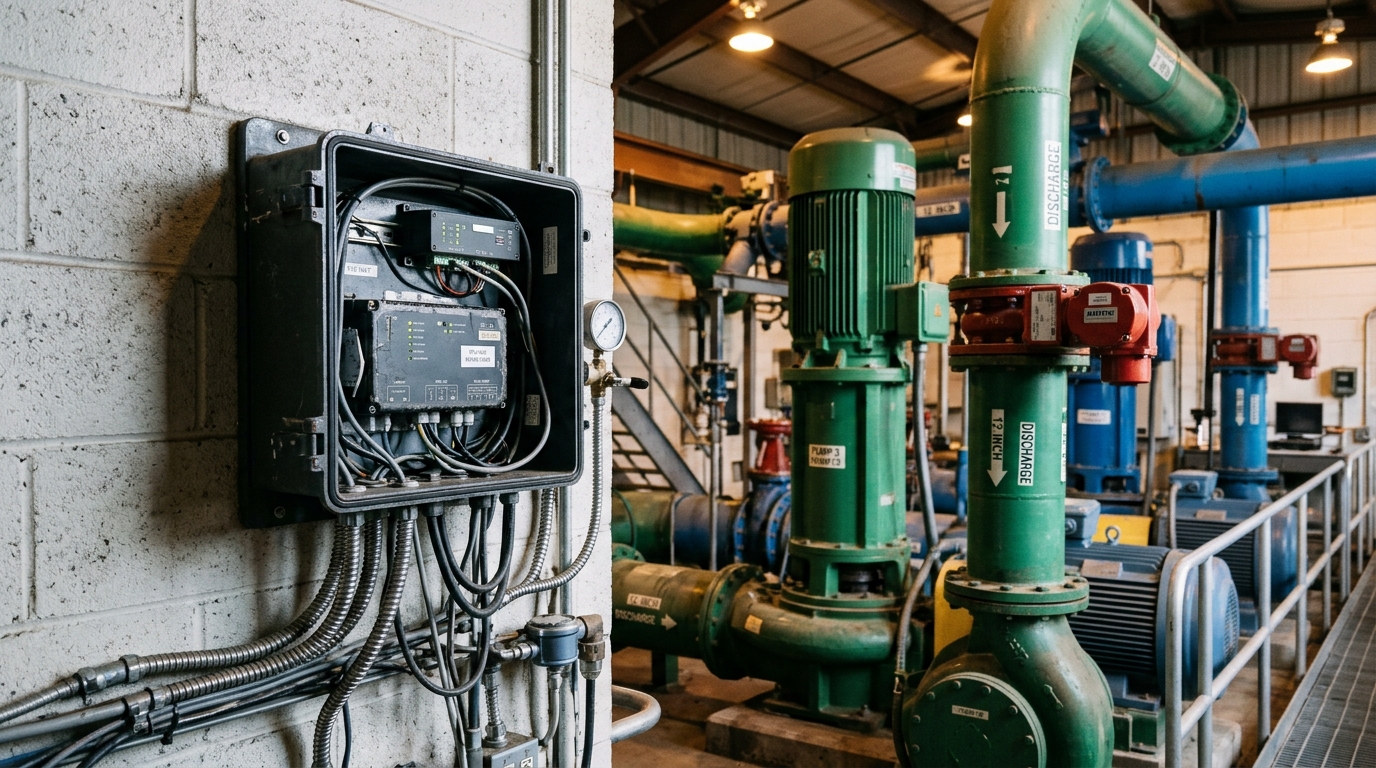
- Environmental baseline: below-grade equipment rated at least IP68, operating from -20°C to +60°C, backed by IEC 60068 environmental test reports.
- Acceptance action: field-verify at least 10% of metering points with portable ultrasonic meters; deviations must stay within the stated accuracy class.
Point 2: Communication Links — Availability Measured Monthly
Manholes, pump-station basements and remote irrigation districts are the three hardest coverage scenarios. The proven pattern is dual-mode RTUs with NB-IoT primary and 4G fallback — NB-IoT carries roughly 20 dB more link budget than GSM, enough to penetrate cast-iron covers — plus LoRa mesh backhaul where public networks are absent and satellite short message as a last resort. Selection is only the start; the real metric is link availability.
- Acceptance metric: monthly communication availability ≥99% — no more than 7 hours of lost data per point per month.
- Store-and-forward: RTU local buffering ≥30 days with automatic backfill, success rate ≥99%.
- Protocol requirements: MQTT over TLS 1.2 with QoS 1 — roughly 60% less bandwidth than HTTP polling — plus remote OTA upgrade capability.
Point 3: Data Quality — Close the Loop or Become a Data Dump
A mid-sized city system with 2,000–5,000 points reporting every 15 minutes generates hundreds of millions of records per year. The first killer is field noise — EMI and fouled probes produce spikes; the engineering standard is double filtering with 3-sigma rejection plus sliding-window smoothing. The second is storage architecture: relational databases typically collapse after six months at this scale, while time-series databases such as TDengine or InfluxDB sustain millions of writes per second on a single node.
- Acceptance metric: core-point data completeness ≥98%; anomalies automatically flagged; raw values never silently overwritten.
- Alignment: SCADA, GIS and meteorological feeds unified on one timestamp, deviation ≤1 minute.
Point 4: Alarm Management — From "It Alarms" to "Someone Acts"
Alarm systems fail not by silence but by crying wolf: guessed thresholds generate false positives until operators mute notifications entirely. Mature alarm management needs three tiers — static threshold, trend (abnormal slope over a sliding window) and correlated alarms combining level, flow and pump status — routed by severity: advisory, actionable, critical.
- Acceptance metric: false-alarm rate ≤10% as verified by field inspection; P1 alarms acknowledged within 15 minutes.
- Closed loop: every alarm generates a work order; the alarm–ticket–verification closure rate becomes a monthly O&M KPI.
Point 5: O&M Budget Model — Put Operations in the Contract
Field data puts annual O&M at 8%–12% of CAPEX: sensor replacement and recalibration take roughly half, communication fees about a fifth. Sensors are consumables — water-quality probes live 1–3 years, radar antenna faces need periodic fouling checks. Acceptance should fix the post-warranty spare-parts list and annual calibration plan from day one.
- Acceptance metric: ≤2 maintenance man-hours per point per year; sensor availability ≥95%.
- Contract requirement: tender documents must cap the 5-year O&M budget and define SLAs (availability, completeness, response time) — preventing low-bid wins followed by unfunded operations.
Summary
The key technical points reduce to one thread: protect turndown and ingress rating at the sensing layer, grade communication by availability, close the data-quality loop at the platform, tier the alarms, and model the O&M budget. Writing quantified acceptance criteria for these five points into the contract is the shortest path from demonstration dashboard to production tool.