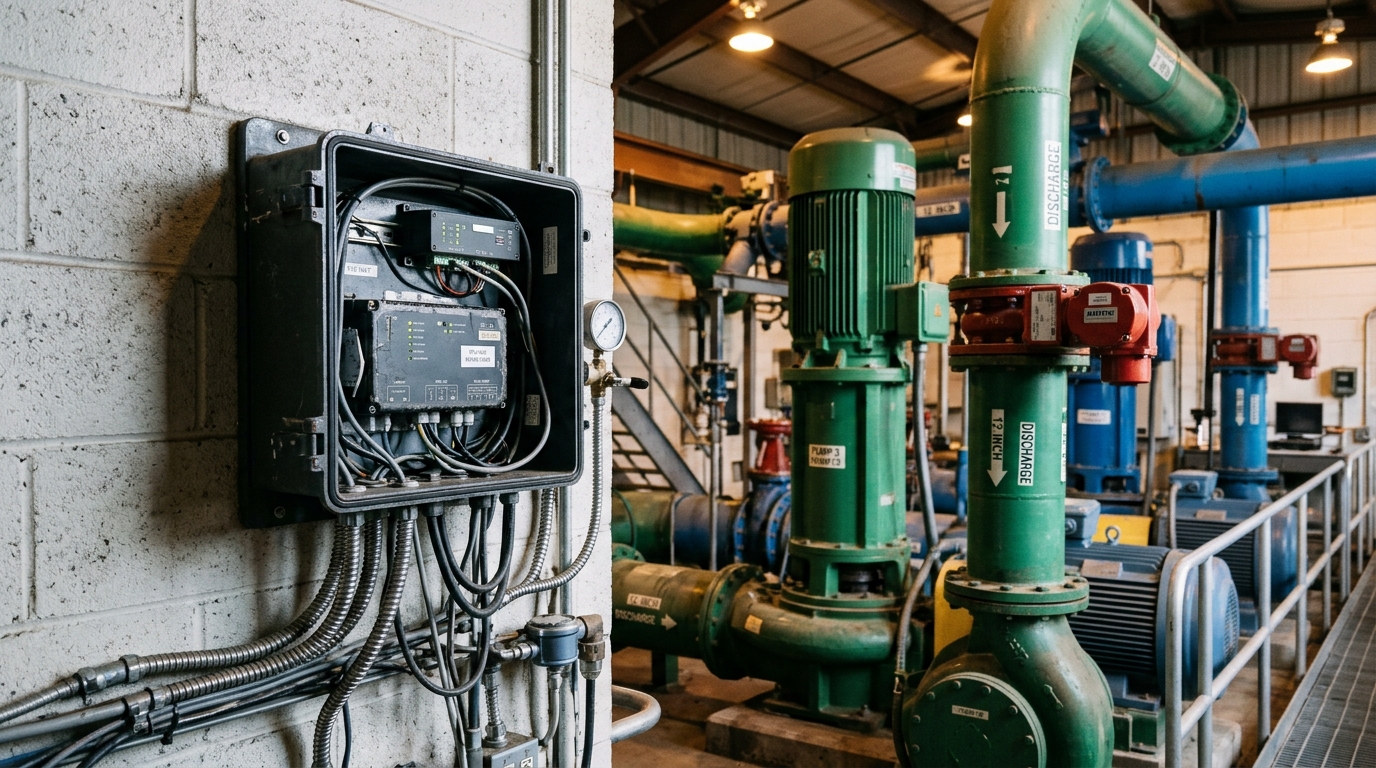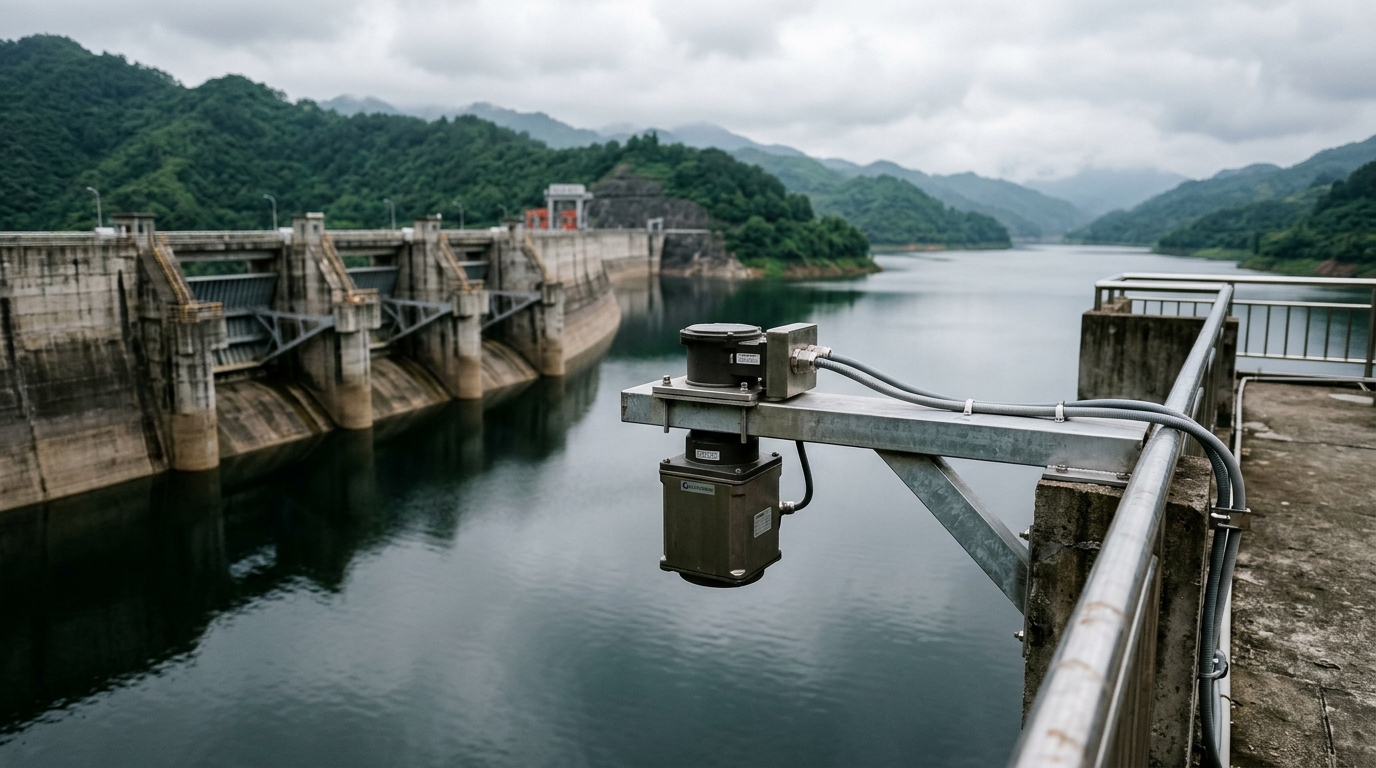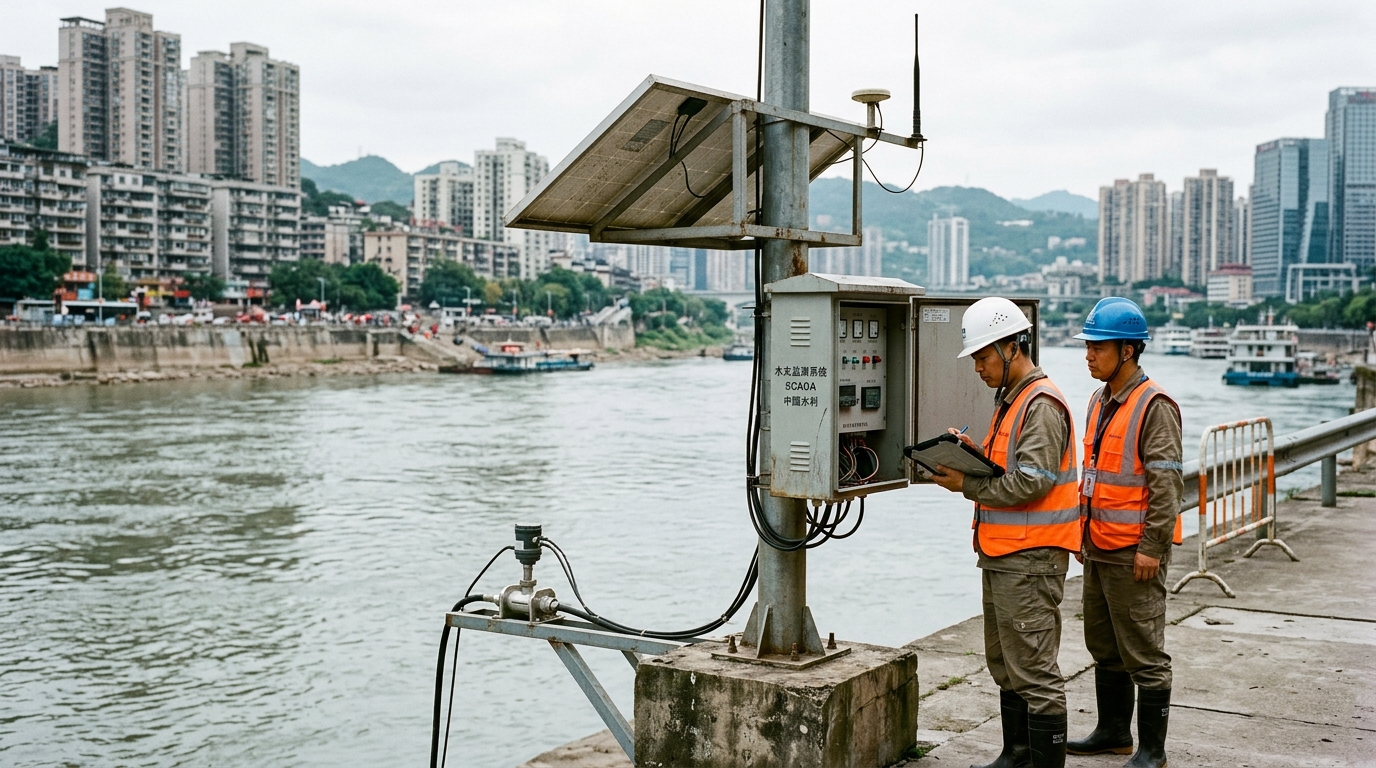
In field deployments of smart water monitoring systems, most failures are not caused by insufficient sensor accuracy. They come from system-level details: power budgeting, communication links, installation practice and data governance. Drawing on distribution network, sewer and river monitoring projects, this article covers six key technical checkpoints from the sensing layer to the platform.
1. Prefer non-contact sensing in hostile hydraulics
Sewers and open channels suffer from sedimentation, corrosive H₂S (often above 10 ppm) and periodic submersion, which drive contact-instrument maintenance costs far up. Recommended practice:
- Level: 80 GHz radar level transmitters with beam angles ≤4° and dead bands within 0.15 m; the antenna never touches the water, enabling maintenance-free intervals beyond three years.
- Flow: electromagnetic meters (±0.5% accuracy, requiring conductivity ≥5 μS/cm) for full-pipe duty; Doppler or radar surface-velocity devices with stage-discharge conversion for partially filled pipes and culverts.
2. Size the power budget for worst case, not average
A common mistake is computing battery life from average reporting intervals. Budget instead for the worst case: storm-mode reporting (e.g. interval shortened from 15 to 5 minutes), lithium capacity derating at low temperature (roughly 60% of nominal at -20 °C) and radio retransmission overhead. For solar sites, size the panel and battery against the worst monthly insolation — not the annual average — with autonomy for at least five consecutive overcast days.
3. Measure the radio link in situ before committing
NB-IoT signals can lose 20–30 dB inside a manhole, and a metallic cover attenuates far more than a composite one. Always measure RSRP and SINR at the target pit with the actual cover fitted. Rule of thumb: RSRP better than -110 dBm and SINR above 0 dB for reliable attachment. For pits deeper than 3 m or with metal covers, route an external antenna to surface level, or aggregate nodes over a private LoRa network to a gateway.
4. Installation: grounding, surge protection and submersion proofing
Electromagnetic flow meters require equipotential bonding with earth resistance ≤4 Ω; otherwise mains interference swamps low-flow signals below 5% of range. River and reservoir sites should implement coordinated SPD stages per IEC 62305. Even IP68-rated pit RTUs must be assumed to be submerged long-term — verify the manufacturer's pressurised immersion test report (e.g. 1 m for 72 h), not just the ingress-protection label.
5. Data governance: outlier rejection and time synchronisation
Low-cost RTCs drift several seconds per day. Without NTP or network-based time sync, multi-site records cannot be aligned for joint analytics such as DMA minimum-night-flow assessment. The platform should enforce outlier rules: physical-range checks, rate-of-change checks (e.g. pressure jumps >0.2 MPa/min flagged as suspect) and spatial-consistency checks against neighbouring stations, so dirty data never reaches operational decisions.
6. Tiered alarming instead of bulk notification
A single threshold across a dense network produces alarm storms during rainfall. Use three tiers — advisory (limit exceeded, not sustained), warning (sustained over N cycles) and critical (multi-parameter correlation such as level over threshold plus velocity surge) — each bound to distinct notification channels and response SLAs, keeping operators focused on genuine anomalies.
Summary
Reliability in smart water monitoring is designed in, not purchased in. Power budgeting, in-situ radio surveys and installation practice are "get it wrong once, pay for years" items and belong on the design-review checklist. Data governance and tiered alarming determine whether the live system actually supports dispatch decisions. For system integrators, the most effective risk control is writing these details into technical specifications and demanding verifiable test reports from suppliers.