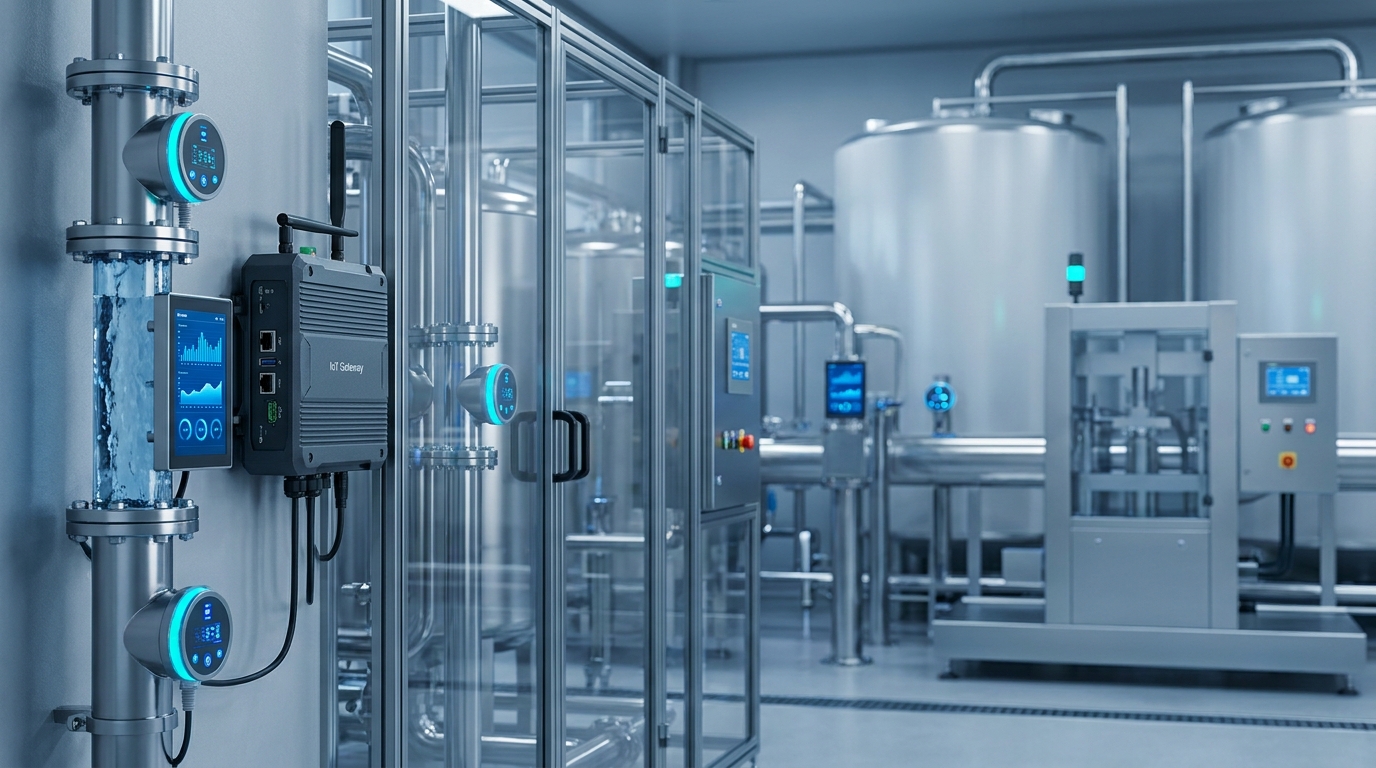
Soil Intelligence: How Embedded Sensing Is Rewriting Irrigation Economics
Soil intelligence represents a paradigm shift in water stewardship—moving irrigation control from time-based scheduling to real-time, root-zone–aware decision-making powered by embedded soil sensing. This evolution is transforming irrigation economics across smallholder farms, municipal systems, and industrial agriculture worldwide.
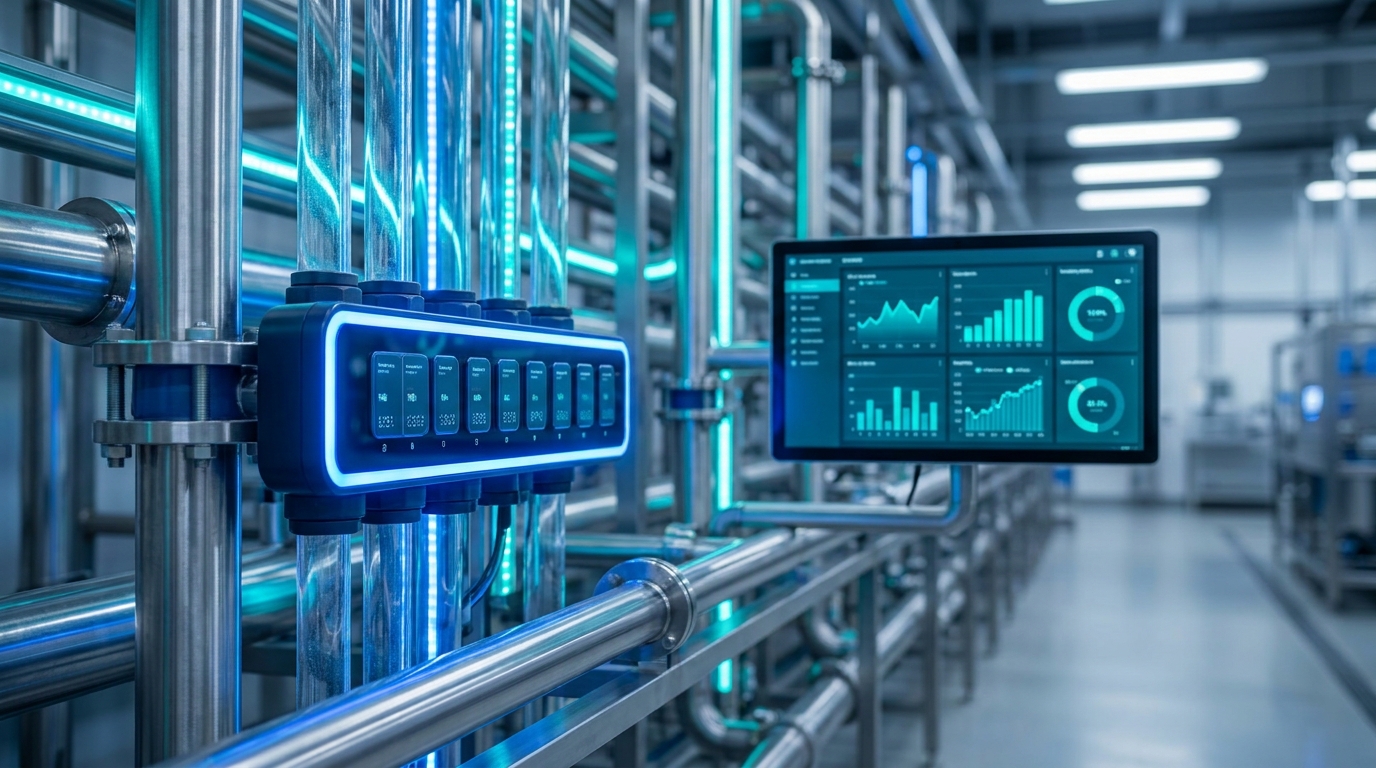
Beyond Timers, Toward Tactile Awareness
As highlighted by the U.S. Department of Energy, next-generation irrigation controls rely on in-soil moisture sensors—not weather forecasts or evapotranspiration models. These devices interface directly with legacy timer-based systems, converting static schedules into responsive, closed-loop decisions.
This is not generic automation—it’s tactile intelligence: where silicon meets silt. Unlike ambient IoT sensors (e.g., motion or smoke detectors), soil-contact sensing demands exceptional durability, long-term calibration stability, and high-fidelity sub-surface signal transmission.
The Unseen Infrastructure Layer
While global water scarcity narratives focus on dams and desalination, the largest inefficiency remains hidden underground: 30–50% of irrigation water is lost to over-application, especially in surface and sprinkler systems across Asia, Latin America, and Africa.
Timer-based controllers—still dominant among smallholders and municipalities—operate blindly, ignoring actual root-zone conditions. When a sensor physically touches the soil and transmits live moisture gradients, the controller shifts from asking “What time is it?” to “What does the plant need right now?”
This transition—from temporal logic to biophysical logic—defines the emergence of the soil-intelligent edge: a new foundational infrastructure layer for precision water management.
Why This Isn’t Just Another IoT Rollout
Standard IoT frameworks emphasize interoperability and remote monitoring—but soil sensing introduces three domain-specific imperatives:
Material Interface Rigor
Sensors must endure salinity, compaction, freeze-thaw cycles, and microbial fouling—far beyond the operating envelope of indoor IoT devices.
Calibration-Dependent Accuracy
A 5% error in volumetric water content translates to liters-per-hectare miscalculation at scale—requiring field-validated, traceable calibration—not just factory specs.
Hybrid Integration Pathways
Designed for retrofitting—not greenfield replacement—these systems integrate with decades-old timers, analog valves, and non-IP field buses.
Chinese Innovation in the Soil-Edge Gap
Chinese instrumentation firms—including Ecolor Technology—are advancing ruggedized, physics-aware architectures originally developed for industrial water infrastructure.
Examples include the LGF electromagnetic flowmeter for delivery verification; the 80GHz visual fusion radar level sensor for non-contact tank monitoring; and the world’s only multi-band Doppler flow radar with integrated underground pipe camera—enabling correlation between subsurface flow anomalies and physical obstructions.
Most notably, the HERO V9 RTU serves as a field-deployable convergence node—accepting analog soil probe inputs, modulating valve actuators via PWM, and transmitting time-stamped moisture gradients (not raw voltage) to SCADA or cloud dashboards. Its design embodies a core principle: soil intelligence requires deterministic latency—not just bandwidth.
Implications Beyond the Field
The impact of soil-intelligent irrigation extends far beyond agronomic efficiency:
- Water-energy nexus optimization: Pumping accounts for up to 4% of global electricity use—reducing unnecessary irrigation cuts both water waste and grid load.
- Policy scalability: Government subsidies often fund Wi-Fi gateways—not calibrated soil probes. Real impact requires shifting incentives toward contact-based, auditable, tamper-resistant sensing.
- Data sovereignty: Soil moisture data is hyperlocal, seasonal, and tied to land tenure. Open-protocol systems with on-device analytics (e.g., HERO V9’s edge inference) support national governance without exporting sensitive agronomic footprints.
A New Benchmark for Water Stewardship
We’ve moved past “smart water” defined by digitized bills or leak detection in transmission mains. The next benchmark is whether a system can answer—with confidence—“Is this water reaching the root zone—and if not, why?”
That question cannot be answered by satellite imagery or weather APIs alone. It requires persistent, calibrated, soil-intimate sensing—deployed not as a luxury add-on, but as foundational infrastructure.
For global water resilience, the most consequential innovation may not be visible from orbit. It’s buried six inches deep—and quietly rewriting the economics of every drop.
Sources:
- Water-Efficient Technology Opportunity: Advanced Irrigation Controls | U.S. Department of Energy
- Internet of Things – Wikipedia