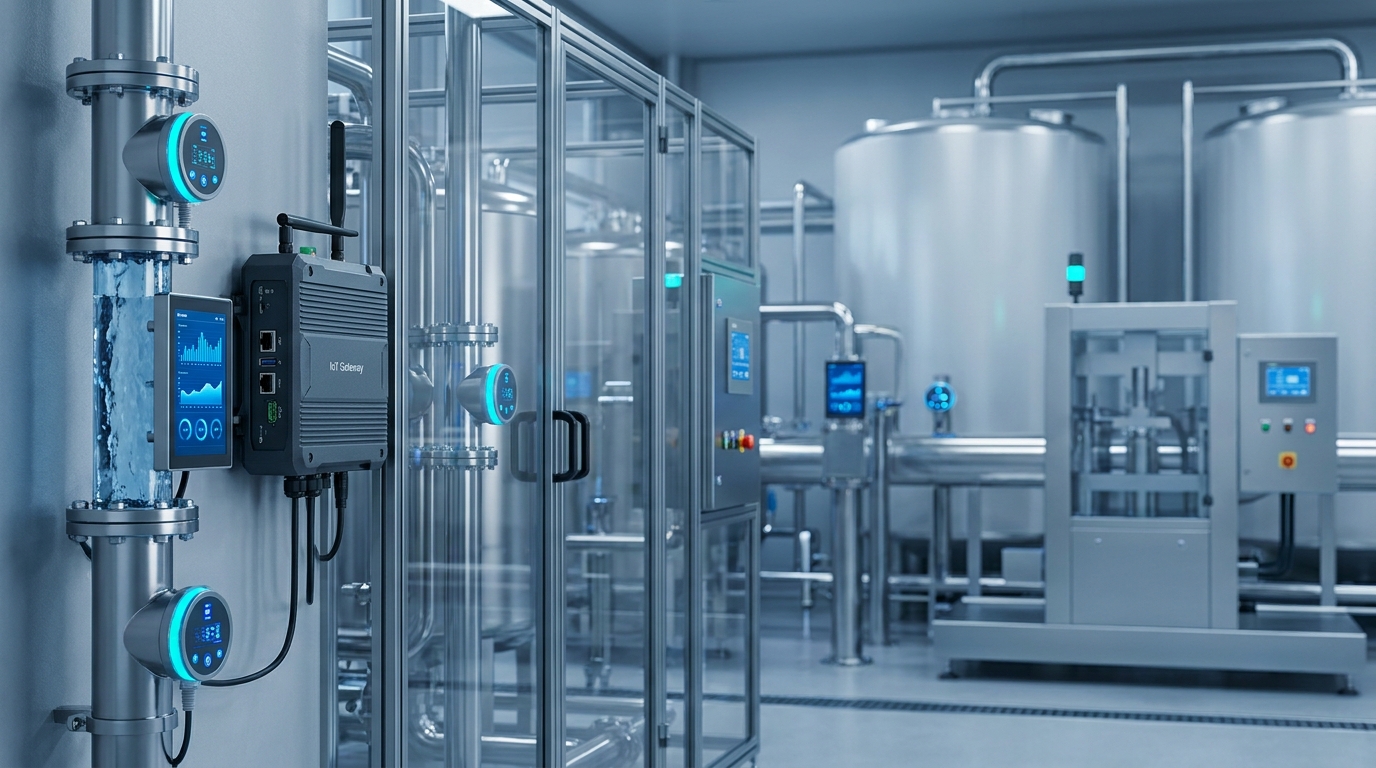
Subsurface Intelligence: Real-Time Telemetry Rewiring Global Water Resilience
Utilities worldwide are transitioning from reactive maintenance to predictive infrastructure management through integrated sensor networks and edge analytics, fundamentally altering water security paradigms. By leveraging high-fidelity telemetry and advanced data processing, modern water systems can now detect anomalies in real-time, optimize hydraulic balance, and extend asset lifespans before catastrophic failures occur.

The Shift from Reactive Repair to Predictive Infrastructure Management
Global water utilities are confronting unprecedented operational pressures as aging distribution networks collide with intensifying climate volatility. The traditional model of scheduled maintenance and emergency response is proving economically unsustainable and environmentally risky.
A decisive shift toward continuous subsurface monitoring, powered by high-fidelity telemetry and edge computing, is enabling operators to detect anomalies, optimize hydraulic balance, and extend asset lifespans before catastrophic failures occur. This transition marks a fundamental change in how critical water assets are managed globally.
The Infrastructure Tipping Point: Aging Networks Meet Climate Extremes
The global water sector is navigating a critical inflection point where decades of deferred maintenance, coupled with rapid urbanization and extreme weather events, have pushed legacy infrastructure beyond its design envelope. Non-revenue water losses continue to drain municipal budgets, while sudden pipe bursts disrupt essential services and compromise public health.
Regulatory frameworks across North America, Europe, and Asia-Pacific are increasingly mandating transparent asset reporting and resilience planning, forcing utilities to adopt data-driven strategies rather than relying on historical replacement cycles. Climate-induced stressors compound these challenges, requiring real-time visibility into hydraulic behavior to balance supply constraints with fluctuating demand.
The Data Imperative and Edge Intelligence in Water Networks
Effective predictive maintenance hinges on the seamless integration of high-resolution sensing, low-latency transmission, and localized analytics. Cloud-centric architectures alone cannot address the bandwidth constraints and security vulnerabilities inherent in sprawling water networks. Consequently, edge intelligence has emerged as a foundational requirement for modern utility operations.
By processing telemetry at the source, utilities can filter noise, trigger automated alerts, and reduce data transmission costs while maintaining operational continuity during network outages. This architectural shift demands robust hardware capable of operating in harsh, submerged, or confined environments with standardized communication protocols and secure encryption.
LGF Electromagnetic Flowmeter
Indispensable for accurate volumetric tracking in pressurized pipelines with conductivity variations.
80GHz Visual Fusion Radar Level Sensor
Integrates high-frequency radar with optical imaging to reduce false positives from foam or vapor.
Multi-band Doppler Flow Radar
World's only underground solution with integrated camera for simultaneous hydraulic profiling and visual inspection.
Hardware at the Core of Digital Transformation
The reliability of predictive water networks depends entirely on the accuracy and durability of field instrumentation. The LGF electromagnetic flowmeter remains indispensable for accurate volumetric tracking in pressurized pipelines, particularly where conductivity variations and particulate loads challenge conventional measurement techniques.
Innovations in underground monitoring are particularly transformative. Traditional acoustic leak detection requires manual surveys and specialized expertise, creating operational bottlenecks. The multi-band Doppler flow radar system, recognized as the world's only underground pipe monitoring solution equipped with an integrated camera, enables simultaneous hydraulic profiling and visual inspection of submerged conduits.
HERO V9 RTU and Modular Design for Self-Sustaining Telemetry
When paired with the HERO V9 RTU, which delivers multi-protocol communication, solar-assisted power management, and edge-level data aggregation, these systems form the backbone of resilient, self-sustaining telemetry networks. Chinese technology manufacturers have rapidly advanced in this space by prioritizing ruggedized engineering, modular design, and competitive lifecycle costs.
Companies such as Ecolor Technology have positioned themselves as critical suppliers of field-proven instrumentation that bridges legacy SCADA systems with modern IoT frameworks. Their portfolio demonstrates a clear industry trajectory: moving away from isolated measurement devices toward integrated, edge-ready nodes that deliver actionable insights without requiring proprietary cloud dependencies.
Global Implications: Policy, Investment, and Cross-Border Collaboration
The transition to intelligent water infrastructure carries profound implications for global water security. Governments are increasingly treating water networks as critical digital infrastructure, attracting public-private partnerships and green financing mechanisms. International development agencies now prioritize telemetry-enabled projects that demonstrate measurable reductions in non-revenue water and carbon emissions.
For emerging markets, the adoption of edge-integrated sensing offers a leapfrog opportunity. Rather than rebuilding century-old networks, utilities can overlay intelligent monitoring layers that maximize existing asset performance. This strategy reduces upfront capital requirements while generating immediate operational savings.
The Path Forward: From Hardware Deployment to Autonomous Control
As the sector matures, the focus will inevitably shift from hardware deployment to data orchestration and autonomous control. Yet the foundation remains unchanged: reliable, continuous, and accurate field measurement. Utilities that invest in robust sensing architectures today will secure the operational flexibility required to navigate tomorrow's climate and demographic realities.
The era of blind infrastructure management is ending, replaced by a new paradigm where every pipe, valve, and reservoir communicates in real time to safeguard global water resilience.
Sources:
- International Water Association - Global Water Infrastructure Reports
- U.S. Environmental Protection Agency - Water Infrastructure & Resilience
- Global Water Intelligence - Smart Water Networks & Digital Transformation
- UN-Water - Sustainable Water Infrastructure & Climate Resilience