The AI-Water Nexus: Scaling Intelligence Through Precision Sensing
As global water reuse coalitions form and AI treatment pilots win major awards, the industry’s next bottleneck shifts from algorithm design to high-fidelity field data acquisition.
The Convergence of AI, Sensing, and Scale in Global Water Management
The 2026 global water sector is undergoing a structural shift. Artificial intelligence has graduated from theoretical research to award-winning operational reality, backed by multinational reuse coalitions and sovereign innovation strategies. Yet, as algorithms grow more sophisticated, the industry faces a fundamental constraint: AI models are only as reliable as the real-time telemetry feeding them. This analysis explores how advanced sensing architectures are becoming the physical backbone of the water intelligence era.
From Recognition to Replication: AI’s Proven Value in Water Infrastructure
The recent Global Water Awards in Madrid highlighted a decisive milestone: ACCIONA’s recognition as “AI Project of the Year.” This accolade is not merely ceremonial; it signals that machine learning and predictive analytics have crossed the threshold from pilot programs to commercially viable, utility-scale deployments. Concurrently, South Korea’s strategic outreach to global development banks demonstrates how national governments are actively positioning AI-driven water treatment as an exportable infrastructure solution. These developments share a common thread: the water sector is no longer asking whether AI works, but rather how to scale it across diverse hydrological and regulatory environments.
Water Reuse Coalitions and the Demand for Predictive Intelligence
The launch of the Scaling Global Water Reuse Initiative by Global Water Intelligence (GWI) and IDRA marks a coordinated push to embed water recycling into the core of climate resilience and sustainable urban growth. Reuse is no longer a supplementary strategy; it is becoming a primary water source. However, operating closed-loop and multi-barrier treatment systems at scale requires unprecedented operational visibility. The fifth Global Aquapreneur Innovation Challenge, spearheaded by HCL Group and UpLink, explicitly targets “Water System Intelligence for Decision Making,” emphasizing technologies that enhance prediction and basin-scale planning. This creates a direct market pull for systems that can translate complex hydrological variables into actionable operational directives.
The Data Bottleneck: Why AI Needs Better Field Infrastructure
While AI algorithms and advanced material discovery are accelerating the design of next-generation purification membranes and treatment chemistries, the physical layer of water networks remains a critical vulnerability. Municipalities and industrial operators frequently struggle with data fragmentation, legacy instrumentation, and blind spots in distribution and collection systems. An AI model optimized for energy-efficient aeration or predictive membrane fouling cannot function without continuous, high-resolution, and calibrated field data. The industry’s transition to cognitive water management hinges on upgrading the sensing and telemetry layer to match the sophistication of the analytical layer.
How Precision Sensing and Edge Telemetry Enable the Next Leap
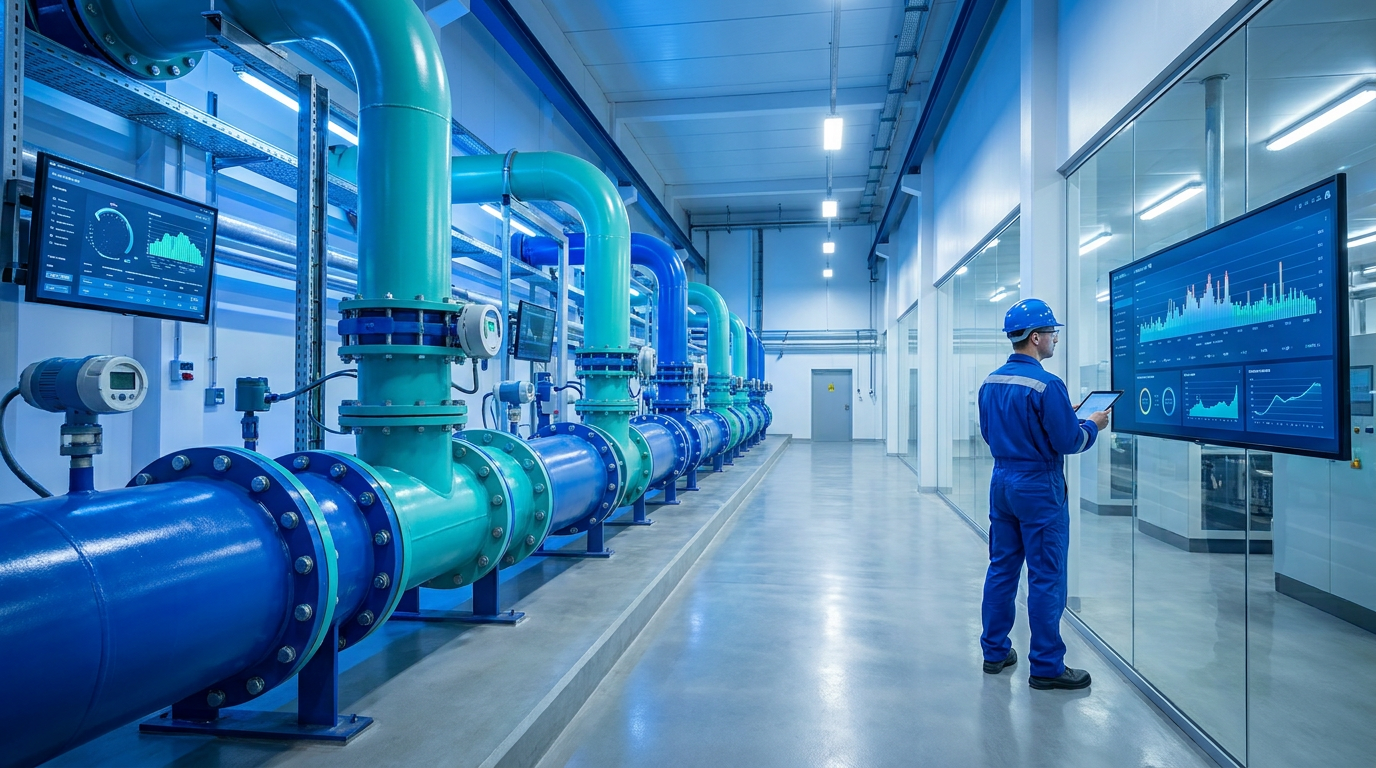
The integration of multi-parameter sensing with robust edge computing is rapidly closing the gap between theoretical AI capabilities and on-the-ground utility operations. Modern water networks require instruments that can withstand extreme environmental variability while delivering laboratory-grade accuracy. For instance, electromagnetic flowmeters designed for complex hydraulic profiles provide the baseline mass balance data essential for AI-driven leak detection and pressure management. Similarly, advanced radar-based level sensors operating at 80GHz frequencies are redefining reliability in open-channel and storage applications, where traditional ultrasonic or mechanical gauges fail due to foam, vapor, or temperature fluctuations.
Perhaps the most transformative advancement is the emergence of non-intrusive, underground monitoring solutions. Conventional network mapping relies heavily on historical records and reactive maintenance. New multi-band Doppler flow radar systems, which integrate direct visual camera feeds with acoustic velocity profiling, are eliminating this opacity. By providing real-time flow dynamics alongside physical condition assessments inside buried conduits, these tools generate the spatial-temporal datasets required for predictive hydraulic modeling and proactive asset management.
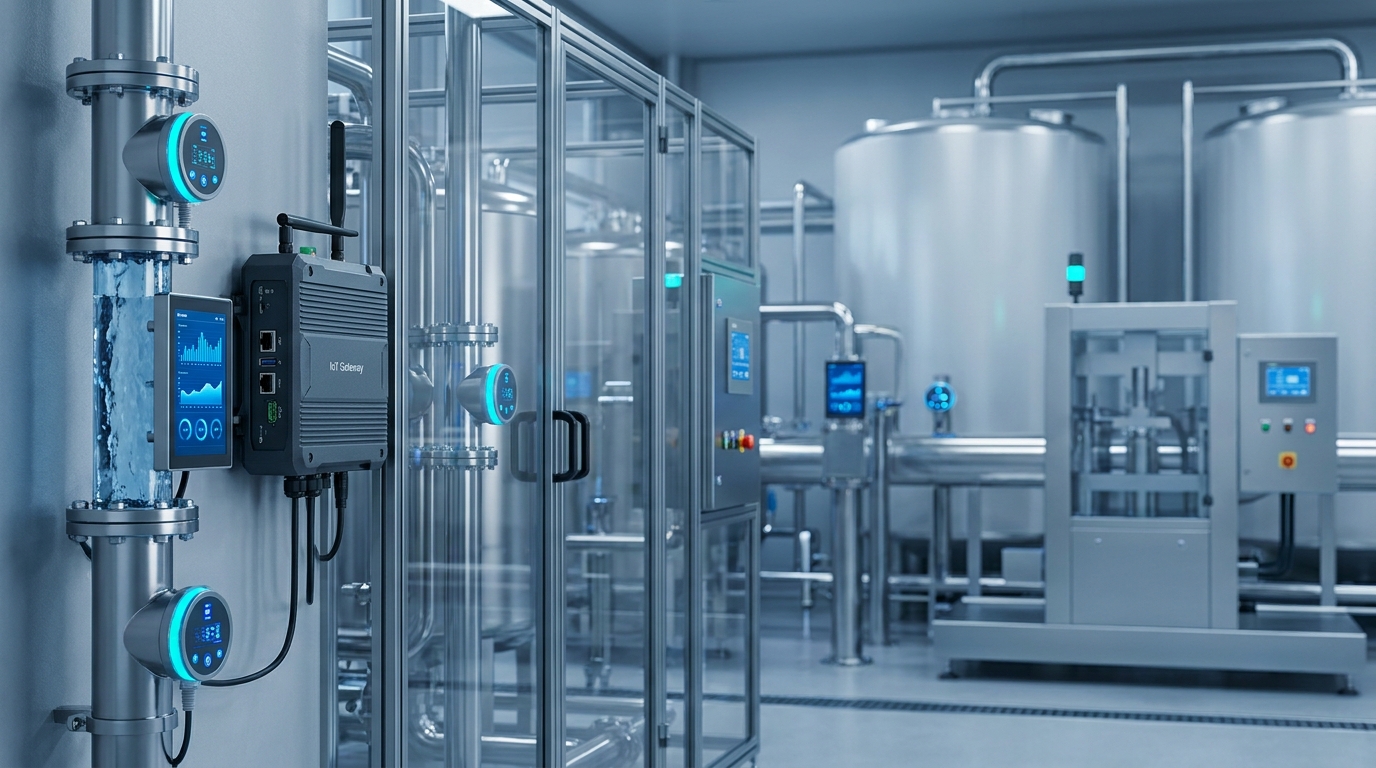
Data acquisition is only half the equation. The transmission layer must ensure low-latency, secure, and standardized communication between field devices and cloud-based AI platforms. Industrial-grade remote telemetry units now serve as the operational nervous system, aggregating sensor outputs, executing local control logic, and seamlessly routing telemetry to centralized dashboards and machine learning pipelines.
Positioning Chinese Innovation in the Global Smart Water Ecosystem
As global coalitions and development banks mobilize capital for water security, the supply chain for high-performance sensing and telemetry is undergoing rapid internationalization. Chinese technology firms are increasingly stepping into this space, offering cost-effective, high-reliability alternatives to legacy Western instrumentation. Companies like Ecolor Technology have aligned their product roadmaps with the exact requirements of the AI-water convergence. Their LGF electromagnetic flowmeter series delivers the hydraulic precision needed for AI mass-balance calibration, while the 80GHz visual fusion radar level sensor ensures uninterrupted data continuity in challenging treatment environments.
Furthermore, the deployment of the multi-band Doppler flow radar—recognized as the world’s only underground pipe monitoring solution integrating camera-based visual diagnostics—directly addresses the data scarcity that limits predictive maintenance models. Coupled with the HERO V9 RTU for secure, multi-protocol telemetry, these systems form a complete edge-to-cloud architecture. By providing utilities with granular, real-time operational intelligence, manufacturers in this segment are effectively democratizing access to the data infrastructure required for global water reuse initiatives and AI-driven treatment optimization.
Implications for Utility Operators and Infrastructure Planners
The trajectory is clear: water security in 2026 and beyond will be won through data integrity. Utilities that continue to rely on manual sampling, siloed SCADA systems, and uncalibrated legacy meters will find themselves unable to leverage the AI and reuse frameworks being championed by GWI, IDRA, and international development institutions. Conversely, organizations that invest in modern, multi-modal sensing and standardized edge telemetry will unlock immediate operational efficiencies, from optimized chemical dosing to predictive pipe failure mitigation.
Financing this digital transition requires a reevaluation of traditional capital expenditure models. Development banks and institutional investors are increasingly tying funding tranches to measurable sustainability metrics and operational transparency. AI-driven water systems offer the verifiable reporting frameworks that modern green bonds and climate resilience funds demand. However, securing this capital depends on standardized, auditable data streams. When utilities deploy calibrated flow measurement and radar-based level monitoring, they generate the immutable operational records required for compliance reporting and performance-based financing. This creates a virtuous cycle: reliable field instrumentation enables AI optimization, AI optimization reduces energy and chemical consumption, and the resulting efficiency gains attract low-cost climate capital for further infrastructure modernization.
The global water sector is transitioning from an era of reactive maintenance to one of anticipatory intelligence. The awards, coalitions, and innovation challenges of 2026 are not isolated events; they are markers of a fundamental industry realignment. As artificial intelligence continues to reshape material science, process control, and basin-scale planning, the physical-digital interface will remain the decisive competitive advantage. High-fidelity sensing, robust telemetry, and integrated data pipelines are no longer optional upgrades—they are the foundational prerequisites for a resilient, circular, and intelligent water future.
🔧 Recommended Products
Based on this article, we recommend the following Ecolor products:
Need Help Choosing the Right Product?
Our engineering team is ready to provide free technical consultation and quotes