The Algorithmic Aquifer: How Data Capital and Smart Sensing Are Reshaping Water Security
As water transitions into a financialized asset and AI infrastructure demands unprecedented resource precision, the global water sector pivots from passive monitoring to predictive digital resilience. This evolution—driven by data capital, smart sensing hardware, and industrial digital twins—is redefining water security for cities, utilities, investors, and nations alike.
The New Asset Paradigm: From Physical Scarcity to Digital Liquidity
Global capital markets now treat water not just as a public utility—but as a foundational water asset class. The Middle East operates nearly half of the world’s desalination capacity, signaling sovereign wealth reallocation toward hydrological security. Meanwhile, China embeds water recycling into agricultural supply chains, revealing how macroeconomic liquidity increasingly hinges on water efficiency.
Yet valuing and trading water assets requires more than policy—it demands granular, auditable, continuous data streams. Financialization accelerates the shift from reactive maintenance to predictive asset optimization—a non-negotiable prerequisite for municipal resilience and institutional investment.
Hyperscaler Ambitions Meet Hydrological Realities
Artificial intelligence and water management are forging a bidirectional dependency. Tech giants deploy machine learning to forecast floods, optimize irrigation, and detect leaks in aging networks. Initiatives like the Water-AI Nexus Center of Excellence prove computational power can directly enhance conservation and replenishment.
But this digital acceleration carries risk. Gulf-region AI data centers rely on undersea cables crossing volatile maritime zones—turning physical connectivity into a strategic liability. For water utilities, digital transformation depends on uninterrupted power, stable connectivity, and reliable telemetry. When hyperscale compute collides with regional water stress, operational margins shrink—and resilience is tested at the infrastructure level.
From Hesitation to Action: The Industrial Digital Twin Imperative
Hydropower—historically cautious about new tech—is now rapidly adopting predictive analytics, real-time optimization, and full-scale industrial digital twins. Why? Because legacy infrastructure cannot meet modern efficiency targets without continuous data assimilation.
Utilities leveraging telemetry reduce downtime, extend asset lifespans, and improve grid responsiveness. This demands a fundamental redesign: not just collecting data, but engineering closed-loop systems where sensors trigger automated valve adjustments, predictive workflows, and dynamic allocation—all orchestrated by the digital twin.
Positioning for Precision: How Hardware Enables Algorithmic Trust
AI models and digital twins are only as trustworthy as the physical data feeding them. That reality places specialized instrumentation manufacturers at the critical nexus of hydrology and computation. Chinese engineering firms now lead in rugged, high-fidelity sensing hardware built for harsh subsurface environments.
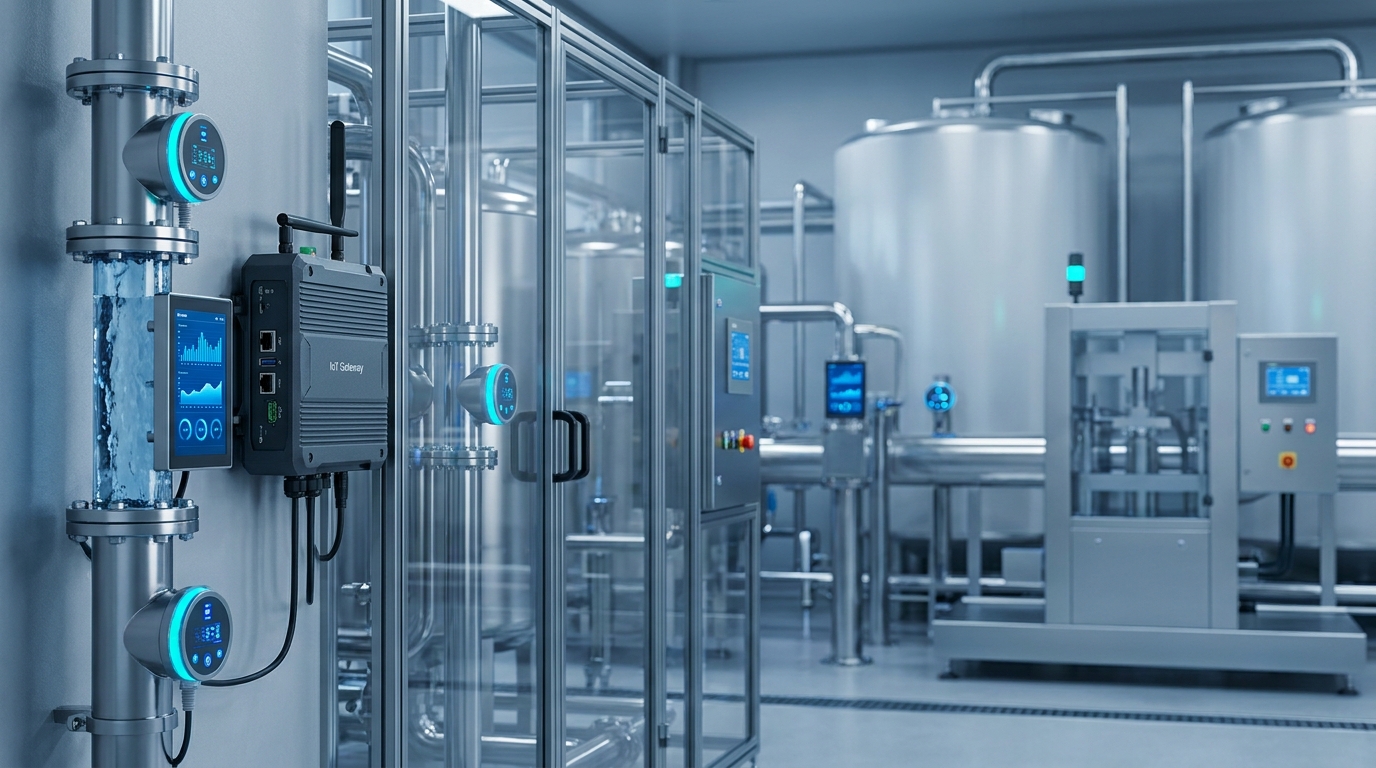
Examples include the LGF electromagnetic flowmeter—stable across variable conductivity—and the 80GHz visual fusion radar level sensor, delivering millimeter-level accuracy over turbulent or foam-covered surfaces. Most transformative for aging infrastructure is the multi-band Doppler flow radar system with integrated real-time camera inspection—the only underground pipe monitoring solution combining radar telemetry and visual verification.
Paired with robust telemetry gateways like the HERO V9 RTU, utilities achieve encrypted, continuous data transmission—from remote catchments to centralized AI platforms. This hardware-software integration ensures algorithmic predictions remain grounded in verified physical reality.
Strategic Implications for Global Water Stakeholders
- 1 Interoperability-first procurement: Isolated sensors fail enterprise digital twins.
- 2 Elevated data governance: Hydrological telemetry must be treated as strategic corporate assets—secured and compliant like financial records.
- 3 Hidden water footprint accounting: Regional strategies must assess AI infrastructure’s demand on local water supplies.
- 4 Global sensor standardization: Harmonized telemetry protocols accelerate resilient network deployment.
In the 21st century, water security will be determined not by reservoir volume alone—but by the precision, provenance, and programmability of the data that governs it.
Sources
- • Why water rights will become the asset class of the 21st century | The National
- • Amazon's water conservation and replenishment efforts...
- • Digitalisation in hydropower: from hesitation to action | International Water Power
- • The Gulf's AI Boom Has an Undersea Cable Problem | WIRED