Combined sewer overflows (CSO) and urban waterlogging are the most frequent and socially impactful events in drainage network operations. Regulatory pressure is mounting — the EU Urban Wastewater Treatment Directive (91/271/EEC) mandates overflow frequency reporting, and China's "Urban Lifeline" safety program requires systematic network monitoring — yet conventional schemes cost tens of thousands of dollars per cross-section, making wide coverage unaffordable. This article distills field experience into a low-cost deployment approach.
1. Monitoring Points: Critical Cross-Sections First
A city network spans hundreds of kilometers; full coverage is economically unfeasible. The proven strategy is tiered: Tier 1 (mandatory) — CSO outfalls, pump station forebays, low-lying flood-prone points, typically 20–50 sites in a mid-size city; Tier 2 (as needed) — trunk sewer nodes and WWTP influent for flow-balance analysis; Tier 3 (expansion) — branch inlets, deferrable under budget constraints.
Tier 1 selection must be driven by hydraulic representativeness: catchment area served by each overflow structure, upstream-downstream relationships of trunk mains, screened against GIS network topology and historical flooding records, then verified on site.
2. Sensors: Level + Flow Covers 80% of Scenarios
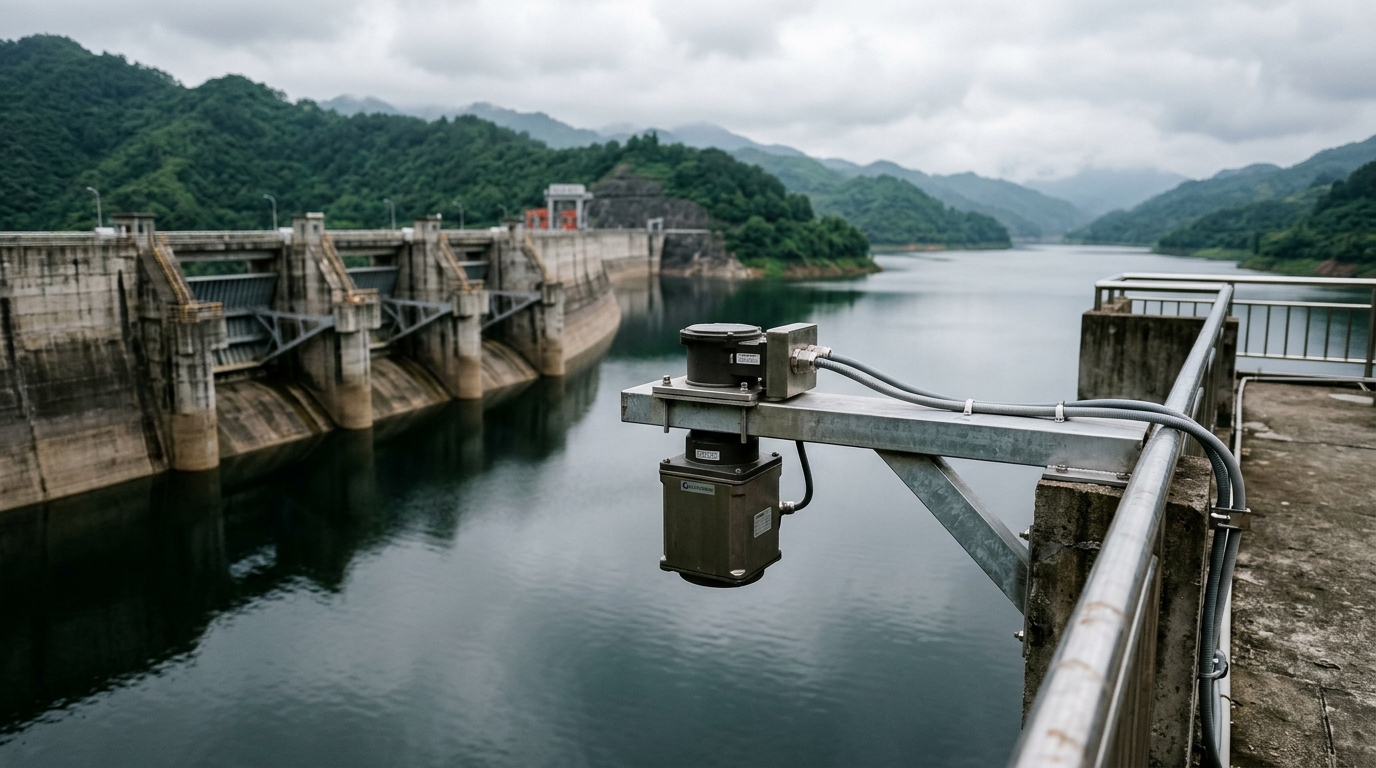
CSO detection needs only two parameters — occurrence and duration. A radar level meter upstream of the overflow weir confirms overflow when level exceeds the crest elevation. An 80 GHz FMCW radar with a 3°–4° beam installs directly in DN800–DN1500 manholes without wall interference; ±3 mm accuracy is ample since overflow heads typically exceed 50 mm.
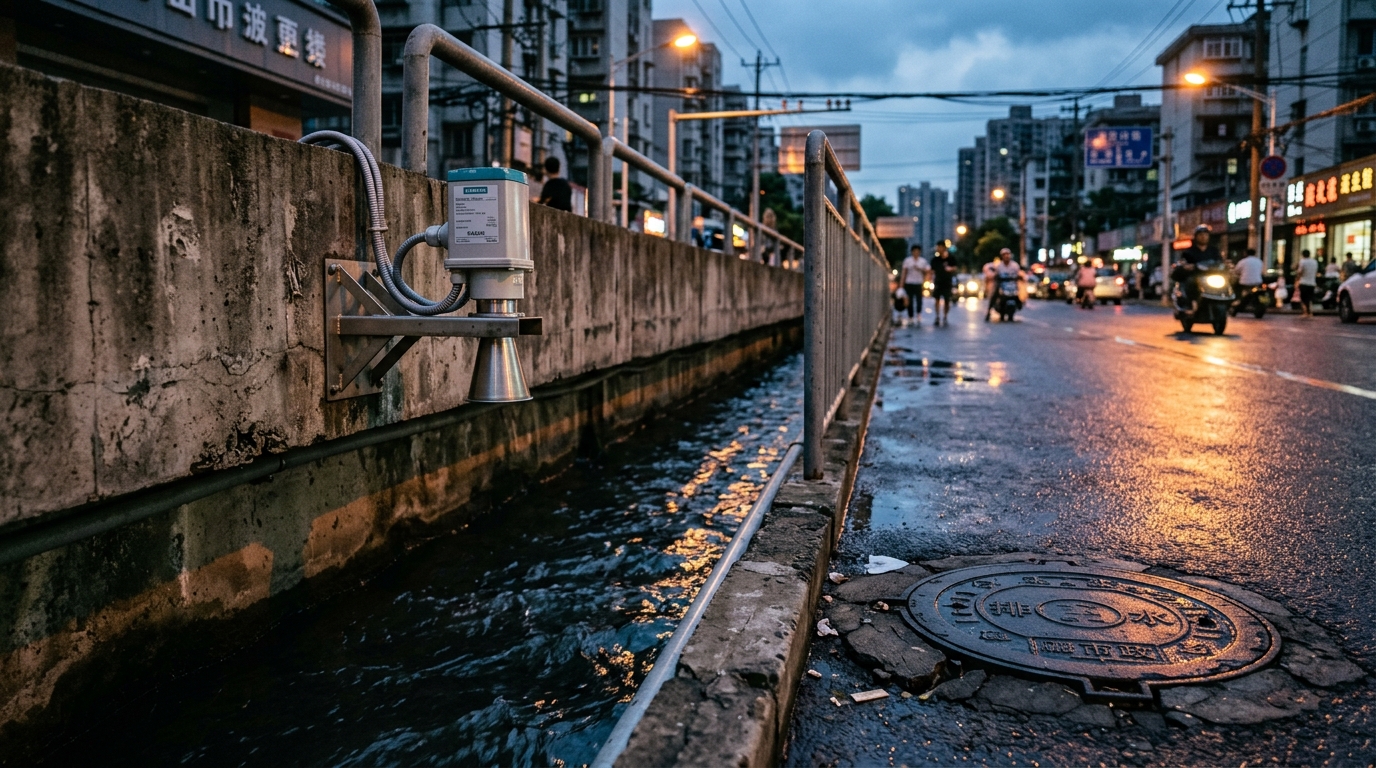
Waterlogging warning measures road-surface depth: submersible pressure transducers are cheap but drift under continuous immersion; pole-mounted radar level meters are non-contact and maintenance-free, with 0.5–5 m range at 2.5–3 m mounting height covering virtually all scenarios. Flow metering uses non-contact Doppler radar flow meters measuring level and surface velocity together, avoiding the corrosion and debris entanglement of wetted sensors in raw sewage; surcharged mains take electromagnetic meters in DN300–DN1200 per ISO 6817.
3. Communications: 4G RTU Primary, NB-IoT Secondary
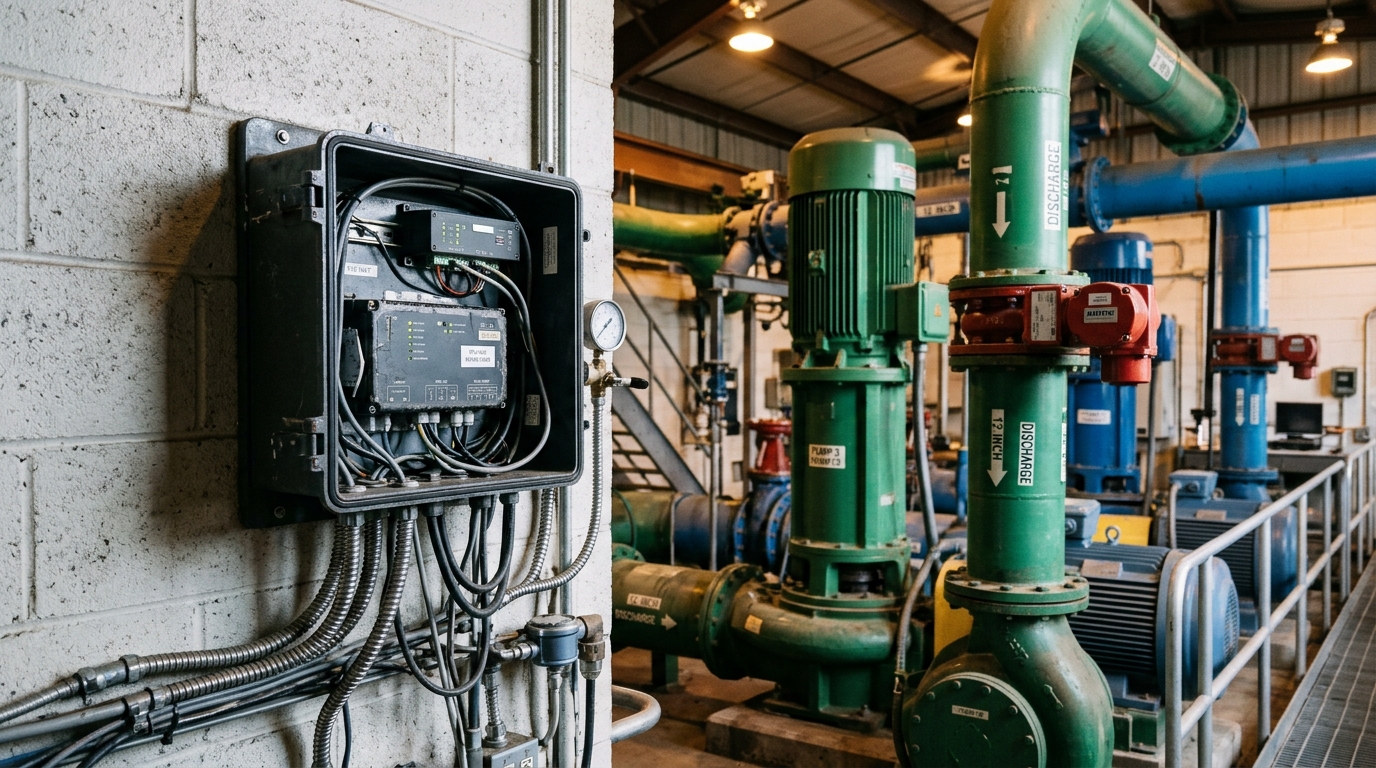
- Tier 1: 4G LTE RTU + solar power; 5-min reporting in normal mode, 1-min in storm mode; IP68-rated, ATEX/IECEx certified where methane risk exists.
- Tier 2: NB-IoT or LTE Cat.1 low-power RTU + lithium battery; 15-min normal, 2-min after threshold trigger; ≥3-year battery life validated to IEC 60068.
- Edge computing: ≥7 days local storage with store-and-forward; threshold logic runs on-device so exceedances transmit immediately without waiting for the next cycle.
Field data from a southern Chinese city with 42 sites: monthly 4G availability 98.7%, NB-IoT 96.2%. Storm-driven base station congestion raised packet loss to 3–5%, fully absorbed by edge buffering.
4. The Alert Loop: From Raw Data to Actionable Warnings
Fixed thresholds are insufficient: CSO threshold = weir crest + 20–50 mm safety margin; waterlogging levels are graduated — Yellow at 10 cm (pedestrian impact), Orange at 20 cm (light vehicles), Red at 30 cm (traffic disruption). Raw data carries vehicle-vibration and EMI noise; direct triggering yields ~15% false alarms. Field-proven mitigation: sliding-window averaging at the RTU (5–10 samples) plus persistence validation at the platform (3 consecutive cycles above threshold), cutting false alarms below 2%. With alerts wired into pump station SCADA, one city pre-lowered sump levels 30 minutes ahead of storm peaks, reducing annual overflow frequency by 40%.
5. Summary
The core challenge is not technical complexity but cost control and O&M sustainability. The 80 GHz radar + Doppler flow meter + 4G/NB-IoT RTU combination delivers $2,000–$4,500 per installed point — over 50% below conventional approaches. Four success factors: model-driven point selection, sensors matched to duty conditions, communications resilient to storm-mode congestion, and a closed alert loop with noise suppression.