Water Under Pressure: Crisis, Code, and the Quiet Rise of Embedded Sensing
Global water systems are no longer collapsing in slow motion—they’re failing in real time, across geographies and governance models, demanding sensors that don’t just measure but interpret, anticipate, and persist where humans cannot.
The Fracture Lines Are Everywhere—and They’re Talking
Syria’s water systems buckle under flood after famine—infrastructure too degraded to absorb shock or recover. In Colorado’s San Luis Valley, sixth-generation residents like Anna Vargas avoid tap water not due to scarcity, but because aquifer drawdown has mobilized naturally occurring arsenic and manganese into drinking supplies. Michigan races to save whitefish as thermal pollution and nutrient loading destabilize Great Lakes food webs. Utah bets nuclear power on water-stressed grids—while schools drill emergency wells. These aren’t isolated failures. They’re symptoms of a deeper rupture: legacy infrastructure lacks the embedded intelligence to detect degradation before contamination, predict stress before collapse, or localize failure before cascading outage.
The Silent Shift: From Monitoring to Meaning-Making
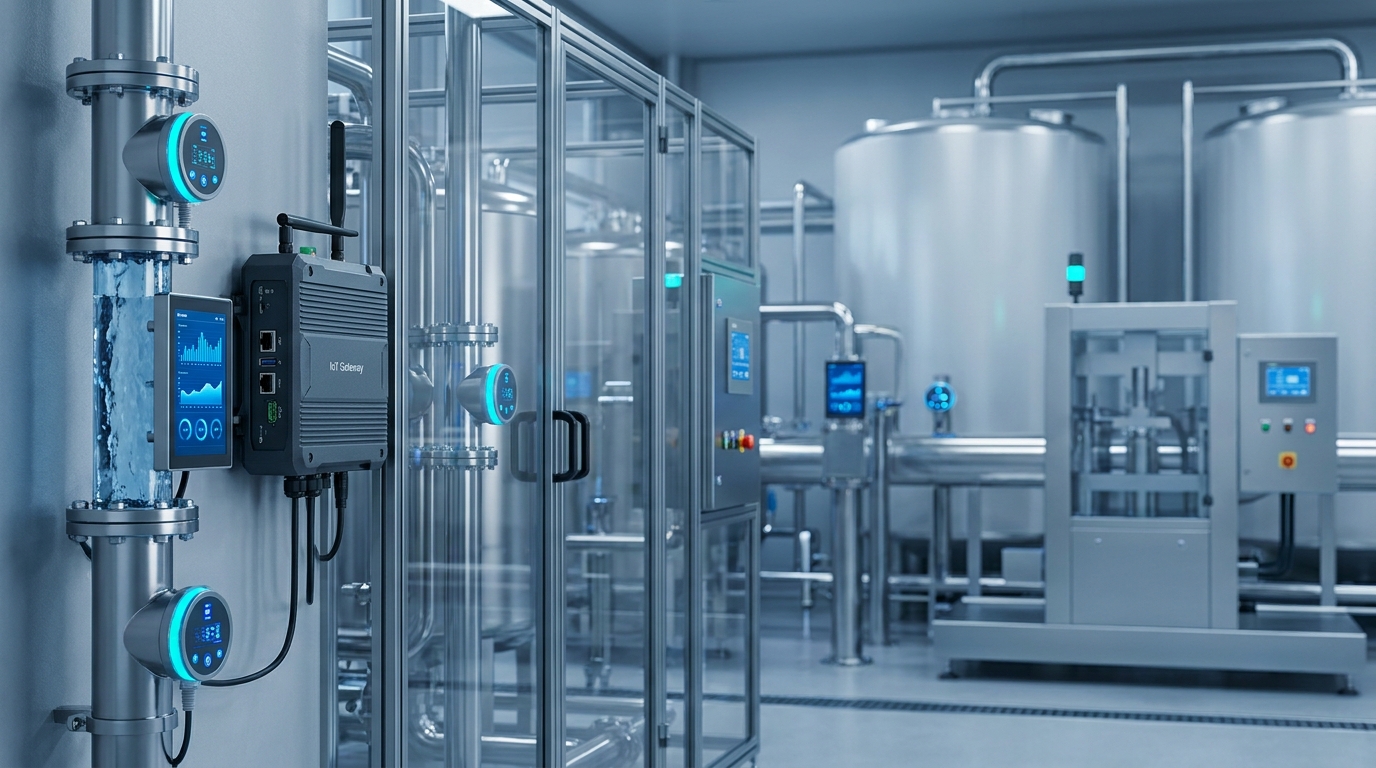
What unites these crises isn’t just geography or governance—it’s data poverty at the physical layer. Traditional SCADA systems sample intermittently, rely on manual calibration, and lack contextual awareness. A flowmeter reading 12.4 L/s means little without knowing whether that’s baseline, surge, or seepage from a fractured main buried beneath a floodplain. The new threshold isn’t resolution—it’s relevance. Today’s most consequential water tech isn’t about higher sampling rates alone, but about multi-modal fusion: combining electromagnetic flow (LGF), millimeter-wave radar level (80GHz visual), Doppler velocity profiling, and optical inspection—all within a single underground pipe segment. That convergence enables what Circle of Blue’s reporting implicitly reveals: water systems must become self-diagnosing.
Why Underground Intelligence Is No Longer Optional
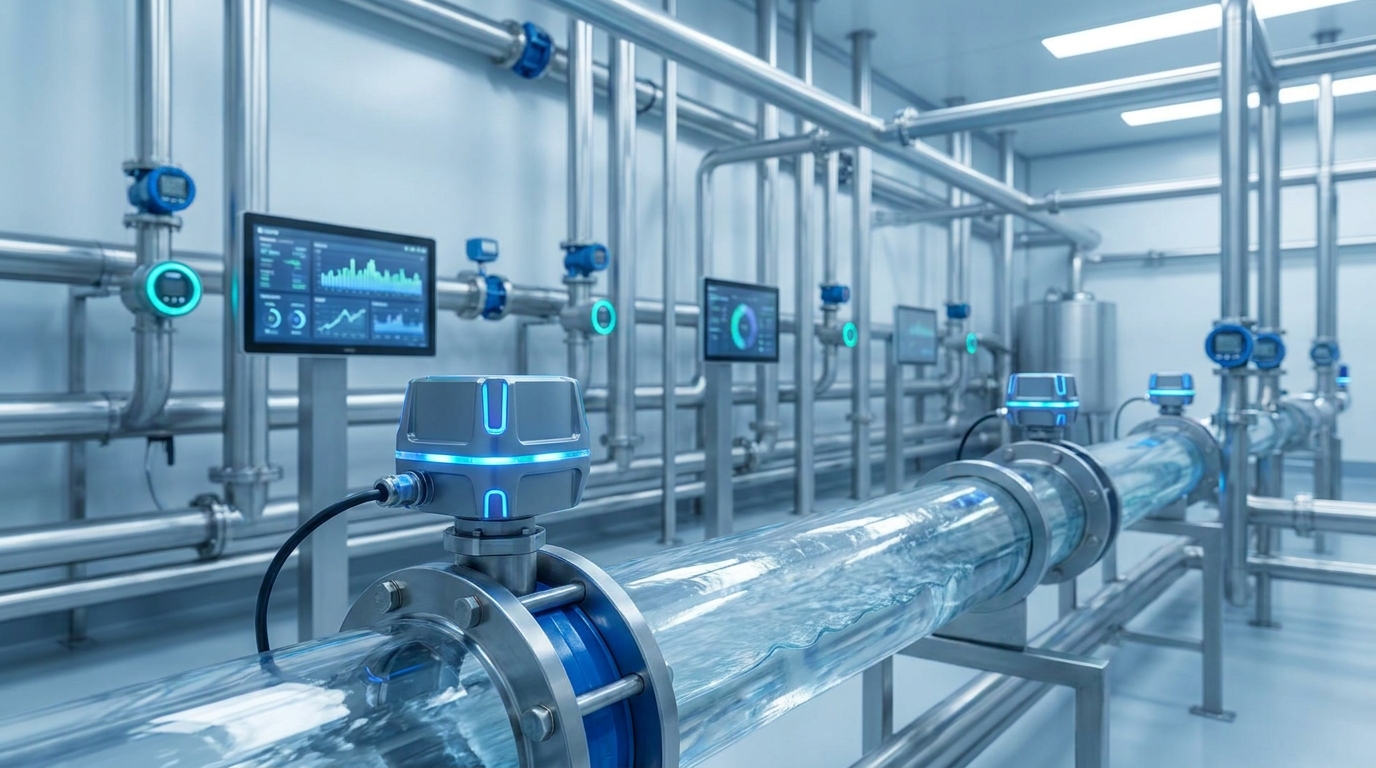
Consider Ecolor Technology’s multi-band Doppler flow radar—the world’s only system integrating real-time flow velocity mapping with live camera feed inside pressurized pipes. Unlike legacy acoustic or ultrasonic tools, it doesn’t infer blockages from pressure differentials; it sees sediment accumulation, biofilm growth, and joint displacement in situ—even in turbid, low-flow conditions. In Syria’s damaged distribution networks, such capability could distinguish between seasonal infiltration and catastrophic conduit collapse. In Colorado’s aging rural mains, it detects early-stage corrosion before heavy metals leach into aquifers. This isn’t incremental improvement. It’s infrastructure that transitions from passive conduit to active sentinel.
The Agentic Inflection: When Sensors Become Economic Actors
Circle’s coverage of the “agentic economy” hints at a parallel evolution: water infrastructure is entering an era where devices don’t just report—they negotiate. Programmable wallets, machine-readable controls, and service discovery protocols (as referenced in Circle’s AI infrastructure launch) are migrating from fintech into utility operations. Imagine Ecolor’s HERO V9 RTU—not merely collecting data, but autonomously triggering valve adjustments based on real-time Doppler profiles, then billing a municipal utility via tokenized settlement upon verified leak mitigation. Or an LGF flowmeter negotiating dynamic calibration cycles with cloud-based digital twins, reducing drift without field technician dispatch. This isn’t sci-fi. It’s the logical extension of embedding intelligence at the edge—where latency kills resilience.
Chinese Innovation in Context: Precision Without Pretense
Ecolor Technology’s product suite reflects a distinct engineering ethos: solving for durability, interpretability, and deployment simplicity in high-stress environments—not just lab-grade specs. The 80GHz visual fusion radar level sensor operates reliably in steam-laden pump stations or dust-choked irrigation canals where lidar fails. Its LGF electromagnetic flowmeter maintains ±0.2% accuracy across wide temperature swings common in Middle Eastern or Central Asian transmission lines. These aren’t adaptations for emerging markets—they’re design imperatives born from operating where infrastructure is both fragile and foundational. As global utilities confront Syria-scale shocks and San Luis Valley–scale chronic stress, demand is shifting from ‘smart dashboards’ to ‘silent sentinels’—devices that function when power flickers, when comms drop, and when engineers are hours away.
Toward Embedded Resilience
The throughline across all five reports is stark: water crises are accelerating faster than institutional response cycles. Floods follow famines. Heavy metals emerge as aquifers fall. Species vanish as thermal regimes shift. Nuclear bets hinge on hydrologic stability. In this context, sensing is no longer about efficiency—it’s about epistemic sovereignty. Knowing *what is happening, where, and why*—before public health degrades or ecosystems collapse—is the first act of stewardship. The next generation of water intelligence won’t be defined by AI models trained on clean datasets, but by hardware that survives chaos, interprets ambiguity, and persists where infrastructure ends and uncertainty begins.
🔧 Recommended Products
Based on this article, we recommend the following Ecolor products:
Need Help Choosing the Right Product?
Our engineering team is ready to provide free technical consultation and quotes